Waste to Worth: How Marine Plastics Are Being Transformed into Inclusion and Value at MTU
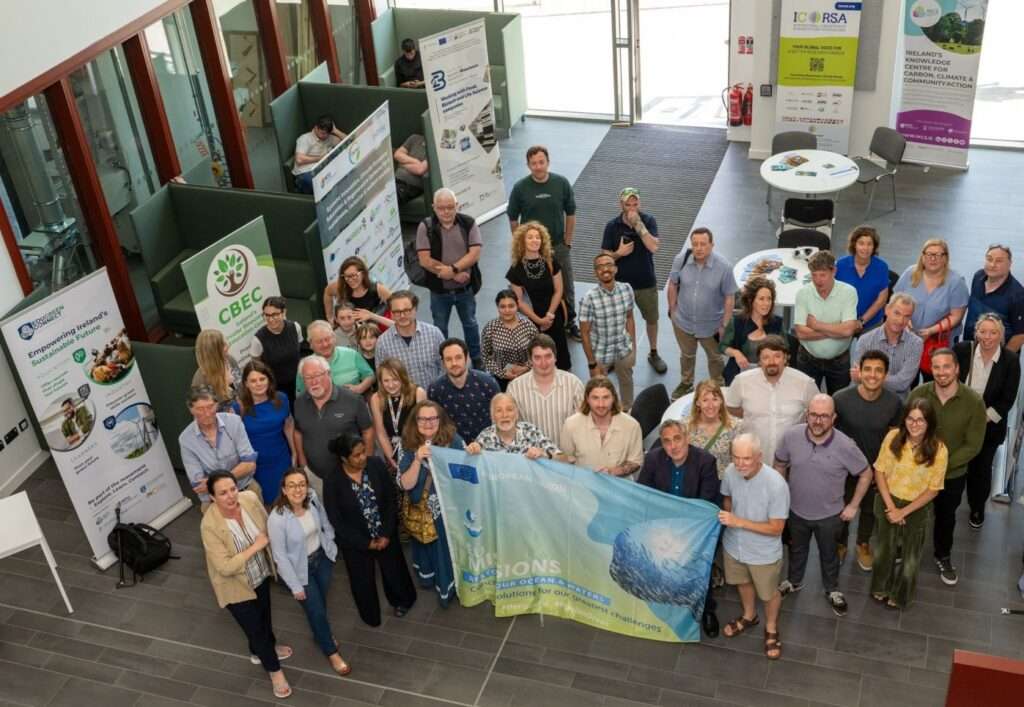
Waste to Worth: How Marine Plastics Are Being Transformed into Inclusion and Value at MTU https://pharosproject.eu/wp-content/uploads/2026/05/WhatsApp-Image-2026-05-30-at-15.10.31-1024x707.jpeg 1024 707 PHAROS Project https://pharosproject.eu/wp-content/uploads/2026/05/WhatsApp-Image-2026-05-30-at-15.10.31-1024x707.jpegOn Tuesday afternoon in late May 2026, in a workshop room at Munster Technological University’s Kerry Campus in Tralee, we heard stories about carefully sorting shredded fishing nets, engineering students tweaking 3D printers, and charity workers explaining how a discarded rope pulled from the Atlantic could become a keyring in someone’s pocket.
This was the Waste to Worth workshop, a 90-minute session running from 14:00 to 15:30 as part of the PHAROS project’s Ireland Mega Event. And in that hour and a half, it managed to demonstrate something that decades of environmental policy sometimes struggle to achieve: a circular economy that actually works, and that leaves nobody behind.
The Problem: Ghost Nets and Ocean Plastic in Irish Waters
The scale of the marine plastic problem is difficult to overstate, and Ireland is far from immune. Abandoned fishing nets, often called “ghost nets,” are a major environmental hazard. The RNLI has noted that ghost nets contribute an estimated 10 per cent of all marine plastic and cause harm to two-thirds of marine species.
The issue is particularly acute in Irish waters. Research has found that of 69 seabird species commonly occurring in Ireland, 13 (19 per cent) had evidence of ingesting plastic. In 2024, Sea Shepherd Ireland launched what was described as “Ireland’s biggest ever beach clean underwater,” recruiting a team of specially trained SCUBA divers to remove discarded fishing gear from around the coast. As Emma Tuite, director of Sea Shepherd Ireland, explained: “The biggest problem is not on the surface, it’s below the surface, and it’s the nets. Seventy per cent of marine life entanglement is due to fishing nets being discarded”.
The Irish fishing industry has been stepping up to the challenge. Under the Clean Oceans Initiative, led by Bord Iascaigh Mhara (BIM), Ireland’s fishing sector has collected more than 1,000 tonnes of marine litter to date as part of its “Fishing for Litter” activities. In 2023 alone, the aquaculture sector collected 17 tonnes of marine litter, with 12 ports participating in the programme and 97 per cent of vessels landing in these ports having signed up to the initiative.
Nationally, a total of 53 tonnes of waste was collected during clean-ups in 2024, comprising 40 tonnes of end-of-life gear and 13 tonnes of marine litter.
This is not a distant problem. It is happening on Irish shores, in Irish waters, and it is being tackled by Irish communities, charities, and industry working together.
The Solution: Shred, Mould, Print, Repeat
The Waste to Worth workshop offered a different ending to that story presenting the initiative of the INSPIRED Blue Hub, operating alongside INSPIRED Day Services and a community facility in Scartaglin, County Kerry. INSPIRED supports adults with intellectual disabilities and autism, and in this project, they are not passive recipients of charity. They are the ones running the recycling process.
Participants sort, clean, shred, and process plastics such as High-Density Polyethylene (HDPE) and Polypropylene (PP). Using injection moulding equipment and 3D printing technologies, these materials are transformed into durable items: keyrings, earrings, bottle openers, and custom ID badges.
The process is elegantly simple:
- Marine litter and plastic waste is collected from beaches, ports, and fishing operations.
- INSPIRED participants sort, shred, and process the material.
- Filament is created or the plastic is prepared for injection moulding.
- Functional 3D printed products are produced and finished.
As Fiona, a Project Leader at INSPIRED, explained during the workshop: “For example, we make bottle openers from plastic such as HDPE number 2 and PP number 5. My favorite part is putting the design together and designing keyrings and earrings.”
Her words carry a quiet power. “I think it’s important that we reuse plastic instead of plastic ending up in the ocean and on our beaches.”
The Key Initiatives Driving Circular Innovation
The Waste to Worth session was not a standalone experiment. It sits within a broader ecosystem of initiatives, each tackling a different piece of the marine plastic puzzle.
Clean Technology Centre at MTU
Based at Munster Technological University, the Clean Technology Centre (CTC) focuses on resource efficiency, waste prevention, and circular economy research. The centre helps communities and businesses move away from single-use models toward closed-loop systems.
BIM’s Clean Oceans Initiative
Led by Bord Iascaigh Mhara (BIM) , Ireland’s seafood development agency, the Clean Oceans Initiative encourages commercial fishermen to retrieve marine litter caught in their nets at sea and return it to port for sorting and recycling. The initiative was launched in 2019 and is funded through the Sustainable Fisheries Scheme, co-funded by the Irish Government and the EU.
WAZP: On-Demand 3D Printing with INSPIRED
Working alongside INSPIRED, County Kerry-based smart manufacturing firm WAZP provides technical expertise in on-demand 3D printing. WAZP was founded in 2015 by Shane Hassett and Mariana Kobal with a mission to refine the capabilities of additive manufacturing and create a supply chain as a service. The company is based in Tralee and expects its revenue to grow by 20 per cent this year, with a team of eight staff and revenue of €1 million last year.
The human impact of the Waste to Worth project was central to the afternoon’s presentations. What emerged was a portrait of a project that delivers on multiple fronts simultaneously.
“We work with Inspired Day Services and we also have a hub in Scartaglin village, and we work with a number of partners on this initiative which is repurposing waste plastic and bringing it to new life,” explained the Project Coordinator from INSPIRED Day Services.
The workshop demonstrated that sustainable manufacturing can build confidence, teach technical skills, and provide meaningful employment opportunities. The adults with intellectual disabilities who participate in the Blue Hub are not just sorting waste. They are designers, technicians, and makers.
Gravity Wave: From Ghost Nets to Furniture
The workshop also highlighted Gravity Wave, a social enterprise operating in Spain and Gran Canaria. Gravity Wave works alongside traditional fishing communities to collect ocean plastics and discarded fishing gear. The collected materials are transformed into durable outdoor furniture, construction panels, and decorative products.
The connection to the PHAROS project is direct. In Gran Canaria, a pilot initiative led by PLOCAN and Gravity Wave collected 220 kilograms of material at the start of 2026, with the aim of reintroducing these materials into the market as furniture and decorative items.
The Plastic Fantastic Hackathon
Another initiative showcased at the workshop was the Plastic Fantastic Hackathon, organised by Impact Hub Athens under the PHAROS project. This eight-day online innovation sprint drew innovators from four continents, kicking off on 11 May 2026 with a three-day bootcamp before culminating in two final hackathon days on 18 and 19 May.
The hackathon awarded €10,000 in prizes to teams designing actionable solutions for the detection, collection, and prevention of marine litter. It brought together 20 finalists for the bootcamp and 12 finalists for the finals in a high-stakes pitching event.
One of the Irish winners was presented at the workshop: C-Quest Blue from Trinity College Dublin.
Ireland’s entry turned heads with high chemistry: converting mixed coastal plastics into recycled carbon feedstock using a bio-derived catalyst made from plant extracts. The process supports biodiversity recovery, waste valorisation and circular bioeconomy solutions without requiring plastic pre-processing.
The jury praised its elegant, low-energy chemistry and noted that “by removing the need for pre-sorting or washing, C-Quest Blue could unlock value from previously unrecyclable coastal plastics”.
Inside the C-Quest Blue Story
The team behind C-Quest Blue came to the hackathon with a clear mission: to upcycle plastic waste rather than downcycle it, as happens in conventional mechanical recycling. Their goal was to create a new carbon supply chain for biorefineries.
What sets their approach apart is the catalyst itself. Instead of relying on energy-intensive processes that require clean, sorted plastic, C-Quest Blue developed a bio-based catalyst system derived from plants. This enables them to process heterogeneous coastal plastic waste in a single pot process without any pre-sorting or washing.
The implications are significant. Most recycling systems require plastic to be clean and sorted before processing, which means vast quantities of mixed or contaminated plastic never get recycled at all. C-Quest Blue’s technology could unlock value from exactly those materials that currently have no market.
The team is led by Dr Parul Johar, a green chemistry researcher and founder of the initiative. She is joined by Professor Ramesh Babu Padamati, who brings over 20 years of experience in advanced materials, and Dr Shrabana Sarkar, who specialises in polymer processing. Together, they are partnering with Coastwatch Europe as their NGO collection partner and the Irish Bioeconomy Foundation for scale-up support.
The commercial model is business-to-business, with three revenue streams: recycled carbon feedstock for biorefineries, process line sensing with regulatory pathways, and carbon credits and certifications. The global market for recycled carbon feedstock alone is valued at over $600 million.
C-Quest Blue took first place in Track A (Idea Stage), winning €3,000. The team is made up of BiOrbic researcher Dr Parul Johar, PMNC group member Dr Shrabana Sarkar, and group leader Professor Ramesh Babu Padamati of BiOrbic and Trinity College Dublin.
Why This Matters Beyond Kerry and Ireland
The Waste to Worth workshop took place on the same day as the launch of the MINKA Living Lab on the Maharees peninsula, and the two events tell a complementary story. MINKA puts citizen science tools into the hands of local residents to document and protect coastal biodiversity. Waste to Worth takes the waste that threatens that biodiversity and turns it into something useful.
Together, they represent a shift in how marine conservation is conducted. Rather than treating environmental protection as a technical problem to be solved by experts alone, the PHAROS project is demonstrating that the best solutions emerge when researchers, charities, industry, and local communities work together.
The Ireland Living Lab, established by MTU Kerry and Bantry Marine Research Station, drew over 100 stakeholders from twelve countries during its three-day launch in May 2026. Its three core goals, reducing marine pollution, supporting the blue economy, and developing sustainable practices, are not abstract aspirations. They are being delivered through initiatives like Waste to Worth, one shredded fishing net at a time.
The workshop at MTU Kerry Campus may have lasted only 90 minutes, but its implications stretch much further. It showed that the waste choking our oceans can become something beautiful, something useful, and something that gives people purpose. That is not just waste to worth. That is waste to dignity.