What Is Multiple Use of Space?
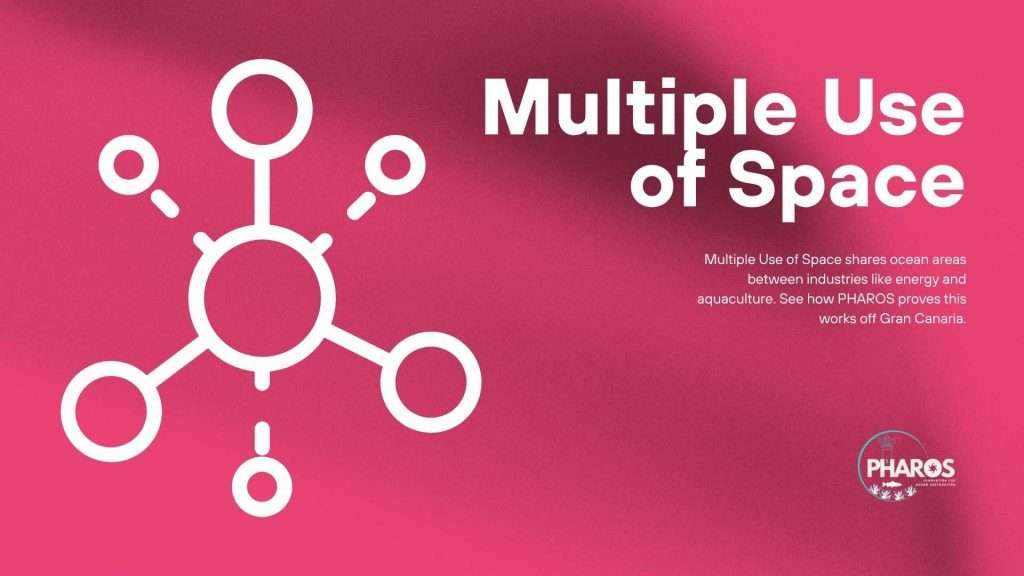
What Is Multiple Use of Space? https://pharosproject.eu/wp-content/uploads/2026/07/Multiple-Use-of-Space-1024x576.jpg 1024 576 PHAROS Project https://pharosproject.eu/wp-content/uploads/2026/07/Multiple-Use-of-Space-1024x576.jpgMultiple Use of Space, often shortened to MUS or referred to as ocean multi-use, means intentionally sharing the same stretch of ocean between two or more different activities at the same time, rather than reserving that space for a single exclusive purpose. It represents a genuine shift in thinking about the sea: instead of exclusive resource rights, where one industry claims a patch of water entirely for itself, multi-use promotes inclusive sharing between users who coordinate around each other’s needs and capabilities. The shared resource in question doesn’t have to be physical space alone, it can also be infrastructure, energy, staff, or even a shared fish stock that multiple sectors depend on.
Why Ocean Space Has Become a Scarce Commodity
The push toward multi-use exists because European seas host an ever-growing list of competing activities: oil and gas extraction, offshore wind, shipping lanes, cruise tourism, aquaculture, telecommunications cables, and protected conservation zones, all trying to occupy the same finite area. Since ocean space cannot simply be created or multiplied, the more users compete for a share of it, the scarcer and more valuable every square kilometre becomes. The scale of this pressure has been documented clearly through EU research and policy efforts:
- The EU-funded MUSES project examined ocean multi-use challenges across every EU sea basin, engaging stakeholders at national, sea-basin, and EU-wide scales to map real versus perceived barriers.
- The Horizon 2020 Blue Growth call that funded early multi-use research allocated nearly €2 million specifically to study compatibility, regulation, and environmental issues around sharing ocean space.
- A January 2026 EU-wide assessment found that all 22 Member States with marine waters have now established Maritime Spatial Plans, the legal framework multi-use projects depend on.
- Only 37% of Europe’s surface water bodies currently achieve “good” or better ecological status, adding urgency to using remaining healthy ocean space as efficiently as possible.
- The UNITED project alone tested the viability of ocean multi-use through five separate pilots deployed across European waters between 2020 and 2023.
One Analogy: An Apartment Building, Not a Single-Family House
Traditional ocean planning has historically worked like a neighbourhood built entirely of single-family houses, each activity getting its own fenced plot of land with a locked gate keeping everyone else out. Multiple Use of Space is closer to an apartment building instead. Different tenants, a wind farm, an aquaculture operation, a research platform, occupy the same physical footprint, but the building only functions if everyone coordinates on shared plumbing, hallways, and schedules. Nobody gets total exclusive control of the property, but far more people can live comfortably on the same plot of land than if it had been divided into separate single-family lots.
How Multi-Use Actually Gets Organised
Academic frameworks developed through the MUSES project break ocean multi-use down along four core dimensions that determine how connected different users truly are. The spatial dimension covers how physically close activities sit to one another, the temporal dimension covers whether they operate simultaneously or in different seasons, the provisioning dimension covers shared resources like energy or infrastructure, and the functional dimension covers whether the activities actually depend on each other operationally. For multi-use to succeed long-term, EU researchers emphasise it must be sustainable, efficient, and fair, delivering clear benefits either directly to the users themselves or to the wider society relying on that same ocean space. That balance is difficult to achieve in practice, since realising multi-use often runs into conceptual disagreements between sectors, entrenched vested interests, and existing political institutions built around exclusive-use models.
PHAROS Demo 1: IMTA as Multi-Use in Action
PHAROS’s flagship Gran Canaria demonstration is explicitly framed as an IMTA and Multiple Use of Space demo, treating the two concepts as inseparable. A single storm-proof structure in the PLOCAN research area combines a fish cage, sea cucumber cages, high-value abalone production, macroalgae cultivation ropes, and Smart Enhanced Reefs, all occupying the same physical mooring footprint rather than being spread across separate zones. This is multi-use in its purest form: aquaculture, restoration ecology, and research monitoring infrastructure sharing one location, with each element’s output or waste stream feeding directly into the next.
Sister project AquaWind pushes this same logic even further by demonstrating multi-use between entirely different industries, combining offshore renewable energy generation with aquaculture in a single installation. PHAROS was directly presented at AquaWind’s final event in Las Palmas de Gran Canaria, where the discussion focused specifically on how multi-use of space through IMTA can help mitigate the broader environmental impacts of aquaculture expansion. PHAROS’s own engagement with permitting authorities has surfaced just how complicated this coordination becomes in practice, since regulatory challenges become exponentially more complex for multi-use platforms where a single structure simultaneously involves wind energy, aquaculture, and marine spatial planning considerations that historically fell under entirely separate legal frameworks.
Why This Matters for the Blue Economy’s Future
As offshore wind and other clean energy infrastructure continue expanding across European waters, treating ocean space as an exclusive resource for one industry at a time is becoming increasingly unrealistic. Multi-use offers the EU’s growing blue economy a genuine alternative: instead of forcing aquaculture, energy, and conservation into a zero-sum competition for the same limited seascape, PHAROS’s demonstrations are actively proving that carefully engineered platforms can host all three simultaneously, generating economic output, environmental restoration, and clean energy from the very same patch of water at once.