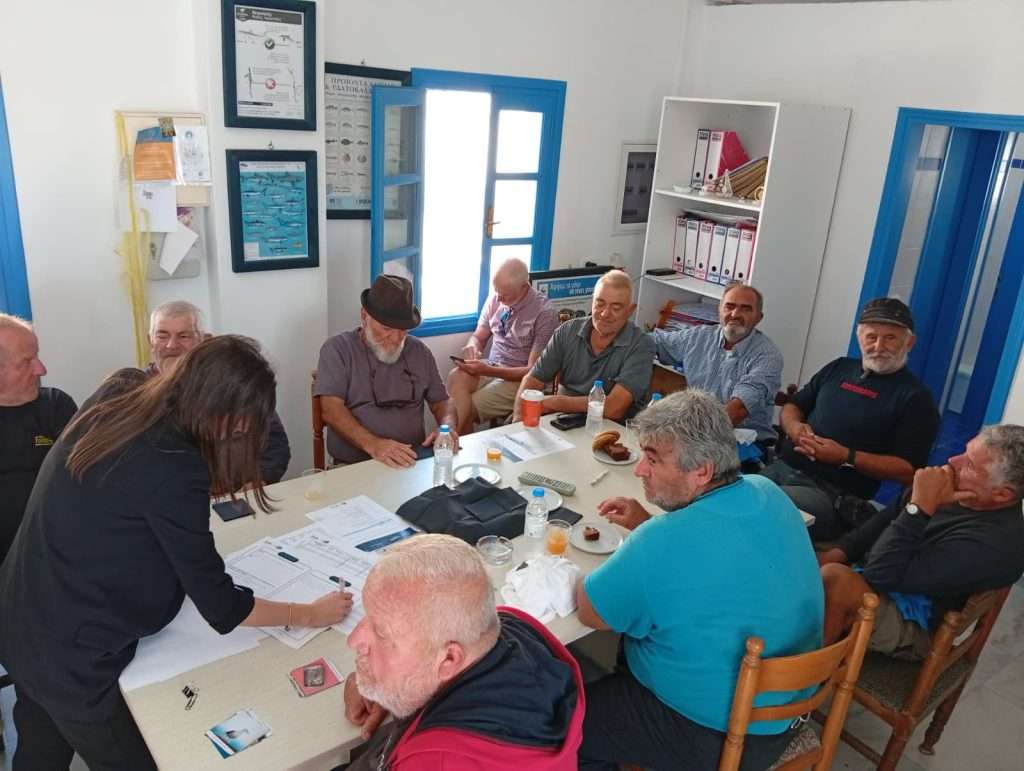
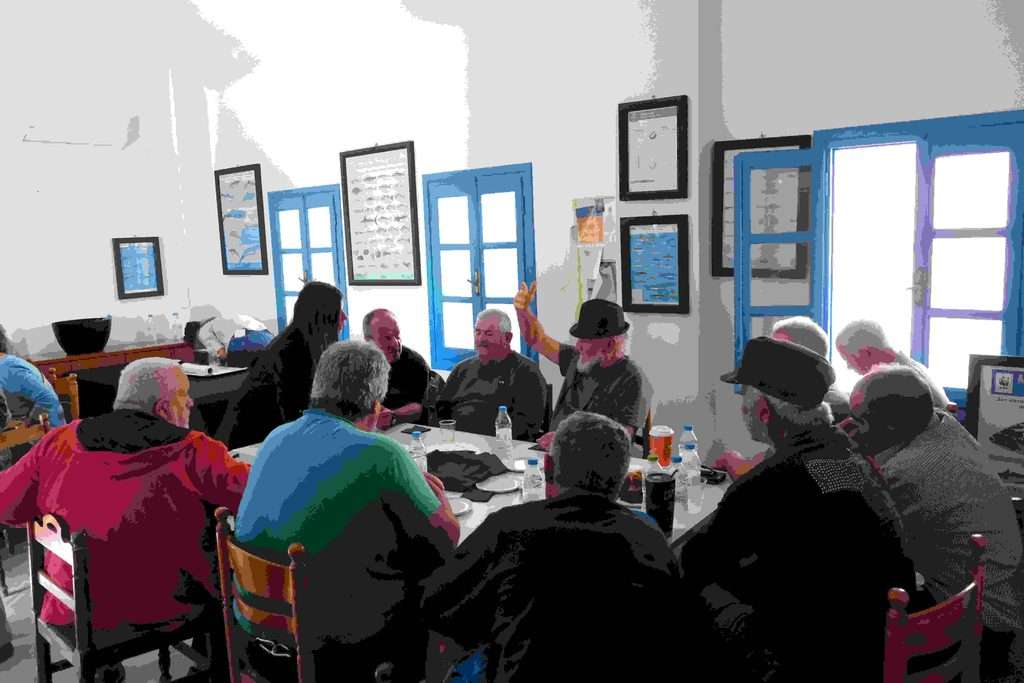
Santorini Living Lab Fisher Guardian Workshop in Vlychada before opening Aegean Hearth Summit
Santorini Living Lab Fisher Guardian Workshop in Vlychada before opening Aegean Hearth Summit https://pharosproject.eu/wp-content/uploads/2026/10/WhatsApp-Image-2026-10-23-at-13.34.16-1024x771.jpeg 1024 771 PHAROS Project https://pharosproject.eu/wp-content/uploads/2026/10/WhatsApp-Image-2026-10-23-at-13.34.16-1024x771.jpegSANTORINI, Oct 23, 2026
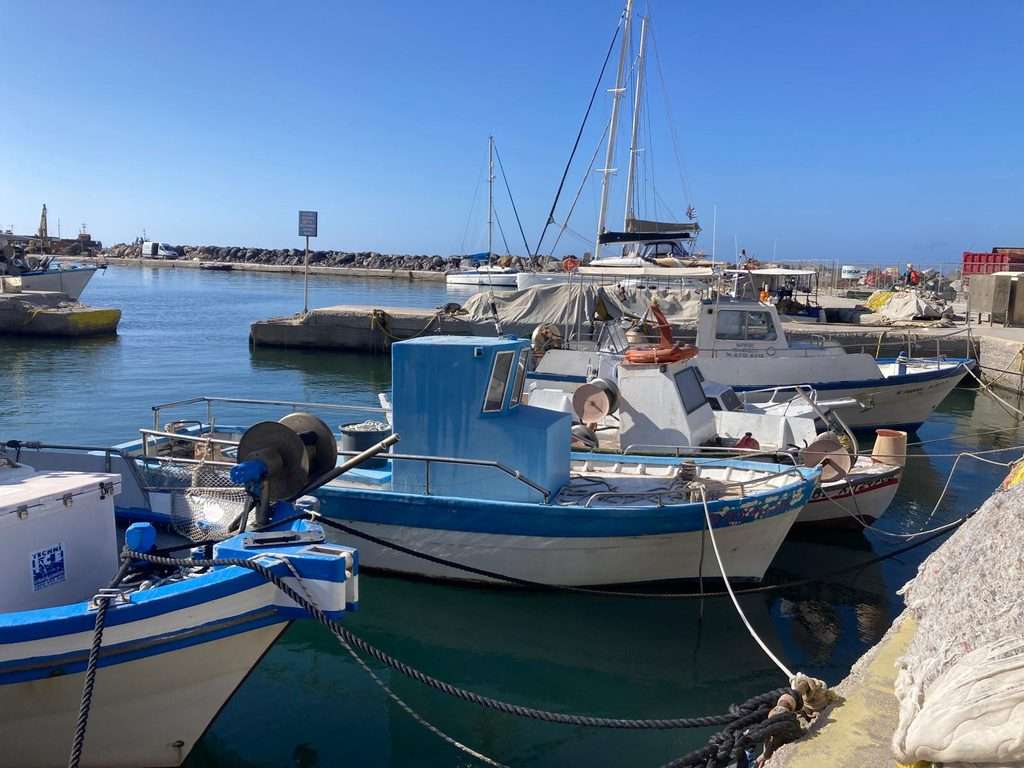
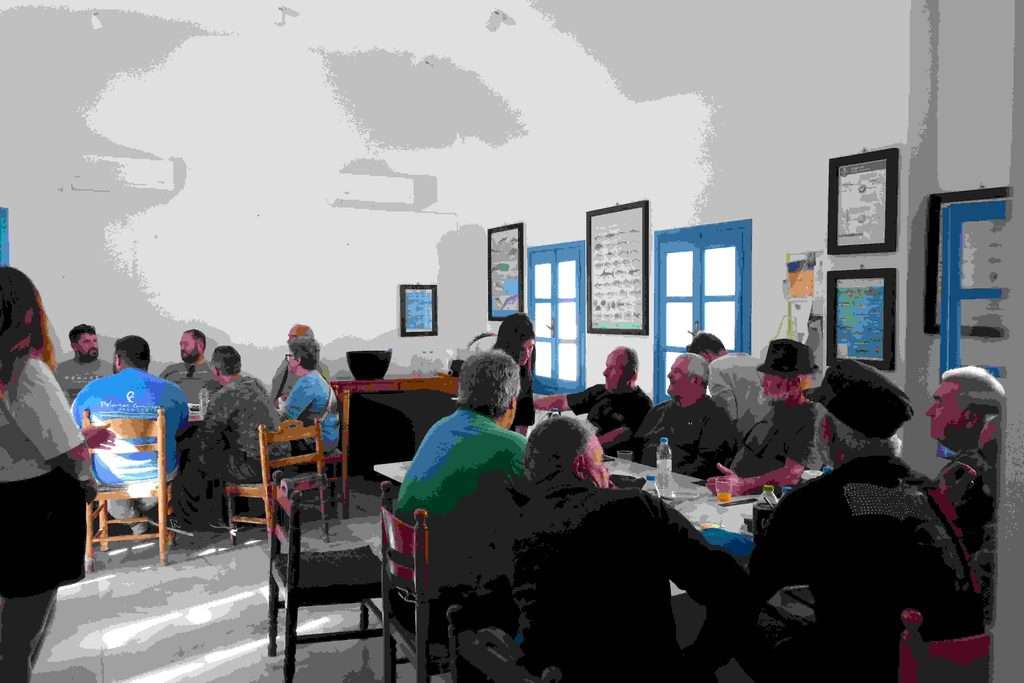
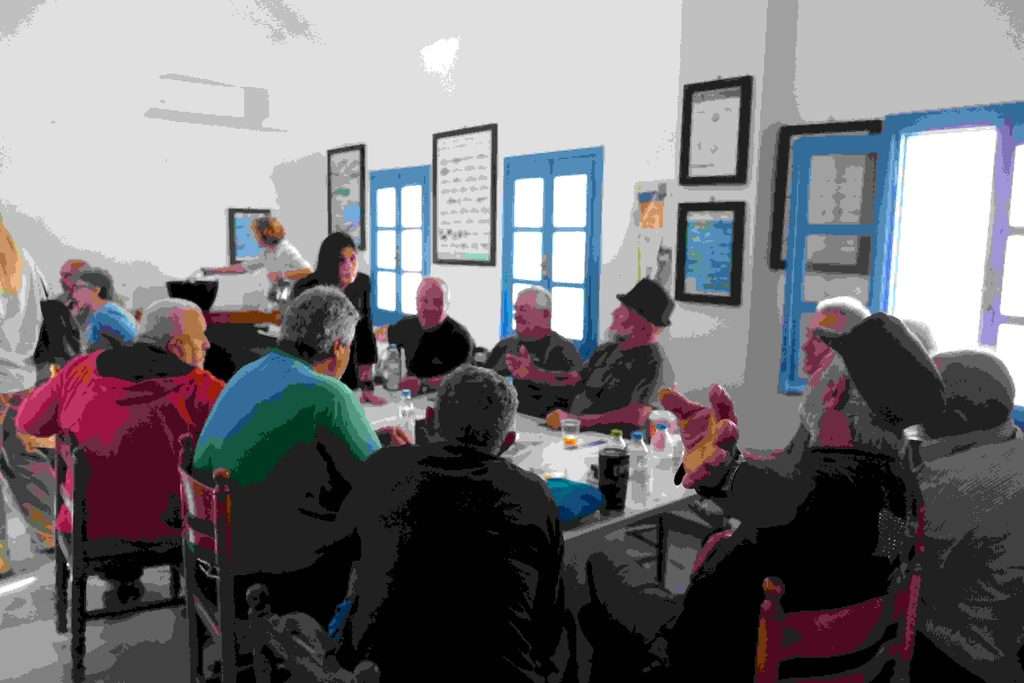
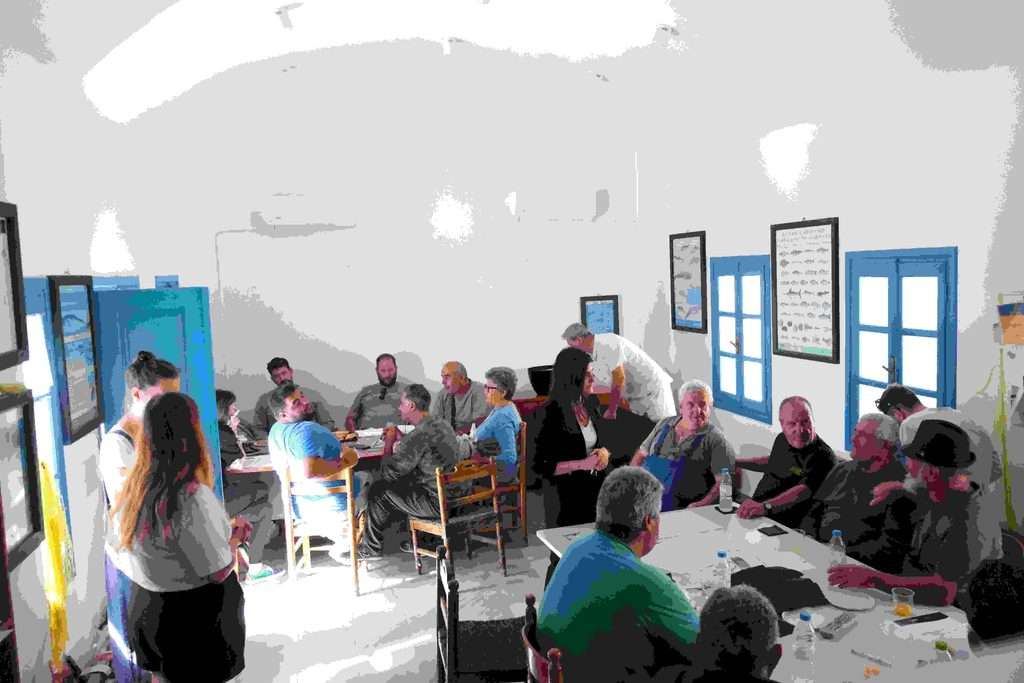
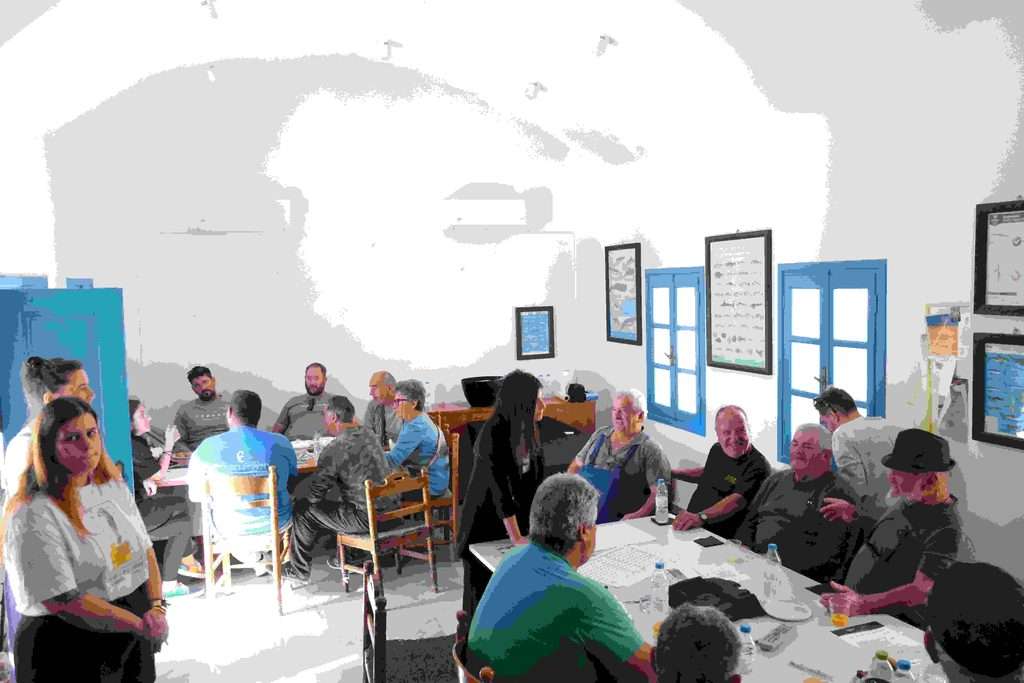
Today at 11:00 CEST started the Aegean Hearth Summit with a PHAROS Santorini Living Lab activity, the Fisher Guardian Workshop, taking place (from 12:00 to 16:00 Santorini time) at Vlychada Fishing Port. This half-day event precedes the official opening of the Aegean Hearth Summit, which will be held later this afternoon at 17:30 at the Mati Art Observatory.
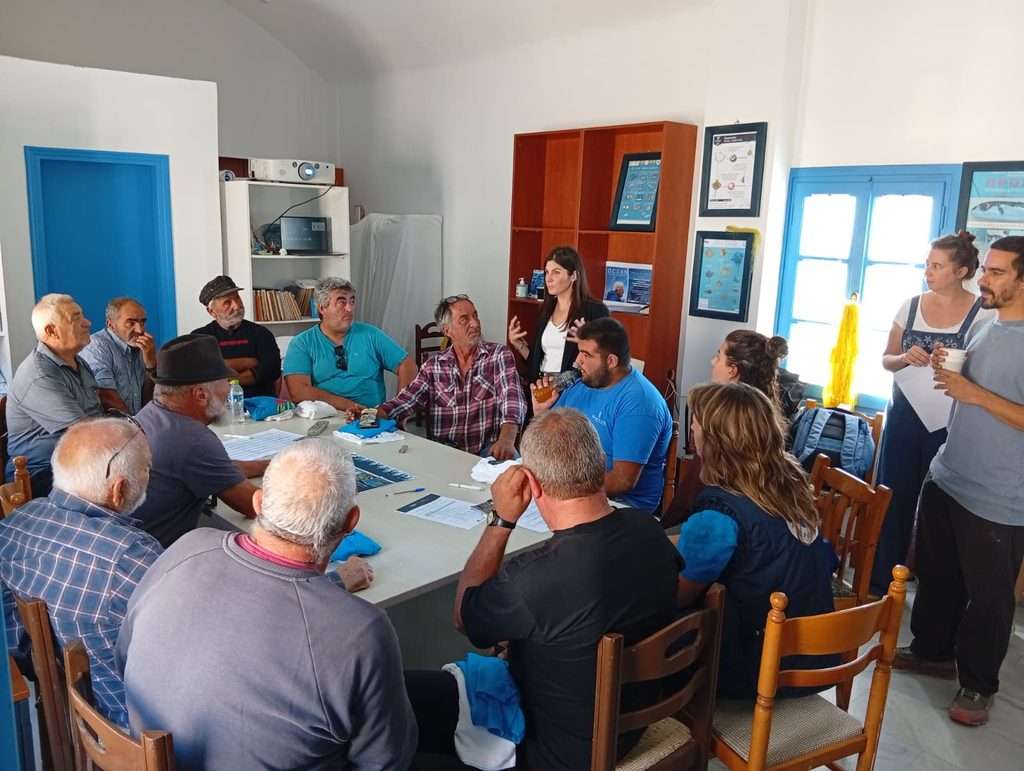
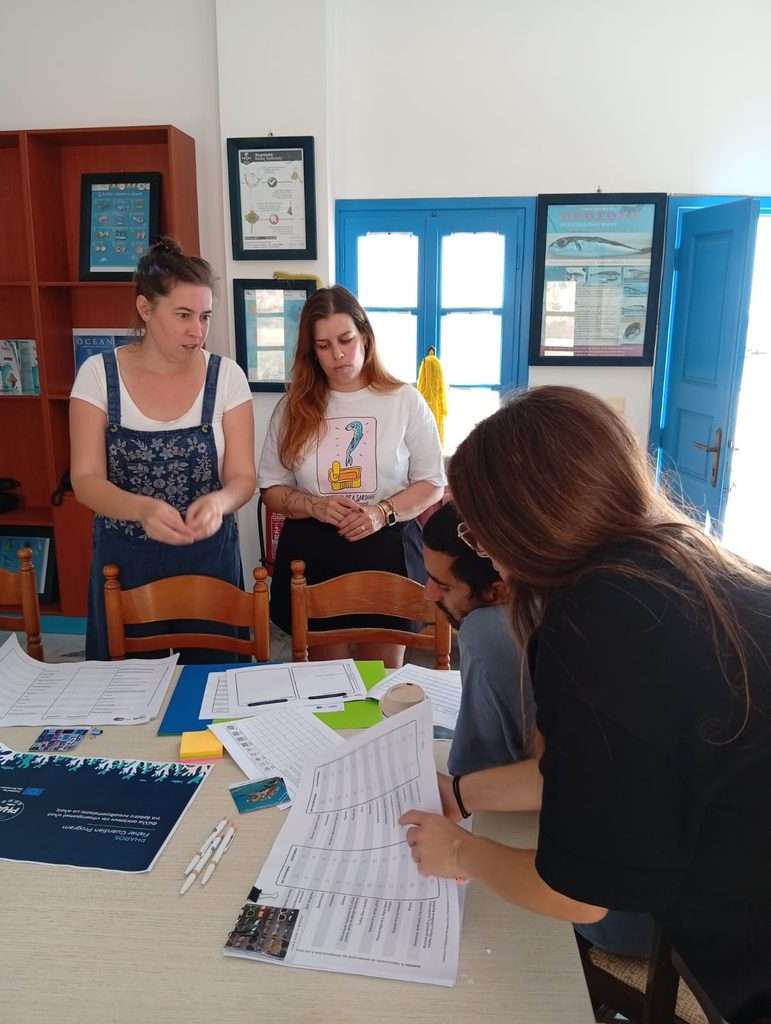
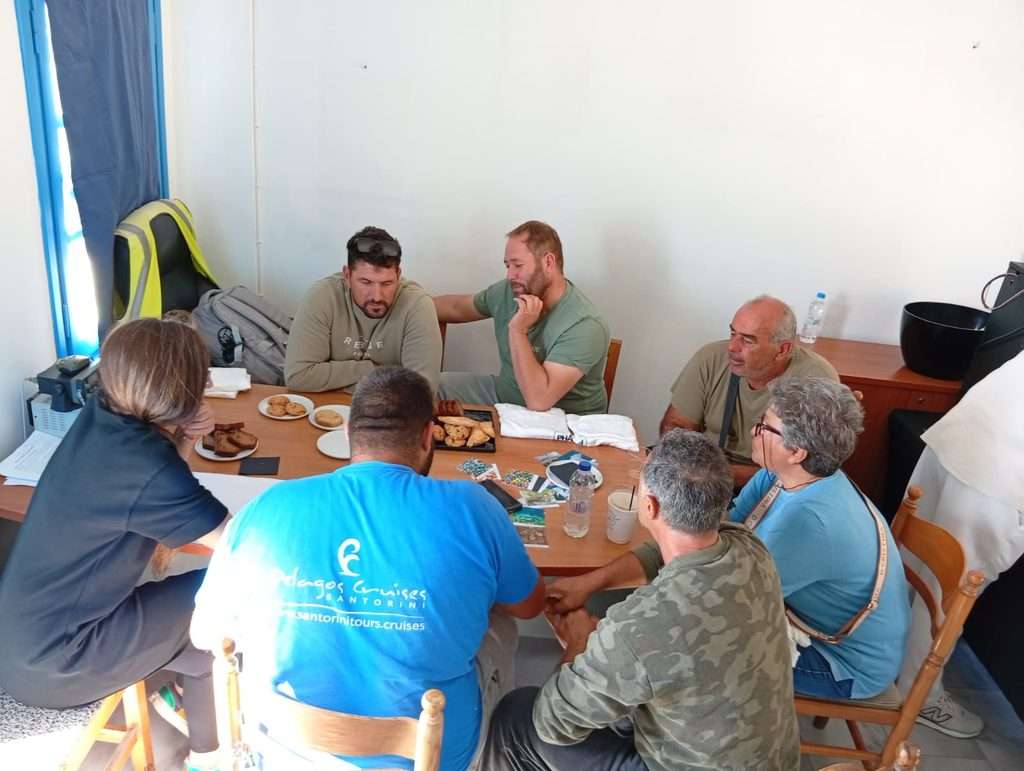
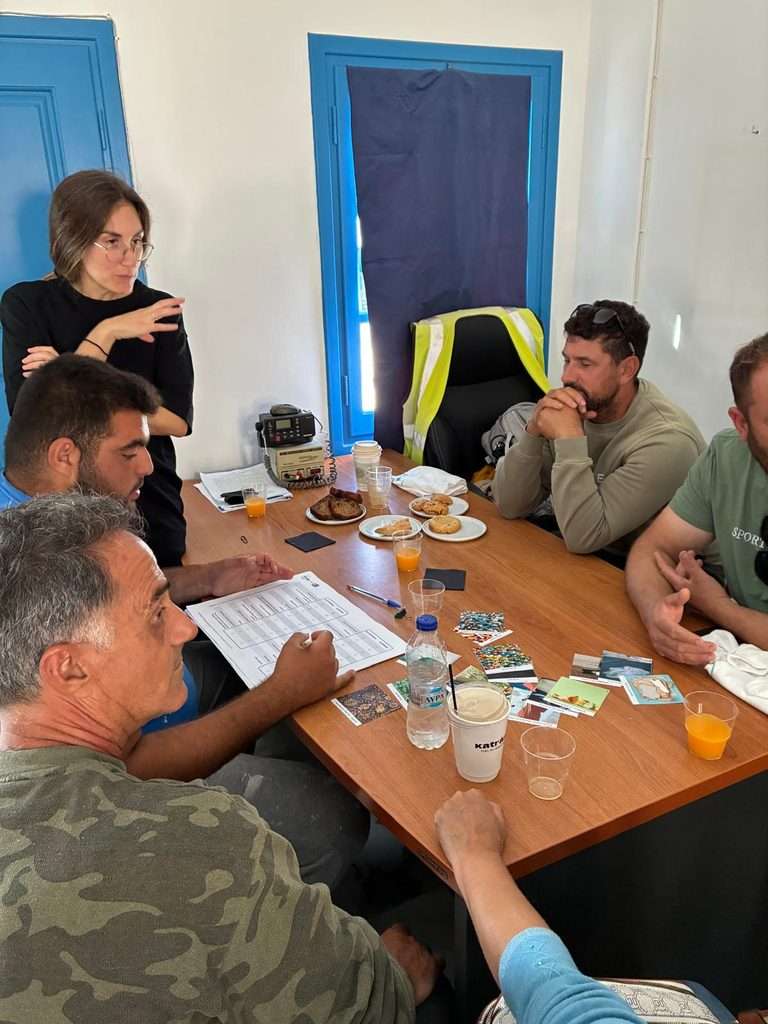
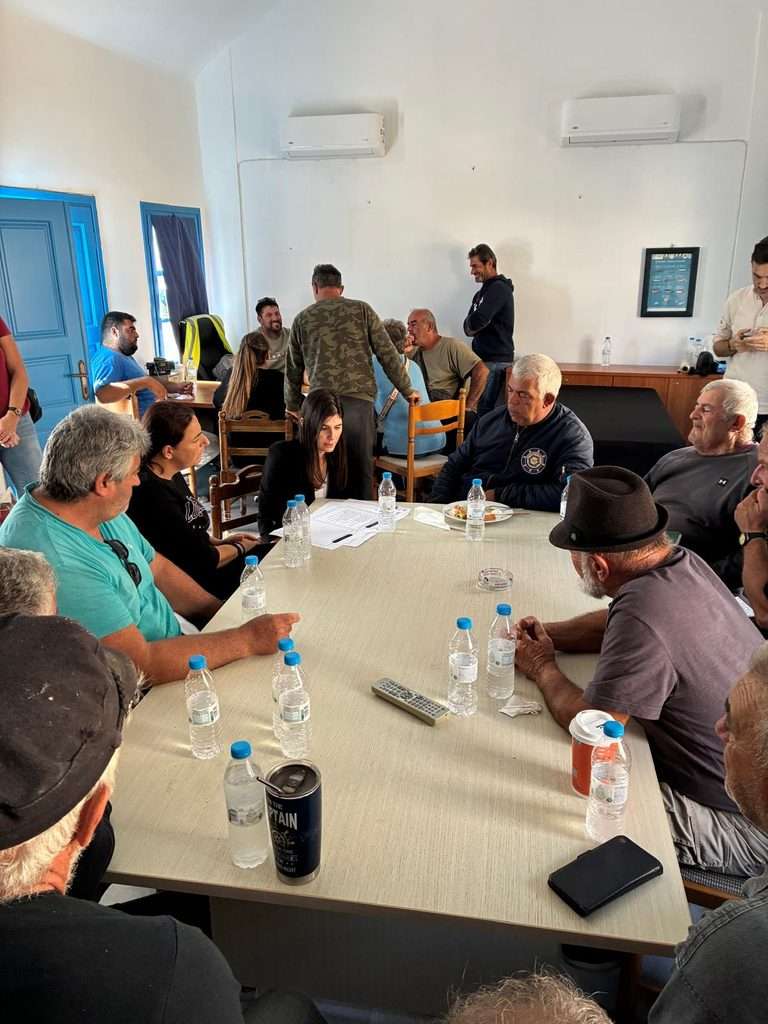
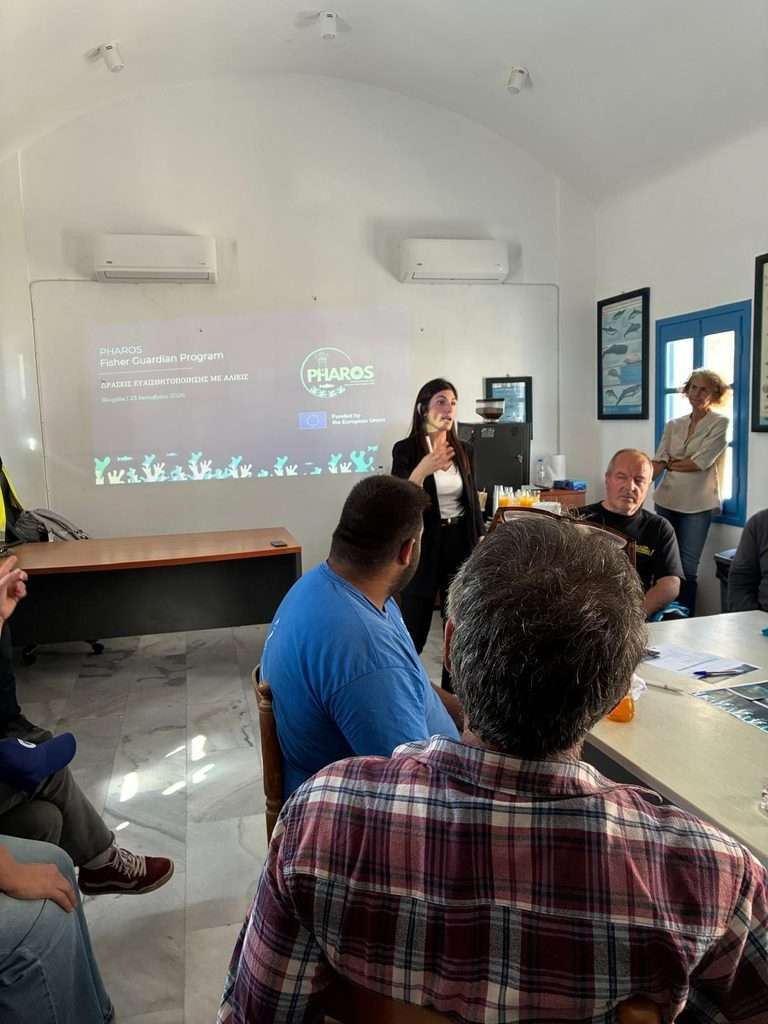
The Fisher Guardian participatory workshop, organised under the PHAROS Fisher Guardian Programme, brings together Santorini fishers to share their experiences, discuss the challenges they face and jointly identify practical measures to tackle marine litter, improve waste management and reduce bycatch, among other issues. By recognising and building on their knowledge and experience, the workshop seeks to strengthen and empower fishers in their role as Guardians of the Ocean. The session is organised by CIIMAR, Coordinator of the Fisher Guardian Programme, and IHA Athens, Coordinator of the Santorini Blue Loop Living Lab. Dimitra Mavrommati facilitated the workshop.
Experiences from the Local Fishers at Vlychada Fishing Port
The event opened with welcoming remarks set against the backdrop of Vlychada Fishing Port. Organisers acknowledged the sacrifice the local fishers made by attending the session instead of heading out to sea on a calm, fair-weather day. Lisa Sousa, researcher at CIIMAR (one of the PHAROS consortium partners implementing the Fisher Guardian programme), noted that the goal of the initiative is to gather real-world insights from those who work on the water every day:
“We know that when you go out to fish, you usually encounter a lot of litter in the sea that sometimes gets collected together with your catch. We would like to work together with you to learn from your experience, to share that experience, and to try to find practical measures and solutions that we could adopt to tackle marine litter and move towards more sustainable fishing.”
Adding to this vision, Gordon Dalton from PLOCAN (the PHAROS project coordinator) emphasised the importance of community involvement:
“Building a sustainable future for our oceans only works if we put fishers at the centre of the conversation. Their daily presence on the water makes them the true front-line guardians of marine ecosystems.”
Following the opening words, Violetta Tsitsiliani from IMPACT HUB Athens (one of the PHAROS consortium partners and organiser of the Santorini Blue Loop Living Lab) provided an overview of the broader PHAROS project and introduced the Fisher Guardian framework. The initiative connects partners across multiple European countries to support fishing communities and equip them with tools to manage marine waste. She outlined three central pillars of the PHAROS program: raising environmental awareness, pilot testing acoustic transmitter tracking tech to locate lost gear in deep waters, and partnering with recycling enterprises like Gravity Wave in Spain to turn recovered nets into new products.
Understanding Ocean Health and Local Environmental Threats
Dimitra Mavrommati, environmentalist from the Port Authority Fund of Fira (which manages all the ports on Santorini Island), took the floor to lead a visual presentation on ocean health, detailing the critical role the marine environment plays in daily life. Beyond supplying food, the ocean supports oxygen production, medicine development, coastal tourism, and renewable energy generation.
However, the session quickly turned to the pressing threats impacting marine ecosystems. Marine litter remains a major hazard, with 80 percent originating from land-based activities such as urban runoff, industrial waste, and abandoned shore litter, while the remaining 20 percent comes from maritime activities. Additional stresses include ocean warming, overfishing, eutrophication, and acidification, all of which directly affect fish populations and fishing livelihoods.
The presentation highlighted the severe economic toll of marine litter. In the European Union alone, damage caused by marine debris to the fishing fleet is estimated at 61 to 67 million euros annually through lost gear, ruined catches, and wasted labor time.
Local Reality: Professional Fishers vs. Amateurs
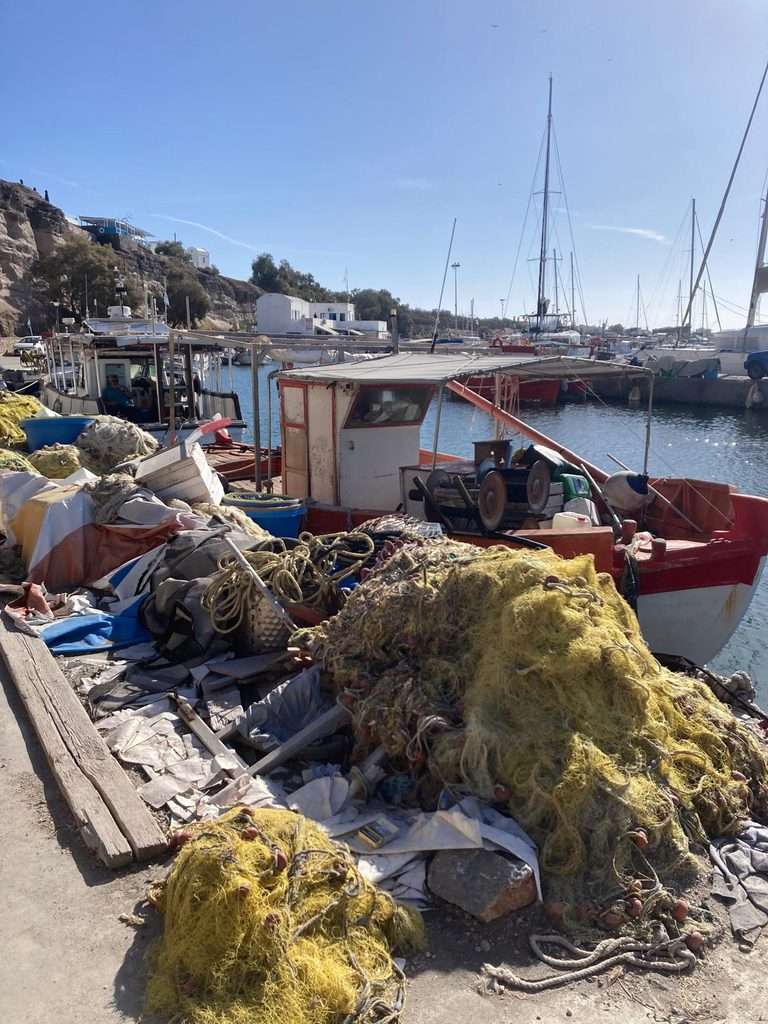
When the discussion turned to abandoned fishing gear and so-called “ghost nets”, local professional fishers stepped in to set the record straight regarding conditions in Santorini. One experienced fisher spoke up strongly to clarify who is responsible for gear left in local waters:
“No professional fisher here leaves a net behind down there! A fisherman is in a very difficult position financially, he doesn’t have money to spare to leave nets down there. He will go fish it out! Nets are extremely expensive, and he can’t replace them afterwards. The nets found down there in our area belong to amateurs, not professionals.”*
He explained that amateur recreational boaters frequently drop nets illegally during the summer months and abandon them when they snag on rocky reefs. In contrast, professional fishers will spend hours and burn barrels of fuel dragging the seabed to recover snagged gear, sometimes at depths of over 180 metres.
The fishers pointed out that abandoned amateur nets continue to fish endlessly, causing catches to rot, fouling the surrounding seabed, and driving fish stocks away from traditional fishing grounds. They urged the facilitators and project leaders to use their platform to press government authorities for stricter enforcement of existing laws against illegal amateur netting.
The Frustrations of Wildlife Interactions
The conversation also touched upon interactions with marine megafauna, including dolphins, seals, and sea turtles. While global data shows that bycatch claims hundreds of thousands of marine animals annually, the local fishers expressed deep frustration over the damage these protected animals inflict on their gear.
Participants described how seals and dolphins regularly destroy longlines, cut nets, and eat catches right off the hooks. Fishers voiced feelings of powerlessness, noting that strict legal protections mean they face harsh legal penalties even if an animal is accidentally harmed during fishing operations, while their own economic losses go uncompensated. They called for stronger state support to help protect their gear and livelihoods from recurring wildlife damage.
Fuel Costs, Technical Limits, and Practical Solutions
As the workshop moved towards climate goals and net-zero targets for 2050, the dialogue grounded itself in the economic realities of operating a fishing vessel. Fishers pointed out the contradiction between official calls for greener operations and their current reality, where high fuel prices and low-quality fuel grades cause frequent engine trouble and heavy smoke emissions.
They noted that commercial shipping vessels burn vast quantities of fuel in a single voyage compared to the annual consumption of the local artisanal fleet. They urged policymakers to allow small-scale fishers access to cleaner automotive-grade diesel, which burns cleaner and prevents severe engine wear.
Addressing technical solutions, Dimitra Mavrommati presented the acoustic tracking technology currently being tested under PHAROS. The system attaches acoustic transmitters to gear, allowing fishers to map and track their location via a tablet application. While acknowledging the promise of tracker technology, local fishers noted that in areas with extreme depths, gear snagged beyond 90 metres cannot be retrieved by divers, making prevention and accurate marking all the more crucial.
Moving Forward as Guardians of the Ocean
To close the presentation segment, Dimitra Mavrommati summarised the core mission of the Fisher Guardian Programme and highlighted how local fishers serve as key stewards of the marine environment:
“You as fishermen are a vital part of this solution. By properly storing and disposing of waste generated on board, recycling gear at the end of its life cycle, using new tracking technologies, and participating in recovery programs, you reinforce your role as true guardians of the ocean.”*
The workshop then transitioned into practical group exercises facilitated by Violetta Tsitsiliani and Dimitra Mavrommati. The fishers broke into working groups to map out localized waste management challenges, evaluate port facilities at Vlychada, and propose actionable steps to improve circular waste collection.
Co-Creating Practical Solutions: Findings from the Fisher Working Groups
During the interactive group reporting session at the PHAROS Fisher Guardian Workshop, local participants presented practical feedback and suggestions for managing vessel-generated waste as well as litter retrieved directly from the sea. The local fishers emphasized that they routinely bring all collected waste back to shore rather than dumping it at sea, often repurposing retrieved items like anchors and tires for their own operations.
The primary operational challenges raised during the reporting centered on the lack of accessible waste disposal infrastructure at port docking areas and the recurring economic difficulties caused by protected marine wildlife damaging gear.
Key Takeaways and Recommendations
- On-Board Waste Reduction: To cut down on single-use plastics generated at sea, fishers suggested replacing disposable plastic water bottle six-packs with refillable, reusable water jerrycans on board.
- Dedicated Vessel Recycling: Providing dedicated waste-stream recycling bags inside fishing boats enables crews to separate waste easily at sea and transfer it directly to port bins upon return.
- Convenient Port Infrastructure: Waste and recycling bins must be situated directly at docking points rather than at a distance. As Violetta Tsitsiliani, organiser of the Santorini Blue Loop Living Lab from IMPACT HUB Athens, noted: “The most important thing is that there are bins at the ports, but not far away, because if they are far away, no one will take them there and they’re already exhausted afterwards.”
- Handling Large Debris and Port Support: Fishers frequently haul heavy, non-fishing debris out of the water, including chairs, beach sunbeds, umbrellas, trash cans, construction wheelbarrows, and large tires. They called for dedicated municipal cleaners or staff from the Port Authority Fund of Fira to assist in lifting and managing these heavy items once landed.
- Island-Wide Recycling and Licensing: Participants highlighted the urgent need for specialized recycling infrastructure on Santorini for materials such as fishing ropes and twine (stragala) and styrofoam. This must be supported by proper island licensing so that collected marine waste is processed circularly rather than sent directly to local landfills. Dimitra Mavrommati, environmentalist from the Port Authority Fund of Fira, confirmed that municipal authorities need to align port infrastructure to properly manage these collected waste streams.
- Reusing Retrived Materials: The fishers pointed out that retrieved equipment, including lost anchors and large tires, is routinely repurposed by the local fishing community rather than discarded.
Workshop Conclusions: Key Findings on Energy Transition, Bycatch, and Policy Engagement
During the afternoon group reporting session covering Workshop #2 (Bycatch and Fisheries Footprint) and Workshop #3 (PHAROS Solutions), participants presented their conclusions regarding decarbonisation, gear recycling, and the practical implementation of emerging technologies. The discussion highlighted a strong desire among small-scale fishers to engage in sustainable practices, paired with a firm demand for direct state support and genuine policy consultation.
Key Takeaways and Recommendations
- Decarbonisation and Vessel Maintenance: Almost all participating fishers expressed interest in reducing emissions, with local fisher Frantzeskos highlighted as a pioneer for already operating a hydrogen-assisted vessel. To support the fleet’s green transition, fishers called for state funding to replace older vessels and seasonal maintenance subsidies during the April–May fish spawning window. Subsidising shipyard maintenance while fish reproduce would naturally reduce fishing pressure while lowering fuel consumption.
- Biodegradable Nets and Ice Crate Circularity: Fishers welcomed pilot testing for biodegradable fishing nets, though they requested clear technical guidance on how these nets degrade without generating microplastics. To tackle waste on board, the group advocated replacing single-use styrofoam fish crates with durable, reusable insulated crates that hold ice longer and eliminate toxic styrofoam waste.
- Skepticism Towards Acoustic Gear Tracking: Addressing the proposed PHAROS acoustic tracking technology, local fishers firmly rejected mandatory tracking devices on gear. An experienced fisher explained the community’s consensus: “As professionals, we don’t go throwing nets out to lose them! We know where we go and we don’t need these things. They made plastic tags mandatory by law on every net, and now it’s a fine if you don’t have it. We do not agree to transmitters being installed because they will make it a law, transmitters aren’t cheap, and above all, we don’t need them.”
- Navigating Wildlife Interactions and Bycatch: When encountering accidentally caught or injured protected species such as sea turtles, dolphins, or seals, fishers reported releasing live animals or notifying port authorities. However, they voiced significant hesitancy due to fear of prosecution or unfair legal liability when animals are found dead or injured.
- Direct Policy Consultation with Artisanal Fishers: In a strongly supported closing point, participants urged the relevant ministries to consult active artisanal fishers before drafting marine legislation. Dimitra Mavrommati, environmentalist from the Port Authority Fund of Fira, and Violetta Tsitsiliani, organiser of the Santorini Blue Loop Living Lab from IMPACT HUB Athens, affirmed that top-down regulations often fail unless policymakers take direct feedback from fishermen on board to shape realistic, workable rules.
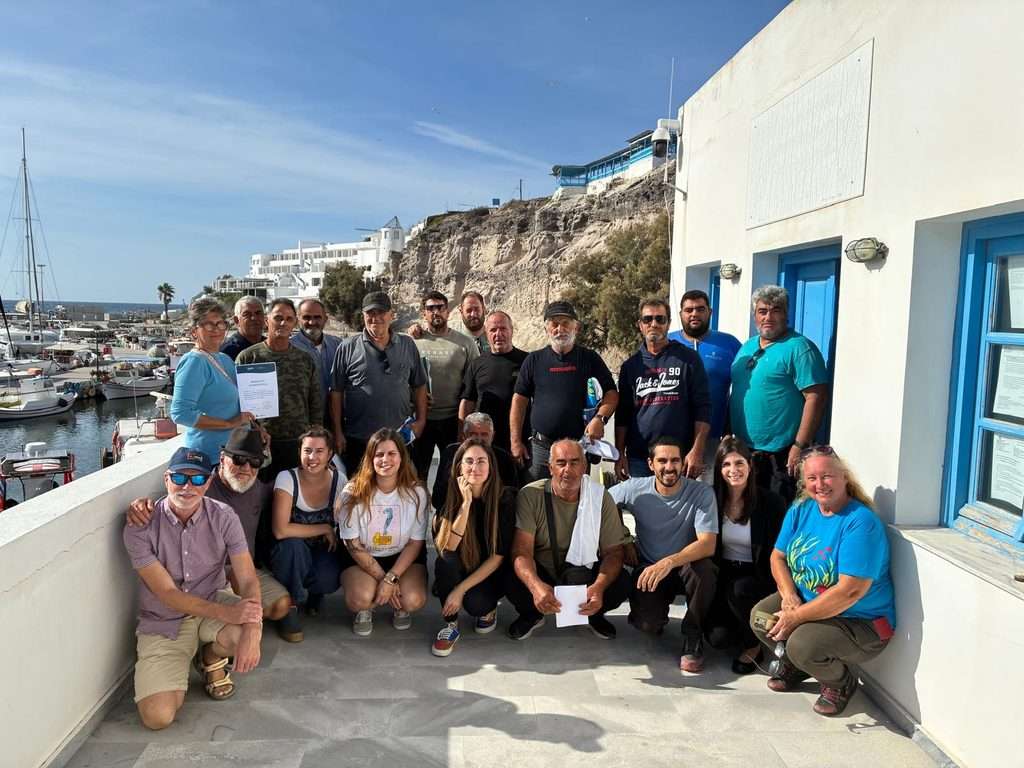
With the interactive session concluded, participants gathered for a group photo before heading to the official opening of the Aegean Hearth Summit at the Mati Art Observatory. The insights gathered during the Vlychada workshop will directly inform the ongoing work of the PHAROS project and the Santorini Blue Loop Living Lab.