Who Are Fisher Guardians?
Who Are Fisher Guardians? https://pharosproject.eu/wp-content/uploads/2026/07/Who-are-Fisher-Guardians-1024x576.jpg 1024 576 PHAROS Project https://pharosproject.eu/wp-content/uploads/2026/07/Who-are-Fisher-Guardians-1024x576.jpgFisher Guardians are fishers and fishing cooperatives who take on an active role protecting the ocean, collecting and recycling abandoned fishing gear instead of leaving it to pollute the sea. The programme, driven by PHAROS partners PLOCAN and Gravity Wave in collaboration with local fishing communities, deliberately reframes the fisheries sector’s image, moving away from being seen as part of the pollution problem and toward becoming a genuine partner in ocean protection. It is one of the clearest examples of how the EU’s Ocean Mission is trying to change behaviour at sea, not just through regulation, but by giving fishers direct incentives and infrastructure to act as ocean stewards.
The Problem Behind the Programme
Abandoned, lost, or discarded fishing gear, known in the industry as ALDFG, is a specific and severe category of marine pollution, distinct from general plastic litter. Nets and lines that get left in the water keep trapping and killing marine animals for years after they’re abandoned, a phenomenon called ghost fishing that continues silently long after any fisher has left the area. This waste stream contributes to a bigger picture that is genuinely alarming, considering some key figures:
- More than 8 million metric tons of plastic enter the ocean every year, much of it originating from land-based sources but a significant share coming directly from fishing activity.
- Over 1 million marine animals, including turtles, birds, fish, and mammals, die annually from ingesting or becoming entangled in plastic waste, much of it fishing-related.
- ALDFG can persist in marine environments for years, continuing to trap wildlife and degrade habitats long after it was first lost or discarded.
- The Gran Canaria pilot’s very first official collection removed 220 kilograms of discarded nets and fishing gear in a single operation, an early but concrete sign of the scale of accumulated waste at just one port.
One Analogy: From Poacher to Ranger
Think of the shift the Fisher Guardians programme is trying to create like turning a poacher into a park ranger. A poacher and a ranger might walk through the exact same forest, but one is extracting resources with no regard for what’s left behind, while the other is actively watching over that same land, removing threats and protecting the animals living in it. Fishers were often unfairly lumped in with the “poacher” category simply because their gear ends up as marine litter when lost, but Fisher Guardians flips that role entirely: the same people who once might have unintentionally left nets behind are now the ones patrolling ports, collecting waste, and training their neighbours to do the same.
How the Programme Actually Works
Fisher Guardians builds on the NETTAGplus project, a three-year Horizon Europe initiative that developed three specific solutions to tackle ALDFG: preventing fishing-related litter in the first place, avoiding gear loss through better equipment, and mitigating harm by mapping and retrieving gear that’s already lost. PHAROS has taken this model and rolled it out through its Living Labs, starting with a pilot in San Cristóbal, Gran Canaria, run jointly by PLOCAN, Gravity Wave, and the local Pescatobal fishing cooperative. The programme runs on a few core mechanisms working together:
- Dedicated recycling containers installed directly at ports, making it easy for fishers to deposit old or damaged nets as part of their normal routine rather than a separate chore
- The Trinamix device, a piece of technology that identifies the exact type of plastic in a net in real time, ensuring materials get sorted correctly before recycling
- Best-practice sharing and reward strategies designed to make sustainable gear management something fishers actively want to participate in, not just comply with
- A circular economy pipeline that turns collected nets into second-life commercial products like furniture and home décor, giving old fishing gear real market value instead of treating it purely as waste
Building Trust at the Port
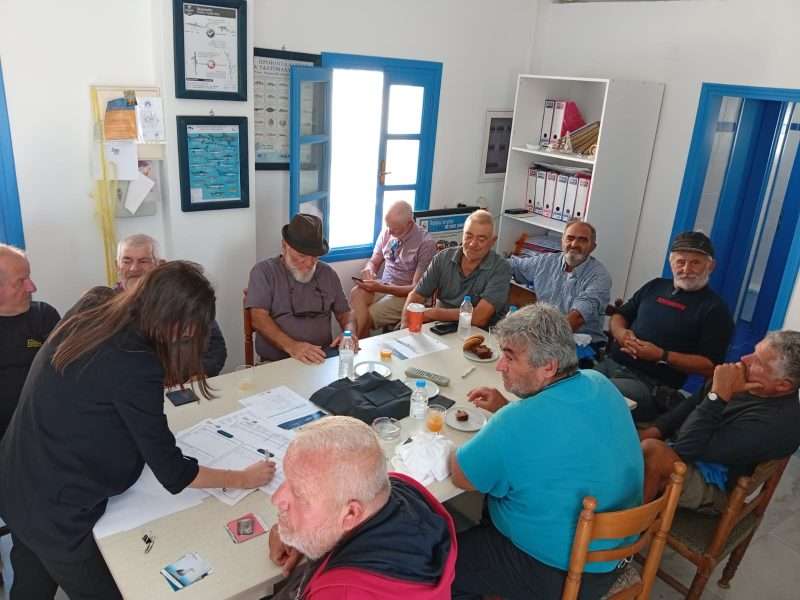
Technology alone doesn’t change an industry’s culture, and PHAROS has been careful to treat trust-building as central to the programme’s success. The first major open event of the Gran Canaria Living Lab was specifically designed to demonstrate the recycling process to local fishers and let them see the Trinamix device identifying plastics in real time, rather than simply announcing a new policy from above. That approach appears to be working: cooperative administrators report that fishers, once they started seeing themselves as guardians of the sea, became genuinely motivated to prevent ghost nets from harming marine animals like turtles. A follow-up workshop held on 29 January 2026 walked participants through the entire end-to-end recycling chain, from net collection through sorting to final product transformation, with direct dialogue between fishers, Gravity Wave representatives, and the Pescatobal cooperative.
Where the Programme Goes From Here
The Gran Canaria pilot is explicitly designed as a proof of concept, not a one-off local project. Logistical studies are currently underway to determine whether full net recycling can eventually be handled locally within the Canary Islands or whether materials will need to be shipped to mainland Spain for processing. Looking further ahead, Gran Canaria’s roadmap for 2027 onward plans to pair the Fisher Guardians infrastructure with the site’s Integrated Multi-Trophic Aquaculture and artificial reef work, linking pollution reduction directly into the same physical location where habitat restoration is happening.