What Is Macroalgae Polyculture?
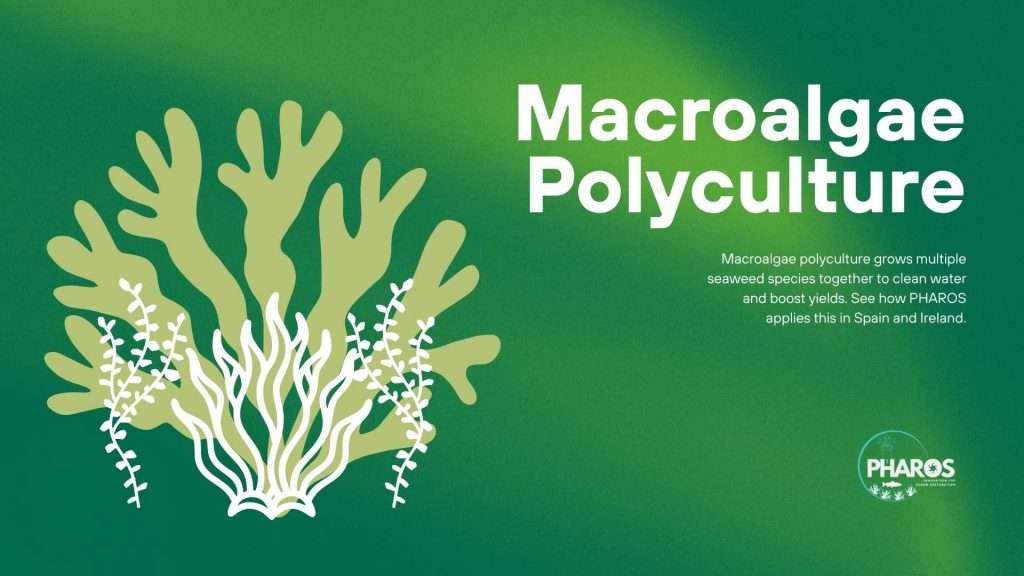
What Is Macroalgae Polyculture? https://pharosproject.eu/wp-content/uploads/2026/07/Macroalgae-Polyculture-1024x576.jpg 1024 576 PHAROS Project https://pharosproject.eu/wp-content/uploads/2026/07/Macroalgae-Polyculture-1024x576.jpgMacroalgae polyculture is the practice of cultivating several different seaweed species together in the same marine farming system, rather than growing just one species alone. This “polyculture” approach, farming multiple species side by side, enhances ecosystem resilience while opening up several revenue streams for coastal communities at once. It stands in direct contrast to monoculture farming, where a single crop occupies the entire growing space and offers only one type of harvest and one type of ecological benefit.
Why Growing More Than One Species Matters
Different seaweed species absorb different nutrients, tolerate different temperatures, and grow at different rates, which means a polyculture system can capture a wider range of dissolved compounds from the water than any single species could manage alone. Peer-reviewed research on macroalgal bioremediation has confirmed this directly, finding that increased species richness in a seaweed system measurably enhances the water’s overall nutrient-cleaning capacity. That finding matters because coastal waters near fish farms or urban runoff often carry an unpredictable mix of nitrogen and phosphorus compounds, and a diverse polyculture is simply better equipped to catch that varied nutrient load than one species working alone.
One Analogy: A Mixed Crop Field, Not a Monoculture
A macroalgae polyculture works much like a farmer planting several different vegetables in the same field instead of a single crop across every row. Each vegetable draws different nutrients from the soil, grows at a different pace, and offers the farmer a different product to sell at harvest, so a poor season for one crop doesn’t wipe out the entire farm’s income. Underwater, seaweed species behave the same way: one species might excel at pulling nitrogen from fish waste, another might grow faster in shallower water, and together they spread both the ecological workload and the commercial risk across several harvests instead of betting everything on one.
The Species Doing the Work
PHAROS demonstrates exactly how this species selection works in practice at its Gran Canaria site, where the polyculture combines Ulva rigida and the red algae species Gracilaria gracilis, chosen specifically for their nutrient reduction capacity and commercial applications. These species are grown across both horizontal and vertical production systems, three 200-metre horizontal strings alongside 20 to 60 vertical ropes positioned at depths ranging from 1 to 12 metres, to maximise how much of the water column actually gets used for cultivation. In Ireland’s Bantry Bay demo, the polyculture takes a different combination entirely, pairing Alaria esculenta, Saccharina latissima, and Laminaria digitata to suit that site’s colder Atlantic conditions. That contrast alone shows why polyculture isn’t a fixed recipe, the species mix has to be tailored to each location’s water temperature, nutrient profile, and target market.
The Environmental Payoff of Macroalgae Polyculture
The ecological case for macroalgae polyculture rests on three measurable benefits working together. Nutrient uptake improves water quality directly, since the combined seaweed species strip nitrogen and phosphorus out of the water before those compounds can trigger harmful algal blooms. Carbon sequestration follows close behind, with research indicating macroalgae can pull roughly 0.97 metric tons of carbon out of the water per hectare every year through ordinary photosynthesis. On top of that, the sheer physical structure of seaweed ropes creates shelter, food, and breeding grounds for fish, crustaceans, and other marine life that would otherwise have nowhere to hide in an open stretch of water.
Turning Ecology Into an Economic Case
What makes macroalgae polyculture commercially interesting is that its ecological function and its market value point in the same direction rather than competing with each other. PHAROS notes that its macroalgae component offers multiple revenue streams simultaneously, including food production, bioremediation services, and carbon sequestration credits. Expected biomass yields at the Gran Canaria site range from 0.5 to 1.2 kilograms of fresh weight per metre of rope, output that gets used directly rather than wasted, since it feeds abalone growing alongside the seaweed lines in the same integrated system. That circular design, seaweed cleaning the water while simultaneously feeding a high-value species selling for €60 to €80 per kilogram, is precisely the kind of dual-purpose economics the sustainable blue economy is built around.
Polyculture as the Backbone of IMTA
Macroalgae polyculture rarely stands alone in a modern restoration design, it typically forms the connective layer inside a broader Integrated Multi-Trophic Aquaculture system. In PHAROS’s Gran Canaria demo, the polyculture strings sit directly downstream from a fish cage specifically to intercept nutrient-rich effluent before it disperses into open water, while sea cucumbers beneath the fish cage handle the particulate waste the seaweed can’t absorb. This layered design means the polyculture is doing double duty, cleaning water for the whole system while also producing three separate harvestable outputs, seaweed biomass, abalone, and sea cucumbers, from what started as a single fish farm’s waste stream. It’s a clear illustration of why polyculture has become a cornerstone technique across PHAROS’s demonstrations, offering a way to multiply both the ecological and commercial return from every metre of ocean space used.