Fisher Guardians Programme

The Fisher Guardians Programme, part of PHAROS, partners with professional fishers to tackle marine litter through peer workshops on litter management, acoustic tagging to locate lost gear, and port infrastructure that collects end-of-life gear for recycling. It helps keep end-of-life gear out of the sea, improves litter management and helps prevent abandoned, lost or discarded fishing gear (ALDFG).

The Fisher Guardians Programme builds directly on the NETTAGplus project (Grant Agreement ID: 101112812), which developed the three-solution portfolio for preventing, avoiding and mitigating ALDFG. PHAROS extends and rolls out this work across the Atlantic and Arctic basins, adding new demonstration sites, replication regions and integration with other Mission Ocean initiatives.

Why Fisher Guardians Programme?

Imagine setting your fishing gear at dawn, only to return hours later and find it gone: dragged away by currents, snagged on an unseen reef, or accidentally cut by a passing vessel. Beyond the immediate financial loss of thousands of euros, that lost net or trap can continue fishing indefinitely, entangling marine life in what is called “ghost fishing”. This is the story of a system that offers few solutions.

Fishers as partners

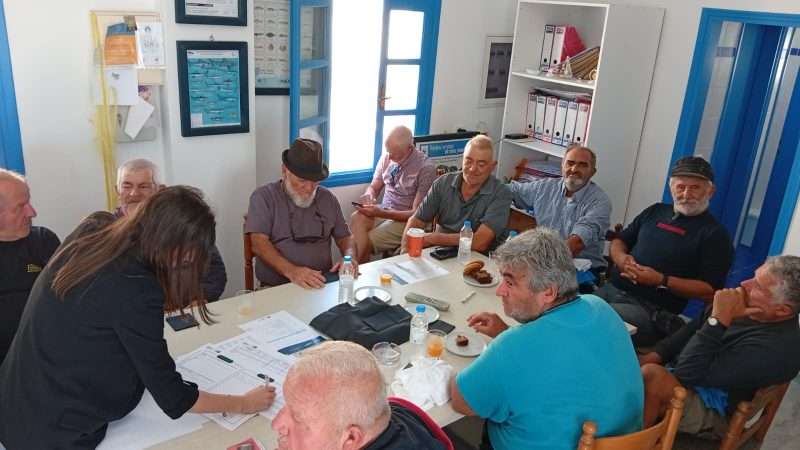
Through the Fisher Guardians Programme, we are partnering with professional fishers to emphasise their role as key actors in tackling marine litter. The programme combines three powerful approaches: participatory workshops where fishers share knowledge and co-create solutions with their peers regarding litter management; acoustic tagging technology to locate fishing gear if lost; and dedicated port infrastructure that collects end-of-life fishing gear for recycling rather than allowing it to drift back into the sea.

Gear-tracking technology

By 2028, the programme aims to train approximately 80 fishers across different demonstration and replication sites, establish operational collection systems in fishing ports, and test gear-tracking technology that could avoid the loss of fishing gear and help prevent abandoned, lost or discarded fishing gear (ALDFG).

Fisher Guardians Programme

The Fisher Guardians Programme is a core component of PHAROS Objective 4, which seeks to fundamentally change perceptions of roles by implementing fisher and citizen guardians and cleaners of the sea programmes.

It recognises a simple truth: fishers can be essential partners in the solution. Every day, professional fishers witness the impacts of marine litter first-hand. Their gear becomes tangled in ALDFG, and the litter passively collected by their gear represents significant economic burdens. Yet, paradoxically, the fishing industry has also been a source of ALDFG (abandoned, lost or otherwise discarded fishing gear). When nets, lines, traps and pots made from synthetic plastic polymers are lost at sea, they can persist in the marine environment for decades, continuing to trap fish and other organisms, damaging sensitive habitats such as corals and seagrass meadows, and eventually breaking down into microplastics that can enter the food chain.

The Fisher Guardians Programme is built on three complementary pillars:

Awareness Workshops

The Awareness Workshops pillar consists of participatory workshops from fishers to fishers, where fishers discuss marine litter, bycatch and sustainable practices. It promotes the adoption of best practices regarding litter management and sustainable fisheries practices.

Gear-Tagging Technology

The Gear Tagging Technology uses acoustic transponders attached to fishing gear to enable rapid location and retrieval, which helps prevent gear from becoming ALDFG in the first place.

Port Collection & Recycling

It provides dedicated containers and logistics chains for end-of-life nets and recovered ALDFG, creating a circular economy pathway for fishing gear waste.

Strategy Behind the Implementation

The strategy of the Fisher Guardians Programme is rooted in one core principle: lasting change must come from within the fishing community itself.

Too many environmental initiatives fail because they impose solutions from the outside: experts telling fishers what to do without understanding their daily realities, economic pressures or practical constraints. PHAROS takes the opposite approach.

From Fishers to Fishers

Every workshop, every discussion and every recommendation is facilitated by respected members of the local fishing community, following the “From fisher to fisher” approach from the NETTAGplus project. A peer who hauls nets alongside them, who understands why a particular decision was made at 3 am in rough seas, and who speaks the same language, literally and figuratively.

This peer-led model builds trust that no external consultant could ever achieve. It creates a safe space where fishers can openly share challenges, admit when practices could improve, and brainstorm practical solutions without fear of judgement.

Shifting the Narrative

The programme aims to help change societal perceptions. For decades, the fishing industry has been framed as a polluter, and the Fisher Guardians Programme offers a different narrative: fishers as the first line of defence for ocean health.

Who else spends more time on the water? Who else has more intimate knowledge of changing marine conditions? Who else has more incentive to keep the ocean clean and productive?

By elevating fishers as guardians and cleaners of the sea, PHAROS replicates the NETTAGplus approach and increases the positive feedback loop, engaging professional fishers from other sea basins and from distinct fisheries realities.

Mission Ocean and Waters

The EU Mission “Restore Our Ocean and Waters by 2030” has set ambitious targets: reducing plastic litter at sea by at least 50%, cutting microplastics released into the environment by 30%, and lowering nutrient losses by 50%. These targets cannot be met without the active participation of the maritime industries, especially the fishing industry.

Fishers are not a small stakeholder group to be consulted at the end of the process. They are central to the solution. The Fisher Guardians Programme places them exactly where they belong: at the heart of Mission Ocean implementation.

How PHAROS Plans to Implement the Fisher Guardians Programme?

CIIMAR, the programme lead, works with local PHAROS partners to identify fisher associations and representatives in each demonstration site (Gran Canaria, Spain; Ireland; and Iceland) and replication sites. Communication materials are developed explaining the programme’s objectives and benefits. Baseline information on local fishing fleets (vessel types, gear used, crew sizes and operational areas) is collected through meetings and surveys.

Trusted local fishers or association representatives are briefed on the workshop methodology. CIIMAR introduces the Fisher Guardians Programme, explains the “from fishers to fishers” approach, and trains facilitators on event preparation, logistics and workshop delivery.

Facilitators, supported by local partners and CIIMAR, organise and deliver a series of three participatory workshops:

Workshop 1: Marine Litter

Focus: litter produced on board versus litter caught at sea
Key activities: classifying litter types, tracing destinations and suggesting better management.

Workshop 2: Bycatch and Fisheries Footprint

Focus: incidental capture, energy efficiency and plastic reduction
Key activities: identifying common bycatch species, discussing mitigation measures and exploring fuel-saving practices.

Workshop 3: PHAROS Solutions

Focus: feedback on the full Fisher Guardians Programme
Key activities: evaluating the relevance of each pillar, suggesting improvements and planning peer outreach.

Each workshop combines a short theoretical introduction with hands-on group exercises, followed by plenary discussion. Materials are provided in local languages, and facilitators adapt examples to local contexts while maintaining a consistent structure.

Based on insights from the workshops, the fishing community in Gran Canaria’s Living Lab (the PESCATOBAL co-operative in the Port of San Cristóbal) plans to trial a tagging system, or similar technology, that enables fishing gear to be tracked if lost.

Each tag (with a specific ID for each fisher) is attached to gear such as fish traps and gillnets. When the gear is lost, a surface locator unit (SLU), connected to a smartphone or tablet of the fisher that owns the tag, transmits acoustic interrogation signals. When the tag responds, the system, by triangulation, calculates the range and guides the fisher to the exact location using GPS coordinates.

If the fishers receive the technology well, it could be extended to other fishing communities, including the Cofradía de Pescadores de Arguineguín in southern Gran Canaria.

Gravity Wave installs dedicated collection containers for end-of-life nylon fishing nets in the Port of San Cristóbal. The containers are strategically located for easy access by the fishing community.

A full logistics chain is activated: fishers deposit damaged or discarded nets → an authorised waste manager collects the material → nets are transported to a recycling facility (either on the island or mainland) → material is transformed into new recycled products.

The first successful collection took place in January 2026, and a periodic collection system is now established.

Results from all demonstration sites are compiled, translated and synthesised into formal reports. Key findings are shared back with participating fishers.

The Tools and Frameworks Used

The Fisher Guardians Programme deploys a carefully designed toolkit that any port community could adapt and adopt.

  • Exercise sheets: Structured worksheets guiding groups through litter classification, destination mapping and solution brainstorming.
  • Printed cards: Images of common litter items and bycatch species to spark discussion.
  • PowerPoint presentations: Short theoretical introductions with local examples and data.
  • Facilitator guidelines: Step-by-step instructions for room setup, group management and plenary synthesis.
  • Feedback forms: Anonymous participant evaluations to continuously improve workshop delivery.
  • Attendance and consent forms: Legal documentation ensuring voluntary, informed and ethical participation.
  • Acoustic tag: Compact, battery-powered transponder attached directly to fishing gear. Remains in low-power listening mode; transmits a response only when interrogated with its unique code.
  • Surface locator unit (SLU): Deployed from the vessel, wirelessly connected to a smartphone or tablet. Interrogates tags within a range exceeding 3 kilometres.
  • Mobile application: Guides users through the location process, displays recovered gear positions on digital maps using GPS coordinates, and manages multiple tags simultaneously.
  • Dedicated containers: Strategically located bins for nylon fishing nets, installed in coordination with PLOCAN and the local fishing co-operative.
  • Authorised waste manager: Martínez Cano coordinates collection, transport and recycling logistics.
  • Trinamix device: Handheld polymer identification tool used in live demonstrations to show fishers exactly what happens to their nets.
  • Recycling pathway: Fisher → container → waste manager → recycling plant → new material.

The plan and the timeline

The Fisher Guardians Program runs from May 2025 (Month 9) to August 2028 (Month 48).

Key Activity

CIIMAR begins preparation and identifies local fisher associations.

Key Activity

Local facilitators are briefed on the workshop methodology.

Key Activity

Gravity Wave installs dedicated bins at the Port of San Cristóbal.

Key Activity

Successful retrieval and transport of end-of-life nets.

Key Activity

Deliverable D2.8, covering Fisher Guardian plans, guidelines and tools.

Key Activity

Gear tagging technology system tested with the PESCATOBAL co-operative.

Key Milestone

Milestone MS11: First Fisher Guardian Programme activated, with the programme officially operational.

Key Activities

Lessons from demonstration sites applied to replication sites: Danube Delta, Santorini, Lanzarote, the Azores and Cape Verde..

Key Activities

Deliverable D2.9, the final effectiveness and impact report.

Work Packages (WP) and Deliverables related to Fisher Guardians Programme

The Fisher Guardians Programme is primarily delivered through Work Package 2 (WP2): Stakeholder Engagement, MPA, Education, Fisher Guardian and Citizen Litter Entrepreneur Programmes.

It is supported by WP5 (Replication and Exploitation) and WP7 (Dissemination and Communication).

D2.8 Fisher Guardian and Citizen Litter Entrepreneur plans, guidelines and tools, the complete “how-to” manual for implementation – February 2026 (Month 18): 

D2.9 Final Fisher Guardian and Citizen Litter Entrepreneur effectiveness and impact report, providing a quantitative and qualitative evaluation of the programme – May 2028 (Month 45)

Connections with other parts of PHAROS

The Fisher Guardians Programme does not operate in isolation. It is deeply connected to other PHAROS components, creating a coherent ecosystem of ocean restoration initiatives.

Living Labs

The programme is implemented through PHAROS Living Labs, real-world innovation ecosystems where citizens, academia, the private sector and public authorities co-create solutions. The Gran Canaria Living Lab, anchored by the PESCATOBAL fishing co-operative, is the primary testing ground for gear tagging technology and collection infrastructure. 

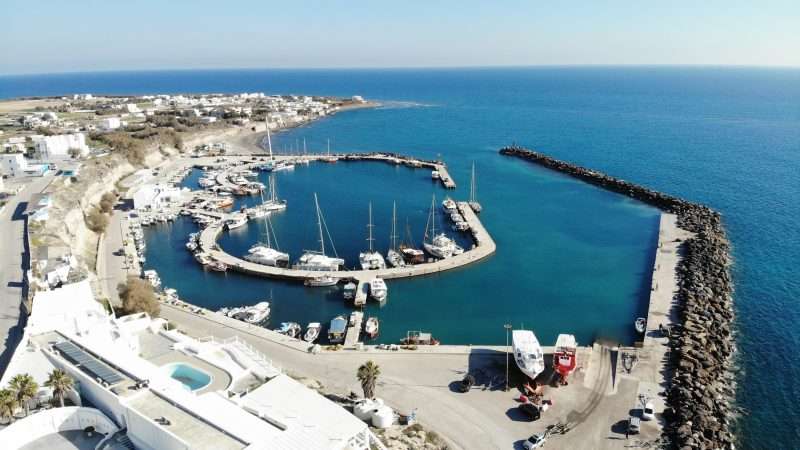
Fisher Guardians Programme workshops will be delivered through the demonstration site Living Labs (Gran Canaria, Ireland and Iceland) and in the five replication Living Labs: the Danube Delta, Santorini, Lanzarote, the Azores and Cape Verde.

Citizen Litter Entrepreneur Programme

While the Fisher Guardians Programme focuses on professional fishers, the Citizen Litter Entrepreneur Programme engages the broader public. Both programmes share a similar methodology: Inspiration, Ideation, Capacity Building and Pitching. They also share a common pipeline: innovative solutions developed through the Citizen Litter Entrepreneur Hackathon may directly benefit fishing communities, and vice versa.

Consortium Partners involved

The Fisher Guardians Programme is a collaborative effort led by CIIMAR (Interdisciplinary Centre of Marine and Environmental Research of the University of Porto), with essential contributions from PLOCAN, Gravity Wave and ICoRSA, supported by the wider PHAROS consortium.

CIIMAR (Centro Interdisciplinar de Investigação Marinha e Ambiental)

Key Partner for the Fisher Guardian Programme
Engages with the Living Labs to connect with fisher communities, co‑develop best practices, and test new technologies for reducing marine litter.

Expert in marine litter, fishing gear impacts, and the Fisher Guardian programme.

  • Overall coordination and lead of awareness activities. 
  • Develops workshop materials, trains local facilitators, ensures methodological consistency across all demonstration sites, analyses data and prepares final reports.
  • Brings expertise from the NETTAGplus project.

General expertise: interdisciplinary marine and environmental research; marine pollution, especially abandoned, lost or discarded fishing gear (ALDFG); citizen engagement and co-creation.

PLOCAN (Consorcio para el Diseño, Construcción, Equipamiento y Explotación de la Plataforma Oceánica de Canarias)

Project Coordinator
Provides the overarching project management and ensures the Living Labs are integrated with other project activities, particularly the demonstrations (WP3) and replication (WP5).

Leads the gear tagging technology trials. Manages the Gran Canaria Living Lab, coordinates with the PESCATOBAL fishing co-operative, oversees technology testing and provides technical support. Also supports awareness activities and collection infrastructure.

General expertise: offshore marine infrastructure and test-site operation; multi-purpose use of space demonstrations; technology validation (acoustic tagging, sensors, DTOs); Living Lab coordination and Responsible Research and Innovation (RRI).

Operator of a world‑class ocean test site. Expertise in project coordination, marine infrastructure, and linking science with industry.


CSIC (Agencia Estatal Consejo Superior de Investigaciones Científicas)

 WP2 Leader & Methodological Lead

Provides the overall framework, tools (including the MINKA platform), and methodology for the Living Labs. Leads the co‑creation and citizen science integration.

Expert in citizen science, stakeholder engagement, and education (Blue Schools). Manages the MINKA citizen observatory platform.

ICoRSA (International Consortium of Research Staff Associations)

WP2 Core Support Partner

  • Supports stakeholder engagement and dissemination. 
  • Helps identify fisher representatives and ensures communication activities reach the wider research and innovation community.

General expertise: international network of research staff associations; stakeholder mobilisation and engagement; science communication and dissemination; capacity building for researchers and innovators.


CMC (Asociación Cluster Marítimo de Canarias)

Coordinator of the Gran Canaria Demonstration Living Lab
Manages the most advanced Living Lab, acting as the local hub for stakeholder engagement and activity implementation. Also leads the replication labs for Lanzarote, Azores, and Cape Verde.

Represents the blue economy industry sector. Has strong local networks in the Canary Islands and expertise in cluster management and maritime business.

IHA (Impact Hub Labs)

Coordinator of the Santorini Replication Living Lab
Leads the Living Lab focused on marine litter and the circular economy in Santorini, connecting local stakeholders and the Citizen Litter Entrepreneurs programme.

Expert in social innovation, entrepreneurship, and the Citizen Litter Entrepreneurs programme. Specialises in running hackathons and supporting start‑ups and citizen‑led initiatives.

MTU (Munster Technological University)

Coordinator of the Ireland Demonstration Living Lab
Leads the development of the Irish Living Lab, connecting academic research with local communities and the aquaculture industry.

Expertise in marine and freshwater research, stakeholder engagement, and education.

BMRS (Bantry Marine Research Station Limited)

Key Partner in the Ireland Living Lab
Provides local knowledge, facilitates connections with the salmon farming industry and the local community in Bantry Bay.

Specialises in applied marine research, macroalgae cultivation, and linking science with the local community and industry.

Coordinator of the Iceland Demonstration Living Lab
Leads the scientific and technical aspects of the Icelandic Living Lab, focusing on eDNA and invasive species monitoring, and engages local stakeholders around this theme.

Leading expertise in environmental DNA (eDNA), marine monitoring technologies, and invasive species management.

IZNASU (I.I. Schmalhausen Institute of Zoology)

Co-Coordinator of the Danube Delta Replication Living Lab
Leads the local implementation in the Ukrainian sector of the Danube Delta, focusing on biodiversity and invasive species monitoring using citizen science.

Expertise in zoology, biodiversity, and ecosystem research in the Danube Delta region.

LPNU (Lviv Polytechnic National University)

Co-Coordinator of the Danube Delta Replication Living Lab
Supports the local implementation and stakeholder engagement in the Danube Delta, with a focus on linking education and citizen science.

Expertise in environmental engineering, sustainable development, and engaging local communities and schools.

Gravity Wave (Spain)

  • Leads end-of-life fishing gear management. 
  • Installs collection containers, coordinates with authorised waste managers, activates the full logistics and recycling chain, and delivers awareness sessions on circular economy practices.

General expertise: circular economy for marine plastics; end-to-end recycling of fishing nets and ocean waste; waste logistics and traceability (Trinamix polymer identification); sustainable product design from recycled materials.

PESCATOBAL (Spain)

The fisher co-operative at the heart of the Gran Canaria Living Lab, composed of over 40 fishers and 16 boats using traditional methods (fish traps and gillnets).

Participates in workshops, trials gear tagging technology and uses port collection infrastructure.

General expertise: artisanal and traditional fisheries (fish traps, gillnets); local ecological knowledge of coastal waters; co-operative management and community-based organisation; direct experience with ALDFG prevention and retrieval.

Local partners (Ireland, Iceland and replication sites)

Identify local fisher associations, facilitate communication, support logistics and help adapt materials to local languages and contexts.

General expertise: regional stakeholder networks; knowledge of local fishing fleets and port infrastructures; language and cultural adaptation; community liaison and grassroots engagement.

Privacy Preferences

When you visit our website, it may store information through your browser from specific services, usually in the form of cookies. Our Privacy Policy can be read here.

Here you can change your Privacy preferences. It is worth noting that blocking some types of cookies may impact your experience on our website and the services we are able to offer.

Click to enable/disable Google Analytics tracking code.
Click to enable/disable Google Fonts.
Click to enable/disable Google Maps.
Click to enable/disable video embeds.
Our website uses cookies, mainly from 3rd party services. Define your Privacy Preferences and/or agree to our use of cookies.