Fisher Guardians: Safeguarding Europe’s Last Native Oyster Beds in Tralee Bay
Fisher Guardians: Safeguarding Europe’s Last Native Oyster Beds in Tralee Bay https://pharosproject.eu/wp-content/uploads/2026/10/Fenit-Lighthouse-1024x1024-3370552281-Medium.jpeg 640 640 PHAROS Project https://pharosproject.eu/wp-content/uploads/2026/10/Fenit-Lighthouse-1024x1024-3370552281-Medium.jpegA field report from the shores of Kilfenora, Co. Kerry
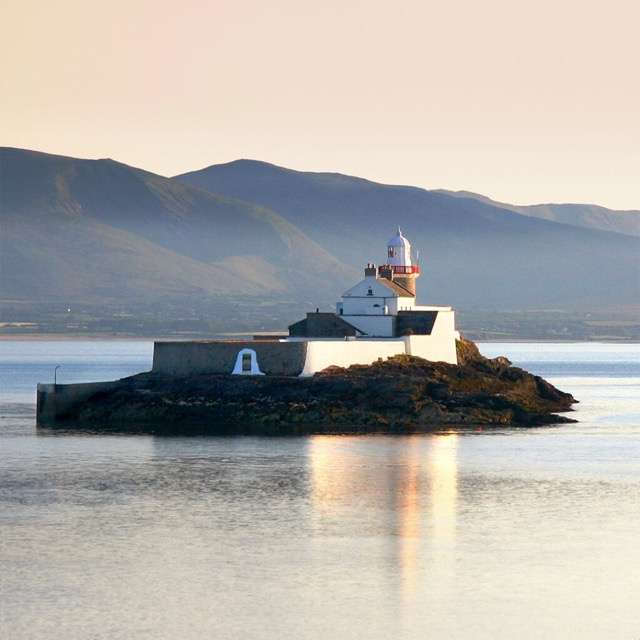
FENIT, CO. KERRY. Kilfenora is a shore near Fenit in Tralee Bay, Co. Kerry. Beneath the shallow, sandy waters of Tralee Bay lies one of the very last major self-seeding native European flat oyster (Ostrea edulis) beds left on the continent. For generations, local fishing families have worked these waters. Today, they find themselves on the front lines of marine conservation, combining centuries of traditional knowledge with current scientific research to protect an ecosystem under threat from climate change, habitat loss, and invasive species.
During the Irish Living Lab event in Fenit, local fishers, researchers, and community leaders shared their stories of survival, strict community self-regulation, and the ongoing fight to preserve their coastal heritage.
On Wednesday, 27 May 2026, from 14:00 to 16:00, participants gathered in Kilfenora near Fenit for a field workshop titled Fisher Guardians Workshop: Meet Local Fishers – Tralee Native Oyster Beds – Ocean Preservation. The event highlighted how grassroots community stewardship and practical fishing expertise combine to protect marine habitats.
Empowering Fishers and Driving Circular Solutions
The Fisher Guardians programme empowers fishers to actively participate in ocean protection, while the BIM Clean Oceans Initiative focuses on transforming end-of-life fishing gear into valuable secondary materials. Supported by MTU’s Clean Technology Centre, it showcases Irish companies and initiatives leading the way in circular economy solutions for the fishing industry.
Tralee Bay is home to one of the last major remaining wild native European flat oyster (Ostrea edulis) beds in Europe. Protecting this self-seeding, sensitive ecosystem requires a balance between traditional harvesting and strict, community-led management. Recent coastal conservation initiatives, such as the €7.9 million Tralee Bay Marine Biodiversity Restoration Project, further highlight the national effort to support native oyster beds and surrounding eelgrass meadows alongside local fishing communities.
- Local fishery experience and traditional rules
- Oyster spat collection and selective grading
- Seasonal fishing quotas and no-take conservation zones
- Long-term marine ecosystem and biodiversity protection
FISHER GUARDIANS WORKSHOP
- Date & Time: Wednesday, 27 May 2026, 14:00 – 16:00
- Location: Kilfenora Pier & Shoreline, Fenit, Tralee Bay, Co. Kerry
- Framework: PHAROS Project & Fisher Guardians Programme
- Key Focus: Native European Flat Oyster Restoration & Ecosystem Care
During the session, local fishers, cooperative directors, and researchers gathered along the shore overlooking the Slieve Mish Mountains and Sammy’s Rock to share the history, ecology, and ongoing management of the bay.
TRALEE BAY OYSTER BED PROFILE
- Species: European Flat Oyster (Ostrea edulis)
- Key Feature: Naturally Bonamia-free & self-seeding bed
- Harvest: Traditional wooden dredges with strict ring sizing (72 mm)
- Management: Run by local Oyster Society cooperative & 5 directors
- Season: Limited weeks around Christmas and Easter markets
Community Custodianship and Marine Biodiversity
“Behind you is one of the last remaining native oyster beds in Europe… Geographically, these mountains, the shallow sandy bay, the Gulf Stream, and El Niño create a nursery not just for oysters, but for rays, elasmobranchs, and seagrass. When I look at this bay, I don’t just see oysters. I see sea grass (Zostera), the birds that make this bay special, and the elasmobranchs. Everything interacts. We don’t separate plants by a grid under the water; everything matters.”
Mary Brown, Local Fisher & Community Liaison Officer
“In the 1970s, this oyster bed was nearly wiped out. In 1922, during the civil war era, huge quantities of oysters were hauled out. By the late 70s, the bed was nearly gone, so the co-op was set up. This bed was rejuvenated from 1980 until now. Nature can restore, but it takes decades. We have rules: a 72 mm grading ring. If an oyster falls through, it goes right back for next year’s spawning. If you have more than 20 small oysters on your board, your licence can be taken for the year.”
Dennis O’Shea & Local Fishermen
Water Temperatures, Spatfall, and Climate Impacts
A major discussion point during the workshop centred on spawning conditions and the delicate water temperature thresholds required for successful settlement.
- Surface water temp reaches about 17°C in early July
- Adult oysters release larvae into water
- Larvae settle on shell substrate and lime collectors
- Shaken off and re-spread onto beds to mature (4-5 years)
“Water temperature in the first two weeks of July is critical. A surface temperature of 17°C seems to be the threshold. If it drops below that, you don’t get settlement. Having a cool spring is actually good for conditioning, but you need that temperature shock for larval release. In 2023, we had surface temperatures of 22°C to 23°C and had a super settlement, up to 34,000 spat per collector frame. But with fluctuating weather, we have only had one good settlement in the last four years.”
– Local Oyster Society Researcher & Director
Managing Threats: The Spider Crab Challenge
While Tralee Bay remains free of the devastating oyster parasite Bonamia ostreae due to strict bans on bringing outside oysters into the bay, local fishers face rising pressures from natural predators.
This bay is Bonamia-free because there is no movement of oysters into the bay. All movement is outward. However, spider crabs have become a massive problem. They are multiplying fast, and they can eat right through the oyster shell. In tank tests, spider crabs cleared test oysters within a week. Tralee Bay fishers are currently working with academic partners to research solutions and manage this influx.
Protecting Dunes and Coastal Barriers
Following the oyster bed showcase, participants examined nearby coastal dune systems and natural barrier structures like tombolos that protect inner bays from Atlantic storm surges.
NATURE-BASED DUNE PROTECTION METHODS
- Sand-Trapping Fencing: Chestnut palisade fences to catch windblown sand
- Palisade Baffles: 3-foot wooden posts breaking wave energy
- Boardwalk Access: Elevated walkways preventing trampling of grass
- Dune Grass Binding: Marram grass roots holding accumulated sand
“At its narrowest point, this barrier is extremely narrow. High spring tides combined with low atmospheric pressure raise the sea level dramatically. For every 30 millibars of pressure drop, the tide rises 30 centimetres before waves even hit. To protect the dunes naturally, we use sand-trapping chestnut fencing and elevated boardwalks. Over four years, catching windblown sand allows embryonic dunes to build back up step by step.”
– Local Coastal Conservationist
A Model for Sustainable Marine Management
The Fisher Guardians session demonstrated that long-term ocean protection relies on combining scientific research with local experience. By establishing voluntary no-take conservation zones, applying strict catch sizes, and restoring native habitats, the fishers of Tralee Bay are building a sustainable model that preserves coastal livelihoods while safeguarding marine biodiversity.