PHAROS Irish Living Lab Day 1: Ireland Charts Course for 30×30: Marine Protected Areas Take Centre Stage at MTU, Kerry
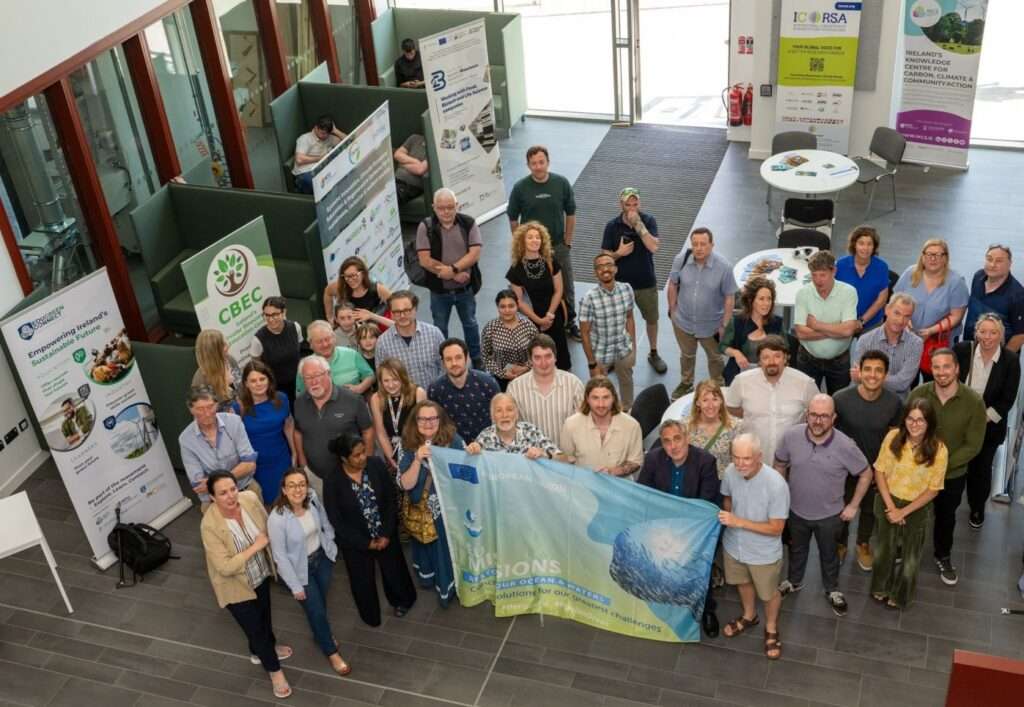
PHAROS Irish Living Lab Day 1: Ireland Charts Course for 30×30: Marine Protected Areas Take Centre Stage at MTU, Kerry https://pharosproject.eu/wp-content/uploads/2026/05/WhatsApp-Image-2026-05-30-at-15.10.31-1024x707.jpeg 1024 707 PHAROS Project https://pharosproject.eu/wp-content/uploads/2026/05/WhatsApp-Image-2026-05-30-at-15.10.31-1024x707.jpegMore than 60 people in person and online gathered at the Irish Living Lab Event: Effective MPA Management happening at the MTU in Tralee, Ireland.
TRALEE, Co. Kerry, May 26, 2026 – On a rare sun-drenched morning on Ireland’s southwest coast, a gathering of marine scientists, policymakers, and coastal stakeholders gathered at Munster Technological University’s (MTU) new STEM building to tackle one of the most pressing questions facing the island nation: how to protect 30 percent of its vast maritime area by 2030 without alienating the communities that depend on it.
The occasion was the first session of the PHAROS Irish Living Lab Event, a three-day assembly focused on marine protected area (MPA) management, circular economy innovation, and citizen engagement. But beneath the polished presentations and European project logos lay a more urgent conversation, one about trust, data, and whether Ireland can learn from the paper parks of the past.
Opening the Door to the Blue Economy
Eve Savage of MTU Kerry welcomed attendees to the university’s new STEM building, which opened in September 2025. Savage, who works within the PHAROS Consortium partner MTU, painted a picture of an institution deeply embedded in Ireland’s marine research landscape.
“We’re incredibly grateful that you’re all here to join the first session of our PHAROS Irish Living Lab Event,” Savage said. “Today’s session is all around marine protected area management.”
She outlined the scope of MTU’s marine ambitions: €25 million in competitive EU funding, 67 partner organisations across 12 countries, and a portfolio of live projects including FISHIN (Interreg Atlantic Area), BioChains (algal biomass value chains), Smart Coast (tourism and traffic management), MerinoNet (marine biotechnology innovation), and FanBest (technology transfer for blue economy startups).
“Sixty percent of Ireland’s population live within ten kilometres of the sea,” Savage noted. “Our waters are ten times the size of our land area.”
She pointed to a line from a famous Irish song, “From Bantry Bay up to Derry Quay, and from Galway to Dublintown”, to emphasise that nearly all four corners of Ireland were represented in the room.
PHAROS: Nature-Based Solutions Across Three Demo Sites
Pablo Reche Garcia, Project Manager of the PHAROS project and representing PLOCAN in the Canary Islands, delivered the keynote overview. PHAROS, a five-year, EU Horizon-funded project involving 24 partners across 12 countries, aims to demonstrate nature-based solutions at three demonstration sites while fostering the blue economy and reducing marine pollution.
The Gran Canaria Demo integrates multi-trophic aquaculture with artificial reefs and macroalgae forests. Reche Garcia explained the science: finfish farms produce a plume of nutrient-rich byproducts. By placing macroalgae downstream and invertebrates such as sea cucumbers and abalone on the seabed, the system uptakes those nutrients before they can cause eutrophication or oxygen depletion.
“We place these macroalgae downstream of the main current of the fish cage,” Reche Garcia said. “The algae can grow and thrive on the nutrients coming from the fish cage.”
Artificial reefs serve dual purposes: structural mooring blocks replacing traditional concrete, and new habitats for native biodiversity. Deployment begins in May 2027.
The Bantry Bay Demo, led by Bantry Marine Research Station, operates in an Irish context. A commercial salmon farm sits upstream; downstream, macroalgae lines grow Alaria esculenta and Saccharina latissima (two native species) to absorb nutrient outflow. The first trial proved highly productive, above average for all years. A control site in Roaringwater Bay allows comparison.
The Iceland Demo addresses an invasive species crisis. Pink salmon have been appearing in European rivers, threatening native Atlantic salmon. Partners at the Technical University of Denmark (DTU) have deployed an automated eDNA sampler that runs PCR analysis on-site, transmitting data to local servers. The first trial detected pink salmon weeks before the first angling catches. The second trial, underway now, focuses on fingerlings hatching in spring.
Reche Garcia also highlighted PHAROS’s stakeholder engagement through Living Labs, co-creation spaces for citizens, academia, industry, and policymakers, and programmes including citizen science (Minka platform), Blue Schools (ocean literacy), Fisher Guardians, and Citizen Litter Entrepreneurs. A recent hackathon funded four initiatives tackling marine litter while boosting local blue economies.
“This is the second mega-event of the PHAROS programme,” Reche Garcia said. “The first was in Gran Canaria in January. We’re learning from each other.”
The National Picture: 30 by 2030
Tim O’Higgins, a marine biologist turned policy advisor with the Department of Climate, Energy and Environment, delivered the first expert session on effective MPA management.
O’Higgins laid out the policy drivers with clinical precision. The Programme for Government commits to 30 percent protection of Ireland’s maritime area, approximately 500,000 square kilometres, by 2030. The Marine Strategy Framework Directive requires spatial protection measures. The EU Green Deal demands 30 by 30. And the UN Convention on Biological Diversity binds Ireland to the same target.
Currently, Ireland has about 10 percent of its maritime area designated as MPAs under the Birds and Habitats Directives. That leaves another 100,000 square kilometres to designate in under four years.
“It’s a big ask,” O’Higgins said.
He acknowledged the polarisation that often accompanies MPA conversations, “biodiversity versus fishing”, and argued for recognising three sets of values: pure nature values (species protection), practical uses (resource extraction, renewable energy), and popular values (swimming, scenic views).
A map of vessel density around Ireland told a vivid story. In reds and oranges, the footprint of fishing. In dark blue, major ferry ports and their tracks. In lighter blue, coastal maritime transport. In yellow hugging the coast, recreation and tourism.
But O’Higgins also introduced nuance: inshore waters see about 10 million use-days per year from fishing and recreation combined. Further offshore, activity drops sharply. The deep sea sees very little human presence at all.
What will Ireland protect? The forthcoming legislation will cover threatened and endangered species (angel sharks, blue whales, Greenland sharks) and habitats (seagrass meadows, cold-water corals, kelp forests, nursery grounds). It will also provide for ecosystem services: provisioning (fishing), regulating (carbon burial, coastal protection), and cultural (intangible benefits from nature).
How will Ireland protect it? Through the MPA LIFE Ireland project: €25 million running from July 2024 to 2033. Partners include UCD, UCC, and University of Galway. The project funds 198 person-years, €3 million for ship time, €2 million for public outreach and documentaries, 180 stakeholder workshops across the country, and three major public events.
“We have regional officers planned: up to four dedicated to public outreach at the local scale,” O’Higgins said. “We know what we want to do, we have the money, we have the plan.”
But he also flagged a critical governance challenge: responsibility is split across the Department of Housing (SACs and SPAs), the Department of Climate, Energy and Environment (marine spatial planning and new national MPAs), MARA (management), and the Department of Agriculture, Food and the Marine (enforcement, particularly beyond 12 nautical miles where the Common Fisheries Policy applies).
“Beyond 12 miles, if the minister wants to regulate fishing in an MPA, he can draw the line on the map,” O’Higgins explained. “But that doesn’t do anything. He has to resort to Common Fisheries Policy mechanisms. All MPAs outside 12 miles would have to go through EU processes.”
Science-Based Tools: From Ecology to Governance
George Hoppit, a postdoctoral research fellow at University College Dublin working under Professor Tasman Crowe, presented on science-based tools for MPA management, drawn from the Horizon project Blue for All.
Hoppit described two tools tested in Irish contexts.
PlanWise4Blue, originally developed for the Baltic Sea, is a decision-support tool that layers pressure data on top of conservation features. Using an algorithm, it identifies areas where conservation objectives can be met with minimal disruption. Hoppit demonstrated with a case study on reef habitats, which are underrepresented in Ireland’s current MPA network.
Using reef habitat data from the National Parks and Wildlife Service and pressure data from the Irish government and EMODnet, Hoppit’s team found that offshore renewable energy, vessel traffic, and bottom-contact fishing were the three main pressures. But crucially, reef habitats showed limited overlap with these pressures.
“In theory, it’s actually a very easy win for conservation,” Hoppit said. “You don’t really upset any of the major parties involved.”
He recommended improvements for PlanWise4Blue: inbuilt mechanisms for stronger scientific basis (effect sizes from systematic reviews), better output presentation for wider audiences, and faster uptake in practice.
The Dundalk Bay social governance tool, led by Hoppit’s colleague Thomas (a research fellow at UCD), took a different approach. Dundalk Bay is a joint Special Protection Area and Special Area of Conservation within the Natura 2000 network, but stakeholders have felt their involvement diminished over time.
Thomas conducted a two-stage facilitated discussion process guided by “path dependency”: who are you, where are you coming from, where do you want to get to? Nine stakeholder groups participated, from local and national government to offshore renewable energy, fisheries, and community groups.
The findings were stark: confusion over governance and monitoring (even within government bodies), lack of consultation for formal and informal stakeholders, and no clear authority in charge. Stakeholders identified collaboration opportunities but found them impossible to realise.
“To move forward, you need either a central stakeholder engagement forum or a dedicated manager to facilitate discussions,” Hoppit said.
Stakeholder Engagement as a Science: BIOPROTECT at the PHAROS Irish Living Lab
Oisín Callery of University of Galway, representing the BIOPROTECT EU Horizon project, took the theme further. Callery, a lecturer by day and researcher by night, described BIOPROTECT as a four-year project under the Mission “Restore our Oceans and Waters by 2030”, designed for implemented solutions, not just research output.
Callery anchored his presentation in Target 3 of the Kunming-Montreal Global Biodiversity Framework, which drives the 30 by 30 push. Crucially, the framework defines “equitably governed” along three dimensions: recognition (all stakeholders’ values are valid), procedure (how to involve stakeholders, facilitate dialogue, share information), and distribution (equitable sharing of costs and benefits).
He offered the Zealandia Te Māra a Tāne national park in Wellington, New Zealand, a pest-proof fence protecting native species—as an example of effective terrestrial conservation. But he warned that a 2D fence cannot work in a 3D ocean.
“MPA boundaries can’t block fish, larvae, or pressures like pollution and heatwaves,” Callery said. “The ocean is highly connected. MPA effectiveness relies on cooperation.”
Callery criticised “fortress conservation”, the view of humans as threats to be excluded, as unworkable in the marine environment. Instead, he argued for co-design, negotiation, and participation.
“The merger of scientific knowledge and local experience is where you start to make effective decisions,” he said. “If stakeholders don’t see MPAs as legitimate, they won’t respect them. They become paper parks.”
Callery introduced systematic conservation planning as a transparent, repeatable framework for identifying priority areas. At its heart is a grid-based optimisation problem: achieve conservation targets at minimal socio-economic disruption. Key terms include conservation features (habitats, species, heritage sites), targets (30 percent of seagrass, 100 percent, 225 hectares), cost (monetary and non-monetary, such as lost recreational opportunities), and constraints (existing protected networks, local opposition).
BIOPROTECT is developing a multiscale approach: what happens in Tralee Bay affects Ireland, which affects Europe, which affects the world. Top-down approaches are too blunt; bottom-up alone leads to every community protecting only charismatic species.
Callery demonstrated the BIOPROTECT Marine Planner and Engage platform, an iPad-based tool for stakeholder sessions. Stakeholders can contribute data on habitats and uses. A facilitator runs systematic conservation planning in real-time, identifying areas that can be conserved with minimal disruption. The platform facilitates vertical communication (policymaker to public) and horizontal interaction (co-design and collaboration).
The MPA Solutions Hub: Tools That Last
Bob Rumes of the Royal Belgian Institute of Natural Sciences presented the MPA Solutions Hub, developed under Blue for All and now being expanded under PHAROS.
Rumes began with a sobering statistic: of 200-plus tools developed by EU projects, only about 10 percent remain functional after funding ends. “Four-year funding, maintain for two to three years, then it stops,” he said.
The MPA Solutions Hub, launching September 2026, aims to change that. It is an online platform for MPA managers and local communities, featuring ecological, social, financial, and governance tools with step-by-step guidance and testimonials. Users can compare tools, and new tools can be uploaded. An MPA Community Network provides peer-to-peer support.
Rumes shared findings from a governance analysis in eight EU member states: unclear legislation preventing enforcement, fragmented governance, lacking operational management plans, and limited/unstable funding preventing long-term strategy.
He offered examples of MPAs that work. In Belgium, shellfish fishermen self-identify conservation areas and enforce them, older fishermen telling younger colleagues not to fish there. In Italy, the Torre Guaceto MPA is funded by tourists paying to park, providing sustainable funding.
Rumes also emphasised the data divide: MPA managers often cannot access the public data they need. “They need easy-to-use, adaptable, user-friendly tools,” he said.
Panel Discussion: Trust, Data, and the Fisherman’s Voice
Moderated by Dr. Julie McGuire of Bantry Marine Research Station, the panel discussion brought the morning’s themes into sharp relief.
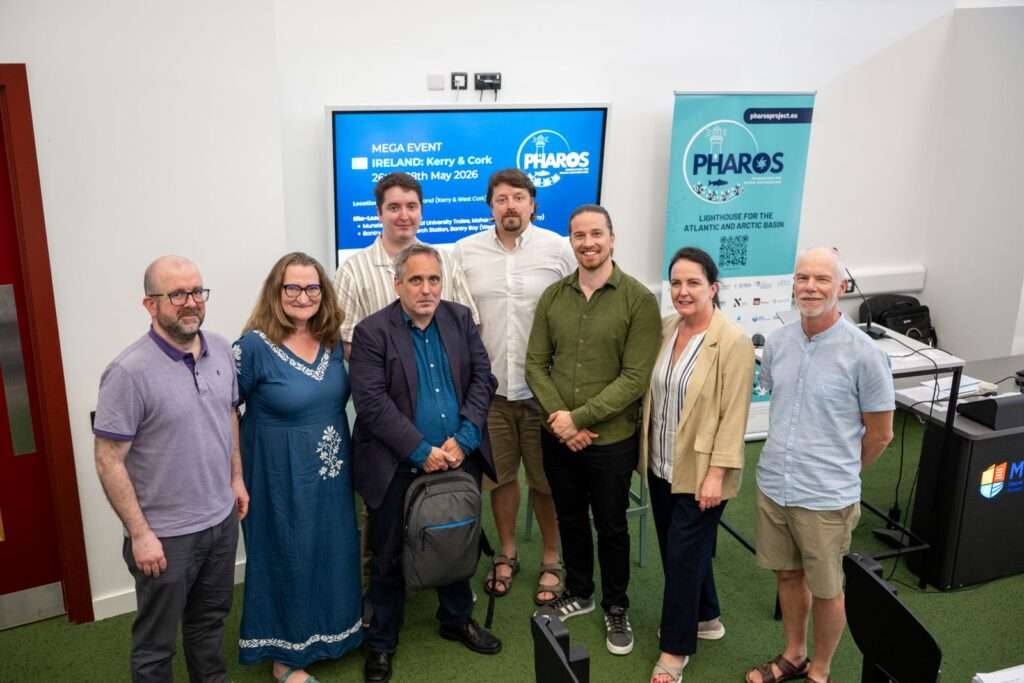
Tim O’Higgins reiterated the intention to include stakeholders in every stage: from feature identification to co-management. But he acknowledged that past MPAs were designated on a purely representative basis without meaningful consultation. “Given that history, it’s understandable fishermen are concerned,” he said.
Bob Rumes distinguished between coastal MPAs (ideal for citizen science) and offshore MPAs (where fishermen are the only consistent human presence). In Belgium, wind farm operators now provide marine mammal sighting data. “They’re there all the time,” he said.
George Hoppit flagged the complexity of offshore governance. Beyond 12 miles, the Common Fisheries Policy applies, meaning Irish MPAs would require engagement with Spanish, French, Portuguese, and Dutch stakeholders. “The Irish government can’t compel non-Irish nationals,” he said.
Oisín Callery returned to his car-mechanic analogy: stakeholders shouldn’t need to understand every technical detail to participate meaningfully. “Technical language is a barrier. Facilitating communication is key.”
Gordon Dalton (PHAROS project coordinator) asked about co-location of MPAs and offshore wind. Tim O’Higgins replied that MPAs exclude no activity unless incompatible with conservation objectives. “You could have an MPA whose conservation objectives are compatible with offshore wind.” George Hoppit added that sensitivity analyses in the Irish Sea and Celtic Sea found conservation targets could be met while avoiding most fishing areas.
Eddie Moore, an inshore fisherman of 46 years and director of the National Inshore Fishermen’s Association (NIFA), delivered the most forceful intervention of the morning.
Moore noted that NIFA has 330 boats and operates entirely out of members’ own pockets. He learned about the event only through Kevin Flannery, not through official channels.
“Inshore fishermen are 90-plus percent of the fleet in Ireland due to decommissioning schemes. A top-down approach is not going to work here”, Moore said.
He acknowledged that later presentations, particularly Callery’s, improved, but stressed that lack of consultation remains a pattern. “Fishermen are the lifeblood of the sea, the custodians down through the generations.”
Tasha Hennessy, Senior Advisor for Stockcraft with Marine and Fisheries, raised the issue of data scarcity. Inshore fishing vessels lack the VMS and AIS tracking systems that provide rich offshore data. “The only way to get those data is to interact with stakeholders directly,” she said. George Hoppit noted that the BIOPROTECT platform allows anonymous data sharing, stakeholders can show acceptable areas for protection without revealing exact locations or activities.
Andrew Scanlon (online, Valencia Island, Kerry) asked for examples of well-functioning MPAs. George Hoppit cited Lamlash Bay MPA in Scotland, a community-driven initiative started by recreational divers who noticed historical decline. Bob Rumes added the Torre Guaceto MPA in Italy, where sustainable funding comes from tourist parking fees.
Tom Cross (audience) raised a broader concern: EU projects produce excellent reports, but who integrates the results? “In my area of fish genetics, we were involved in maybe 20 EU projects. They go in and gather dust.”
George Hoppit acknowledged the problem. “I read through projects looking at tools developed. The number of times something amazing was produced and then died, and then another project produced the same thing and died.” He noted that EU missions, with their 2030 deadline and implementation focus, are attempting to address this.
Beyond MPAs: CABER and the Bioeconomy
Tim Yeomans of MTU’s Centre for Applied Bioscience Research (CABER) offered a brief overview of the centre’s work. CABER is core-funded by Enterprise Ireland to help Irish companies solve scientific and technical challenges, working with seaweed, microalgae, oyster shells, fish waste, lobster, and other marine biomass.
Capabilities include growing microalgae at scale (thousands of litres), green biorefining, analytical technologies, and testing compounds for antibacterial properties, skin cell growth, and cancer applications.
The Road Ahead
Ireland has the policy, the funding, and the scientific tools to meet its 30 by 30 commitment. The MPA LIFE Ireland project, the BIOPROTECT platform, the PHAROS demonstration sites, and the MPA Solutions Hub represent substantial investments in infrastructure and methodology.
But the gap between designation and effective management, between lines on a map and genuine ecological recovery, will be bridged only by trust. And trust, as the fisherman in the room made plain, cannot be built in a single morning session or through a public consultation form.
It begins, as Oisín Callery said, with recognising that the person who has spent 40 years on the water knows something the marine biologist does not, and vice versa. And it continues with a process that brings both to the table before the lines are drawn.