PHAROS Highlights Ocean Innovation at Spain’s 13th EU R&I Framework Programme Conference
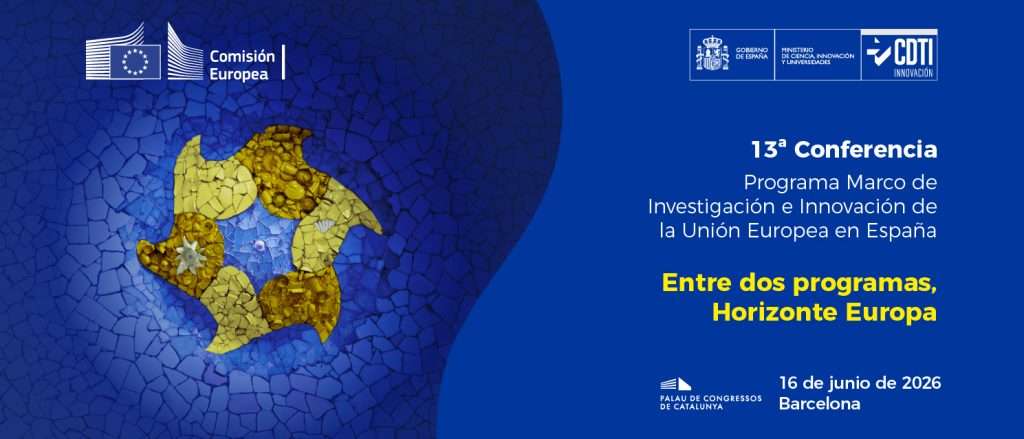
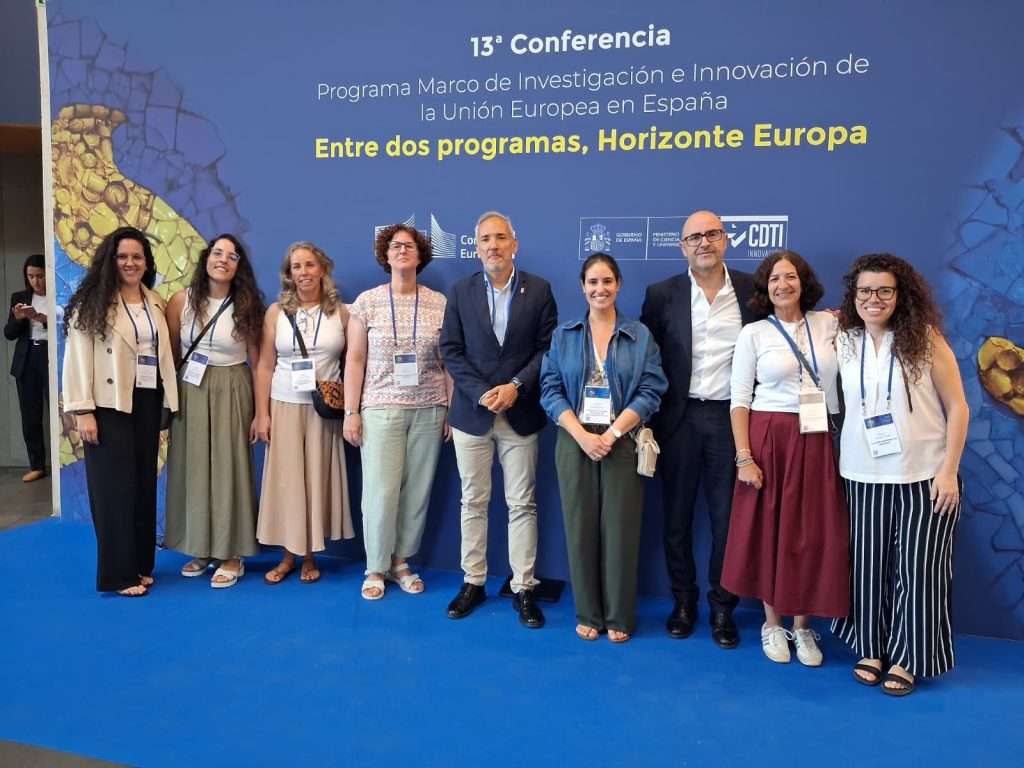
PHAROS Highlights Ocean Innovation at Spain’s 13th EU R&I Framework Programme Conference https://pharosproject.eu/wp-content/uploads/2026/09/13-conferencia-EU-1024x439.jpg 1024 439 PHAROS Project https://pharosproject.eu/wp-content/uploads/2026/09/13-conferencia-EU-1024x439.jpgPHAROS was presented at Spain’s 13th Conference on the European Union Research and Innovation Framework Programme, bringing the project’s ocean restoration work into a national discussion on Europe’s research and innovation future. The event in Barcelona created a valuable space to exchange experience, showcase successful Horizon Europe participation and look ahead to the next EU Framework Programme, expected to begin in 2028.
PLOCAN, the coordinator of PHAROS, used the occasion to underline how Horizon Europe can connect regional marine expertise with European-scale action. The message was clear. Ocean restoration, pollution prevention and a sustainable blue economy need practical demonstrations, strong local partnerships and funding frameworks that support long-term impact.
A key Spanish event
The 13th Conference on the European Union Research and Innovation Framework Programme brought together stakeholders involved in Spanish participation in Horizon Europe. It provided an opportunity to review successful approaches, exchange views on the future of European research funding and consider how Spanish organisations can remain active and competitive in the next generation of EU programmes.
For PHAROS, participation was strategically relevant. The project is funded through Horizon Europe and works directly towards the objectives of the EU Mission to Restore our Ocean and Waters. Its work focuses on restoring marine ecosystems and biodiversity, reducing pollution and helping build a circular, carbon-neutral blue economy.
European Framework Programmes are not simply funding mechanisms. They shape the conditions under which research institutions, public authorities, businesses, coastal communities and civil society can work together on complex challenges. The next programme will need to retain this collaborative strength while making room for solutions that can be tested, improved and replicated in real coastal settings.
PHAROS takes the stage
During the conference, PLOCAN presented PHAROS as an example of how a European project can build from regional capacity while addressing challenges shared across the Atlantic and Arctic basins. PHAROS is coordinated by the Oceanic Platform of the Canary Islands and brings together 24 organisations from across Europe for a five-year action running from September 2024 to August 2029.
The project is not built around a single technology or a purely academic research agenda. Instead, it combines nature-based restoration, marine monitoring, digital tools, stakeholder engagement and local innovation. This integrated approach matters because marine degradation is rarely caused by one issue alone. Biodiversity loss, invasive species, nutrient pollution, marine litter and unsustainable economic activity are closely connected.
PHAROS responds by developing and testing solutions that can deliver environmental benefits while supporting viable coastal economies. The project aims to show that restoring marine ecosystems is not an obstacle to economic development. It is a precondition for a resilient, future-proof blue economy.
Canary Islands leadership
The Canary Islands have a prominent role in PHAROS. PLOCAN coordinates the project, while the Government of the Canary Islands, the Maritime Cluster of the Canary Islands and the University of Las Palmas de Gran Canaria contribute regional knowledge, institutional capacity and technical expertise.
This cooperation is one of the project’s strongest assets. It connects science, public policy, marine-sector innovation and education within a region that faces direct exposure to climate pressures, ocean pollution and the need for sustainable maritime development.
Island regions are ideal places to test scalable ocean solutions. Their marine environments are highly valuable, their coastal economies depend heavily on healthy seas, and the effects of environmental change are often visible earlier and more sharply than elsewhere. What works in the Canary Islands can therefore offer useful lessons for other European islands, coastal territories and outermost regions.
The Gran Canaria demonstration site is based in PLOCAN’s research area and is designed as a real-world testing environment for integrated marine restoration. Rather than treating aquaculture, habitat restoration and biodiversity monitoring as separate fields, PHAROS combines them into one operational system.
Restoration in practice
At the Gran Canaria site, PHAROS is developing an Integrated Multi-Trophic Aquaculture system. This approach brings together species from different levels of the food chain, including fish, macroalgae, abalone and sea cucumbers, to make better use of nutrients and reduce waste.
The model follows a simple ecological principle. Outputs from one production activity can become inputs for another. Nutrients released by fish farming can support macroalgae growth, while other organisms can contribute to nutrient cycling and ecosystem function. This offers a more circular alternative to conventional marine production systems.
PHAROS also integrates Smart Enhanced Reefs at the site. These artificial reef structures are designed to improve habitat complexity, create surfaces for marine life and support biodiversity restoration. The project’s ambition goes beyond the seabed by linking reef structures with vertical mooring systems and macroalgal forests higher in the water column.
This is the direction marine restoration must take. Isolated interventions have limited value if they cannot work with broader ecosystem processes. PHAROS is testing whether combined approaches can restore habitat, improve ecosystem functioning and create opportunities for sustainable ocean-based economic activity at the same time.
A wider Atlantic approach
PHAROS extends well beyond Gran Canaria. The project is running four demonstrations across sites in Gran Canaria, Ireland and Iceland, each responding to a specific local challenge while contributing knowledge that can be shared across Europe.
| Demonstration area | PHAROS approach | Expected contribution |
|---|---|---|
| Gran Canaria | Integrated Multi-Trophic Aquaculture, artificial reefs and macroalgal restoration | Improved habitat complexity, circular nutrient use and marine ecosystem function |
| Ireland | Kelp cultivation and nutrient-removal solutions linked to salmon farming | Better use of nutrient outputs and support for water quality and habitat provision |
| Iceland | Environmental DNA and sensor-based monitoring | Earlier detection of invasive pink salmon and changes in biodiversity |
In Ireland, PHAROS is exploring how macroalgae cultivation can make use of nutrient outputs from salmon farming. This has direct relevance for the future of aquaculture, particularly where environmental performance, water quality and public acceptance are increasingly important.
In Iceland, the project is deploying environmental DNA, known as eDNA, to improve detection and monitoring of invasive pink salmon. eDNA can help identify the presence of species through genetic traces found in water, creating the potential for faster and more targeted monitoring than conventional approaches alone. PHAROS aims to use this evidence to support interventions that reduce invasive pink salmon in its demonstration areas.
These sites are different by design. PHAROS is not trying to impose one model across every marine region. It is developing a portfolio of approaches that can be adapted to local ecosystems, governance structures and economic conditions.
People drive impact
Technology is not enough. PHAROS places citizens, coastal stakeholders, public authorities, schools, fishers and entrepreneurs at the centre of its work through Living Labs. These are real-world collaboration spaces where people jointly identify problems, test solutions and shape how innovations are used.
The project’s Living Labs connect several stakeholder groups. Citizen scientists use the MINKA platform to record and share observations. Marine Protected Area managers contribute to digital decision-support tools. Blue Schools bring ocean literacy into education. Fisher Guardians focus on improved practices related to fishing gear and marine litter. Citizen Litter Entrepreneurs explore how waste prevention and circular solutions can become viable local business opportunities.
This approach is more demanding than a standard communication campaign. It requires project partners to listen, adapt and allow users to influence the solutions being developed. Yet it is also more likely to produce impact that remains after EU funding ends.
A sustainable blue economy cannot be delivered only through policy documents, research reports or isolated pilots. It needs local ownership. It needs businesses that can see commercial potential in sustainable practices. It needs communities that understand the value of marine ecosystems and have a real role in protecting them.
The digital dimension
PHAROS is also developing digital tools to strengthen access to marine knowledge and support better decisions. These include the MINKA citizen science platform and an enhanced Blue4All Marine Protected Area Solutions Hub.
MINKA gives each Living Lab a way to collect, visualise and share local observations. Depending on the site, this may involve invasive species, marine litter, biodiversity or reef health. Information gathered by citizens can complement professional monitoring and help make ecological change more visible to the communities living and working near the coast.
The enhanced Blue4All MPA Solutions Hub is being developed to support Marine Protected Area managers. It is intended to bring together practical tools, tested solutions and stakeholder input, helping managers access relevant knowledge for pollution reduction, ecosystem restoration and local engagement.
Digital tools matter only when they make action easier. PHAROS is therefore focused on using data to support real decisions, not simply to generate more information. The value lies in turning observations into useful insight for restoration planning, community participation and marine governance.
Looking beyond Horizon Europe
The Barcelona conference also offered an early opportunity to discuss the next EU Framework Programme, expected to launch in 2028. The future programme will be crucial for Europe’s capacity to respond to climate change, strengthen competitiveness and maintain leadership in science, technology and mission-driven innovation.
For projects such as PHAROS, the main lesson is straightforward. Europe should not retreat from ambitious collaborative research. It should make it more connected to deployment, replication and long-term uptake.
Future funding should support projects that link research with regional development, public policy, business models and citizen participation. It should also recognise that ocean restoration is a strategic investment. Healthy marine ecosystems are essential for food systems, coastal resilience, climate regulation, tourism, renewable energy and local livelihoods.
The next Framework Programme should build on Horizon Europe’s strongest feature. Its ability to unite diverse actors around shared European challenges. However, it should push further on practical implementation. Demonstration projects need clearer routes to scale, stronger links with regional investment and better support for solutions that are ready to move from pilot stage to wider adoption.
PHAROS as a lighthouse
PHAROS demonstrates what a mission-oriented project should look like. It is rooted in real marine environments, supported by scientific evidence and structured around partnerships that bring different capabilities together. It does not treat ocean restoration as a narrow environmental issue. It recognises the links between ecosystems, jobs, innovation, education and community resilience.
PLOCAN’s presentation in Barcelona helped bring this work into a wider national and European conversation. Spanish participation in Horizon Europe is not only about securing funding. It is about ensuring that strong regional ecosystems, such as the Canary Islands’ marine innovation community, can help shape Europe’s future research and innovation agenda.
As Europe prepares for its next Framework Programme, PHAROS offers a useful benchmark. The strongest projects will be those that move beyond promising concepts and prove what works in practice. They will build trust with local communities, create value across regions and deliver solutions that can protect the ocean while supporting a fair and sustainable blue economy.