What Are Invasive Species?
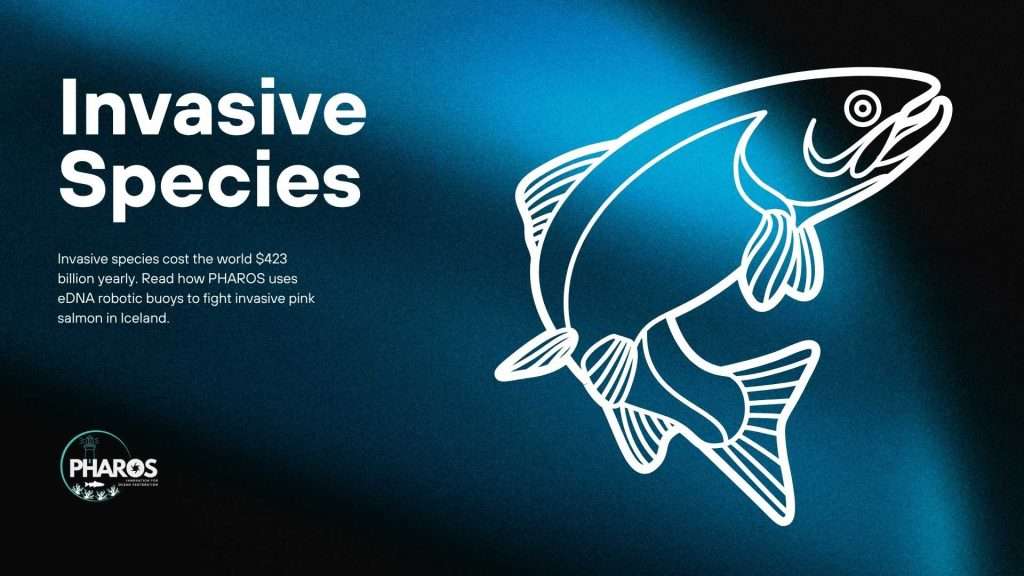
What Are Invasive Species? https://pharosproject.eu/wp-content/uploads/2026/07/Invasive-Species-1024x576.jpg 1024 576 PHAROS Project https://pharosproject.eu/wp-content/uploads/2026/07/Invasive-Species-1024x576.jpgAn invasive species is any organism introduced by human activity, deliberately or by accident, into an area outside its natural range, where it goes on to cause measurable ecological or economic harm. Not every species that arrives somewhere new becomes invasive: many simply die off without the right conditions to survive, but some thrive precisely because they land somewhere without the natural predators or competitors that once kept them in check back home. Once that happens, an invasive species can reproduce explosively and effectively take over its new environment, smothering the native species that were never adapted to compete against it.
A Global Problem With a Startling Price Tag
Invasive alien species are one of the five biggest drivers of biodiversity loss on the planet, according to the UN’s Intergovernmental Platform on Biodiversity and Ecosystem Services, and the scale of the damage has become impossible to ignore. The IPBES Assessment found that IAS have been a significant driver in 60% of all documented plant and animal extinctions worldwide. Nearly 20% of Europe’s Red Listed species are currently under threat from invasive organisms alone, a figure that shows this isn’t a distant problem confined to remote ecosystems, it’s actively unfolding across the continent right now. The financial dimension is just as stark, and a few figures make that clear:
- Global invasive species cost the world economy more than US$423 billion in 2019 alone, with that figure projected to quadruple roughly every ten years
- Alien species records have increased by 40% globally since 1980, driven largely by expanding trade, travel, and human population growth
- The number of invasive alien species worldwide is forecast to grow by 36% by 2050 if current trends continue unchecked
- The World Register of Introduced Marine Species has documented 1,711 introduced marine species globally, though not all eventually become invasive
- Managing invasive alien species across 18 LIFE-funded EU projects between 2010 and 2022 cost an estimated €43.3 million, with 82% of that budget spent specifically on aquatic environments
How Invasive Species Actually Get Around
Marine invasive species rarely swim their way into a new ecosystem on their own, they typically hitch a ride on human infrastructure. Shipping is by far the most significant pathway, since large vessels take on seawater as ballast to balance cargo weight and then release that water, along with whatever organisms it contains, at their destination port. A single year’s global ballast water traffic carries up to 7,000 species of aquatic plants, microbes, and animals every hour of every day. Beyond ballast water, species also travel by clinging to ship hulls and anchors in a process called biofouling, by escaping from aquaculture farms, through the exotic aquarium trade, and even by drifting on floating plastic debris across entire ocean basins.
One Analogy: An Uninvited Houseguest Who Never Leaves
Think of an invasive species like a houseguest who lets themselves in through an unlocked door, then proceeds to eat all the food in the fridge, take over every room in the house, and never leave. A well-mannered guest, the ecological equivalent of a species with natural predators keeping it in check, would take only what it needs and coexist peacefully with everyone else living there. An invasive species behaves nothing like that. Once inside, it consumes resources without restraint, pushes out the household’s original occupants, and, because nothing in this new house has evolved defences against it, there is often nobody capable of showing it back out the door.
The Real Damage Invasive Species Cause
Once established, invasive species reshape entire ecosystems through several compounding effects. They disrupt native habitats, outcompete local species for food and space, decrease water quality, and can even introduce diseases and pathogens that spread to both wildlife and humans. Some of the most destructive marine cases include the European green crab, which has cost the American fishing industry millions of dollars since establishing itself on both US coasts in the 1950s, and Caulerpa taxifolia, a so-called “killer algae” that escaped aquariums and now blankets more than 13,000 hectares of Mediterranean seabed, choking out virtually all native marine life beneath it.
The Arctic Front Line: Pink Salmon in Iceland
PHAROS is confronting this exact threat in Iceland, where an invasive species originally introduced thousands of kilometres away has now taken hold of local rivers. Pink salmon are native to the Pacific Ocean but were introduced to Russia’s White Sea by the Soviet Union in the 1950s. For decades the species stayed largely contained, but warming Arctic waters have since allowed it to spread rapidly across Europe and the wider Arctic region, and it has now established itself throughout Iceland’s river systems, directly threatening native salmonids that are central to both local ecosystems and Iceland’s fishing economy.
To fight back, PHAROS partner DTU has deployed a high-tech robotic buoy equipped with an Environmental Sample Processor that automatically collects river water, extracts environmental DNA left behind by every fish that swims past, and runs real-time genetic analysis on board. The moment the system detects pink salmon DNA in the water, it streams an alert directly into the PHAROS Digital Twin Ocean, giving researchers and fisheries managers a chance to intervene early rather than discovering the invasion only after populations have exploded. Alongside the automated buoy, the team runs manual eDNA sampling at eight separate sites along affected rivers specifically to track how far the pink salmon have spread and what proportion of the total fish population they now represent.
This early-detection philosophy reflects a core principle in invasive species management: once a population is fully established, eradication becomes extraordinarily expensive and often practically impossible, but catching an invasion in its early stages dramatically increases the odds of controlling it before permanent ecological damage sets in. PHAROS extends this vigilance beyond scientific instruments too, engaging local divers and citizens through its MINKA platform in Iceland and Gran Canaria to document invasive species sightings directly, turning ordinary beachgoers and swimmers into an early-warning network working alongside the robotic monitoring systems.