PHAROS Roundtable Pushes Permitting Debate Forward for Blue Economy Projects
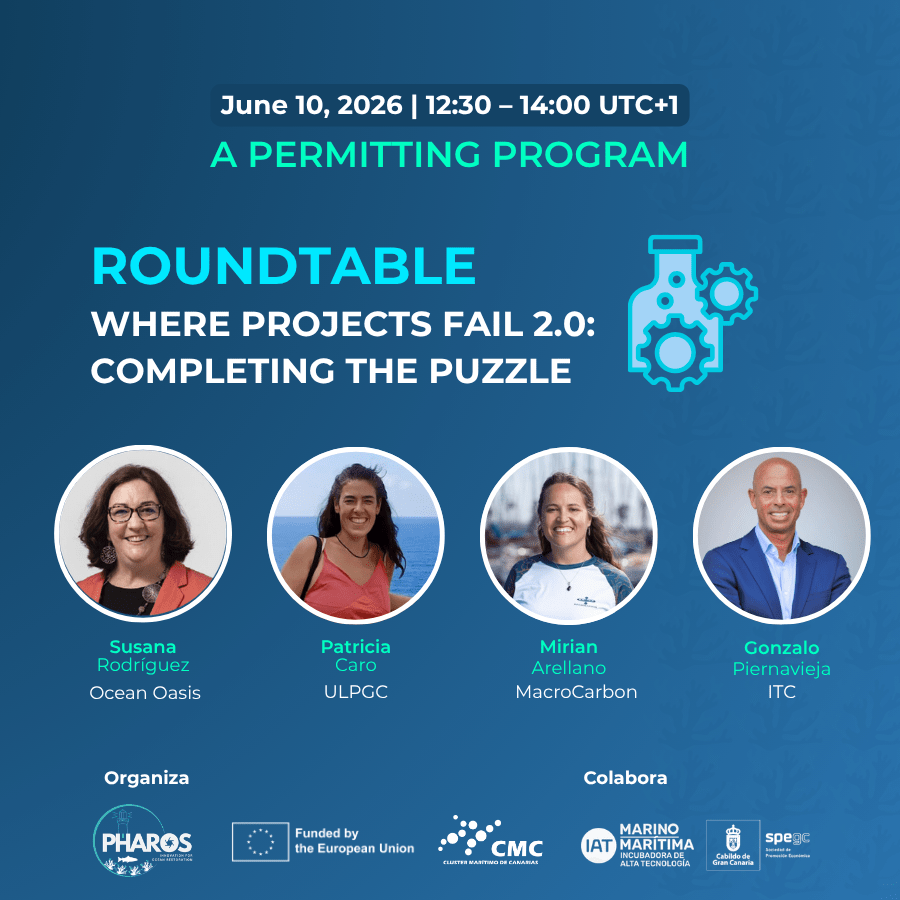
PHAROS Roundtable Pushes Permitting Debate Forward for Blue Economy Projects https://pharosproject.eu/wp-content/uploads/2026/06/cartel-ponentes-def.png 900 900 PHAROS Project https://pharosproject.eu/wp-content/uploads/2026/06/cartel-ponentes-def.pngOn 10 June 2026, PHAROS brought together a new group of European blue economy projects for the second roundtable in its Permitting Challenges & Opportunities webinar series. The session focused on a familiar problem with a real cost: how to move innovative marine projects through regulatory and administrative barriers without losing momentum, ambition, or impact.
This second roundtable was designed to do more than describe the problem. Project managers and experts compared obstacles, grouped them into regulatory, procedural, and organisational categories, and assessed whether they were isolated cases or wider patterns affecting the sector. That matters because permitting is often where strong ideas slow down or fail, especially in projects that sit at the intersection of science, public administration, and real-world deployment.
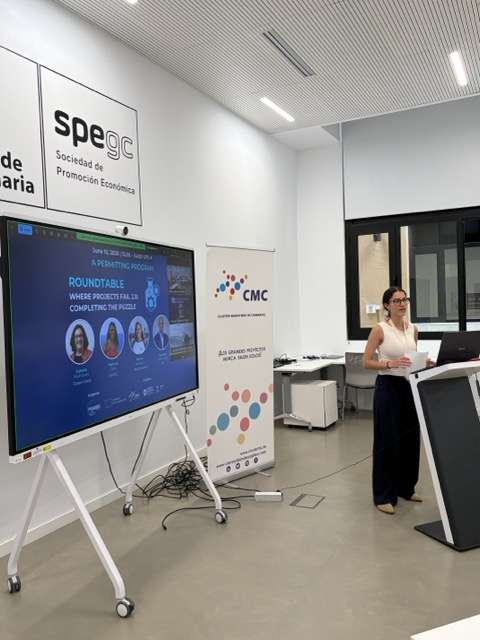
The discussion brought together representatives from Ocean Oasis, Universidad de Las Palmas de Gran Canaria, MacroCarbon, and the Canary Islands Institute of Technology. Their projects ranged from offshore wave-powered desalination to coastal adaptation, marine operations, and blue economy strategy, giving the roundtable a practical edge rather than a purely theoretical one.
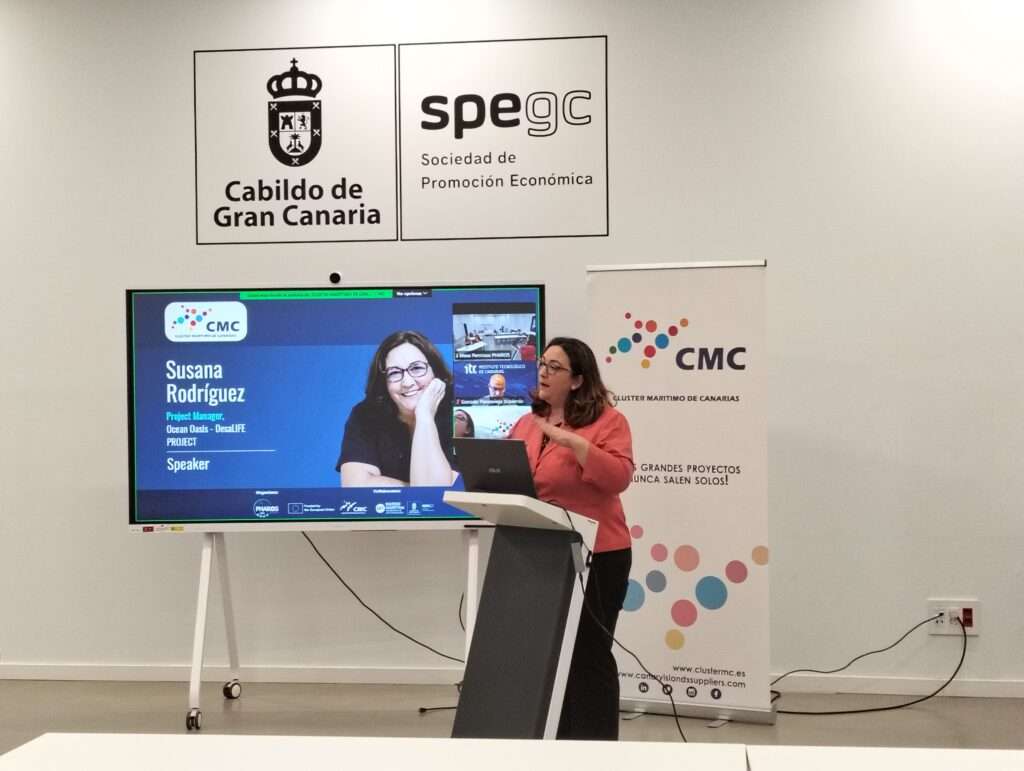
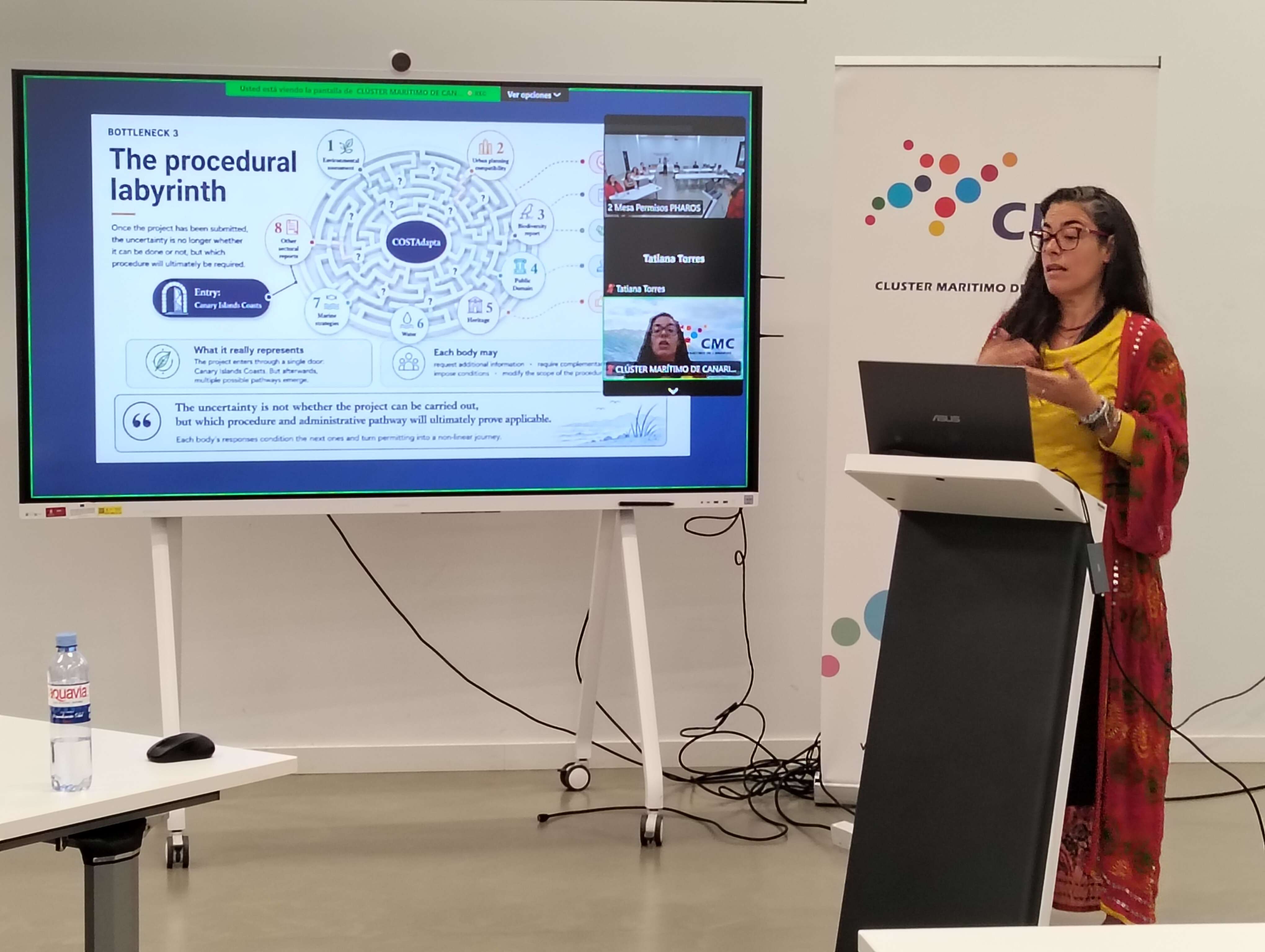
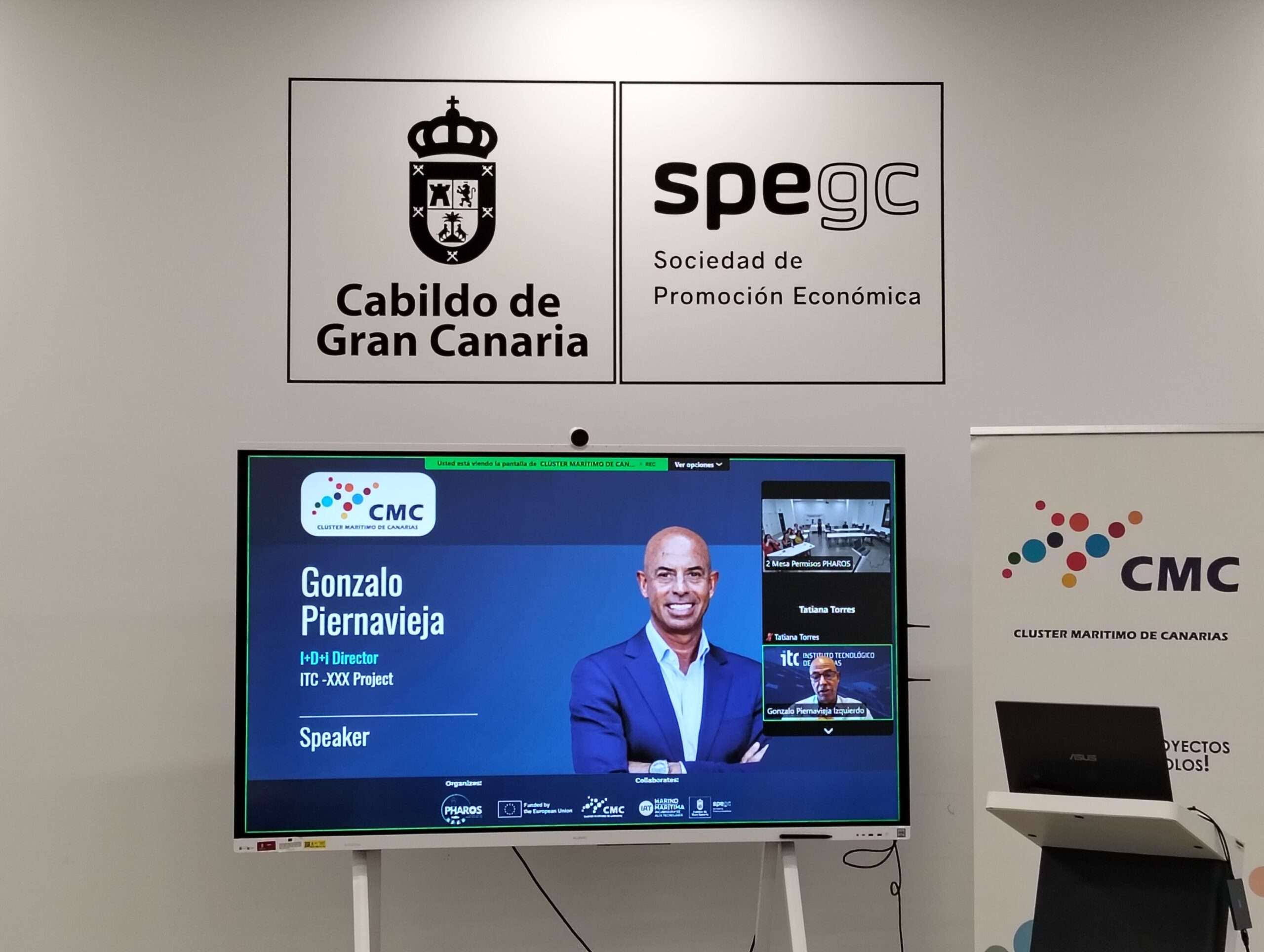
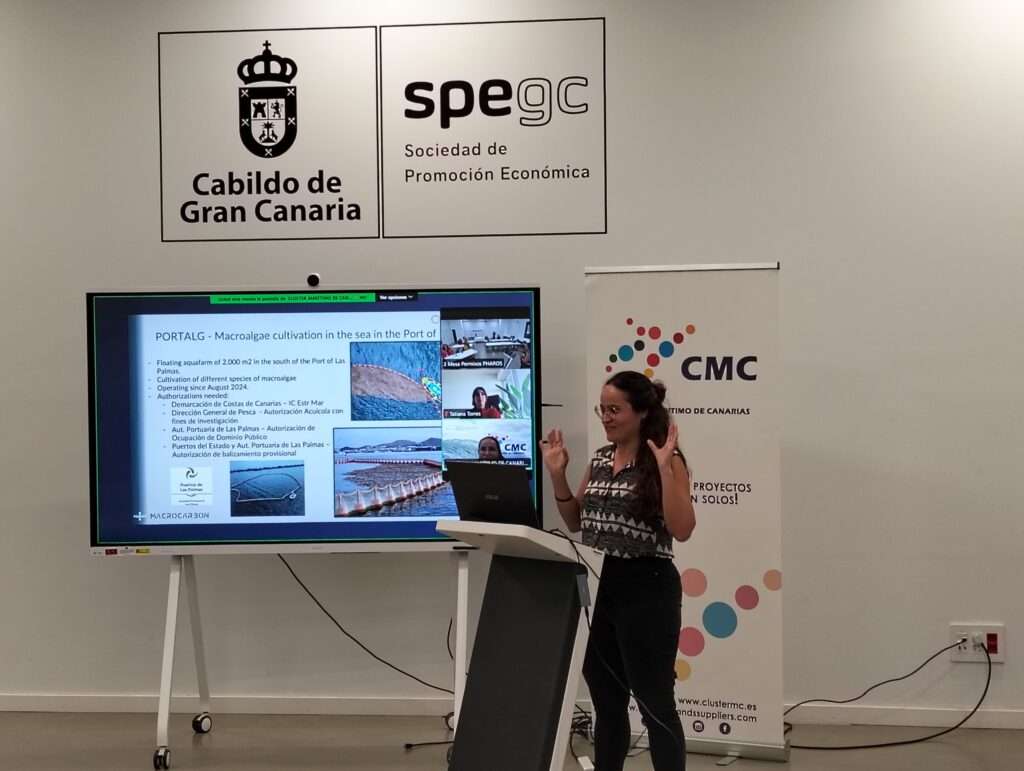
Susana Rodríguez from Ocean Oasis presented DesaLIFE, which aims to validate offshore wave-powered desalination in Gran Canaria. Patricia del Mar Caro from ULPGC shared work from LIFE COSTAdapta, a coastal adaptation project tackling sea-level rise and erosion in island territories. Mirian Arellano of MacroCarbon described the operational reality of dealing with public authorities and permits, while Gonzalo Piernavieja of ITC brought a wider strategic view of island-based innovation, water technologies, and energy self-sufficiency.
For PHAROS, the value of the roundtable was clear. The project is built on co-creation, and permitting is not a side issue. It is one of the main bottlenecks that determines whether marine innovation can move from pilot phase to real deployment. By putting regulators, academics, and project leaders in the same conversation, PHAROS is helping shape a more realistic path for future projects working in sensitive coastal and marine environments.
The session also fed into a bigger process. Lessons from this roundtable will be combined with the first webinar session held during the MarCoLab Mega Event in January 2026, before a third and final session with public administration stakeholders is organised. The result will be a policy brief that captures what the sector needs most: clearer procedures, better coordination, and permitting systems that support innovation instead of slowing it down.
That is the real importance of the roundtable. Blue economy projects cannot deliver climate resilience, water security, and ecosystem restoration if they remain trapped in administrative uncertainty. PHAROS is using this series to turn shared frustration into practical knowledge, and practical knowledge into policy-relevant action.
Key conclusions from the roundtable
The discussion made one point impossible to ignore. Many blue economy projects are slowing down because the permitting system was never designed for first-of-a-kind, cross-sector projects.
A second clear conclusion was the need for early permitting mapping. Project teams repeatedly said that knowing the required permits, the responsible authority, and the expected level of documentation from the start would save time, money, and frustration.
The roundtable also showed that fragmented responsibilities remain a major problem. In several cases, projects had to move between regional, national, port, coastal, and technical authorities before anyone could give a final answer. That lack of coordination creates delays, confusion, and unnecessary duplication.
Another key message was the need for proportionality. Participants argued that innovative pilot projects should not be treated like large-scale commercial facilities. The regulatory burden should reflect the scale, duration, and risk profile of the activity.
The speakers also called for stronger communication between administrations and project developers. They stressed the value of one-stop-shop style support, clearer guidance on mandatory versus optional documentation, and more technical staff who can help interpret the rules in practice.
A final conclusion was strategic. If Europe wants more marine innovation, it must make room for regulatory sandboxes, faster procedures, and more flexible pathways for projects that are still being validated. Without that shift, good ideas will keep losing time, funding, and momentum before they ever reach the water.
About the speakers
Susana Rodríguez Domínguez is Head of Projects at Ocean Oasis. She brings more than 20 years of international experience in water, desalination, offshore engineering, and marine renewable energy, and she is presenting DesaLIFE, a project testing offshore wave-powered desalination in Gran Canaria.
Patricia del Mar Caro is a marine scientist and environmental engineer at ULPGC. She has worked on major infrastructure and climate adaptation projects for over 20 years and is coordinating LIFE COSTAdapta, which develops coastal solutions for sea-level rise and erosion in island territories.
Mirian Arellano is a marine scientist at MacroCarbon. She leads local relations, permit applications, and operational coordination with public authorities in the Canary Islands, bringing practical experience from the frontline of project delivery.
Gonzalo Piernavieja is Director of R&D&I at the Canary Islands Institute of Technology. He has spent decades working on renewable energy, water technologies, and island self-sufficiency, and he brings a strategic view of how blue economy innovation can move from theory to implementation.