How Deltares Is Helping PHAROS Bring Science to the Sea
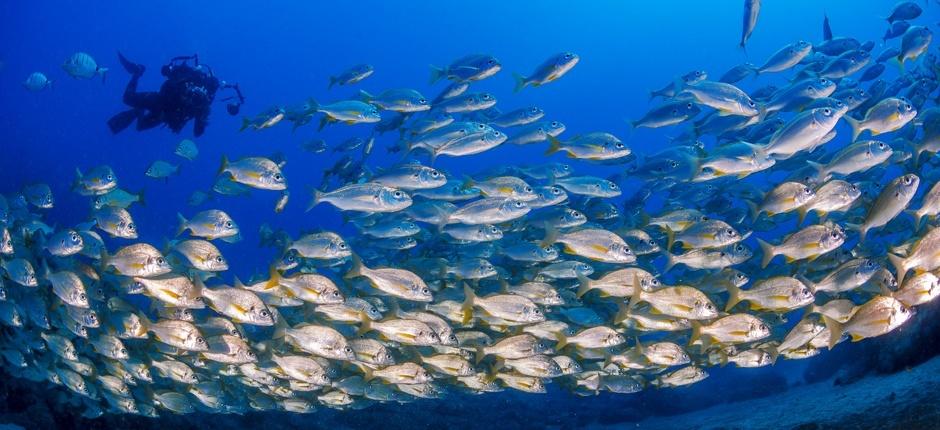
How Deltares Is Helping PHAROS Bring Science to the Sea https://pharosproject.eu/wp-content/uploads/2026/02/el_cabron-gran_canaria_0.jpg 940 430 PHAROS Project https://pharosproject.eu/wp-content/uploads/2026/02/el_cabron-gran_canaria_0.jpgMarine ecosystems across Europe are under serious pressure. Pollution, habitat loss and a warming climate are pushing coastal biodiversity to its limits. PHAROS, funded under the EU Mission Restore our Ocean and Waters by 2030, is responding with field-tested, nature-based solutions across the Atlantic and Arctic basins.
At four demonstration sites in Gran Canaria, Ireland and Iceland, the project is trialling concrete restoration techniques. In Gran Canaria, artificial reef modules and marine forest restoration are paired with an Integrated Multi-Trophic Aquaculture system, where fish, algae and sea cucumbers work together in a closed nutrient loop. In Ireland, kelp cultivation and nutrient-removal systems are exploring how seaweed farming can clean up water quality alongside salmon production. In Iceland, environmental DNA and sensor-based monitoring give early warning of invasive species and biodiversity shifts.
What connects these pilots is a shared scientific backbone. Deltares, which leads Work Package 1 in PHAROS, is responsible for the project-wide methodology: ensuring common indicators, harmonised data collection and a coherent monitoring framework across all sites. That consistency is what makes cross-site learning possible, and what turns local pilots into scalable blueprints.
Deltares is also central to building the PHAROS Digital Twin Ocean. This virtual environment brings together real-time sensor data, hydrodynamic models and biological observations to simulate restoration scenarios before they are deployed in the real world. The full modelling suite, covering hydrodynamics, biogeochemical interactions and the influence of macroalgae, fish and mussel aquaculture, is being applied at Bantry Bay in Ireland as a flagship demonstration of Deltares’ capabilities.
By 2029, PHAROS expects to deliver operational demos, open datasets and harmonised methodologies that form a practical restoration blueprint for Europe’s coastal managers. The ambition is straightforward: prove that scientific innovation and digital tools, working together, can bring degraded marine environments back to life.