PHAROS and Pavlo Goldin: how a smartphone photo from the Danube Delta becomes hard science, and why Iceland’s salmon crisis matters for Ukraine’s dolphins
PHAROS and Pavlo Goldin: how a smartphone photo from the Danube Delta becomes hard science, and why Iceland’s salmon crisis matters for Ukraine’s dolphins https://pharosproject.eu/wp-content/uploads/2026/11/image-3-1024x650.png 1024 650 PHAROS Project https://pharosproject.eu/wp-content/uploads/2026/11/image-3-1024x650.pngZN.UA sits down with the I. I. Schmalhausen Institute of Zoology scientist at the heart of the PHAROS project to talk living labs, invasive species and over ten thousand citizen scientists.
By Veronika Reznichenko, ZN.UA
The scientist who wants your fish pictures
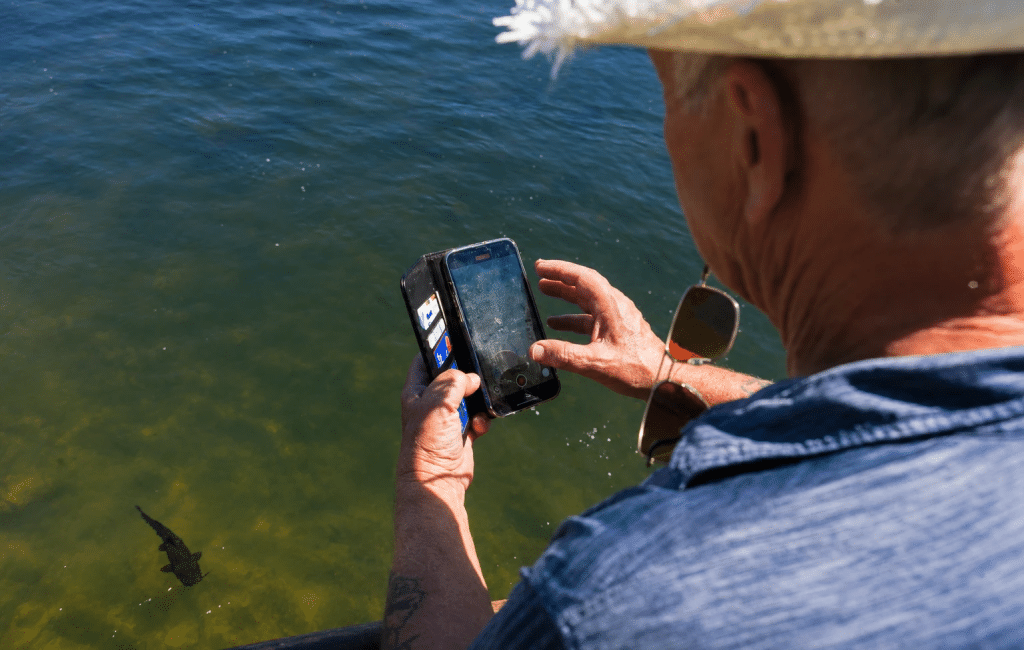
Pavlo Goldin does not ask for much: A photograph, taken on a phone. From roughly the right angle, in reasonable light, at a resolution that lets a trained eye tell one silvery fish from another. That is the entire barrier to entry for the Danube Delta Living Lab, a Ukrainian citizen science project that Goldin helps run from his desk at the I. I. Schmalhausen Institute of Zoology in Kyiv.
Goldin is a leading research fellow in the department of evolutionary morphology of vertebrates. He studies modern and fossil cetaceans. He is also, in the context of this interview, the public face of a European experiment that is quietly rewriting who gets to call themselves a researcher.u
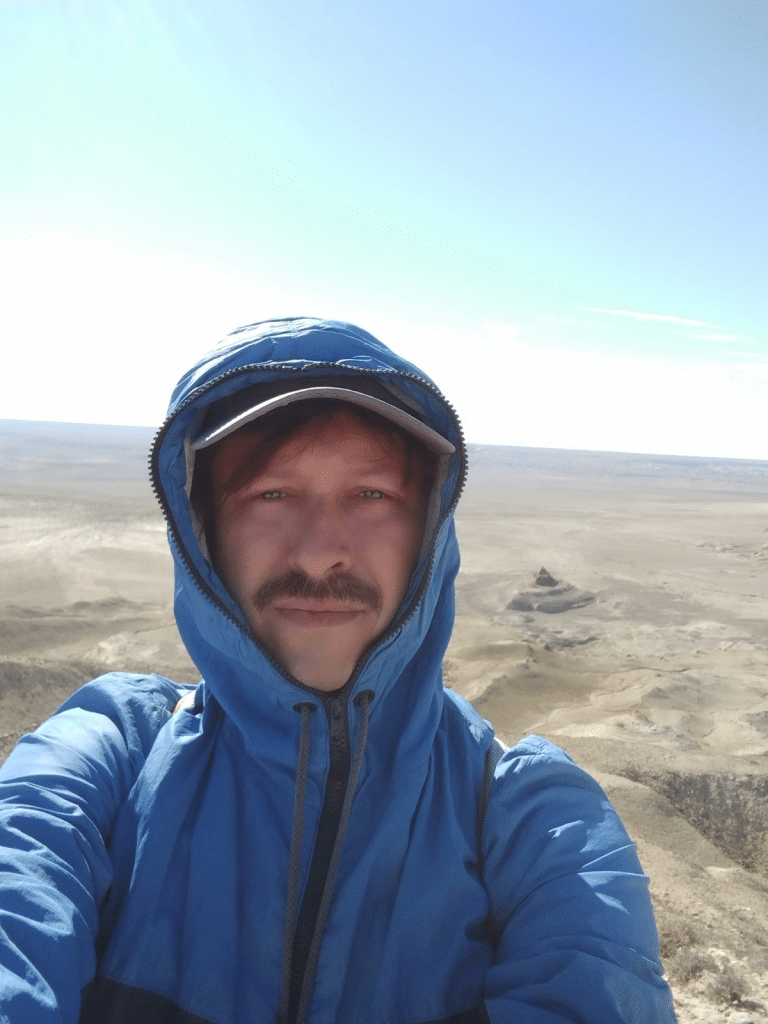
The experiment is called PHAROS, and it is a project funded through Horizon Europe, the European Commission’s main research purse, under grant agreement 101157936. PHAROS stands for Lighthouse for the Atlantic and Arctic Basin. It is a sprawling, multi-country effort to restore marine ecosystems while coping with climate change and human pressure. Ukraine is not on the Atlantic. But the Danube Delta, Europe’s largest remaining natural wetland, is on the project’s map as a replication site, and Goldin is one of the people making sure the delta is not just a dot on a slide.
This interview was originally published in Ukrainian. What follows draws on the full conversation, translated here in English for the first time, alongside reporting on the PHAROS project’s public documentation.
What a living lab actually is, and why it is not inside a building
Goldin is careful with the phrase “living laboratory”. It is not a room with a microscope and a coffee machine. It is a community, and the community is the point.
“The idea of living laboratories is one of the approaches supported by the European Commission through the Horizon Europe programme,” he says. “Science and innovation cannot be imposed from above. Living labs are science and innovation hubs that bring together scientists, local government, business and communities. It is called ‘living’ because it is not a building with four walls or instruments, but a community of living people with local roots.”
The Danube Delta Open Living Lab launched officially in spring 2025. Its framework was developed by the Schmalhausen Institute in Kyiv, drawing on PHAROS priorities. Lviv Polytechnic National University is a partner. The lab is a “replication” site, which is Brussels language for a place that takes methods proven elsewhere and adapts them to local conditions. The model has already been tested in Gran Canaria, Iceland, Ireland, Santorini and Lanzarote.
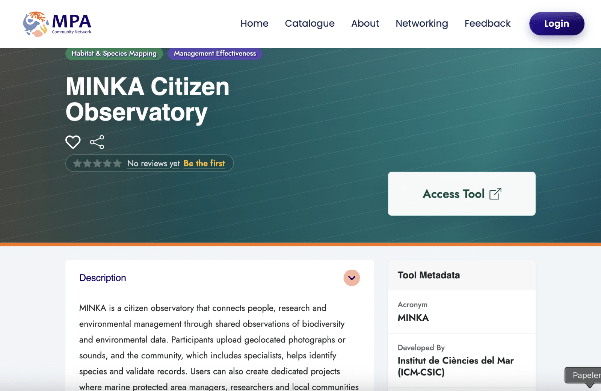
The geographical scope is wider than Ukraine alone. The lab covers the Danube basin, the Black Sea and surrounding territories in Ukraine, Romania and Moldova. More than one hundred schoolchildren from Odesa have already logged over three hundred wildlife records through a summer camp linked to the project. The MINKA platform, a citizen science tool built by the Institute of Marine Sciences in Barcelona, has been translated into Ukrainian, and the lab is included in Ukraine’s European Research Area roadmap.
That last detail matters. It means the lab is not a philanthropic side project. It is part of the architecture of Ukrainian science’s integration with Europe.
Thirty thousand observations, and the uncomfortable truth about quality control
Numbers are where citizen science projects either earn credibility or lose it. Goldin does not flinch from the numbers.
“We have already collected more than 30 thousand observations, and about 10 thousand of them, that is 30%, we have reliably identified,” he says. “The rest are awaiting processing or cannot be identified due to the low quality of the images.”
Thirty per cent is not a failure, it is a filter. A phone photograph of a fish held at the wrong angle, in bad light, at a distance, is not useless, it is raw material. The scientist’s job is to sort the signal from the noise. Goldin’s colleague Oleksii Marushchak has produced what Goldin believes is the first Ukrainian video tutorial on collecting biodiversity data for citizen science. That kind of basic training is what turns a blurred snap into a data point.
The data does not sit in a drawer. It goes to MINKA, the Spanish-run European platform that operates under EU rules on personal data and copyright. From there it moves to a Ukrainian repository and onward to GBIF, the Global Biodiversity Information Facility, the largest biodiversity database in the world. GBIF data is used by researchers across the planet. Goldin says the project’s dataset has already been cited several times in scientific papers.
There is a conservation safeguard built into the system. Locations of rare species are not disclosed on MINKA, precisely to keep poachers from using the data as a treasure map.
Iceland’s salmon problem is Ukraine’s dolphin question
PHAROS is tracking invasive fish and other organisms in the Black Sea-Danube region. The questions are specific. Do alien species displace native ones? Who eats whom? Can a native predator act as a biological brake?
Goldin explains why Ukraine was invited into the project in the first place.
“We were invited to the project, among other things, because of the situation in Iceland, where a ‘full-scale invasion’ of Russian humpback salmon is taking place, displacing the local salmon, which is, by the way, a national symbol of the country,” he says. “There is a hypothesis that Icelandic seals could hold back this onslaught, since they readily eat humpback salmon.”
Pink salmon, also called humpback salmon for the hump that males develop during spawning migration, is native to the Pacific. It has spread westwards through Russian and Norwegian rivers and is now recorded as an invasive species in Iceland, the UK, Ireland and Greenland. It competes aggressively with native salmonids for food and space.
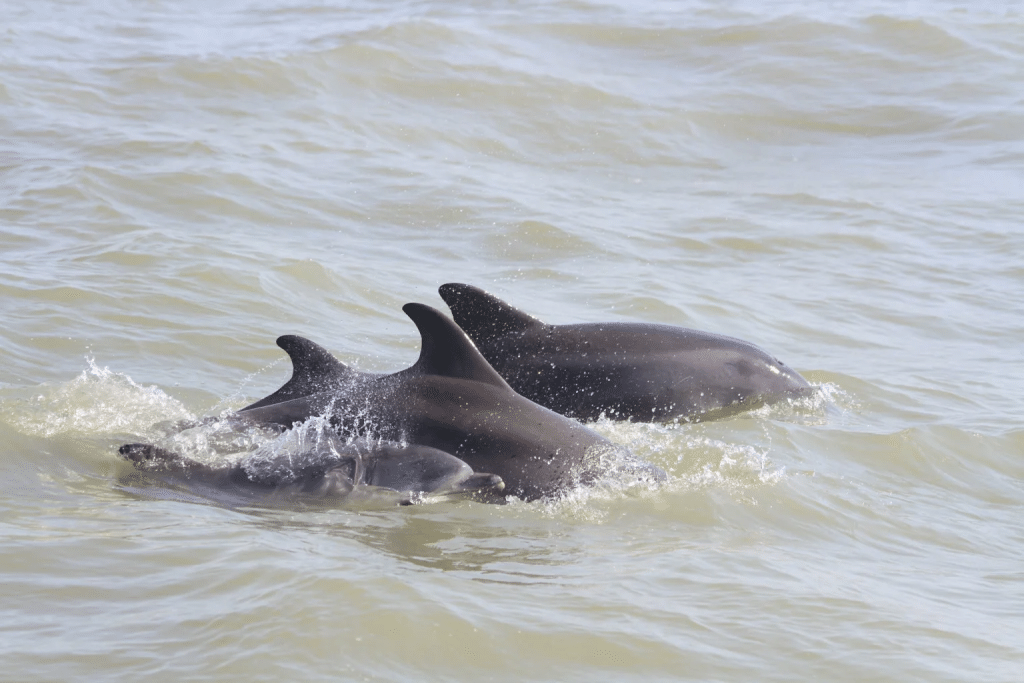
The Ukrainian parallel is dolphins. Bottlenose dolphins enter the Danube estuary from the Black Sea. The question PHAROS wants to answer is whether they can suppress alien fish in the same way Icelandic seals might suppress pink salmon. This is not an abstract ecological puzzle. The Danube herring has economic value and a keystone role in the delta’s food web. If invasive fish squeeze it out, the consequences ripple through the ecosystem and into the fishing communities that depend on it.
Anecdotal accounts of bottlenose dolphins and harbour porpoises feeding near the Danube Delta’s mouth have circulated for years. PHAROS aims to turn anecdote into data. The photographs and videos that fishers and residents upload are the raw material for that transformation.
The distrust problem, and why a scientist has to knock on doors
Goldin does not pretend that communities greet researchers with open arms. He describes the suspicion directly.
“Sometimes distrust arises: ‘Will your science harm our interests? Maybe we will be banned from fishing or from taking a boat out to sea?'” he says.
The answer is not a lecture about biodiversity. It is a conversation about power. Goldin frames it as a practical negotiation.
“Imagine a situation: a large industrial corporation comes to a community and offers to build a plant, a port or a data centre,” he says. “People may lose their ancestral lands and their usual way of life. A scientist who studies the area and proposes options for developing environmentally sustainable business or improving the state of the environment can help the community preserve all of this.”
This is the argument that citizen science projects often fail to make clearly. The scientist is not there to impose restrictions. The scientist is there to give the community another option, a counterweight to the developer’s offer. Whether that argument works depends on trust, and trust depends on dialogue. The living lab is one mechanism for that dialogue. It is not a guarantee.
From Spanish slugs to Black Sea mussels: what citizen science has already delivered
Goldin is asked whether amateur photographs have ever produced a genuine surprise. His answer is careful. Not in this specific project, not yet. But in Ukraine, yes.
“In the second half of the 2010s, the Spanish slug spread across our territory,” he says. “It was a pan-European invasion, and it was thanks to citizen science activists that the pace and direction of this onslaught were quickly identified.”
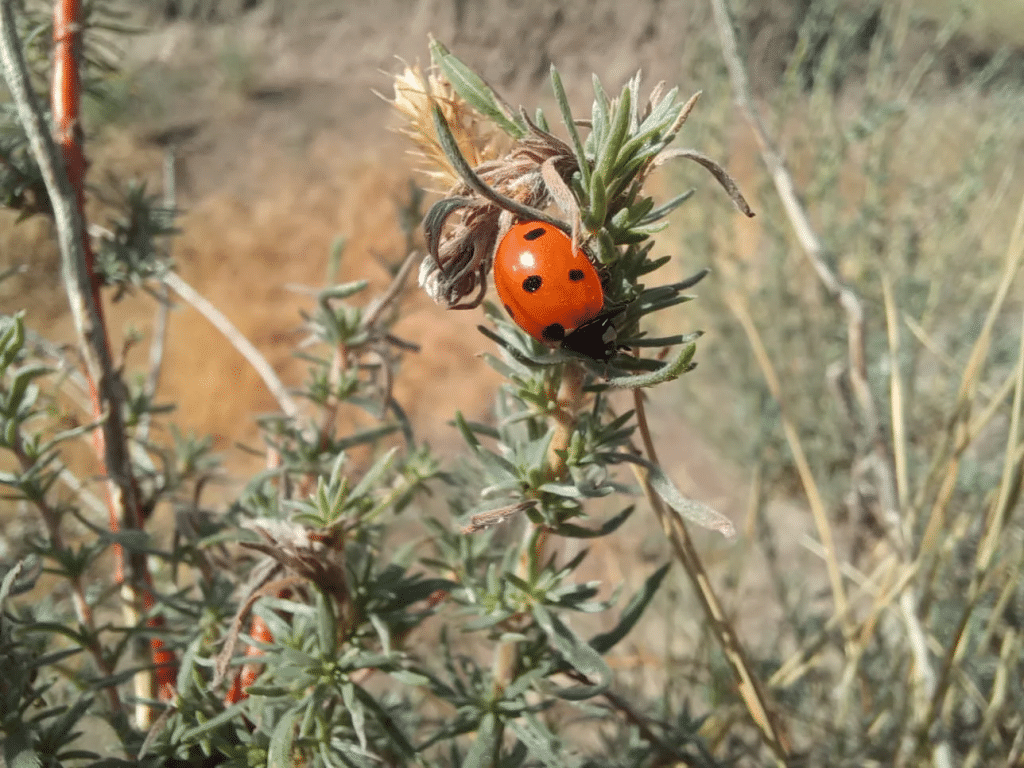
That is the quiet case for citizen science. A professional institute cannot monitor every garden, every riverbank, every stretch of coastline. Ten thousand pairs of eyes can. Goldin puts the size of Ukraine’s citizen science network at more than ten thousand participants, a figure he has calculated himself. He describes the country’s level of development as “good Central European”.
The platforms exist. UkrBIN. Biodiversity of Ukraine. iNaturalist. MINKA. This year the Institute of Zoology launched a dedicated platform for reports of bird deaths. The legislation is not the bottleneck. Ukrainian law is adapting to European frameworks, and the Ministry of Education and Science is working on open data and open science. Lviv Polytechnic, a PHAROS partner, is involved in national policy development.
The bottleneck, Goldin says, is awareness.
“It is much more difficult to make sure that people know about citizen science, understand its possibilities and want to join,” he says. “They need to realise that the life around us is not something abstract and separate. This is more than environmental awareness. It is a person’s idea of themselves as a living organism among other living organisms.”
What happens when the grant runs out
Every EU-funded project faces the same existential question. The money ends. What remains?
Goldin offers a plan:
“For the living lab to continue to exist, the idea must be supported not only by scientific institutes but also by civil society organisations, business, local government and educational institutions,” he says. “Our goal is to form a community interested in its existence after the project ends.”
Business is part of that picture. Goldin is explicit that he is not asking companies to fund science out of charity. He is asking them to invest in their own development, responsibly. The example he gives is Black Sea mussel farming. The project is already advising entrepreneurs on the prospects. Restaurants could serve Black Sea mussels instead of imported ones. The mussel is a natural water filter, so the business case and the ecological case point in the same direction.
Green tourism, shellfish collection, aquaculture. These are the economic hooks. Whether they are strong enough to hold a living lab together after the Horizon Europe money stops is an open question. Goldin’s answer is that the lab is not just a data pipeline. It is a network of people who have a reason to keep it alive.
The bottom line: your photo, their evidence
The interview ends where it began. A person on a riverbank. A phone. A fish that might be new, or might be ordinary, or might be the first sign of something changing.
To join the Danube Delta Living Lab, you fill in a form or send an email to pharos@izan.kiev.ua. You do not need a biology degree. You need an interest in the living world and a willingness to learn how to take a photograph that a scientist can use.
The PHAROS project has already collected more than thirty thousand observations. Ten thousand have been identified. The rest are waiting. Somewhere in that pile of images is a record of a species arriving where it should not be, or a predator doing what a predator does, or a fish that no one expected to see.
Pavlo Goldin will take your picture. He will run it through the system. And if it turns out to be something that matters, he will cite it in a paper. That is the deal. It is not glamorous. It is science, and it is happening now, in the Danube Delta, with a smartphone and a fisherman’s eye.
How to get involved: Fill in the form at the Danube Delta Living Lab or email pharos@izan.kiev.ua. Data is collected through the MINKA platform and, with your permission, feeds into GBIF. Rare species locations are protected.
Read original interview in Ukrainian: https://zn.ua/ukr/UKRAINE/vtorhnennja-horbushi-v-islandiji-ta-delfini-v-hirli-dunaju-navishcho-vchenim-vashi-foto-ribi.html