PHAROS Annual General Meeting 2026
PHAROS Annual General Meeting 2026 https://pharosproject.eu/wp-content/uploads/2026/01/IMG_3062-Medium.jpeg 640 360 PHAROS Project https://pharosproject.eu/wp-content/uploads/2026/01/IMG_3062-Medium.jpegLas Palmas de Gran Canaria, 28 January 2026
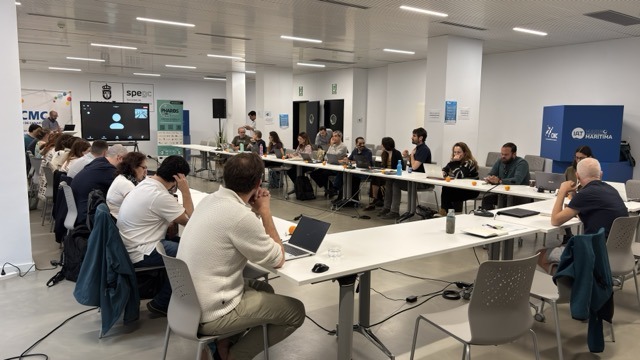
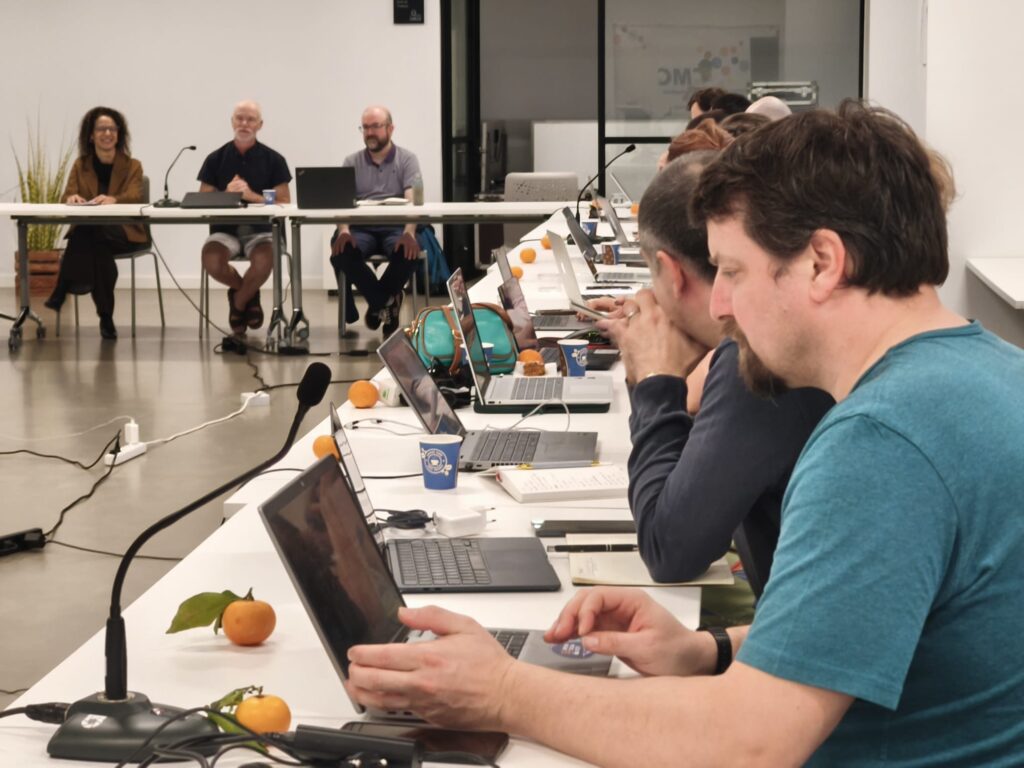
The PHAROS project kicks off its First Annual General Meeting today at CMC in Las Palmas de Gran Canaria, bringing together more than 30 participants from 24 partner organisations from across Europe for two intensive days of strategic planning, technical reviews, and collaborative decision-making. Running through 29 January, the AGM marks a critical juncture as the €9.5 million EU-funded project transitions from Year 1 achievements into Reporting Period 2 (RP2), the phase where marine restoration moves from planning into full-scale deployment.
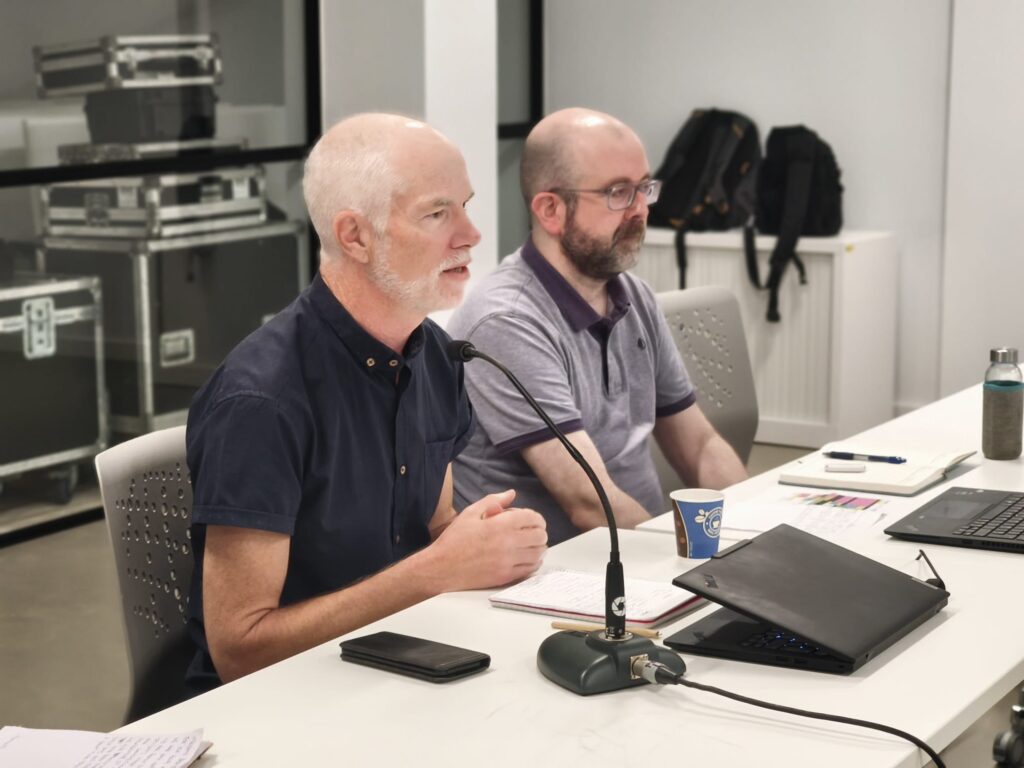
The AGM addresses fundamental questions about how PHAROS will scale its nature-based solutions across the Atlantic and Arctic basins, how the Digital Twin Ocean will integrate real-time data from demonstration sites, and how community programmes, from Fisher Guardians to Blue Schools, will expand their reach. With amendment proposals on the table and risks to navigate, partners are here to make decisions that will shape the project’s trajectory through 2027.
What’s New?
Work Package 1: Connecting EU Goals to Field Reality
Alex Ziemba (Deltares) presented Work Package 1’s (Methodology and Preparation) methodological framework. The challenge? More than 90% of ecosystem restoration projects don’t actually monitor what they claim to improve. PHAROS developed a framework connecting high-level EU policy goals to tangible field measurements.
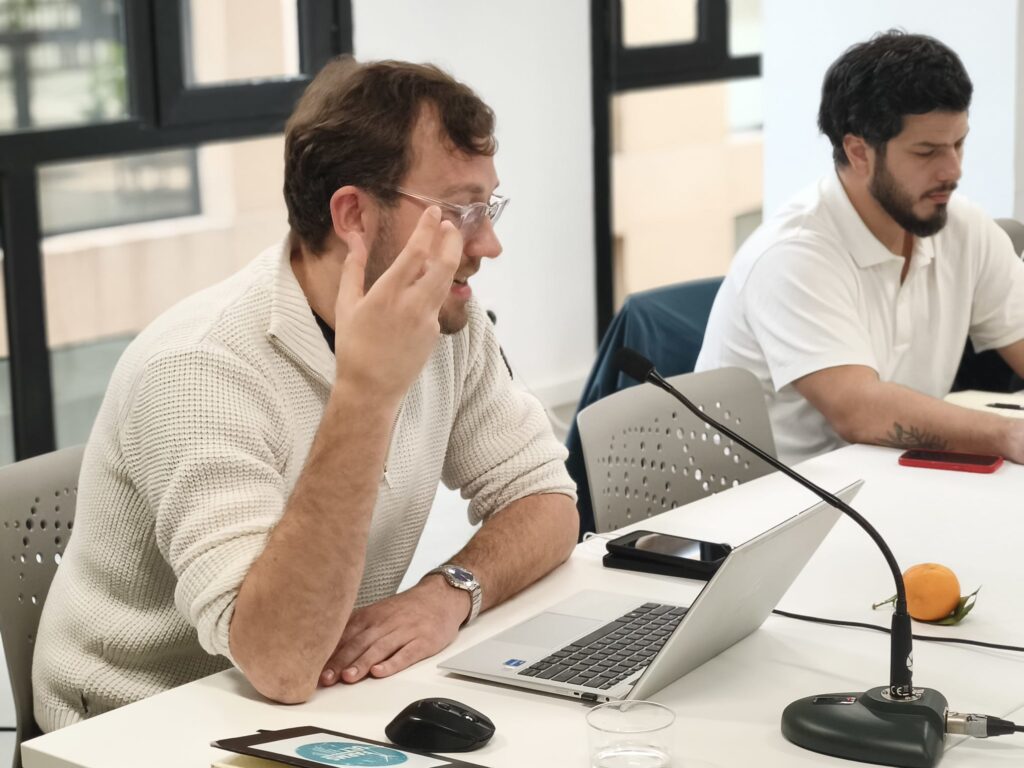
Gordon pressed the question: Are pilot sites actually following the monitoring templates? Alex clarified the framework doesn’t dictate actions. It highlights gaps. If you say you’re increasing biodiversity but deploy no cameras or sensors, you’ll have no evidence of success. The framework makes “known unknowns” visible.
Work Package 2: Five Programmes Engaging Diverse Stakeholders
Meritxell Turó Silanes from CSIC: This heterogeneous work package runs five parallel engagement programmes across fisheries, citizens, entrepreneurs, schools, and MPA managers.
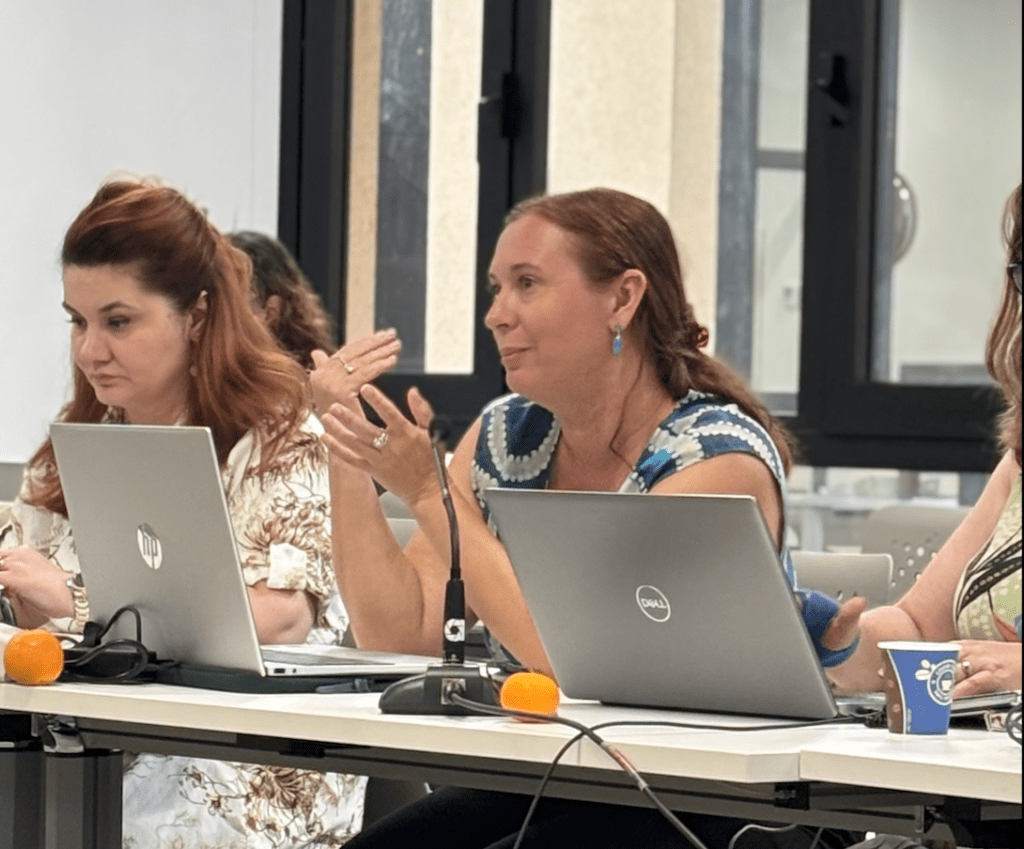
WP2 delivered presentations covering five critical community engagement initiatives. Living Labs, managed by CSIC and ICoRSA, will facilitate stakeholder co-creation across demonstration and replication sites.
Living Labs Launch Across Atlantic Islands
The Gran Canaria Living Lab officially launched during the AGM week. It’s the most developed, but the Danube Delta lab has also mobilised citizens uploading observations to the MINKA platform. Ireland’s Island Blue Marine Educational Living Lab launched shortly after. These labs serve as innovation hubs where local communities co-develop solutions.
WP2 represents the social and mobilisation dimension of PHAROS, working directly on the idea of the quintuple helix approach of the project, connecting science with education, civil society, economic actors such as fishers, public authorities, and the environmental dimension.
Additionally, the extension of the Blue Schools Network to the first island has been already achieved, in the Gran Canaria Demo Site.
WP2 has worked on clearly defining each Living Lab, carrying out a risk and capacity assessment, and developing the stakeholder mapping and priority setting. For the coming months, the focus of the work for CSIC will shift towards supporting the definition of evaluation criteria and tracking tools for the Living Labs. In parallel, we will also provide technical support and training related to the use of the MINKA platform.
Blue Schools Network Expands to Islands
PHAROS supports expanding a network of Blue Schools across Atlantic and Arctic regions. Gran Canaria certified 13 new schools. The challenge: School engagement is slow. Teachers are overwhelmed. Certification windows open only twice yearly. Funding helps but isn’t scalable to hundreds of schools.
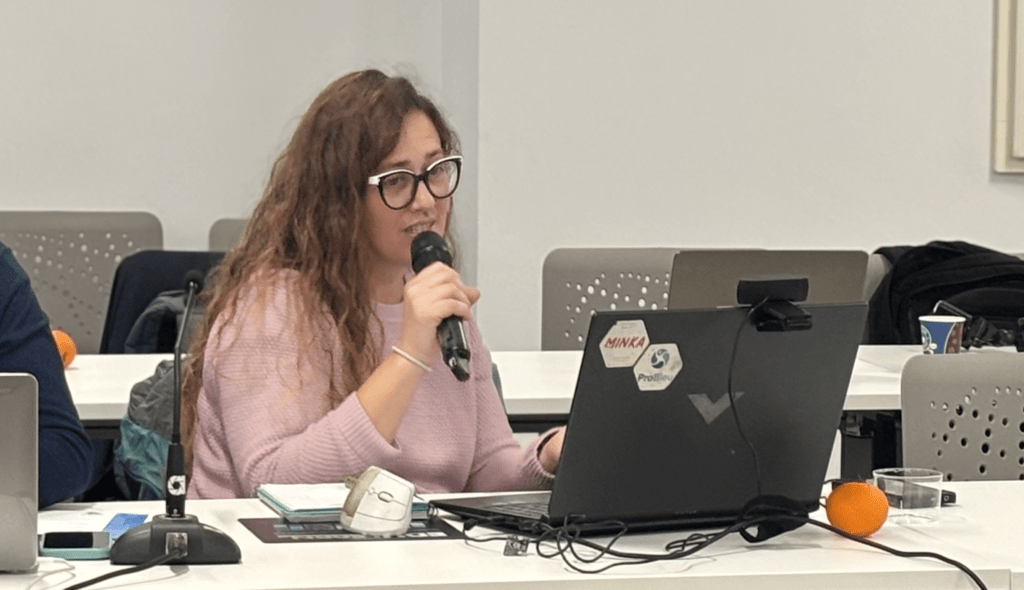
The team shifted strategy. Rather than fund schools directly, they’re developing tools and services, educational kits, the MINKA platform and resources allowing schools to build their own ocean literacy programmes. Local governments might then integrate these into formal curricula. The Biodiversity Snapshots Challenge helps schools meet Blue Schools criteria whilst collecting citizen science data.
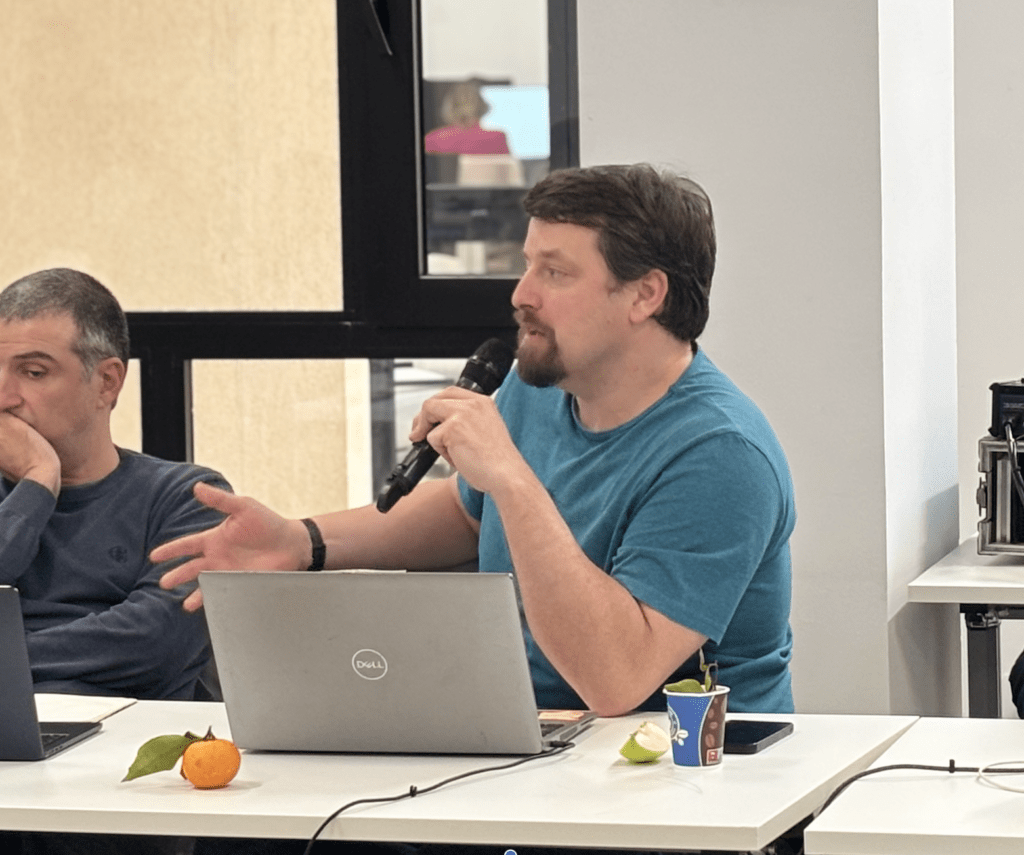
RBINS presented plans for expanding the MPA Managers network, while CSIC outlined how the Blue Schools programme will scale ocean literacy efforts across the Atlantic and Arctic.
Fisher Guardians Tackle Marine Litter and Ghost Gear
Sandra Ramos from CIIMAR presented the Fisher Guardian programme. Professional fishers contribute to marine litter and they also suffer from it. Marine litter can contaminate catches, damage propellers, and pose risk to navigation and crew safety. In addition, lost nets and traps may continue fishing for years, entangling marine wildlife and becoming sources of pollution.
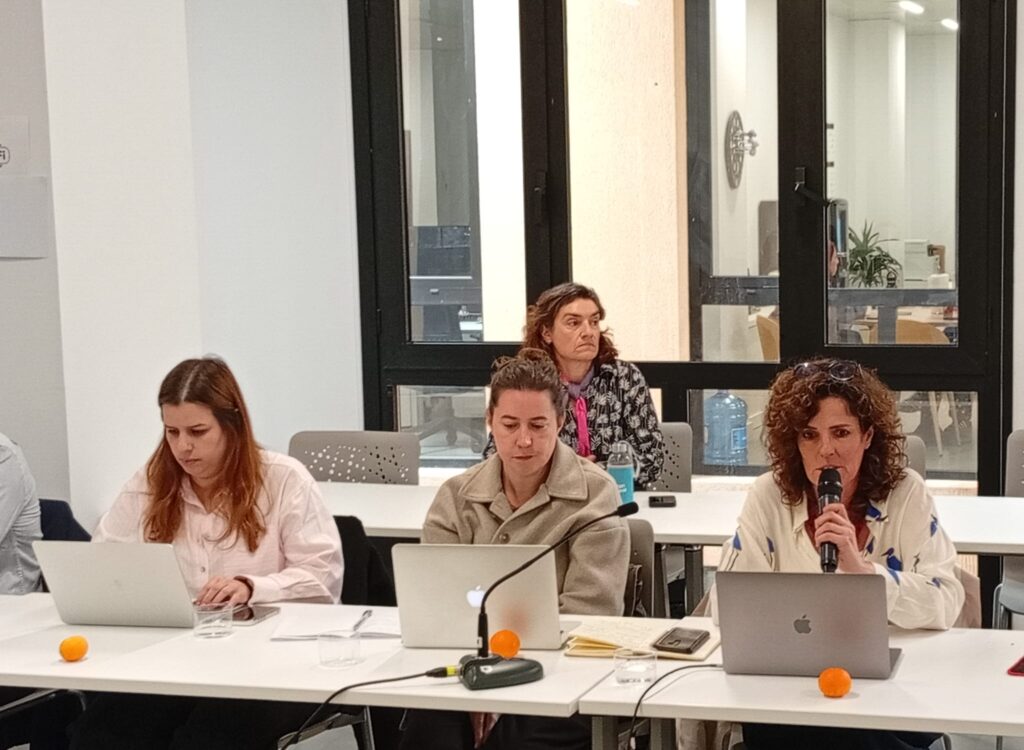
The programme combines awareness workshops, demonstration of proper gear disposal and recycling, and deployment of new technology to prevent ghost gear. It has already been launched in Gran Canaria with the installation of dedicated bins for discarded fishing nets by Gravity Wave, and the awareness workshops with professional fishers are being organised. Following these activities, participating fishers will test “MyGearTag”, an innovative system combining acoustic tags, surface locator units, and a mobile app to help quickly locate fishing gear accidently lost, before it becomes ghost gear. The technology requires initial training, and its implementation is planned to begin in September 2026.
The team stressed the importance of adapting the programme to local fishing communities, as practices differ significantly between regions. Timelines are tentative because fishers often have limited availability for voluntary participation. Implementation in the remaining demonstration and replication sites will start during RP2.
Hackathon Targets Ocean Entrepreneurs
Impact Hub Athens (IHA) presented plans for a hackathon on plastic reduction, monitoring, and valorisation. Target: 30 citizen ideas, 12 participants, 30 experts. Dates: 20-21 May 2026 (Thursday-Friday).
The hackathon offers €10,000 in awards (€2,000-5,000 per winning team) plus acceleration services. Consortium partners will serve as mentors, jury members, and speakers. The open call launches one month prior.
Work Package 3: Three Ambitious Demonstrations
Gran Canaria: Integrated Multi-Trophic Aquaculture Meets Artificial Reefs
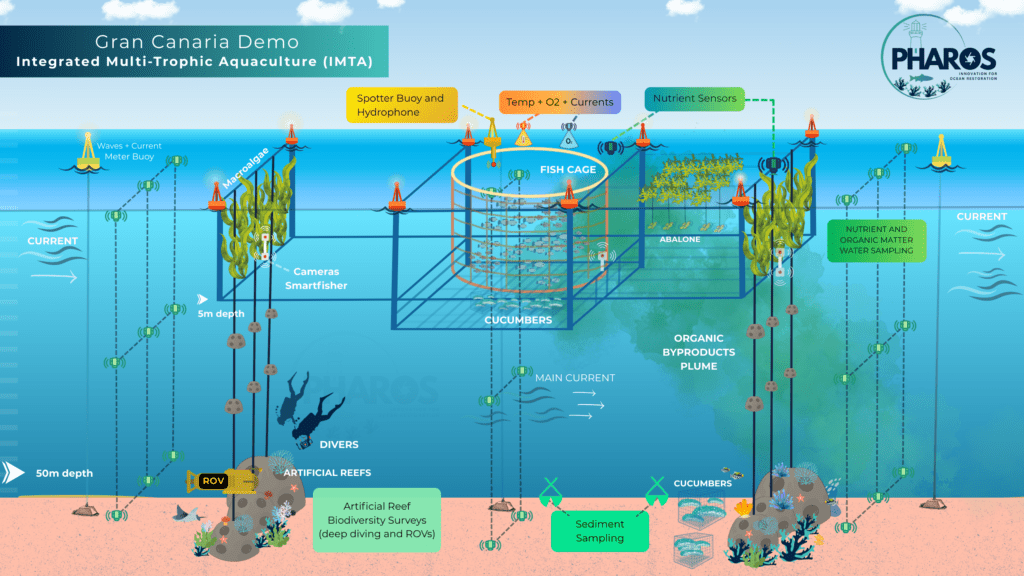
The most complex demonstration combines fish farming with nutrient-absorbing macroalgae and invertebrates. It’s an 18-month trial starting May 2027. PLOCAN coordinates while multiple partners contribute components.
The IMTA infrastructure includes:
- One fish cage stocked with gilthead seabream (May 2027)
- Macroalgae forests (Ulva lactuca) on longlines (February-April 2027)
- Abalone and sea cucumber cages beneath the fish
- Three designs of artificial reefs targeting different species: 10 type A reefs, 24 type B and 16 type C
Blue Oasis deploys smart buoys with hydrophones, current meters, and cameras. Nutrient sensors monitor upstream and downstream of the fish cage. The system transmits data in near-real-time via 4G to dashboards. PLOCAN contracts an aquaculture company for daily operations. Deep-diving teams conduct surveys. Stable isotope analysis will quantify nutrient transfers between components.
ULPGC explained abalone production. They’re conditioning broodstock, inducing spawning, and culturing larvae in settlement tanks. The challenge: Marking individual sea cucumbers for growth monitoring proves impossible. They eject pit tags. The team explored using cameras with AI to measure growth from snapshots. Gavin Burnell from the advisory board confirmed tagging doesn’t work but suggested AI approaches are promising.
Oscar Aller Rojas from Underwater Gardens explained how regulatory constraints reshaped the artificial reef component and ultimately led to a more integrated reef design. To avoid long permitting delays, authorities recommended incorporating the reefs into the IMTA system, which required merging Demo 1 and Demo 2, redesigning the layout, and relocating the reefs from 15 m to 49 m depth. In response, and to support more flexible monitoring, three reef types are being developed: seabed reefs for benthic and sand-dwelling species, semi-submerged floating reefs for vagile pelagic species, and cavity reefs for small demersal and encrusting species. Production is expected to be completed by February 2027, and the overall schedule remains largely on track aside from a later final delivery date.
Ireland: Seaweed Farming Meets Salmon Aquaculture
Julie Maguire from BMRS runs trials in Bantry Bay. The site hosts established salmon farms. The demonstration tests whether macroalgae farming can absorb excess nutrients whilst generating biomass. Year one data shows unexpected variations. Growth rates differ between sites despite similar conditions. Species composition varies. The team continues sampling and depositing data in repositories.
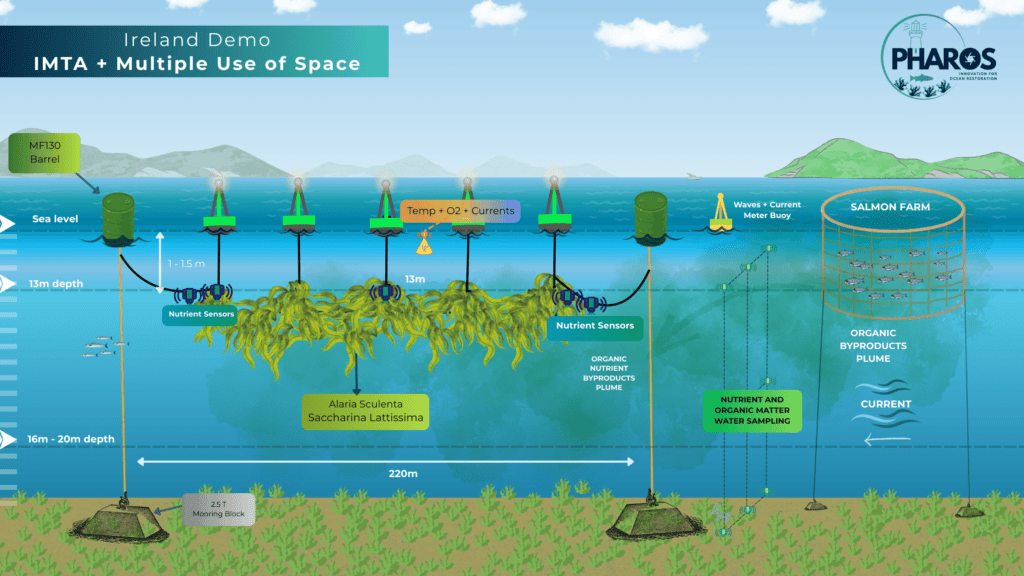
Alex Ziemba from Deltares calibrates hydrodynamic and biogeochemical models. The Del 3D modeling suite will integrate a macroalgae module. They’re exploring what-if scenarios. How much seaweed can Bantry Bay support before ecological thresholds are breached? One major seaweed farm could tip nutrient balances quickly, even without adding salmon farms. Light penetration changes benthic communities too.
But there is a twist, the salmon farm lies fallow in 2026. This provides control condition data. Stable isotope analysis from the last fallow period showed 93% of seaweed nitrogen came from salmon. The farm returns in 2027, allowing comparison.
Iceland: Early Detection of Invasive Pink Salmon
Erik Karlsson from DTU presented results from 2025. Pink salmon from Soviet Union introductions in the 1950s have spread across Europe. They spawn in odd years. Iceland fears disruption of prized fishing rivers. The demonstration tests whether environmental DNA (eDNA) can enable early detection.
They deployed an Environmental Sample Processor (ESP) in the Eyjafjarðará River. This automated system filters water, extracts DNA, and runs real-time qPCR analysis. It can target six species every two hours. They processed pink salmon samples three times for reliability, plus arctic char, trout, and a control.
Results validated the approach. The ESP detected pink salmon DNA on 6 July 2025. The first physical observation came nearly a month later. Manual eDNA sampling at eight river sites tracked spawning migration upstream in mid-July and August, then downstream in September. Exactly as expected.
The feared 2025 invasion didn’t materialise. Numbers were low across Europe. But the method works. In 2026, they’ll monitor fry emigration in April-May. Blue Oasis will deploy improved cameras and hydrophones. The system might detect seals following salmon, providing indirect evidence.
Work Package 4: Data Management and Digital Twins
Marcos from Blue Oasis presented the data management architecture. Multiple sensors with different telemetries feed data through quality control and harmonisation into EDITO and EMODnet platforms. The team follows FAIR principles (Findable, Accessible, Interoperable, Reusable).
Marcos confirmed Blue Oasis servers will hold data before transfer to EDITO. Details need clarification. Alex stressed embargo periods matter, and that researchers need time to publish before data becomes public. Up to two years post-project is possible.
Ireland’s twin uses Deltares’ Del 3D models with hydrodynamic, biogeochemical, and macroalgae modules. Iceland’s approach relies more on AI and machine learning, adapting algorithms to local conditions for species detection. Concerns arose about interoperability standards. Different projects use different formats.
Challenges and Opportunities
The AGM revealed both progress and pressure points. Demonstrations are moving from planning to implementation. Permitting delays in Spain highlight bureaucratic challenges in marine innovation. Ireland and Iceland demonstrate the value of getting started early. They’re already generating data and refining methods.
The social engagement programmes show maturity. Moving from funding-dependent models to tool-based approaches ensures sustainability. Schools, fishers, and entrepreneurs need resources they can use independently. The hackathon and living labs create local ownership.
Data management emerged as more complex than anticipated. FAIR principles sound simple. Implementation requires coordination across partners, platforms, and standards. The proposal for a data provenance workshop could influence EU policy beyond PHAROS.
Perhaps most importantly, the AGM demonstrated a consortium willing to adapt. The amendment isn’t failure. It’s responsiveness. Marine ecosystems don’t follow grant agreement timelines. Fish spawn when they spawn. Permits arrive when they arrive. Success means adjusting whilst maintaining scientific rigour and stakeholder trust.
About PHAROS
PHAROS is an EU-funded project led by the Canary Islands Ocean Platform (PLOCAN), running from September 2024 to August 2029. The project implements nature-based solutions for ecosystem restoration across the Atlantic and Arctic basins through four demonstration sites, community engagement programmes, and Digital Twin Ocean development. PHAROS aligns with the EU’s Ocean Mission objectives: protecting and restoring marine ecosystems, eliminating pollution, and achieving a sustainable, carbon-neutral blue economy by 2030.