MarCoLab Lanzarote

PHAROS Replication Living Lab

What is MarCoLab Lanzarote?

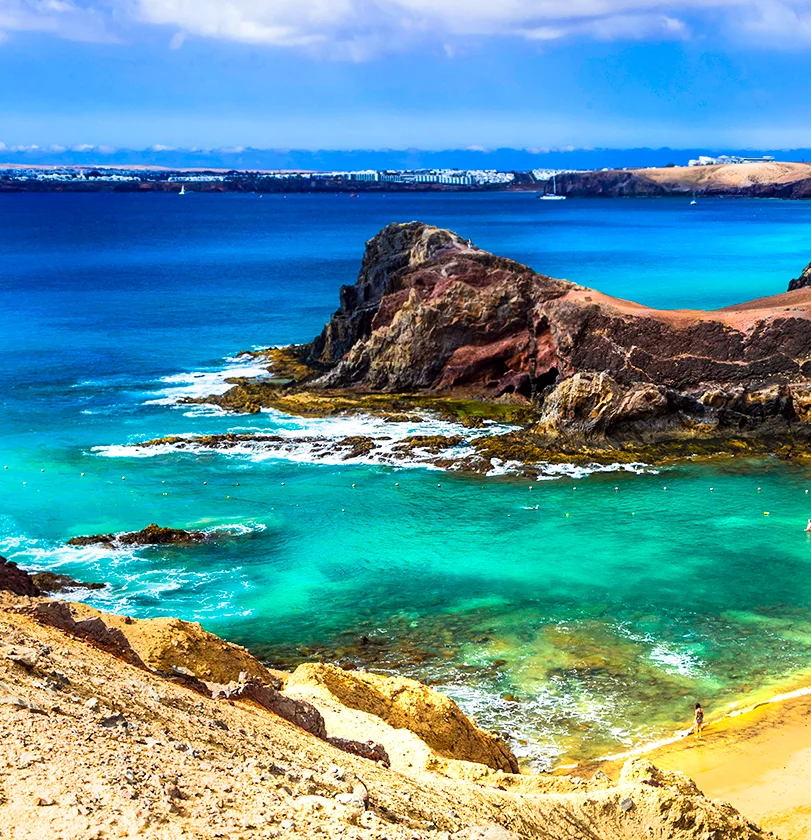
MarCoLab Lanzarote is a replication Living Lab based on the Gran Canaria model and is being developed as an emerging Living Lab in the eastern Canary Islands. The lab focuses on marine biodiversity monitoring and circular economy strategies, with a particular emphasis on building awareness and behaviour change around blue-economy issues.

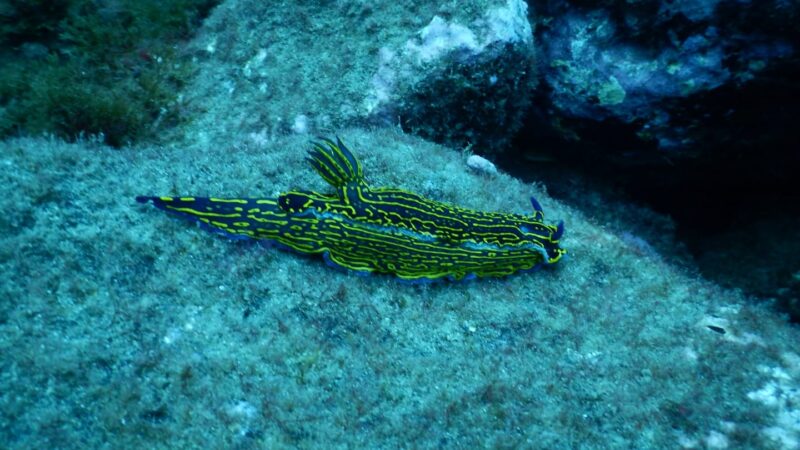
The Lanzarote Living Lab uses MINKA primarily for biodiversity observation and species mapping, with tailored activities for schools, diving clubs and local volunteers. It engages with marine reservesdiving centreswaste management authorities and RedPROMAR collaborators, leveraging Gran Canaria networks and experiences to launch citizen science campaigns from January 2026.

As a replication Living Lab, Lanzarote adapts and scales the methods tested in the demonstration Living Labs, guided by its local context, needs and priorities. The replication nature of the lab allows it to leverage Gran Canaria networks and experiences, whilst requiring formal co-ordination structures and confirmation from local stakeholders to move into full planning mode. The PHAROS project describes this as taking what is learnt in the demonstration sites and using it to start replication Living Labs in other places, with each one adapting the same core method to its own local challenges.

Why Lanzarote?

Lanzarote is part of the Canary Islands archipelago and shares many of the same environmental and socio-economic strains as Gran Canaria. The island’s coastal and marine environments face pressures from tourism, pollution and overfishing, making it an ideal location for testing and scaling restoration solutions.

The thematic priorities of the Lanzarote Living Lab include:

  • marine biodiversity monitoring
  • circular economy strategies
  • building awareness and behaviour change around the blue economy
  • marine protected area (MPA)-related themes
  • coastal tourism pressures

The lab also engages with MPA-related themes and coastal tourism pressures, recognising the importance of marine protected areas in the region.

First Activities

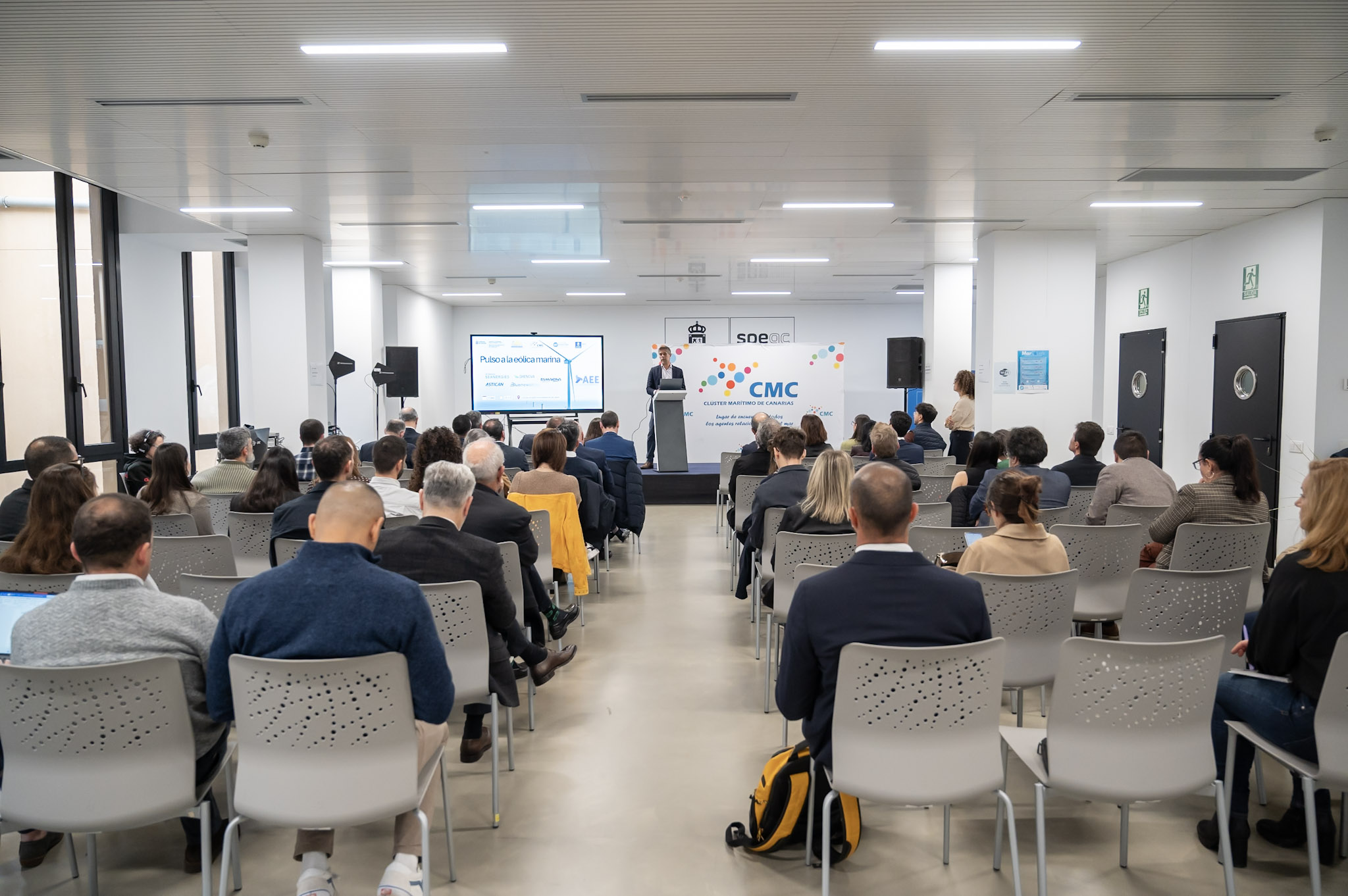
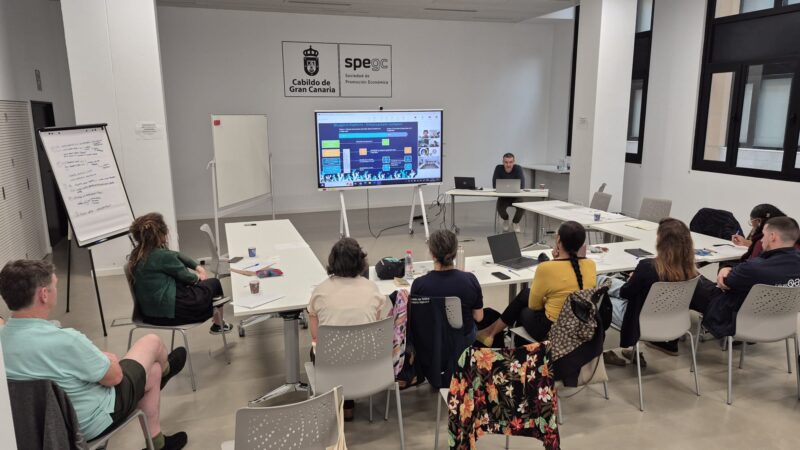
MarCoLab Lanzarote held its first activities on 30 January 2026, alongside MarCoLab Gran Canaria, during the first PHAROS Mega Event, held from 29 to 31 January 2026. The event marked the beginning of the work of the two Living Lab communitiesMarCoLab Gran Canaria and MarCoLab Lanzarote.

YouTube Short Embed

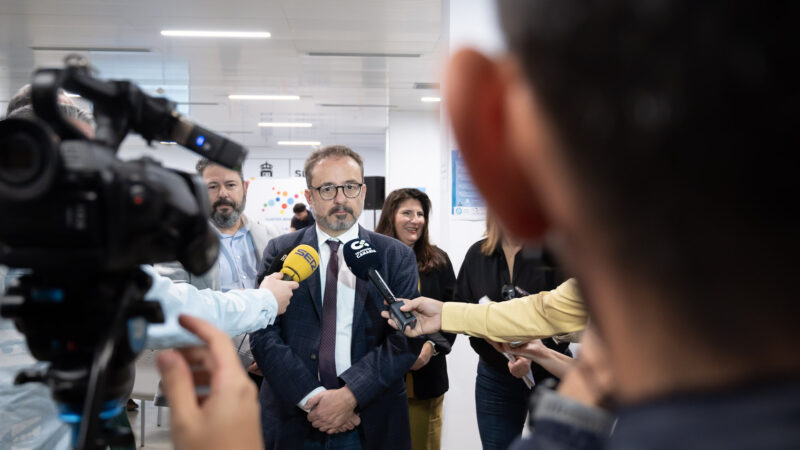
The event brought together government representatives, researchers, innovators, educational institutions, businesses, investors and local communities, who worked collaboratively to address marine ecosystem restoration challenges and contribute to a healthier ocean. The MarCoLab press conference marked the official start of a collaborative experiment that will transform the coast of the Canary Islands into a living laboratory, where citizens use their smartphones and become the eyes and ears of marine science.

MarCoLab NEWS

Islands Forge Path to Healthier Seas: Canary Islands Living Lab Launch and the PHAROS Mega Event
Islands Forge Path to Healthier Seas: Canary Islands Living Lab Launch and the PHAROS Mega Event 1024 681 PHAROS Project

LAS PALMAS, Gran Canaria – For three days at the end of January 2026 (28-31), the Canary Islands became the focal point for a concerted effort to rethink how we protect and restore marine environments. The first PHAROS Mega Event, hosted by the MarCoLab initiatives on Gran Canaria and Lanzarote, brought together a broad cross section…
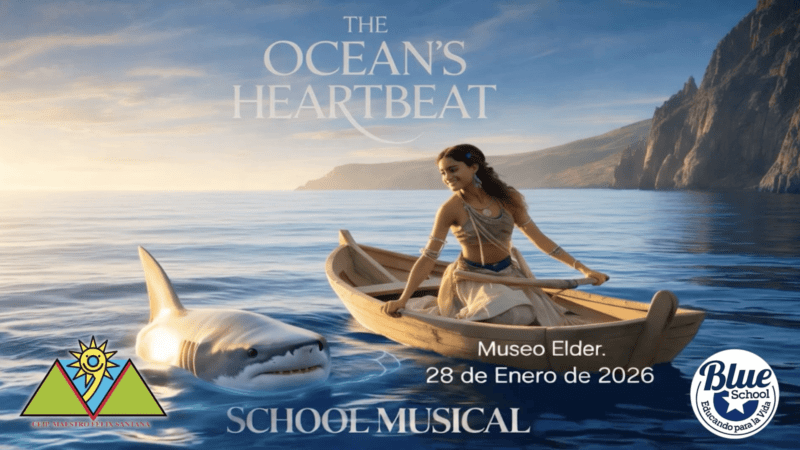
The Heartbeat of the Ocean: How a Canarian School Turned a Musical Dream into a Blue Revolution
The Heartbeat of the Ocean: How a Canarian School Turned a Musical Dream into a Blue Revolution 1024 575 PHAROS Project

January 30, 2026, Las Palmas, Gran Canaria: A public school in Gran Canaria has earned a recognition through PHAROS project after turning a teacher’s offhand comment into a full-scale musical about ocean conservation. “The Heartbeat of the Ocean,” written and performed by students at the CEIP Maestro Félix Santana, has shown how arts education can…

MPA Managers Forge Path Forward at Landmark Atlantic-Arctic Workshop
MPA Managers Forge Path Forward at Landmark Atlantic-Arctic Workshop 1024 768 PHAROS Project

Marine Protected Area (MPA) practitioners from across the Atlantic and Arctic regions gathered on 29th January 2026 in Gran Canaria to tackle the sector’s most persistent challenges, from governance fragmentation to critical funding shortages. The workshop, held with both onsite and online participation, served as a collaborative forum to share solutions and directly shape the…

Citizens Become Scientists in Canary Islands “BioBlitz”
Citizens Become Scientists in Canary Islands “BioBlitz” 1024 768 PHAROS Project

On 31 January 2026, families, snorkellers, and divers came with a purpose to document what lives in the water during the BioBlitz day.

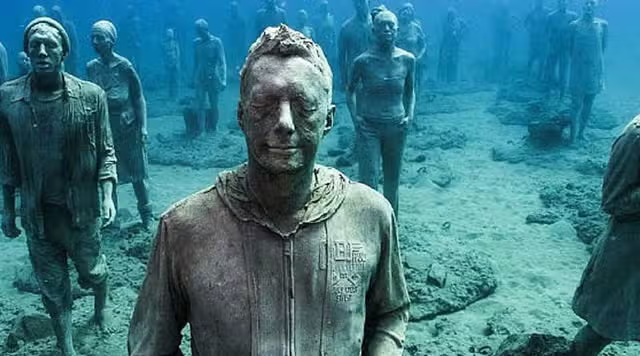
Marine BioBlitz Day at the Museo Atlántico, Lanzarote
Marine BioBlitz Day at the Museo Atlántico, Lanzarote 640 356 PHAROS Project

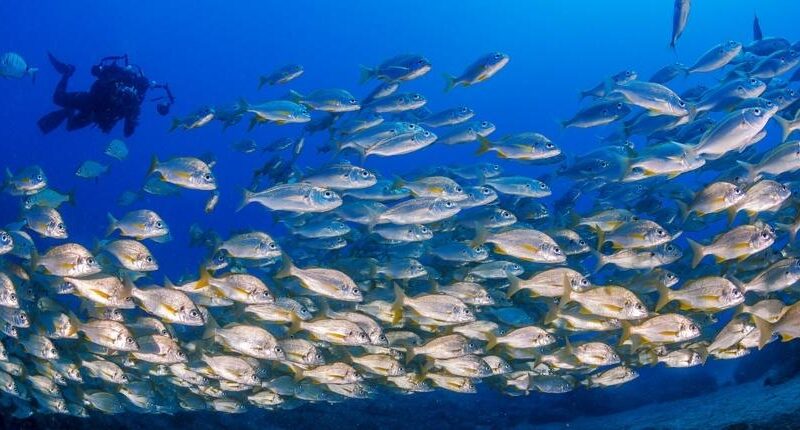
Beneath Lanzarote’s waters, 300 sculptures have transformed into living reefs. Citizen scientists reveal how art accelerates ocean restoration.

Best Practices in Living Labs Report
Best Practices in Living Labs Report 1024 594 PHAROS Project

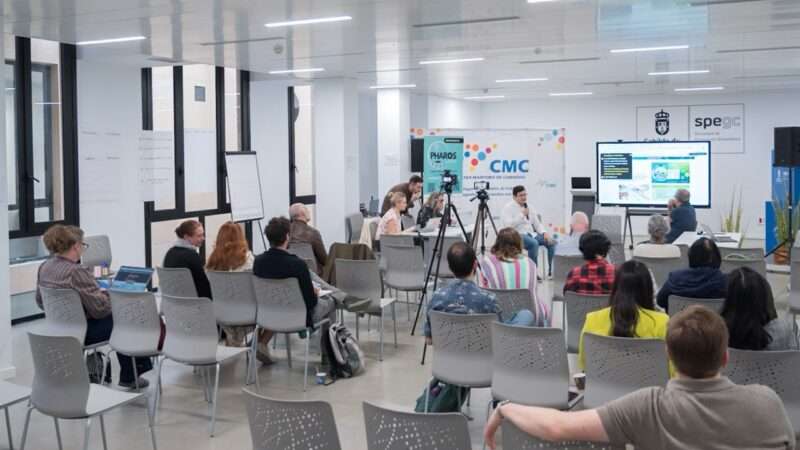
The first “Best Practices in Living Labs Implementation” workshop, organised at the Clúster Marítimo de Canarias on January 30, 2026, and forming part of the PHAROS Project series, brought together a consortium of European projects.

Spanish media reported on Fisher Guardian initiative
Spanish media reported on Fisher Guardian initiative 1000 563 PHAROS Project

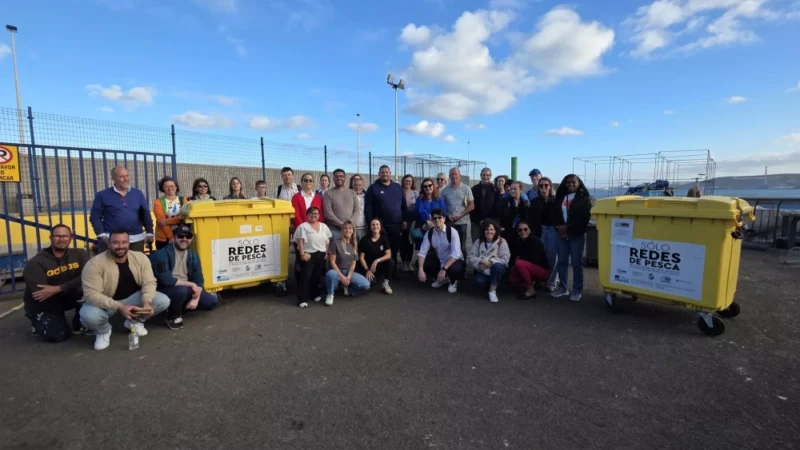
A circular economy initiative focused on recycling end-of-life fishing gear has been launched in San Cristóbal, Gran Canaria. The project, named “Fisher Guardians,” is driven by a collaboration between the Oceanic Platform of the Canary Islands (PLOCAN), the company Gravity Wave, and the local San Cristóbal Fishing Cooperative (Pescatobal). It operates under the broader European-funded…

Marine BioBlitz Day at El Cabrón Marine Reserve
Marine BioBlitz Day at El Cabrón Marine Reserve 940 430 PHAROS Project

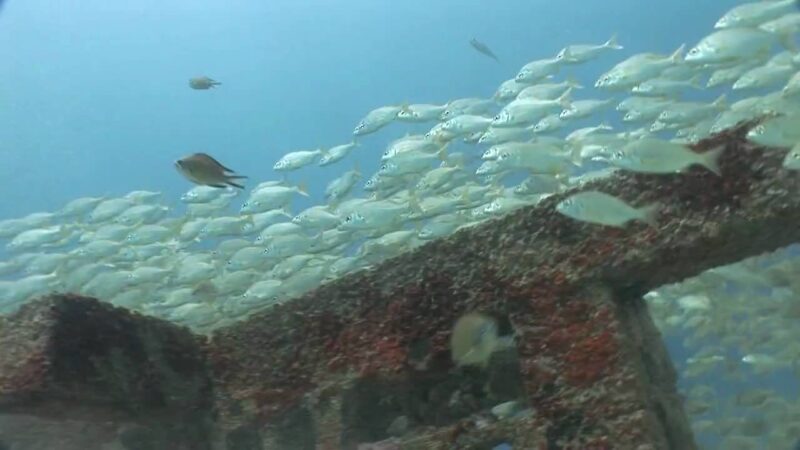
Gran Canaria’s El Cabrón Marine Reserve hosts 400+ species. PHAROS scientists use this natural reef as the gold standard for artificial reefs.

How PHAROS Project Turns Gran Canaria Fishing Nets Into Value Products
How PHAROS Project Turns Gran Canaria Fishing Nets Into Value Products 1024 768 PHAROS Project

SAN CRISTÓBAL, Gran Canaria. On 29 January 2026, local fishermen gathered to discuss what happens to their nets when the fishing is done.

Citizen Science Marine Day at the Biotopo de Arguineguín
Citizen Science Marine Day at the Biotopo de Arguineguín 1024 576 PHAROS Project

Since 1991, Gran Canaria’s Biotopo de Arguineguín transformed barren seabed into thriving reef. PHAROS scientists reveal what 34 years teaches us.

Key Activities

MarCoLab Lanzarote is open to everyone who wants to contribute to a healthier oceanResidents, fishers, scientists, students, divers, entrepreneurs and local organisations are all invited to get involved.

You can join a future BioBlitz and contribute observations through the MINKA platform. You can participate in workshops and seminars on topics such as marine littercircular economy and sustainable fishing. You can connect with the Fisher Guardians programme if you are part of the fishing community. You can bring your school into the Blue Schools Network. Or you can simply follow the project’s progress and share its results with your networks.

The ocean surrounding Lanzarote is a shared resource, and its future depends on the actions we take together.

MINKA - Citizen Science

MINKA is the central citizen science infrastructure for PHAROS Living Labs. In Lanzarote, it is used for biodiversity observation and species mapping, with activities adapted for schools, diving clubs and local volunteers.

The Museo Atlántico proved a unique site for citizen science. Participants photographed algae, sponges and fish on the sculptures and uploaded findings to MINKA. The data adds to the growing body of evidence that human ingenuity can accelerate the ocean’s healing processes.

Fisher Guardians

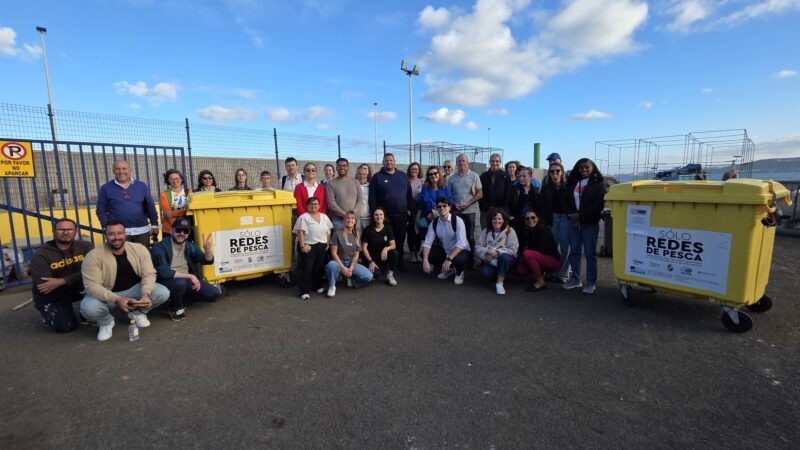
The Fisher Guardians programme engages small-scale fishers and coastal users in data stewardship and environmental monitoring. Fishers and cooperatives collect and recycle abandoned fishing gear instead of leaving it to pollute the sea. The programme is driven by PHAROS partners PLOCAN and Gravity Wave with local fishing communities.

The pilot was launched at the port of San Cristóbal in Gran Canaria and is designed for island-scale action in Lanzarote. It builds on the NETTAGplus project, a three-year Horizon Europe initiative tackling discarded fishing gear.

Citizen Litter Entrepreneurs

The Citizen Litter Entrepreneurs programme supports social innovation at the intersection of marine litter prevention and inclusive entrepreneurship. In Lanzarote, initiatives are adapted for island-scale action, engaging citizens, particularly youth and underrepresented groups, in designing micro-business and awareness campaigns.

The From Waste to Worth seminar introduced best practices for ocean entrepreneurs. Participants learned to transform plastic litter into sustainable businesses through circular economy ventures. The session was held in Spanish with a panel of blue economy experts.

Blue Schools

The Blue Schools Network is a core part of PHAROS educational outreach. It connects school communities with marine and coastal issues through experiential learning, working towards the Network of European Blue Schools.

In Lanzarote, the programme is promoted through Rancho Texas Park, inviting the educational community to join a European movement for sustainable oceansColegio Arenas Internacional is the only school in Lanzarote in the network, holding the Aquamarine Blue School distinction since 2024.

MPA Platform and Ecological Corridors

The MPA Blueprint Platform and ecological corridors work supports MPA expansion and citizen participation through adapted BLUE4ALL platforms. It contributes to the development of ecological corridors in the Atlantic and Arctic basins.

MPA managers held a workshop on key digital tools during the Mega Event, exploring tools to support their work in managing protected sea areas.

METHODOLOGY & APPROACH

The Lanzarote Living Lab follows the PHAROS methodology, adapted from ENoLL. It is participatory and iterative, a flexible guide adapted to local readiness.

Five phasesscope definition, stakeholder engagement, collaborative design, risk assessment and launching co-creationMonitoring and evaluation complement these.

It uses the quadruple helixpublic authorities, businesses, academia and civil society. The quintuple helix adds environmental considerations. The Canary Islands Maritime Cluster co-ordinates Living Labs in Gran Canaria (demo) and Lanzarote (replication), uniting industry, academia, government, NGOs and civil society to co-design nature-based solutions.

Key principlesco-creation from the startreal-life settingsmulti-stakeholder participationopenness and transparency, and iteration and feedback for adaptive design.

Privacy Preferences

When you visit our website, it may store information through your browser from specific services, usually in the form of cookies. Our Privacy Policy can be read here.

Here you can change your Privacy preferences. It is worth noting that blocking some types of cookies may impact your experience on our website and the services we are able to offer.

Click to enable/disable Google Analytics tracking code.
Click to enable/disable Google Fonts.
Click to enable/disable Google Maps.
Click to enable/disable video embeds.
Our website uses cookies, mainly from 3rd party services. Define your Privacy Preferences and/or agree to our use of cookies.