From Trash to Triumph: PHAROS Hackathon Awards €10,000 to Innovators Tackling the Marine Litter Crisis
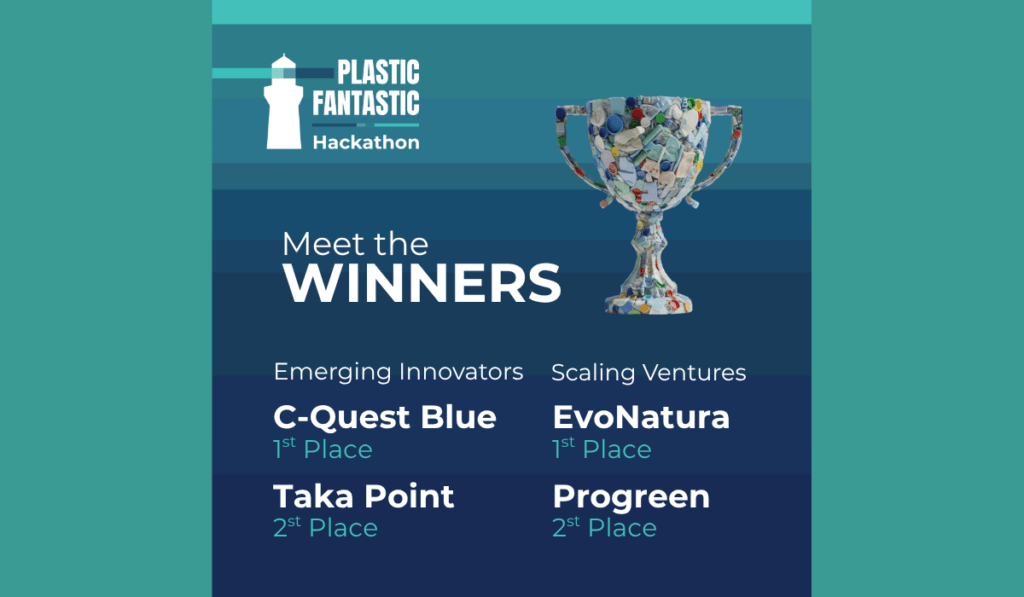
From Trash to Triumph: PHAROS Hackathon Awards €10,000 to Innovators Tackling the Marine Litter Crisis https://pharosproject.eu/wp-content/uploads/2026/06/Copy-of-Winners-Template-1024x597.png 1024 597 PHAROS Project https://pharosproject.eu/wp-content/uploads/2026/06/Copy-of-Winners-Template-1024x597.pngAfter an eight-day sprint that drew innovators from four continents, the Pharos Plastic Fantastic Hackathon crowned its winners on 19 May, awarding €10,000 in cash prizes and a three-month acceleration programme to four teams with bold, actionable solutions to the world’s marine litter crisis.
The online challenge, organised by Impact Hub Athens under the EU‑funded PHAROS project, brought together 20 finalists for the Bootcamp and 12 finalists for the Plastic Fantastic Hackathon Finals in a high-stakes pitching event. The mission: design breakthrough approaches to detect, collect, prevent and valorise the plastic choking our oceans. By the time the virtual dust settled, the jury had whittled the field down to two winners per track.
Winners
Track A – Idea Stage (Emerging Innovators)
First Place (€3,000): C-Quest Blue (Ireland)
Ireland’s entry turned heads with high chemistry: converting mixed coastal plastics into recycled carbon feedstock using a bio‑derived catalyst made from plant extracts. The process supports biodiversity recovery, waste valorisation and circular bioeconomy solutions without requiring plastic pre‑processing. The jury praised its elegant, low‑energy chemistry and noted that “by removing the need for pre‑sorting or washing, C-Quest Blue could unlock value from previously unrecyclable coastal plastics.”
Second Place (€1,000): Taka Point (Kenya)
Kenya’s Taka Point took runner‑up honours with an IoT‑enabled smart bin system that gamifies recycling in schools, malls and events. Users earn points for recycling bottles, while organisations track environmental impact in real time. The judges called it “a clever fusion of behavioural economics and digital monitoring – turning waste disposal into a reward‑driven habit for the next generation.”
Track B – Established Organisations (Scaling Ventures)
First Place (€4,000): EvoNatura (United States)
An American biotech firm won the top prize in the mature track with an additive that gives conventional plastics a ‘programmed death’ in soil (and is currently working on an ocean‑deployable solution). Compatible with existing production lines, EvoNatura’s additive maintains performance while enabling full biodegradation in real conditions such as soil and compost. The jury noted its immediate scalability, regulatory readiness and the potential to retrofit global supply chains without retooling.
Second Place (€2,000): Progreen (Kenya)
Kenya’s Progreen secured second place by turning plastic waste into circular fuels and eco‑bricks. Recyclable plastics become certified industrial fuels, while laminates are transformed into bricks for local construction. The solution prevents waste from reaching dumpsites and oceans. The judges commended its dual‑revenue model and direct impact on both energy poverty and marine litter, calling it “a pragmatic, shovel‑ready answer to East Africa’s plastic crisis.”
All four winning teams will now enter the three‑month accelerator, with a demo day expected in late summer.
Description of 8 remaining finalist teams and ideas
Track A – Idea Stage finalists beside winning teams included:
Replay Plastic Workshops (Greece) aims to change human behaviour before plastic ever hits the tide. It transforms plastic waste on Greek islands into educational and creative activities through workshops and mobile fabrication tools. By promoting recycling, reuse and circular economy practices, it empowers communities to reduce waste and strengthen resilience.
Type of Solution: Collection & Valorisation | Greece
Beach Plastic Board Games (Greece) offers a charmingly circular model – turning trash into Monopoly‑style tokens and local handicrafts. It transforms beach plastic waste into handcrafted games using simple recycling methods. Through workshops and local production, the project promotes circular economy practices, reduces marine litter and empowers communities creatively.
Type of Solution: Collection & Valorisation | Greece
Chitofoil (Portugal) attacks horticultural waste by replacing plastic pots with a biodegradable foil made from shrimp shell waste and biopolymers. Designed to replace plastic horticulture pots, it degrades naturally in soil while improving plant growth, water retention and circular agriculture practices sustainably.
Type of Solution: Prevention & Reduction | Portugal
Chrysoptera (UK) employs AI and drift forecasting to predict where ghost gear will land, even adding a QR‑code return scheme. It detects, predicts and prevents marine litter across Atlantic and Arctic coastlines. Using AI, drift forecasting and a QR‑based return scheme for ghost gear, the system helps coastal communities reduce debris and improve marine monitoring.
Type of Solution: Detection & Monitoring | United Kingdom
Track B – Established Organisations finalists beside winning teams included:
WeavAir (Poland) delivers hardware and software solutions for plastic and particulate pollution monitoring. Using advanced sensors and predictive analytics, the system identifies pollution sources in real time, helping reduce waste pathways and improve ecosystem health.
Type of Solution: Detection & Monitoring | Poland
Eko Daska (Montenegro) offers urban furniture that lasts 30 years, with each bench consuming 50kg of waste.
(Type of Solution: Collection & Valorisation)
Zero Waste Solutions (Pakistan) advances circular economy practices through waste recovery, recycling, composting and plastic transformation. The company converts low‑value plastics into construction materials while reducing landfill dependence and pollution.
Type of Solution: Collection & Valorisation | Pakistan
Nusa Penida Plastic Project (France/Indonesia) focuses on low‑tech recycling equipment for island communities. Protecting Nusa Penida, the project supports plastic waste management by expanding collection points, improving sorting systems and introducing low‑tech recycling equipment. Developed with local partners, it reduces plastic leakage and strengthens recycling.
Type of Solution: Collection & Valorisation | France
Beyond the Prize Money
Winning teams don’t just walk away with cash. Each receives a three‑month acceleration programme delivered by Impact Hub Athens, offering curated capacity‑building in blue economy strategy, impact measurement and investor readiness. They also gain access to a dedicated network of marine ecologists, business mentors and EU‑level circular economy experts.
“The quality of pitches was extraordinary, not just in technical ambition, but in practical, deployable thinking,” said Mikel Oleaga from Impact Hub Athens, Pharos Consortium Partner and event organiser. “Marine litter is a crisis of detection, collection, and prevention. These four winners proved you can tackle all three at once.”
The full hackathon programme (Bootcamp and Hackathon finals), which ran from 11 to 19 May, is part of the broader PHAROS project , an EU‑funded project dedicated to nature‑based solutions for ecosystem restoration. With oceans, seas and coastlines increasingly choked by plastics, chemicals and debris, the organisers made clear that this was not an academic exercise.
“This was a sprint for actionable change,” said Gordon Dalton, PHAROS Project Coordinator from PLOCAN. “And the finish line is a cleaner ocean.”