The Secret in the Water: How eDNA is Fighting Pink Salmon in Iceland
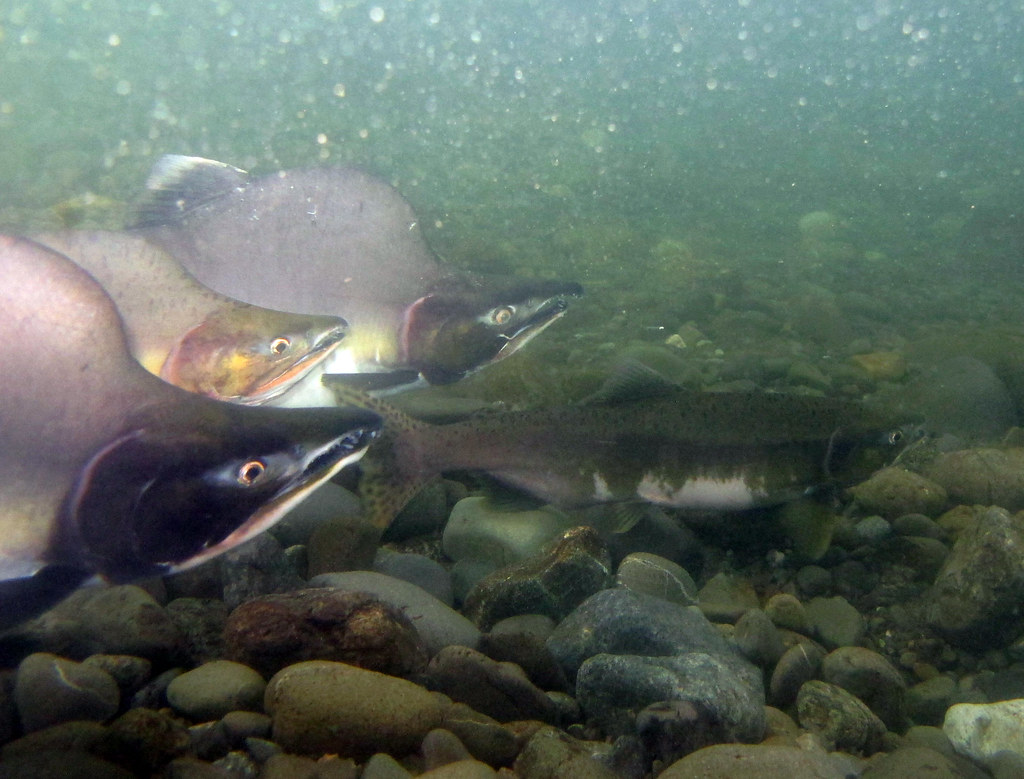
The Secret in the Water: How eDNA is Fighting Pink Salmon in Iceland https://pharosproject.eu/wp-content/uploads/2026/04/pink-salmon.jpg 1024 779 PHAROS Project https://pharosproject.eu/wp-content/uploads/2026/04/pink-salmon.jpgYou wouldn’t know it by looking. The river runs clear, maybe a little greenish-grey under the Arctic sky. But that water holds secrets: Tiny fragments of skin, scales so small they’d slip through your fingers, mucus, waste. All of it shedding from every creature that swims by. That’s environmental DNA. eDNA, for short. And it’s becoming the most powerful weapon we have against one very unwelcome visitor: the pink salmon.
Here’s the problem. Pink salmon were introduced to the Atlantic decades ago, probably from their native Pacific range. Now they’re spreading through European waters like a bad rumour, and they’re aggressive. They outcompete Atlantic salmon and Arctic char, mess with spawning grounds, and generally throw the whole ecosystem out of whack. For Iceland, where salmon fishing isn’t just a hobby but a pillar of the economy and a point of national pride, this is a proper headache.
The old way of dealing with this? Send someone out to stand by the river and count fish: Labour‑intensive, slow. And by the time you see a pink salmon with your own eyes, it’s often already too late. They’ve spawned, or worse, they’ve established a population that’s about to explode.
A group of researchers (led by the Technical University of Denmark, as part of a project PHAROS) are building a smart, non‑invasive early warning system that listens for the genetic whispers of invasive fish, and it works in near real time.
What actually is eDNA monitoring?
Imagine you’re holding a cup of river water. You can’t see anything swimming in it. But if you had the right tools, you’d find traces of everything that’s passed through. That’s the magic of environmental DNA.
For invasive species like pink salmon, eDNA changes the game, because it’s fast and quiet. And it doesn’t disturb the native fish we’re trying to protect.
The PHAROS project takes this further. They’ve put a high‑tech buoy in the water which automatically collects samples, runs genetic analysis on board, and sends an alert the moment it detects pink salmon DNA. Think of it as a forensic lab that never sleeps, anchored right there in the current.
That alert gives river managers a crucial head start. They can swoop in and remove the invasive fish before they’ve had a chance to spawn. It’s the difference between putting out a match and fighting a wildfire.
The strategy: Why early detection actually matters
Here’s the thing about invasive species: They’re easiest to control when nobody knows they’re there. The moment you see them, really see them with your own eyes, the population is usually already too big to handle easily.
The PHAROS strategy is simple: Stop being reactive (“Oh no, we caught a pink salmon, what do we do?”) and start being proactive (“The buoy just pinged. Let’s go.”).
Pink salmon have a quirky life cycle, by the way. They return to rivers to spawn only in odd‑numbered years. That gives the project a clear, two‑year rhythm to test and refine everything. It’s like nature built in a schedule for them.
The strategy rests on three legs.
First, real‑time detection. That’s the robotic buoy (officially called an Environmental Sample Processor, or ESP). It runs 24/7. No days off. No coffee breaks.
Second, data‑driven intervention. Once the buoy tells you where and when the pink salmon are showing up, you can target your removal efforts. That means less wasted time, less disturbance to native species, and a much higher chance of actually making a dent.
Third, blend the tech with local knowledge. The project brings in river managers, anglers, even school kids. Because a robot is clever, but a robot plus a local who knows every bend of the river? That’s a superpower.
Two ways to decode the DNA: qPCR and metabarcoding
You can’t just dip a stick in the water and read the results, as the DNA traces are tiny. To make sense of them, the project uses two genetic techniques which work like different tools in a detective’s kit.
First is qPCR: Quantitative Polymerase Chain Reaction, if you want the full mouthful. Think of it as a highly specific searchlight. You design it to look for one thing and one thing only: a unique genetic marker for pink salmon. And the “quantitative” bit means it doesn’t just say yes or no. It tells you how much DNA is there. A strong signal means a lot of fish are nearby. The ESP buoy runs this analysis on board, so the results come through almost instantly.
Second is metabarcoding. This is the wide‑angle lens. Instead of hunting for a single species, it captures a DNA snapshot of everything in that water sample. Pink salmon, Atlantic salmon, Arctic char, brown trout, even the insects and algae. You don’t use metabarcoding on the buoy itself (it’s more lab‑intensive). But back on dry land, it validates what the buoy found and keeps an eye on the overall health of the river. Because you don’t want to wipe out pink salmon only to accidentally harm something else.
Together, these two methods give you precision and breadth. You know exactly where the invaders are, and you also know what’s happening to everyone else.
The toolkit: robots, hydrophones, cameras, and a digital twin
None of this works with a single gadget. The PHAROS demo pulls together a whole suite of tools, each doing a different job.
The Environmental Sample Processor (ESP) is the star. It’s a robotic “lab‑in‑a‑box” from MBARI. Pumps water, filters out the eDNA, runs the qPCR test. No human needed on site.
Then there’s Hydrotwin‑S. That’s an AI‑driven underwater hydrophone. It listens for sounds (like the surge of seals that often follow a salmon run) and classifies them. It’s a secondary clue, a way to cross‑check what the eDNA is saying. If the buoy says pink salmon are present and the hydrophone hears something fishy (pun not intended but I’ll keep it), you’ve got a much stronger case.
SmartFISHER is exactly what it sounds like: Underwater 2D cameras with AI that can identify and count fish species in real time, visual confirmation. You get a live video feed.
The MINKA Citizen Science platform (developed by CSIC) connects researchers with the public. River owners, students, local communities can report observations, upload photos, become active partners.
All this data feeds into something called the Digital Twin of the Ocean, a virtual model that integrates everything (eDNA, acoustic signals, video footage) into one dashboard. You can watch the invasion unfold in near real time, spot patterns, make decisions fast.
And finally, the boots‑on‑the‑ground tools: Electrofishing and nets, old school, selective, but absolutely necessary. Once the monitoring system has done its job (confirmed the presence of pink salmon and pinpointed the best moment), you go in and physically remove them. The goal is a reduction of more than 50% at the demonstration sites.
That’s the whole loop. Detect early. Target precisely. Remove effectively.
What’s the catch?
It’s not perfect. Nothing ever is. The buoy costs money. The analysis can sometimes pick up DNA that drifted downstream from somewhere else (a dead fish a mile up, for example). And you still need humans to interpret the data and swing the nets.
But compared to the old way? Standing on a riverbank with a clipboard, hoping to spot a fish? This is light years ahead.
For Iceland, for the Arctic, for any place where invasive species are creeping in, eDNA monitoring offers something rare: a chance to get ahead of the problem. Not to react. Not to clean up the mess afterwards. To stop it before it really starts.