Irish Living Lab Day 3: Bantry Marine Research Station
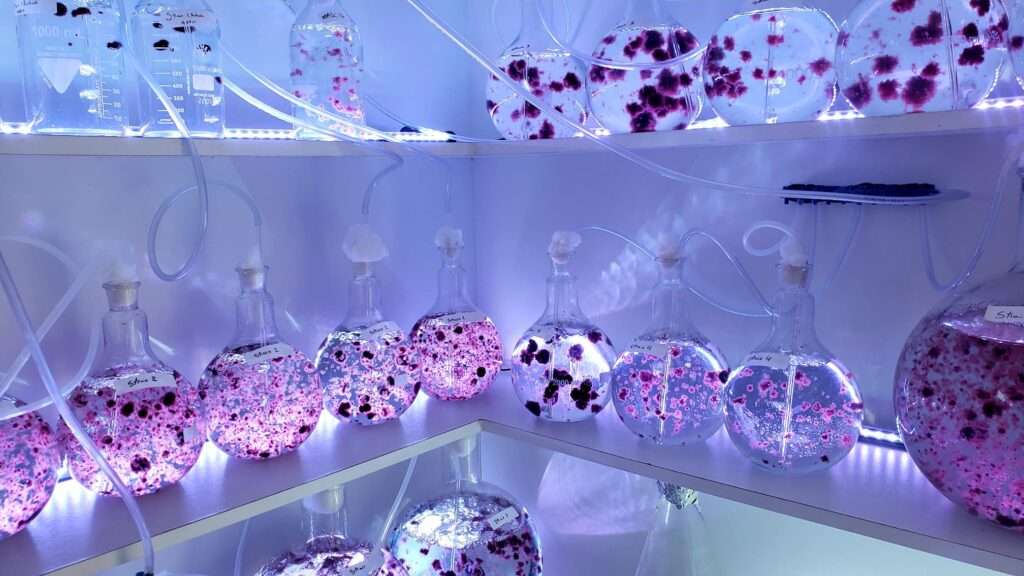
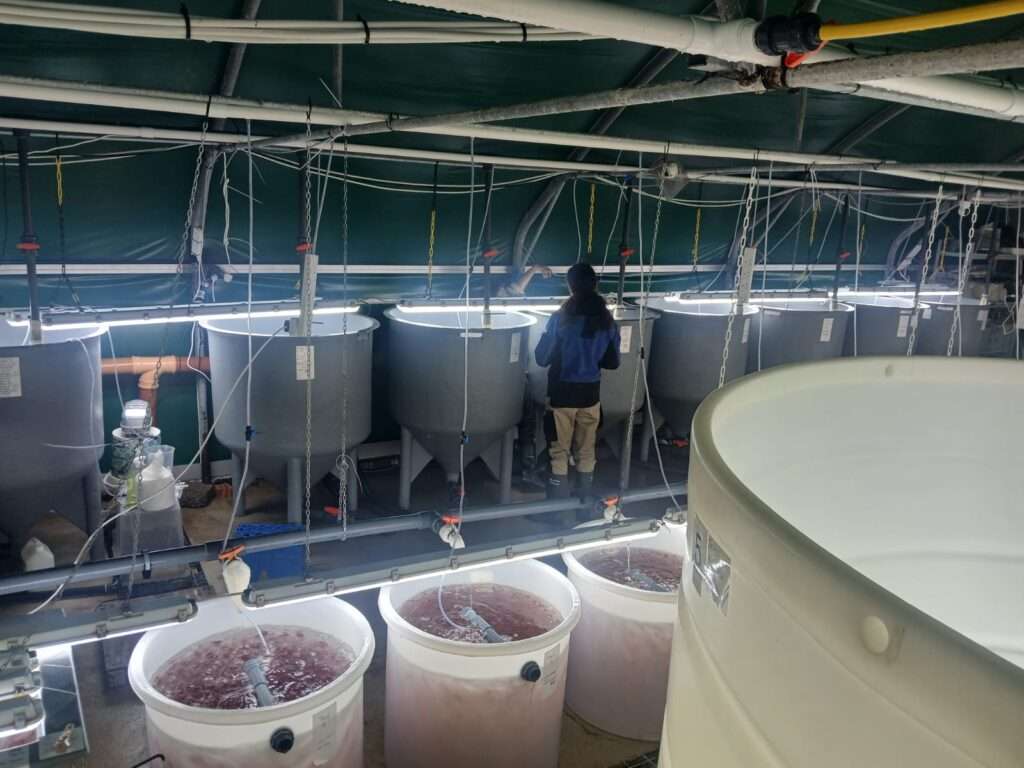
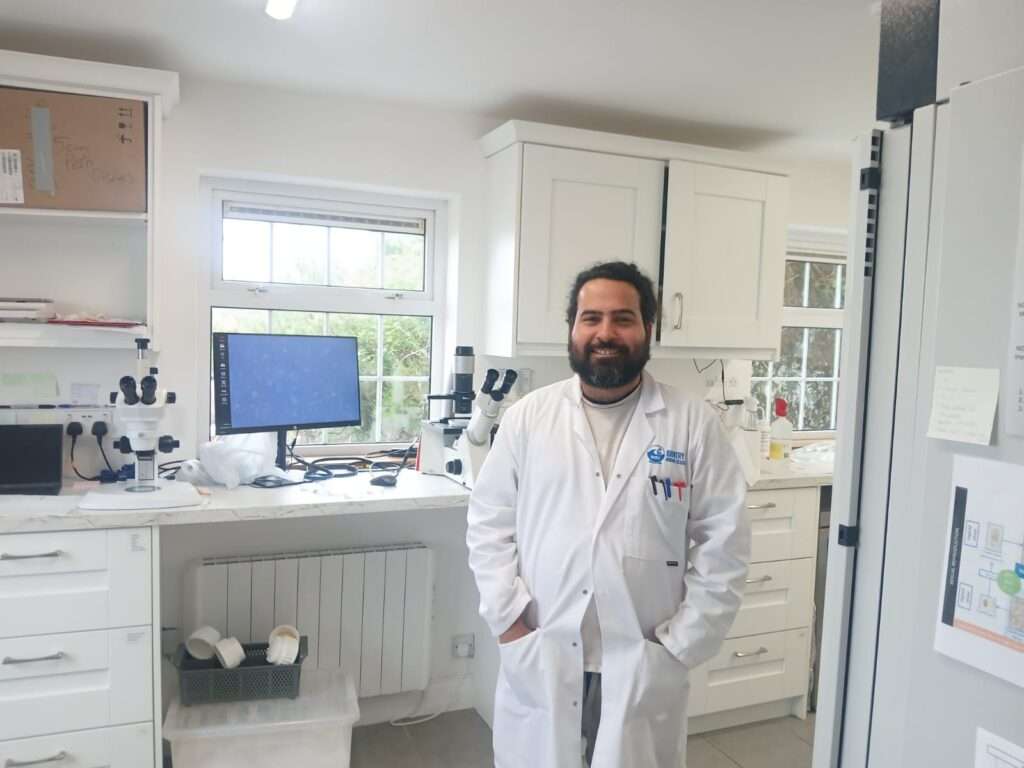
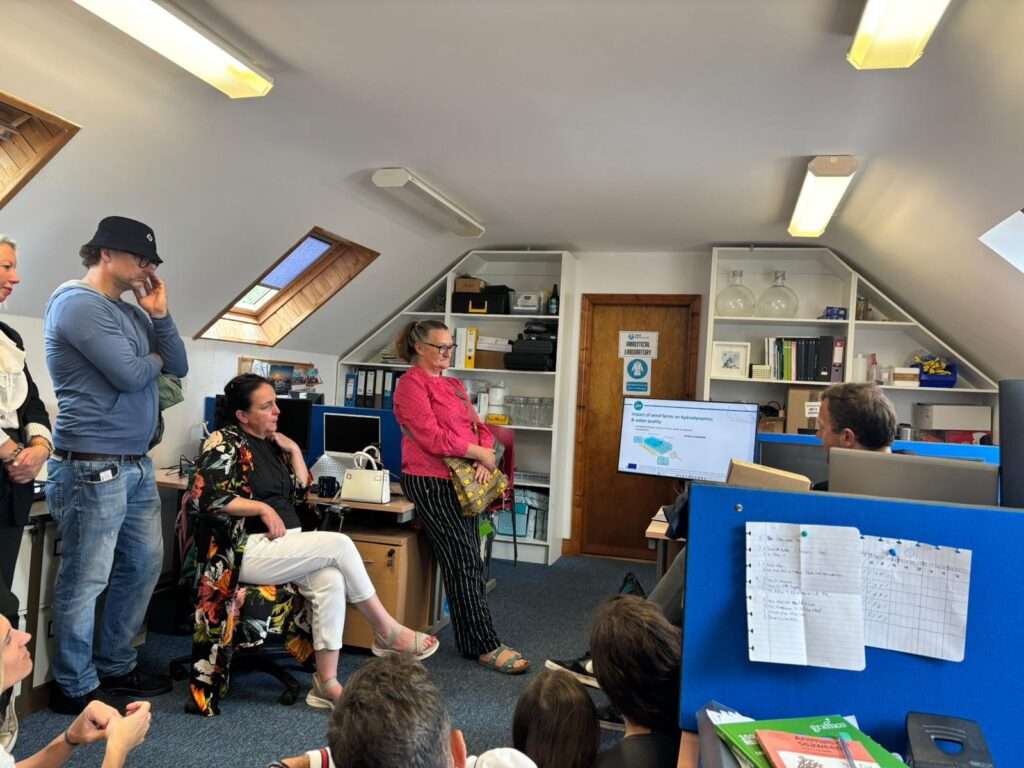
Irish Living Lab Day 3: Bantry Marine Research Station https://pharosproject.eu/wp-content/uploads/2026/05/WhatsApp-Image-2026-05-30-at-15.32.01-1024x576.jpeg 1024 576 PHAROS Project https://pharosproject.eu/wp-content/uploads/2026/05/WhatsApp-Image-2026-05-30-at-15.32.01-1024x576.jpegAs the PHAROS project team gathered at the Bantry Marine Research Station (BMRS), guided by its director, Dr. Julie Maguire, and Alex Ziemba of Deltares, their tour took them through a state-of-the-art seaweed and fish hatchery and out onto the water to see the kelp lines that form the heart of this research. Can strategically farmed seaweed, co-located with a commercial salmon farm, mitigate environmental impact while actively enhancing marine biodiversity? The first full season of data, collected over the winter of 2024-25, has now been analysed, and the answers are proving to be far more complex and surprising than anyone anticipated.
An Experiment in Controlled Comparison
The PHAROS Ireland demonstration (Demo 3) is designed with the precision of a scientific control, set against the breathtaking backdrop of the Wild Atlantic Way. The experiment pits two sites against each other:
- The IMTA Site (Bantry Bay): Located directly alongside a Mowi salmon farm, this is the Integrated Multi-Trophic Aquaculture (IMTA) site. Here, winged kelp (Alaria esculenta) and sugar kelp (Saccharina latissima) are cultivated on longlines a mere 200 metres from the salmon cages.
- The Control Site (Toormore Bay): A similar kelp farm in a nearby bay, entirely free from any fish farming influence, providing a baseline for comparison.
The operational scale of this living laboratory is impressive in its own right. The Bantry IMTA site covers approximately 6 hectares and is equipped with 17 longlines, each 110 meters in length, a substantial infrastructure designed to test real-world applications.
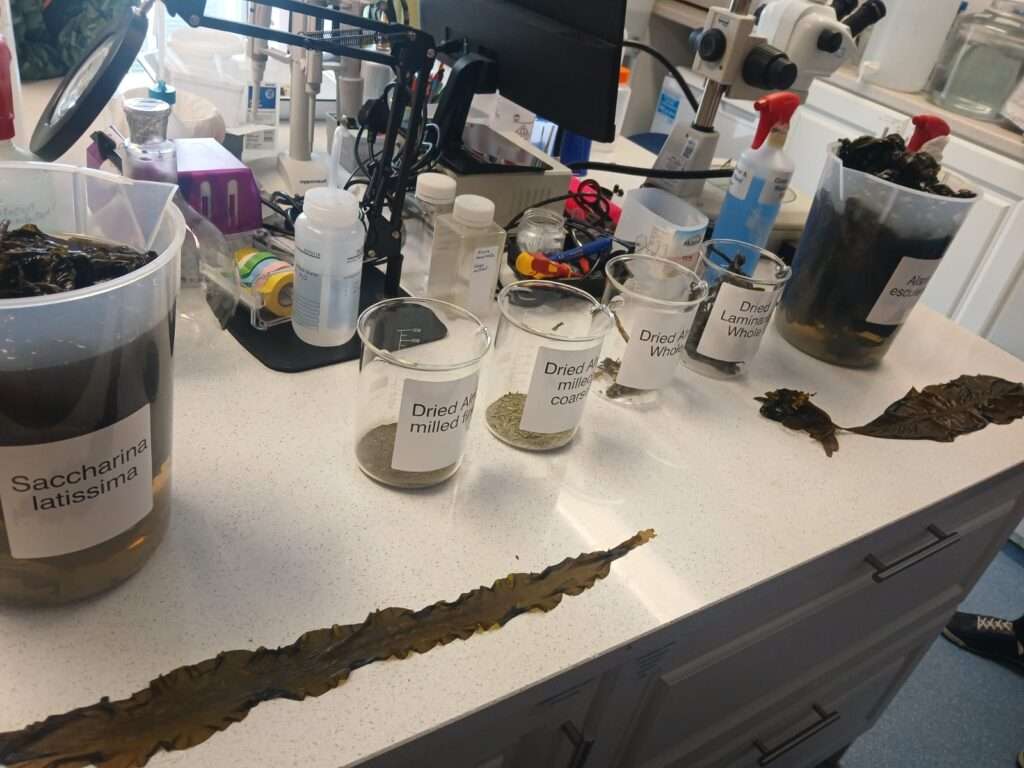
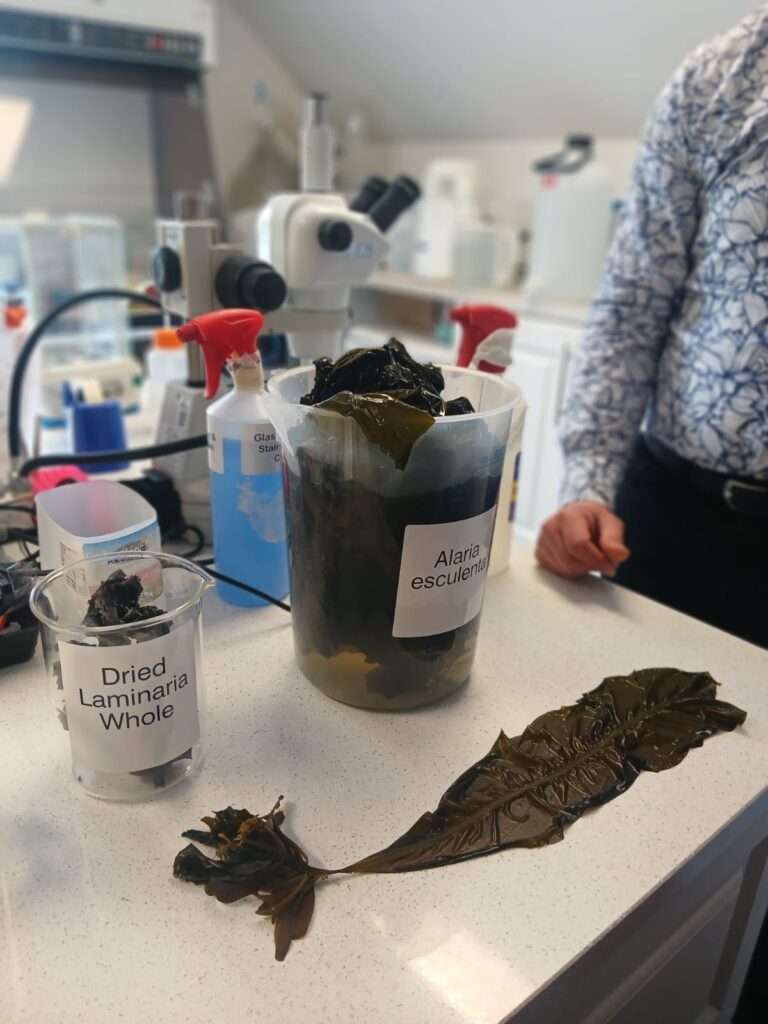
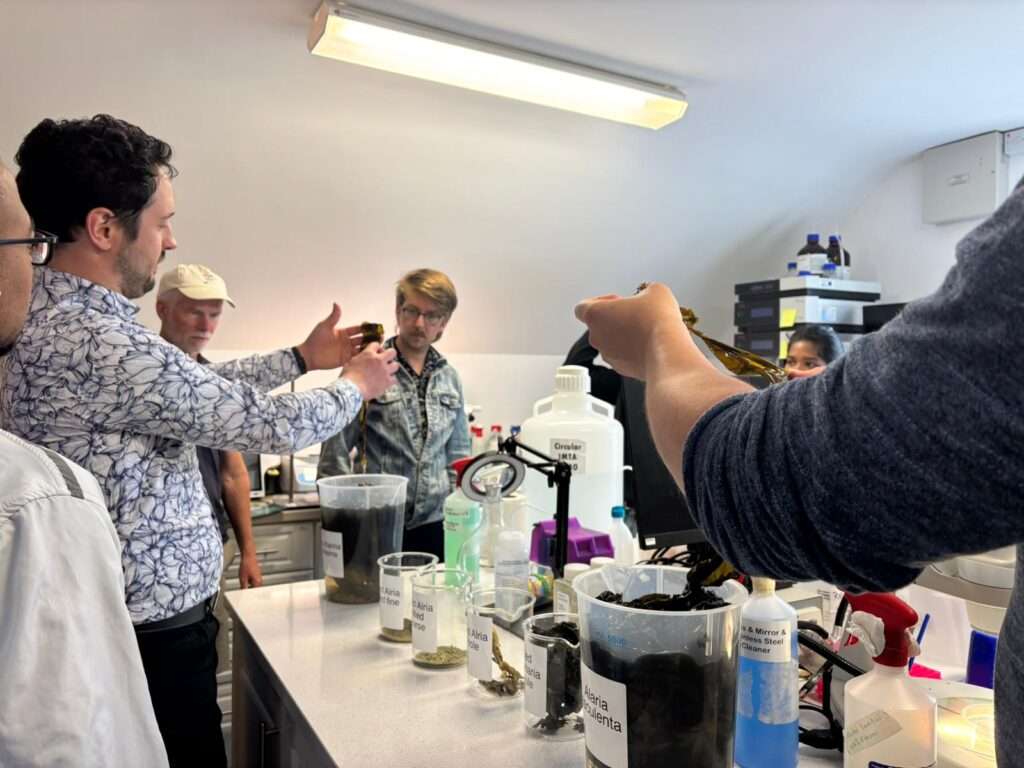
The annual harvest from this demonstration yields significant biomass for analysis: roughly 1 tonne of sugar kelp and an estimated 6 to 10 tonnes of winged kelp. This harvest not only provides crucial data for researchers but also generates a revenue stream for BMRS as the dried seaweed is sold, helping to recoup project costs and demonstrating a path toward economic viability for such nature-based solutions.
A Season of Surprises and Hidden Complexity
The core hypothesis was straightforward: the nutrient-rich waste from the salmon farm, often seen as a pollutant, would fertilise the kelp, leading to superior growth and higher yields. The first full growth season’s data, however, has dramatically flipped this script.
- Counterintuitive Growth: When the final harvest occurred in April 2025, the control site in Toormore Bay yielded a remarkable 17 kilograms of kelp per metre, significantly outperforming the IMTA site’s 12 kilograms per metre. The reason appears to lie in localised water chemistry. Analysis revealed that the control site generally had higher concentrations of ammonia and nitrite throughout the sampling period, suggesting that background nutrient levels and localized dynamics can be more influential than a direct point source.
- The Biodiversity Paradox: While the IMTA site fell short in biomass, the story changed drastically when researchers looked at the life the kelp supported. The abundance of epifauna, the tiny invertebrates living on the seaweed blade, was drastically higher at the IMTA site. In April alone, researchers counted 4,570 individuals on samples from Bantry Bay, compared to just 1,422 at the control site. However, abundance isn’t everything. The control site, despite having fewer organisms, hosted greater species diversity. This suggests the salmon farm’s influence is a powerful attractant, but one that may favour certain species, simplifying the overall community.
- A Key Limiting Factor: Adding another layer of complexity, a detailed modelling study focusing on the Bantry Bay site identified that the primary limiting factor for sugar kelp growth was not nitrogen, the salmon waste, but light availability. In the turbid waters of the bay, the algae are often starved of sunlight, which is a far more critical constraint on their growth.
A Lighthouse for Ocean Restoration
The Bantry Bay demonstration is a single, crucial node in the wider €9.5 million PHAROS project, which runs from September 2024 to August 2029. This project serves as a “Lighthouse for the Atlantic and Arctic Basin,” testing innovative nature-based solutions across distinct marine environments:
- Gran Canaria Demo (Southern Europe): An advanced IMTA system designed to tackle pollution and restore biodiversity in a subtropical ecosystem.
- Ireland Demo (North Atlantic): The kelp-salmon integration project we’ve explored, focusing on nutrient management and habitat creation in a temperate coastal zone.
- Iceland Demo (Arctic): A critical project using real-time environmental DNA (eDNA) monitoring to combat the threat of invasive species, such as the pink salmon, which endanger fragile Arctic ecosystems.
By successfully demonstrating and validating these innovative models, PHAROS aims to provide the scientific evidence and policy framework needed to scale up nature-based solutions, charting a sustainable course for the future of the blue economy across Europe.
A Future Written in the Fjords
The PHAROS team’s final day in Bantry Bay was a moment to take stock of a year of data that has fundamentally challenged their assumptions. The experiment has shown that the relationship between aquaculture and ecosystem restoration is not a simple, linear equation. The control site grew more kelp, but the IMTA site supported a teeming, if less diverse, hotbed of life. The key to optimising growth may lie less in the proximity of waste and more in the synchronisation of life cycles with the environment, a finding supported by the modelling study which showed that advancing kelp seeding from winter to autumn could quadruple its biomass and nitrogen removal.
As the attendees departed, leaving Bantry Bay to its rhythms, the work was far from over. The complexity revealed is not a setback but an invitation to refine the approach, to move from “does it work?” to “how can we make it work best?” The kelp lines swaying in the current are more than a research plot; they are a test-bed for a future where aquaculture does not simply extract from the ocean but actively restores it. And on Ireland’s rugged coast, that future is being written, one surprising data point at a time.