The MPA Solutions Hub: A Tool That Actually Helps Protect Our Oceans
The MPA Solutions Hub: A Tool That Actually Helps Protect Our Oceans https://pharosproject.eu/wp-content/uploads/2026/03/michael-worden-6BiEyTD4cfc-unsplash.jpg 1 1 PHAROS Project https://pharosproject.eu/wp-content/uploads/2026/03/michael-worden-6BiEyTD4cfc-unsplash.jpgYou can draw all the pretty lines on a map, declare a marine protected area, and pat yourself on the back. But if the people who use that space don’t buy in? If the managers can’t adapt to changing conditions? If the MPAs are isolated from each other like abandoned islands? Then you’ve basically built a paper park. And paper parks protect nothing.
That’s where the Blue4All MPA Solutions Hub comes in, the enhanced version of it. You might have heard it called the Blueprint Platform before, same thing, just a bit of a glow up. It’s being developed inside the PHAROS project, and it’s the kind of practical, slightly unglamorous tool that makes conservation actually work.
What is the problem we’re actually solving?
The EU has big, ambitious targets. Protect 30% of our seas by 2030, with a third under strict protection. But here’s the thing nobody tells you about the paperwork: designating an MPA on paper is the easy bit. Making it work? That’s where dreams go to die. Limited budgets, competing interests, climate change throwing curveballs left and right.
The PHAROS team spent over a year (from October 2024 to February 2026) actually talking to MPA practitioners across Madeira, the Azores, Cabo Verde, the Canary Islands, Ireland, and even the Danube Delta. The same six problems kept coming up, again and again:
- Fragmented government coordination.
- Not enough legal backing for shared management.
- Slow political action that can’t keep pace with ecological collapse.
- Resistance from fishers who feel locked out of decisions.
- Logistical nightmares when you’re managing islands that are hours apart by boat.
- Lack of basic monitoring equipment.
And that’s before you even get to the tourists who don’t understand why they shouldn’t anchor on seagrass.
PHAROS took an existing, tested platform (the Blue4All MPA Solutions Hub) and decided to make it actually useful. Strategic for three reasons. Speed, because the foundation already exists. Coherence, because one unified platform beats five competing systems every single time. And sustainability, because the platform keeps living after PHAROS ends.
The four big upgrades (and why you should care)
Because the platform already does some useful stuff, a centralised tool catalogue, intelligent filtering so you can find what you actually need, a networking hub to connect with other MPA managers. All wrapped in an interface “grandma to use”. Clear, intuitive, multilingual. No PhD required.
But PHAROS is taking that foundation and expanding it in four major ways.
Geographic expansion
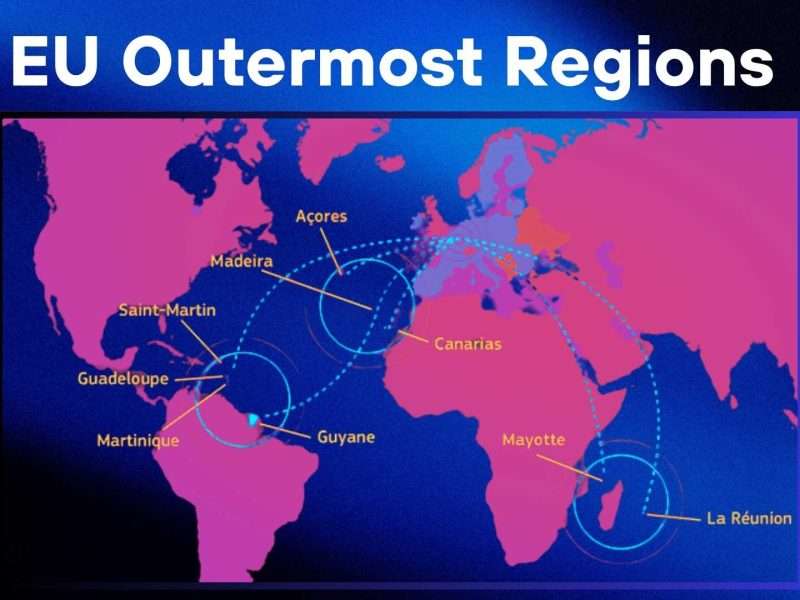
First up, they’re adapting the platform for the Atlantic and Arctic basins. Including the EU’s outermost regions, those beautiful, isolated islands like the Azores, Madeira, and the Canary Islands. Why does this matter? Because island MPAs face completely different challenges than coastal ones. Logistics are a nightmare, resources are thinner, and the communities are smaller, so every stakeholder conflict feels personal. The platform needs to speak their language, literally and figuratively.
Ecological corridor module
Most MPAs don’t actively think about ecological connectivity. They manage their little patch of ocean like a fenced garden. But species don’t respect boundary lines: Fish migrate, larvae drift on currents, turtles travel thousands of kilometres. A turtle hatched in Cabo Verde might spend its teenage years feeding off the Azores. If those two MPAs aren’t talking to each other, if there’s a gauntlet of longlines and plastic pollution between them, then what’s the point?
The new module uses Lagrangian models (fancy way of saying they simulate how larvae drift with ocean currents) to help managers identify priority areas for corridors. They can spatialise pressures too. Map where the marine heatwaves are hitting, where the fishing boats cluster, where the cruise ships churn through. Then design interconnected corridors that actually maintain genetic flow. This work is being done with the Blue Connect project, which focuses specifically on connectivity in Macaronesia.
Digital Twin Ocean integration
A Digital Twin Ocean is basically a live digital replica of marine environments. Real-time data from sensors measuring waves, currents, wind, temperature, salinity. AI that can identify species from acoustic recordings or underwater cameras. Predictive modelling that tells you what’s likely to happen next month, next year, next decade.
PHAROS is building this for demo sites in Gran Canaria and Iceland, then integrating it into the Solutions Hub as a tool within the catalogue. Initially it’ll be an external viewer: you click a secure hyperlink and it opens up. They want to test it, collect feedback, see if managers actually use the thing before embedding it directly, smart agile development. Once it’s working properly, you’ll get early warnings for storm surges and marine heatwaves, scenario planning for climate impacts, real insight into what’s happening in your waters right now, not six months ago when the report finally got published.
Decision Support System for Living Labs
This one’s for the Living Labs, real-world testing sites where MPA practitioners can play with oceanographic data layers and run scenario planning. What happens if we shift this fishing zone five kilometres west? What if that shipping lane gets rerouted? The system lets them configure different scenarios and see the likely outcomes. It turns guesswork into something closer to educated forecasting.
The thinking behind the tools
PHAROS has put serious thought into the frameworks organising all this information.
The Integrated Solutions Framework is the conceptual backbone. It organises tools around three dimensions.
- Phases – planning, implementation, management, reviewing.
- Dimensions – environmental, social, governance, economic.
- Components – stakeholder engagement, sustainable financing, capacity building, enforcement, ecological monitoring.
Every tool in the catalogue gets tagged with these elements. If you need a tool for stakeholder engagement during the planning phase, the framework finds it, multiple entry points for discovery.
Then there’s the Socio-Governance Tool Typology. This classifies tools based on three fundamental aspects of MPA management.
- Knowledge and understanding – tools for gathering baseline data, mapping, assessment.
- Engagement and participation – stakeholder mapping, co-creation, communication.
- Policy and intervention – regulation, enforcement, compliance.
The typology also distinguishes between top-down government-led approaches and bottom-up community-led ones. Because what works in a remote Arctic fjord probably won’t work in a densely populated Mediterranean bay.
The Ecological and Environmental Tool Characterisation is based on a systematic review of existing Decision Support Tools. They classify across multiple dimensions.
- Tool structure – is it a model, a guideline, a protocol, software?
- Tool function – mapping, monitoring, assessment, prediction?
- Thematic focus – biodiversity, water quality, habitat, species?
- Technical aspects – open access or restricted, data handling requirements, output types.
- User-friendliness – knowledge requirements, ease of use, documentation quality, user support available.
The database is non-hierarchical. Tools get tagged across multiple dimensions using a flexible system, a participatory mapping tool might be tagged under Engagement and Participation, Knowledge and Understanding, and Technical Aspects: Mapping all at once. That means a single tool can appear in multiple search results, depending on what the manager needs.
When is all this actually happening?
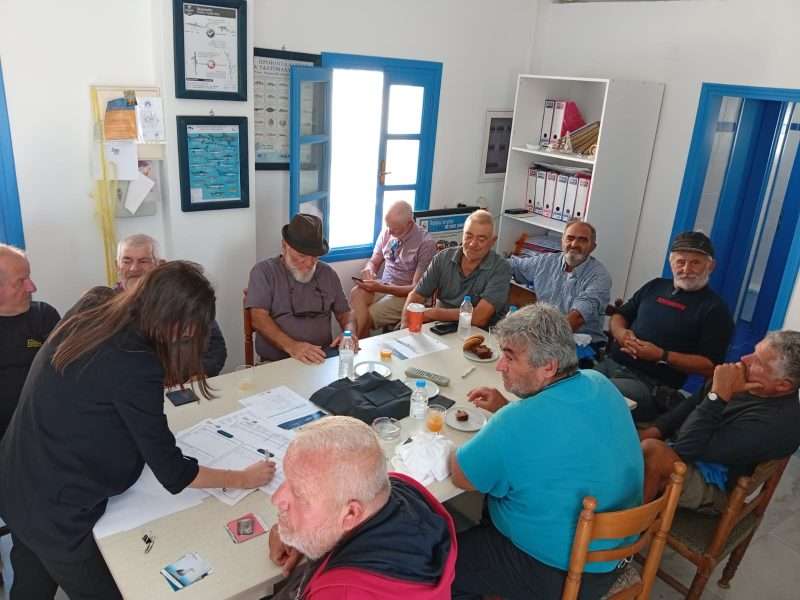
PHAROS started on 1 September 2024. The needs assessment and user story creation phase runs from September 2025 to June 2026. That included a co-creation workshop in Gran Canaria in January 2026, where MPA managers actually sat down and told the developers what they need, real user stories, not technocratic assumptions. Then user story analysis from February to April, translating feedback into technical requirements. Mock-ups from April to June, visual prototypes of the new features so people can see what they’re getting.
Important context here: The Blue4All project is developing the core MPA Solutions Hub in parallel. They released an alpha version in January 2026 (and the final version 1.0 in December 2026). PHAROS enhancements are timed to align with these releases. Nobody’s working in isolation.
Functional expansion and integration happens from July 2026 to October 2027.
- Development of the ecological corridor module from July to December 2026, integrating those Lagrangian models and corridor design tools.
- DTO integration from January to June 2027 – starting with the external viewer approach, testing with demo site data.
- Decision Support System development for the Living Labs from April to October 2027.
Then fine-tuning and progressive versioning from November 2027 right through to August 2029. Living Lab testing, real-world use cases, feedback collection, regular updates every three to four months based on what actual users say, a decision in early 2029 about whether to embed the DTO viewer natively or keep it external, and final validation from June to August 2029, testing with MPA managers across the Atlantic and Arctic basins.
The MPA Solutions Hub live with all enhancements lands in November 2027.
What success actually looks like
By the end of PHAROS in August 2029, the enhanced MPA Solutions Hub will be a live, operational tool used by MPAs across the Atlantic and Arctic basins that genuinely makes their work easier and more effective.
MPA managers are overworked, underfunded, and constantly putting out fires. If a tool doesn’t save them time, doesn’t help them make better decisions faster, they won’t use it, doesn’t matter how elegant the technology is, doesn’t matter how many grant proposals praised its innovation. If it’s not genuinely useful, it’s digital landfill.
PHAROS understands this. Their whole strategy centres on co-creation. They’re not building features based on guesswork or academic theories. Every enhancement comes from direct feedback from MPA practitioners through structured workshops, user stories, and continuous testing. The evidence behind their approach comes from those interviews and questionnaires between October 2024 and February 2026, a proper needs assessment, not a PowerPoint exercise.
Why this all matters
A protected area that cannot adapt to change will not protect anything for long. Climate change is shifting everything: currents, temperatures, species ranges, storm patterns. The MPAs we designed ten years ago might already be in the wrong places. The management plans written five years ago might already be obsolete.
The MPA Solutions Hub turns good intentions into effective action. It helps managers quickly spot emerging problems, find proven solutions from other MPAs facing similar challenges, and make confident decisions even under uncertainty. That uncertainty isn’t going away. But having a tool that connects you to real solutions, real data, real people who’ve solved similar problems? That’s the difference between a paper park and a living, breathing protected area.
A reef that managers understand, that stakeholders feel ownership over, that connects to other protected areas through ecological corridors, that uses real-time data to adapt to changing conditions, is a reef that survives.