Citizens Become Scientists in Canary Islands “BioBlitz”
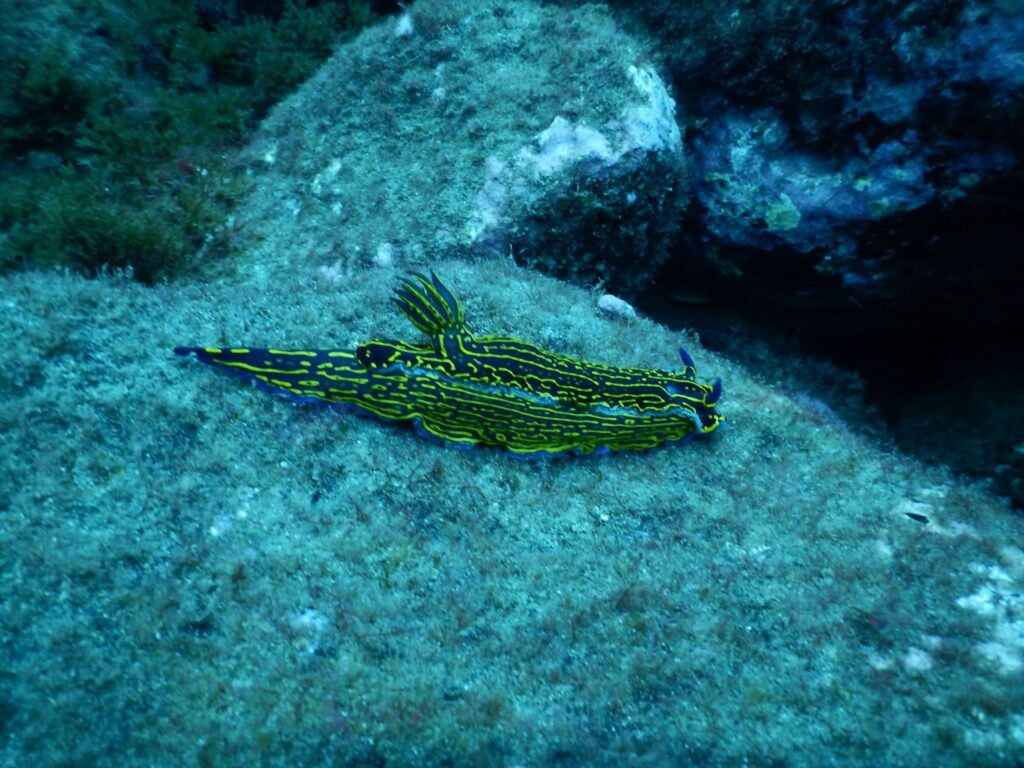
Citizens Become Scientists in Canary Islands “BioBlitz” https://pharosproject.eu/wp-content/uploads/2026/02/WhatsApp-Image-2026-01-31-at-18.47.09-1-1024x768.jpeg 1024 768 PHAROS Project https://pharosproject.eu/wp-content/uploads/2026/02/WhatsApp-Image-2026-01-31-at-18.47.09-1-1024x768.jpegOn 31 January 2026, families, snorkellers, and divers came with a purpose to document what lives in the water.
They were part of a massive, cross-archipelago Citizen Science Marine BioBlitz organised by the EU-funded PHAROS project, which transformed four iconic dive sites in Gran Canaria and Lanzarote into living laboratories for the day. Armed with underwater cameras and observation slates, ordinary citizens collected vital data on coastal plants and animals, uploading their findings to the MINKA platform to aid real marine research.
“The goal was twofold,” explained the PHAROS project coordinator Gordon Dalton. “To engage the public directly in the scientific process, and to showcase a radical, hopeful proposition: that we can actively restore ocean health, and that everyone can be part of measuring that success.”
The BioBlitz offered a rare, comparative tour of four very different approaches to marine ecosystems:
1. El Cabrón Marine Reserve (Gran Canaria)
At this strictly protected reserve off Arinaga, citizen scientists dove into a “living museum of biodiversity.” With visibility stretching 30 metres, they navigated volcanic arches and tunnels, cataloguing over 400 species, including endangered angel sharks and elusive seahorses. For researchers, El Cabrón serves as the scientific “control”, the pristine standard against which all restoration efforts must be measured.
2. Biotopo de Arguineguín (Gran Canaria)
This site acts as a “living archive” for the PHAROS team, providing crucial long-term data on how artificial habitats evolve, with residents like octopus and swaying colonies of garden eels proving that patience yields a fully functioning ecosystem.
3. Parque de la Atlántida (Gran Canaria)
The site provides powerful evidence that artistically designed, pH-neutral concrete can rapidly transform a barren sandflat into a thriving reef.
4. Museo Atlántico (Lanzarote)
As citizen scientists photographed algae waving from stone scalps and anthias fish darting between human forms, they contributed to a powerful dataset proving that art and conservation can merge to accelerate reef recovery.
All observations from the day were logged on MINKA, the project’s citizen science platform, transforming photographs into usable data for marine biologists. This collective effort directly supports PHAROS’s ambitious mission: to develop blueprints for restoring ocean habitats across the vastly different conditions of the Atlantic and the Arctic.
The citizen scientists surfaced with full cameras and a shared sense of purpose. They had floated through an underwater gallery where the exhibits are slowly being reclaimed by the sea, a reclamation that the project is keen to point out is not a tragedy, but a resurrection.
The PHAROS project is an ambitious EU project aimed at restoring ocean health across the Atlantic and Arctic basins, using innovative techniques like Smart Enhanced Reefs (SER®) and Integrated Multi-Trophic Aquaculture (IMTA) to rebuild ecosystems from the seabed up.