How PHAROS Project Turns Gran Canaria Fishing Nets Into Value Products
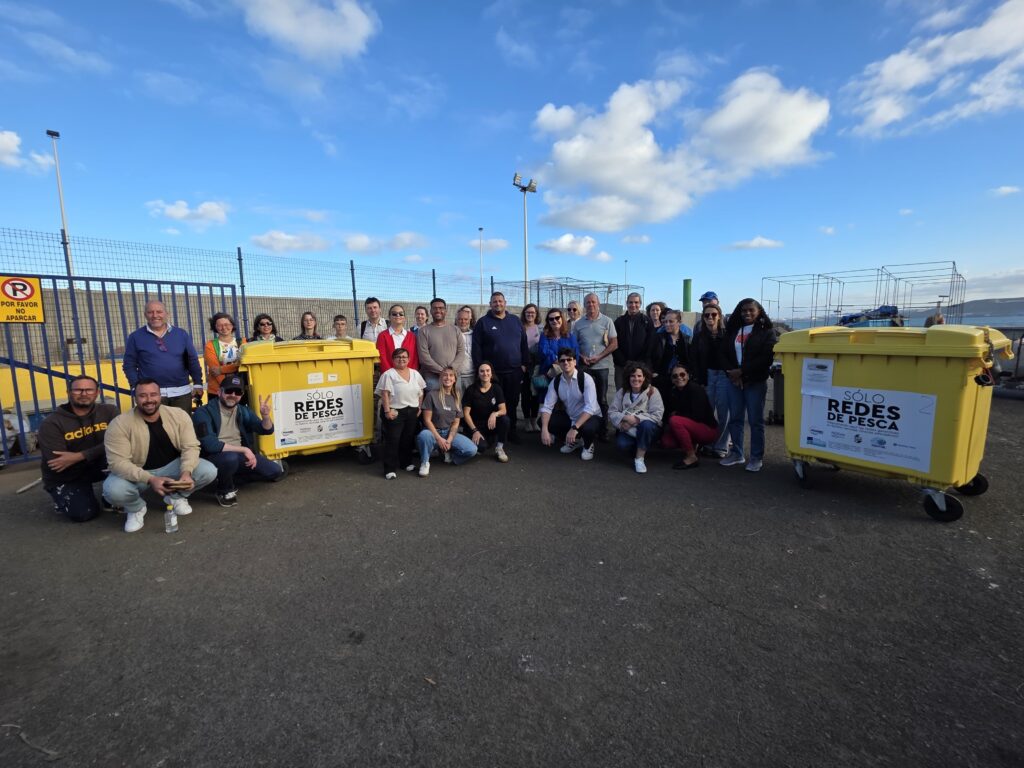
How PHAROS Project Turns Gran Canaria Fishing Nets Into Value Products https://pharosproject.eu/wp-content/uploads/2026/02/Fisher-Guardians-1024x768.jpeg 1024 768 PHAROS Project https://pharosproject.eu/wp-content/uploads/2026/02/Fisher-Guardians-1024x768.jpegSAN CRISTÓBAL, Gran Canaria. On 29 January 2026, local fishermen gathered to discuss what happens to their nets when the fishing is done.
Marine waste management in the Archipelago has begun transitioning towards a sustainable business model. The Canary Islands Oceanic Platform (PLOCAN), in collaboration with Gravity Wave and the San Cristóbal Fishermen’s Cooperative (Pescatobal), has launched a system for collecting and recycling fishing nets. The project, presented on 29 January 2026 during the FISHER GUARDIANS workshop, aims to consolidate the circular economy as a key tool for ocean protection and the creation of new economic resources across the Islands.
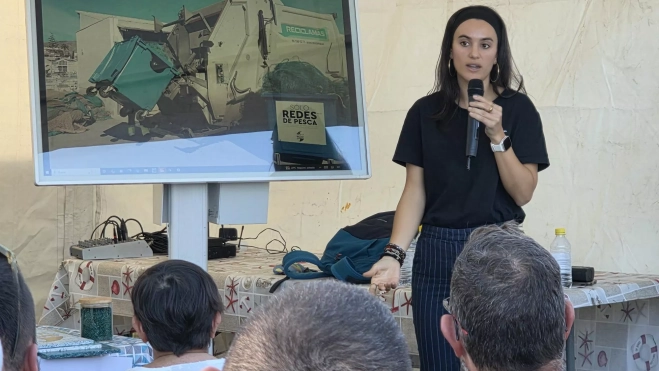
The workshop marked the first major public event of Gran Canaria’s Living Lab, an initiative framed within the European PHAROS project. During the day, held at the cooperative’s headquarters in San Cristóbal, participants analysed the impact of abandoned fishing gear and explored how an organised traceability system can transform plastic waste into raw material for other sectors.
The operational viability of the project has already delivered its first tangible results. According to Amaya Rodríguez, CEO and co-founder of Gravity Wave, the installation of the first containers in San Cristóbal has been a success. In the first official collection, carried out last week, 220 kilos of discarded nets and fishing gear were removed.
The proposed business model goes beyond mere cleaning. Rodríguez explained that logistics are currently being studied to determine whether the recycling can be completed in the Canary Islands or if it will require transportation to the Spanish mainland. The ultimate aim is to reintroduce these materials into the market, transforming them into value-added products such as furniture and decorative items, giving them a second commercial life.
The morning sun cast long shadows across the Port of San Cristóbal as approximately ten fishermen attended the ninety-minute session. The conversation flowed around polymers, pellets, and the unexpected second life awaiting their discarded gear.
Building Trust Through Transparency
Behind the gathering stands a strategic alliance. PLOCAN, Gravity Wave, and Pescatobal have joined forces to launch what they describe as a structured, traceable, and replicable system for managing end-of-life fishing gear.
Before any nets could be collected, before any recycling could begin, there was something more fundamental to address: trust.
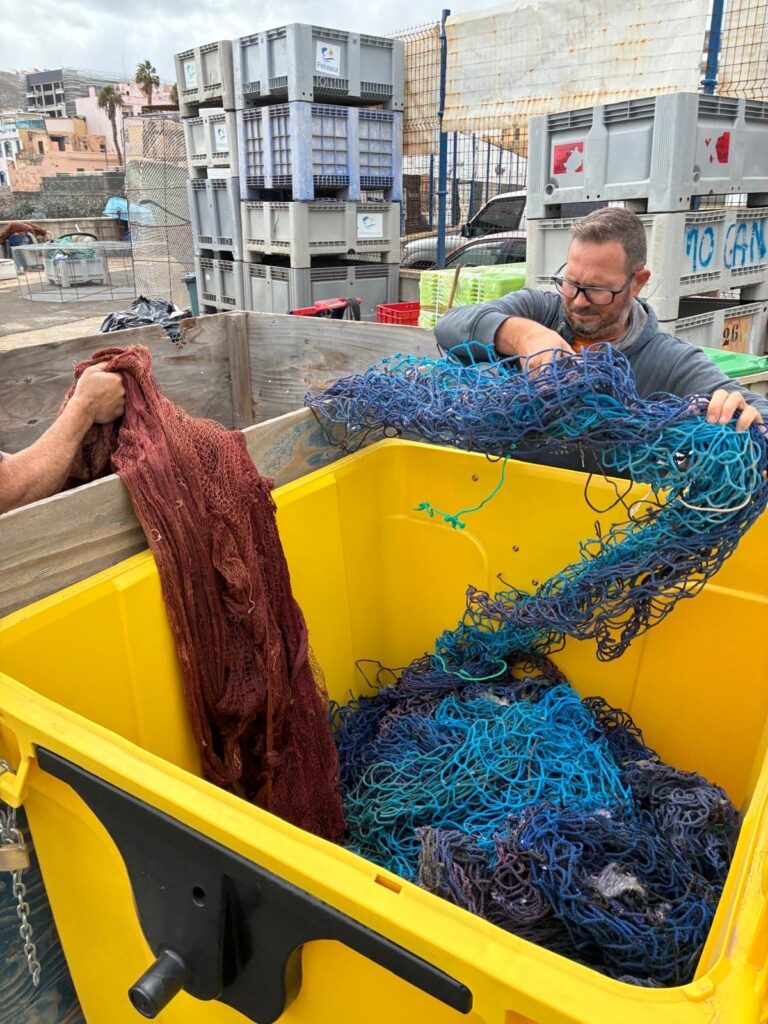
“Build trust and transparency regarding the recycling process” formed one of the workshop’s core objectives. Gravity Wave came prepared to deliver exactly that. During the session, the organisation introduced its mission and operational model, its experience managing end-of-life fishing nets in other ports, and the complete recycling chain from collection to transformation into new products.
Representatives brought physical evidence of circularity itself. Recycled pellets known locally as “granza”, Gravitec panels manufactured from recovered materials, and mobile phone stands produced from recycled fishing nets. These physical samples allowed fishers to see the real outcome of proper waste segregation and recycling, reinforcing confidence in the system.
The effect proved immediate. Fishermen who had spent decades watching their worn-out nets pile up in port corners suddenly saw those same nets transformed into something valuable and unrecognisable.
Scanning for Solutions
One of the initiative’s pillars involves building trust through technological innovation. Perhaps the most striking moment came when Gravity Wave demonstrated Trinamix technology, a tool capable of identifying the type of plastic in a net in real time. Fishing nets were scanned on site to identify their polymer composition. The live demonstration served a dual purpose: showing fishermen exactly how material identification works while proving that transparency represents a verifiable process, not merely a promise.
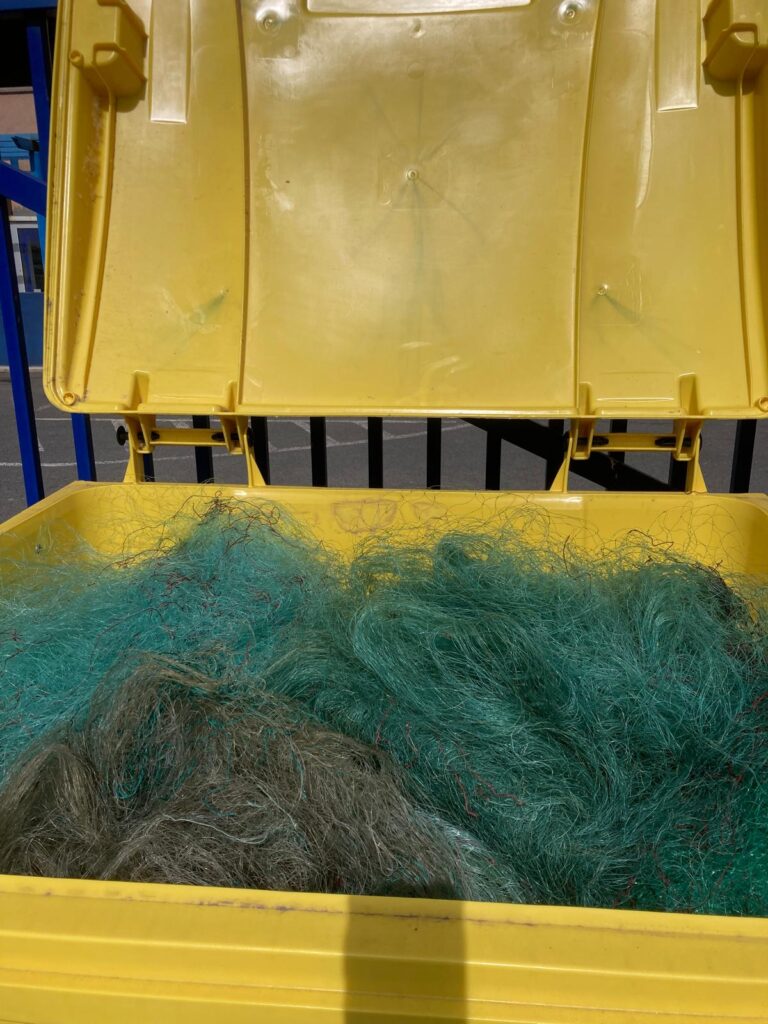
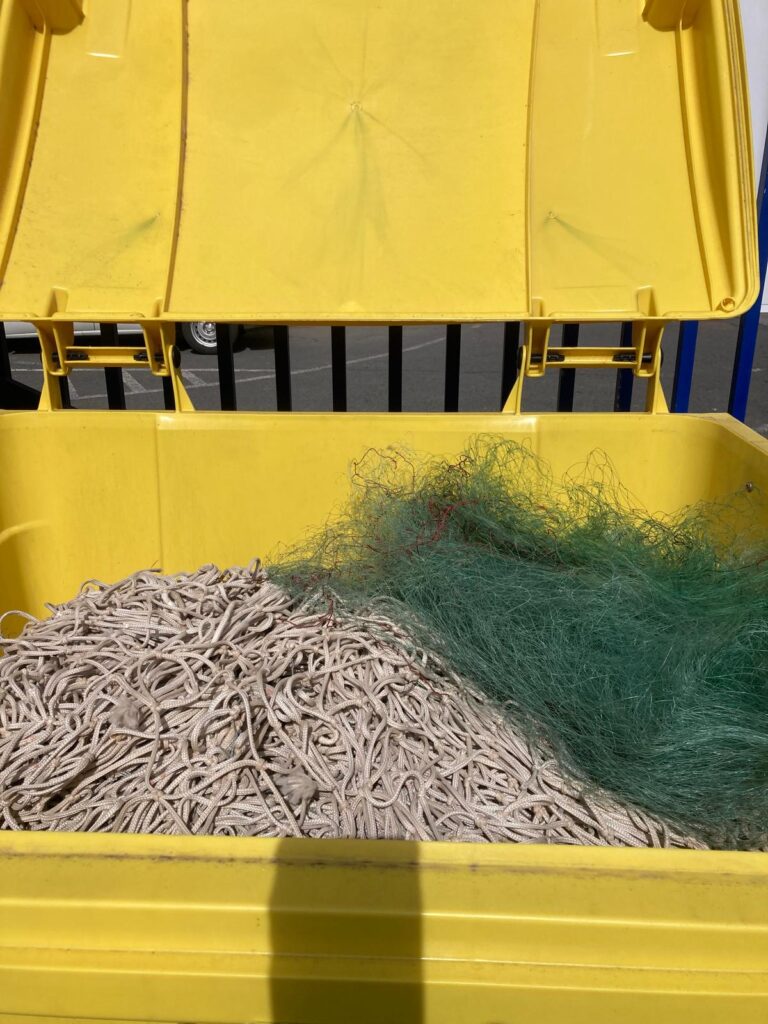
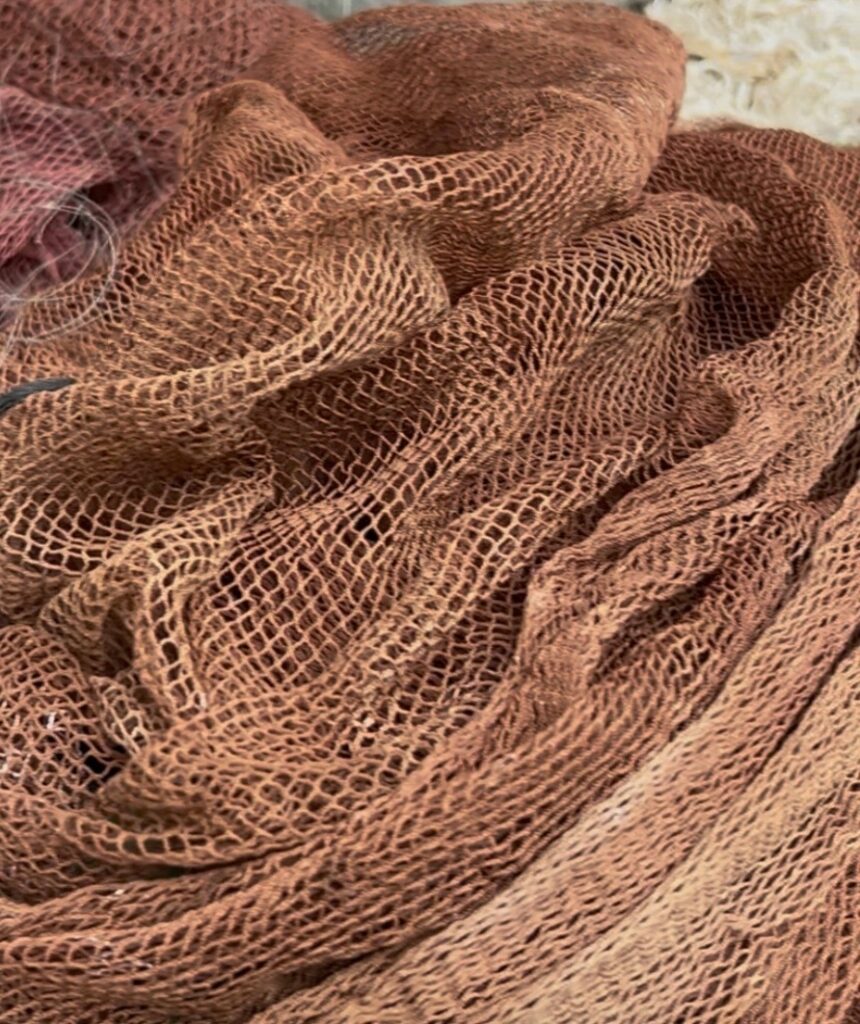
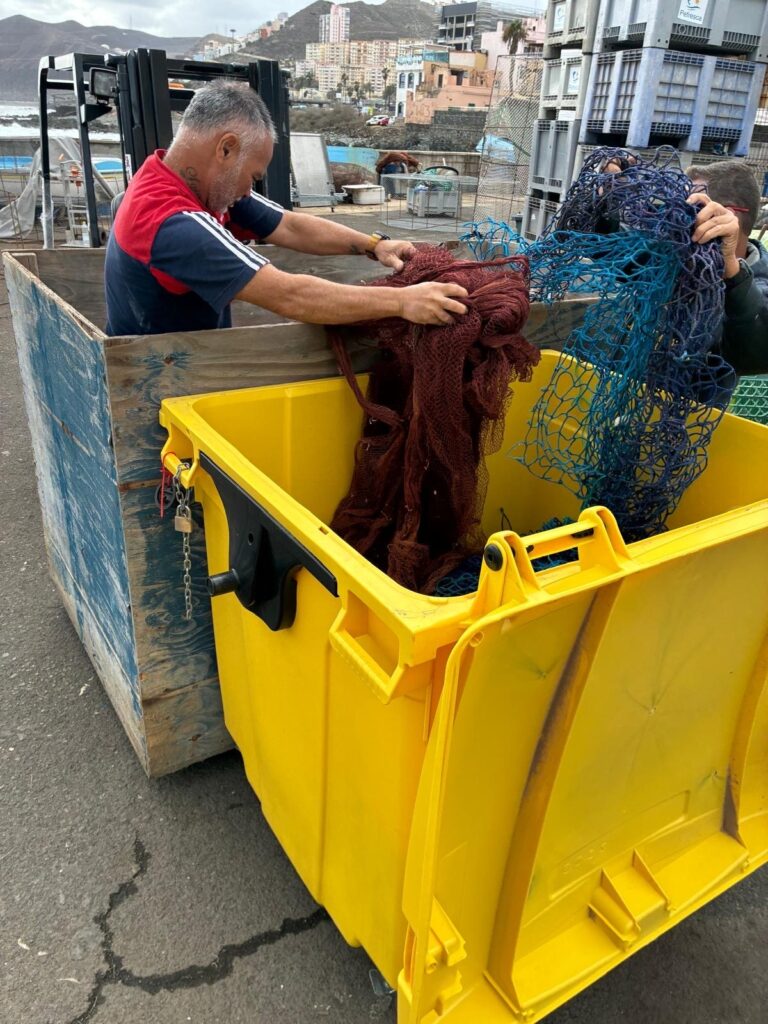
“This demonstration illustrated how material identification supports proper segregation and enables traceability within the recycling chain,” the project report notes, emphasising that fishermen aren’t simply depositing waste into a black box. They contribute to a verified system. The technology enables waste quality certification and facilitates reintegration into the production chain.
Pablo Reche, technologist at PLOCAN and project manager, emphasised that the Fisher Guardians programme serves as a direct appeal to the local community. The goal involves fishermen inserting old or drifted nets into a local recycling chain, integrating ecosystem preservation with traditional economic activity.
Voices from the Port
The most valuable exchanges happened away from the formal presentation. As coffee cups emptied and chairs scraped against concrete, fishermen opened up about their daily operational challenges, their role within the port ecosystem, and their perceptions of current waste management practices.
For Gravity Wave, these conversations proved essential. The discussion allowed the organisation to better understand local dynamics and to reinforce the importance of infrastructure combined with awareness actions. Understanding local rhythms and the informal networks that keep the fishing community functioning would determine whether infrastructure would be used or ignored.
“The participatory approach contributed to strengthening engagement and ownership of the system amongst fishers,” the project confirms, acknowledging that top-down solutions rarely survive contact with working waterfronts.
The Fisherman as Custodian
The response from the primary sector has been positive. Dolores Guedes, head of administration at Pescatobal, noted that the fishermen have welcomed the project enthusiastically since its introduction. Guedes described the maritime professionals as custodians of the environment, emphasising their interest in preventing accidents involving marine fauna, such as turtles, caused by ghost nets.
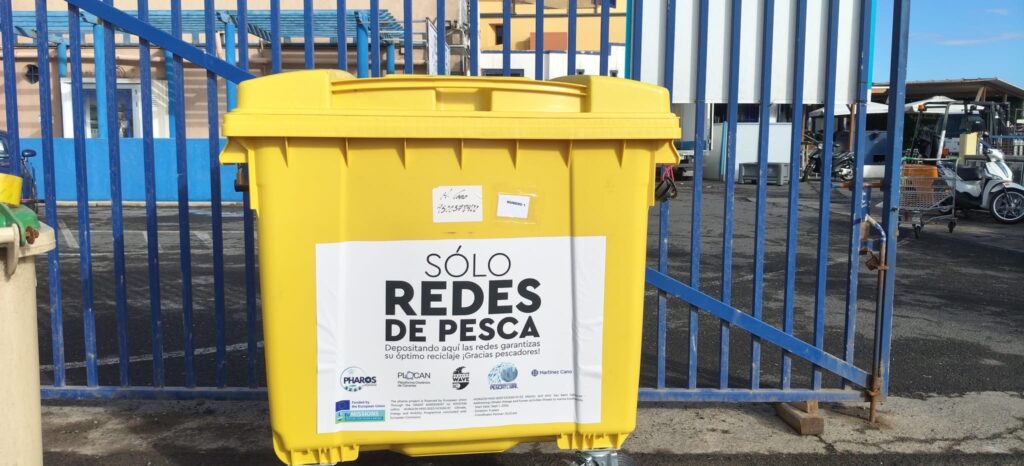
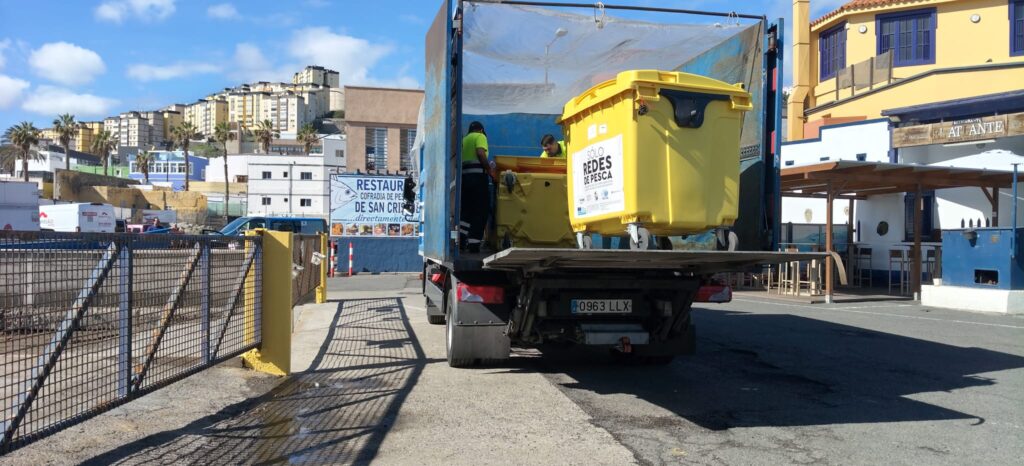
To support this work, a clean collection point has been established at the port itself where nets are stored and sorted into specific containers. The cooperative’s management believes this project, unprecedented in the Canary Islands, represents a forward-looking investment for the sector.
First Collection Validates the Model
Following the installation of dedicated containers at the Port of San Cristóbal, the first collection of fishing nets was successfully completed. According to Amaya Rodríguez, CEO and co-founder of Gravity Wave, the installation of the first containers in San Cristóbal has been a success. In the first official collection, carried out last week, 220 kilogrammes of discarded nets and fishing gear were removed and transported to the authorised waste management plant Martínez Cano.
The milestone confirmed three critical elements: active use of the installed infrastructure, initial validation of the logistics chain, and genuine engagement from the local fishing community. In circular economy terms, the loop was beginning to close.
When Local Solutions Meet Technical Reality
Collection proved straightforward. What followed revealed the complexity inherent in recycling. Gravity Wave conducted a site visit to the Martínez Cano treatment plant to assess possible treatment pathways for the collected material, evaluate technical compatibility with local shredding processes, and identify operational constraints and opportunities.
Initial shredding tests with the collected nets did not yield satisfactory results, revealing technical limitations at the local facility. More significantly, material analysis identified that some nets contained additional polymers not accounted for in initial segregation assumptions.
“The finding highlighted the importance of enhanced material identification and structured segregation before processing,” the assessment concluded. The technical setback nevertheless provided crucial intelligence for the project’s future.
A Strategic Pivot
Rather than abandon local processing, project leaders adapted. As a result of the visit and technical evaluation, the following operational pathway was defined: fishing nets will first undergo proper segregation at Martínez Cano, guided by a newly developed fishing gear segregation guide addressing the identified material complexities. Once separated and baled, the material will accumulate until reaching reasonable volume, then travel to the province of Alicante in mainland Spain. There, shredding and recycling tests will proceed using methods already validated by Gravity Wave, ensuring technical feasibility whilst maintaining traceability and quality control.
The proposed business model extends beyond mere cleaning. Rodríguez explained that logistics are currently being studied to determine whether the recycling can be completed in the Canary Islands or if it will require transportation to the mainland. The aim involves reintroducing these materials into the market, transforming them into value-added products such as furniture and decorative items, giving them a second commercial life.
The decision represents a pragmatic approach to circular economy realities. Whilst local processing remains the ideal, technical compatibility cannot be sacrificed for geographic proximity.
Building the Fisher Guardian Model
The activities carried out in San Cristóbal demonstrate that effective ALDFG prevention requires multiple elements working in concert. Infrastructure: the dedicated containers now standing at the port. Awareness and training: the workshop that brought fishermen into the process. Technical validation: the honest assessment that sent materials to Alicante. Adaptive decision-making: the willingness to pivot when local solutions prove technically incompatible.
For PLOCAN and its partners, the San Cristóbal experience reinforces fundamental lessons about marine waste prevention. “The experience in Gran Canaria reinforces the importance of flexibility within Living Labs,” project documents emphasise. “Whilst local processing is desirable, technical compatibility must be ensured to guarantee successful recycling outcomes.”
By activating the full chain, from fisher engagement to logistics and recycling validation, the PHAROS Living Lab is progressing from awareness-raising to concrete operational implementation.
Lessons Learnt and Recommendations
Key lessons from this phase include several crucial findings. Awareness actions are significantly strengthened when accompanied by tangible examples of recycled products. On-site material identification tools such as Trinamix increase transparency and trust. Local treatment facilities may require specific segregation protocols for fishing gear. Early-stage pilot testing proves essential to avoid operational inefficiencies at scale. Accumulating sufficient volume before transport improves economic and environmental efficiency.
A New Economic Horizon for the Islands
Beyond the technical achievements, the FISHER GUARDIANS workshop signals something larger: the Canary Islands’ transition toward a sustainable business model for marine waste management. What begins with 220 kilogrammes of nets from San Cristóbal could scale across the archipelago, transforming an environmental liability into an economic resource.
The fishermen who gathered on that January morning now serve as active contributors within the PHAROS Living Lab. Their daily work connects to a chain extending from Gran Canaria’s port to Alicante’s processing facilities and ultimately to new products manufactured from recovered materials.
Monitoring Towards Sustainability
With the collection system now active, project partners enter a monitoring and optimisation phase under Living Lab conditions. Attention will focus on continuous monitoring of the volume and composition of fishing nets collected at port level, assessment of segregation quality and material consistency over time, and evaluation of logistical, technical, and economic parameters associated with the management of collected material. Progressive optimisation of the system will be based on operational feedback from fishers, waste managers, and technical partners.
“The data gathered during this monitoring phase will inform the definition of the most appropriate and sustainable treatment pathway, ensuring that future decisions are evidence-based and aligned with the broader objectives of the PHAROS project.”
From Awareness to Implementation
The workshop, first collection, and site visit to the Martínez Cano facility represent a significant transition from planning to operational implementation within the PHAROS Gran Canaria Living Lab.
The collection system is now active and undergoing a monitoring and optimisation phase to validate its technical, logistical, and economic performance under real conditions. These actions contribute to the prevention of ALDFG, the strengthening of circular economy practices within the fishing sector, and the broader PHAROS mission of developing sustainable and scalable solutions for marine ecosystems.
For the fishermen of San Cristóbal, the change is tangible. Their nets, once destined for landfill or the seabed, now enter a verified recycling chain. Their voices, once absent from waste management discussions, now shape system design. Their port, once a collection point for marine waste, now demonstrates how circular economy principles can strengthen both ocean protection and economic resilience.
As the PHAROS mission continues developing sustainable and scalable solutions for marine ecosystems, the fishermen of San Cristóbal have become exactly what the initiative named them: guardians. The PHAROS project, funded by the European Union, has a roadmap extending beyond waste collection. In Gran Canaria, the implementation of experiments combining multitrophic aquaculture with the installation of artificial reefs is planned from 2027 onwards, seeking to restore habitats and enhance marine biodiversity.
Spanish Media Reporting on the Workshop:
Article 1: “Crónica del Atlántico Hoy” (29/01/2026)
This outlet reported on the launch of the pilot project as a new circular economy opportunity. It focused on the collaboration between PLOCAN, Gravity Wave, and the Pescatobal fishing cooperative in San Cristóbal, Gran Canaria. Key details included the initial collection of 220kg of fishing nets, the plan to recycle them into furniture and decor, and the use of Trinamix technology for plastic identification. It framed the story within the larger European PHAROS project, mentioning future plans for multi-trophic aquaculture and artificial reefs from 2027. See the Spanish version in PDF version here.
Article 2: “Tellkes” (02/02/2026)
Tellkes covered the “Fisher Guardians” workshop as the first open event of the Gran Canaria Living Lab under the PHAROS project. The report emphasised the workshop’s role in raising awareness and building trust within the fishing community about the recycling process. It highlighted the involvement of fishermen as key allies, the demonstration of the Trinamix device, and the project’s aims to reduce marine pollution and foster the blue and circular economy. See the Spanish version in PDF version here.
Article 3: “Telde Habla” (31/01/2026)
This local news site provided a detailed community-focused report on the same workshop. It included extensive direct quotes from project managers: Pablo Reche (PLOCAN), Amaya Rodríguez (Gravity Wave), and Dolores Guedes (Pescatobal). It elaborated on the practicalities, such as the dedicated “punto limpio” (clean point) in the port for storing nets, the fishermen’s positive reception, and their motivation to protect marine life like turtles. It also confirmed the 220kg collection and discussed the logistical considerations for local recycling versus processing on the Spanish mainland. See the Spanish version in PDF version here.
Radio interviews: