Cleaner Seas Begin on Land: Prevention, Zero Waste & Community Action
Cleaner Seas Begin on Land: Prevention, Zero Waste & Community Action https://pharosproject.eu/wp-content/uploads/2026/02/Banner_Website_Cleaner-Seas-Begin-on-Land-Prevention-Zero-Waste-Community-Action-1024x576.png 1024 576 PHAROS Project https://pharosproject.eu/wp-content/uploads/2026/02/Banner_Website_Cleaner-Seas-Begin-on-Land-Prevention-Zero-Waste-Community-Action-1024x576.png26 March 2026 | 12:00 CET | Online
On March 26, 2026, the Pharos Project, an EU-funded initiative focused on nature-based solutions for ocean restoration, hosted a pivotal webinar titled “Cleaner Seas Begin on Land” as the fourth session in its “Meet the Ocean Entrepreneur” webinar series. The session brought together thought leaders, innovators, and policymakers to address a critical paradigm shift in marine conservation. Rather than focusing solely on cleaning polluted waters, the webinar emphasized the urgent need to prevent pollution at its source through waste prevention, circular economy models, and community engagement. This report captures the key insights, speaker presentations, and strategic takeaways from this discussion.
Context and Background
The webinar itself was organized under the Meet the Oceanpreneur program, with session leadership from Impact Hub Athens with ICORSA support and moderation by Ignasi Mateo, Project Manager at MedWaves and waste prevention expert at the Waste Agency of Catalonia. This framing positioned the discussion squarely within the context of systemic change rather than symptom management.
The Core Thesis: Prevention Over Cleanup
Both speakers, Amaia Rodriguez (CEO and co-founder of Gravity Wave) and Katrin Schuhen (CEO and founder of Wasser 3.0), converged on a fundamental message. Treating pollution after it enters waterways is inefficient, costly, and incomplete. The real solution lies upstream, where waste originates. Katrin articulated this powerfully: “The ocean is not the trash bin, and it is not a filter,” she emphasized, noting that once pollutants enter aquatic systems, they persist indefinitely in sediments, accumulating in food chains and ecosystems.
This prevention-first approach reflects a critical understanding of marine systems. Whereas cleanup efforts address symptoms, prevention addresses root causes by stopping waste from reaching oceans in the first place. Such a shift represents not merely a tactical adjustment but a fundamental recalibration of how society manages resources and production.
Speaker Insights
Gravity Wave: From Collection to Prevention
Amaia Rodriguez presented Gravity Wave’s evolution over nearly six years of operations. The company began by collecting abandoned fishing nets and marine plastic through partnerships with traditional fishermen across the Mediterranean, Atlantic, and now North African regions. Remarkably, Gravity Wave discovered that over 40 percent of collected plastic comprises fishing gear and ghost nets, demonstrating a concentrated pollution source that could be systematically addressed.
What distinguished Gravity Wave’s approach was its transition from reactive collection to prevention-focused systems. The company established waste management containers in fishing ports with blockchain-verified traceability, ensuring accountability throughout the supply chain. By 2026, Gravity Wave had engaged over 7,000 traditional fishermen, collected 1.4 million kilograms of waste, and partnered with more than 100 companies committed to circular economy principles.
Perhaps most innovatively, Gravity Wave moved beyond collection to material transformation. By developing new recycling techniques, the company converted collected fishing nets into usable raw materials for diverse applications. from architectural elements to stadium seating. The company’s leadership recognized a critical gap. without addressing waste generation at source, collection efforts become perpetual exercises in managing symptoms.
Consequently, Gravity Wave launched prevention initiatives targeting the Nile River, understanding that between 25 and 40 percent of Mediterranean plastic originates from upstream riverine systems. This geographic and systemic expansion demonstrates mature entrepreneurial thinking. prevention works best when applied across entire value chains and geographic contexts.
Wasser 3.0: Microplastic Detection, Removal, and Circularity
Katrin Schuhen’s presentation approached the challenge through a scientific lens, emphasizing the critical need for microplastic detection, removal, and loop closure. Wasser 3.0 developed an innovative fluorescent dye (MP1) designed exclusively to stain microplastic particles, enabling rapid, precise identification of pollution hotspots in various water systems. industrial facilities, wastewater treatment plants, rivers, seawater and drinking water.
The company’s groundbreaking finding. most microplastic pollution concentrates in specific industrial and municipal contexts. where intervention yields disproportionate benefits.
Wasser 3.0’s removal technology, termed “clump and skim,” uses hybrid silica gel to aggregate microplastics for efficient separation, followed by valorization as construction materials. Critically, the approach creates circular systems. treated water returns to industrial processes, chemicals are recovered, and waste becomes resources. Early feasibility studies demonstrated high removal efficiency coupled with significant operational cost reductions through water and chemical reuse.
Katrin provided practical household guidance as well. Washing synthetic textiles at lower temperatures, reducing spin cycles, and using appropriate detergent quantities reduces microplastic release by approximately 70 percent without requiring expensive filtration. Such practical interventions empower citizens to act immediately within daily routines.
Systemic Barriers and Solutions
The moderator’s questioning probed deeper into implementation challenges. Two central barriers emerged persistently throughout the discussion.
Financing and Risk Aversion: Both speakers noted that Europe’s risk-averse culture and financing mismatches pose substantial obstacles to scaling sustainable solutions. Traditional technology dominates municipal procurement processes despite innovations demonstrating superior performance. Katrin advocated for showcasing pilot successes to build confidence and overcome institutional inertia.
Regulatory Clarity and Demand: Extended Producer Responsibility (EPR) regulations were highlighted as essential but incomplete. Spain’s fishing gear EPR scheme is being discussed in 2025 and the producer definitions remain ambiguous with the recycling infrastructure lagging behind.. Without clear regulations, market signals remain weak. Amaia noted that economic value drives behavior change. When waste has no economic value, disposal into nature becomes rational despite environmental consequences. Conversely, when waste becomes a valued resource, behavior transforms.
Collaboration as Necessity: Both speakers emphasized that innovation cannot succeed in isolation. Gravity Wave’s success depended on partnerships with fishermen, industry partners, investors, scientists, researchers, and NGOs. Collaboration bridged technical, economic, social, and policy dimensions simultaneously. This principle extends to institutional collaboration. Wasser 3.0 operates municipal wastewater treatment plants, while Gravity Wave partners with local government entities. Public sector participation legitimizes innovation and accelerates adoption.
Key Takeaways for Entrepreneurs and Policymakers
Several actionable insights emerged for entrepreneurs seeking to scale solutions.
Start with Data: Understanding precisely where pollution concentrates, its composition, and pathways enables targeted interventions yielding measurable impact. Wasser 3.0’s fluorescent dye technology exemplifies this principle. baseline assessment guides all subsequent strategies.
Engage Communities Early: Both companies succeeded through patient, respectful engagement with affected communities. Gravity Wave works alongside fishermen as partners, not subjects of intervention. Community ownership transforms compliance into commitment, enabling sustainable behavioral change.
Build Economic Value: Solutions must create demonstrable economic benefits for participants. Charging users for waste collection, developing profitable secondary markets for recycled materials, and creating livelihoods through circular value chains transform environmental objectives from costs into opportunities.
Pilot Before Scaling: Katrin recommended beginning with small pilot programs that build credibility and generate evidence. Scaled claims without supporting evidence trigger skepticism. Successful pilots demonstrate feasibility and justify confidence in larger implementations.
Advocate for Regulation: Paradoxically, innovators must champion regulation, not resist it. Clear standards level playing fields, prevent greenwashing, and create market certainty enabling investment decisions.
Broader Implications for Ocean Restoration
The webinar situated individual solutions within systemic frameworks aligned with Pharos Project objectives. Marine restoration encompasses ecosystem recovery, biodiversity enhancement, and pollution elimination. Yet foundational to all three lies prevention. restored ecosystems cannot withstand ongoing pollution. Protected biodiversity requires clean waters. Neither circular nor sustainable economies function amid continued contamination.
The thesis that “cleaner seas begin on land” reflects sophisticated systems thinking. Oceans reflect upstream decisions regarding production, consumption, and waste management. Addressing marine challenges requires restructuring terrestrial systems. This demands not merely technological innovation but behavioral transformation, institutional change, and policy alignment.
Conclusion
The “Cleaner Seas Begin on Land” webinar advanced ocean conservation dialogue beyond reactive cleanup toward preventative systems design. Gravity Wave and Wasser 3.0 demonstrated that innovative entrepreneurs can capture economic value whilst solving environmental challenges. Their presentations illustrated that prevention outperforms treatment, collaboration multiplies impact, and data-driven targeting accelerates outcomes.
Wrapping up the webinar, the attendees recognised a fundamental truth. Seas can only become truly clean through systematic prevention beginning on land. This principle, now embedded within PHAROS implementation strategies, positions the project to deliver meaningful progress toward EU Mission Ocean 2030 targets.
Event Details
Title: Cleaner Seas Begin on Land: Prevention, Zero Waste & Community Action
Date: Thursday, 26 March 2026
Time: 12:00 – 12:50 CET (50 minutes)
Format: Online via Zoom
Host: Impact Hub Athens
About the Panelists
Host
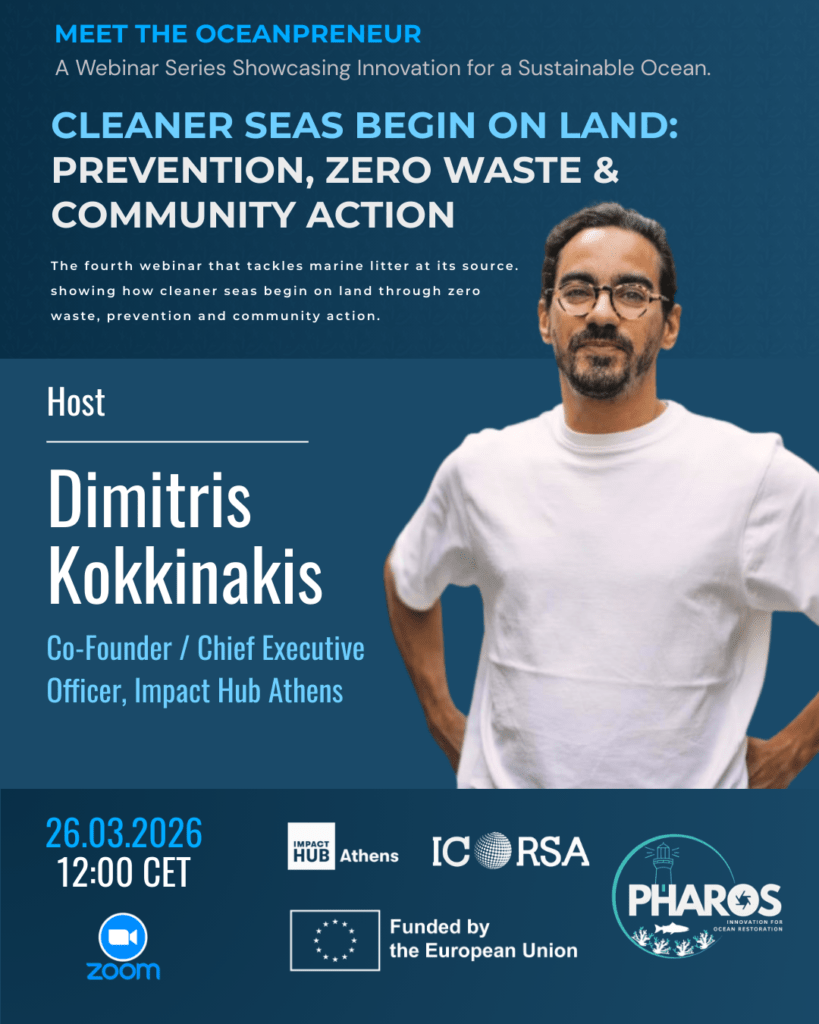
Dimitris Kokkinakis / CEO & Co-Founder, Impact Hub Athens
Dimitris Kokkinakis is a social entrepreneur and community-builder, he co-founded Impact Hub Athens in 2013, an ever-growing ecosystem of social innovators and entrepreneurs driving change through responsible, inclusive, and sustainability-driven initiatives. Impact Hub Athens is part of the global Impact Hub network, present in over 110 cities worldwide, connecting people, places, and programs to inspire, support, and catalyze impact. Since a young age he has been actively involved in national and international organizations and networks, working with diverse communities across sectors including entrepreneurship, the arts, and environment. Under his co-leadership, Impact Hub Athens has implemented large-scale initiatives at local, national, and EU levels, focusing on sustainability, inclusion, and climate resilience.
Moderator
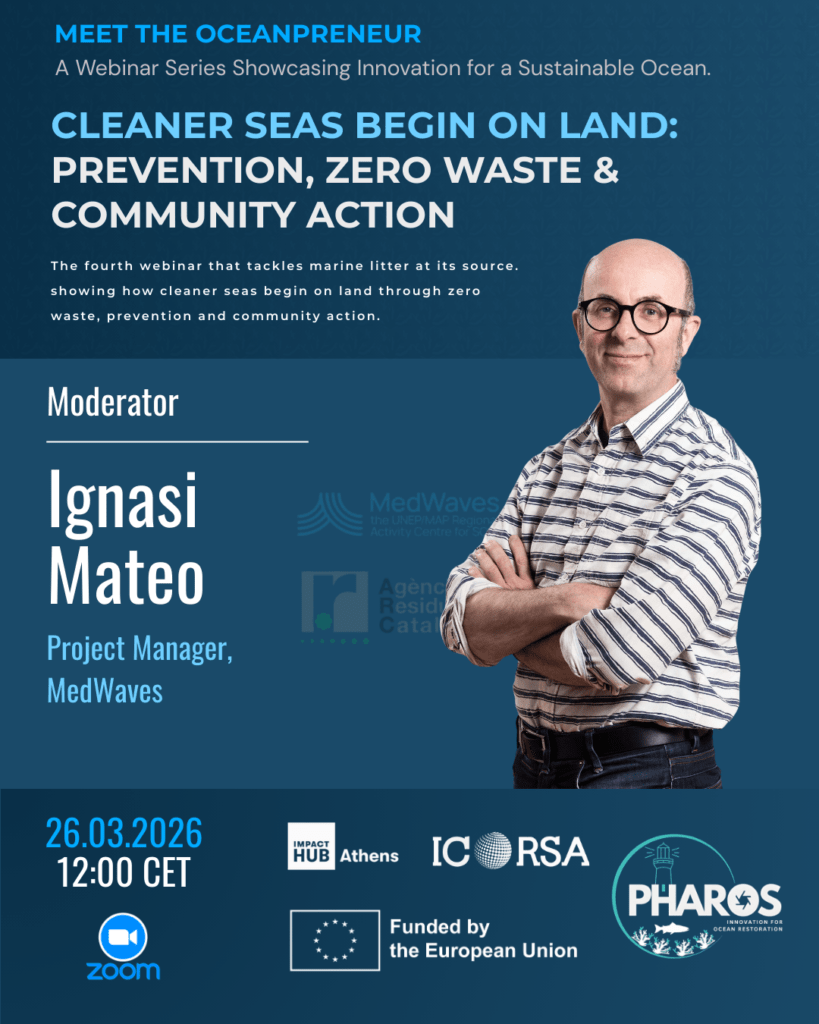
Ignasi Mateo / Project Manager, MedWaves
Ignasi is currently working at the Waste Agency of Catalonia, where he supports companies in developing waste prevention measures (mainly plastic and SUP), advancing circular economy strategies, and promoting extended producer responsibility schemes.
For the past decade, he served as a Project Manager at MedWaves, a UNEP/MAP Regional Activity Centre, where he managed and coordinated European and Mediterranean projects under the framework of the United Nations Environment Programme (UNEP) and the Barcelona Convention. Notable projects include ACT4LITTER and Plastic Busters MPAs (Interreg), BlueMissionMed and LooP Zone (Horizon 2020), and CapiMed+ (funded by Beyond Plastic Med). He is also engaged in the Intergovernmental Negotiating Committee (INC) process to develop a legally binding international instrument to end plastic pollution.
Speakers
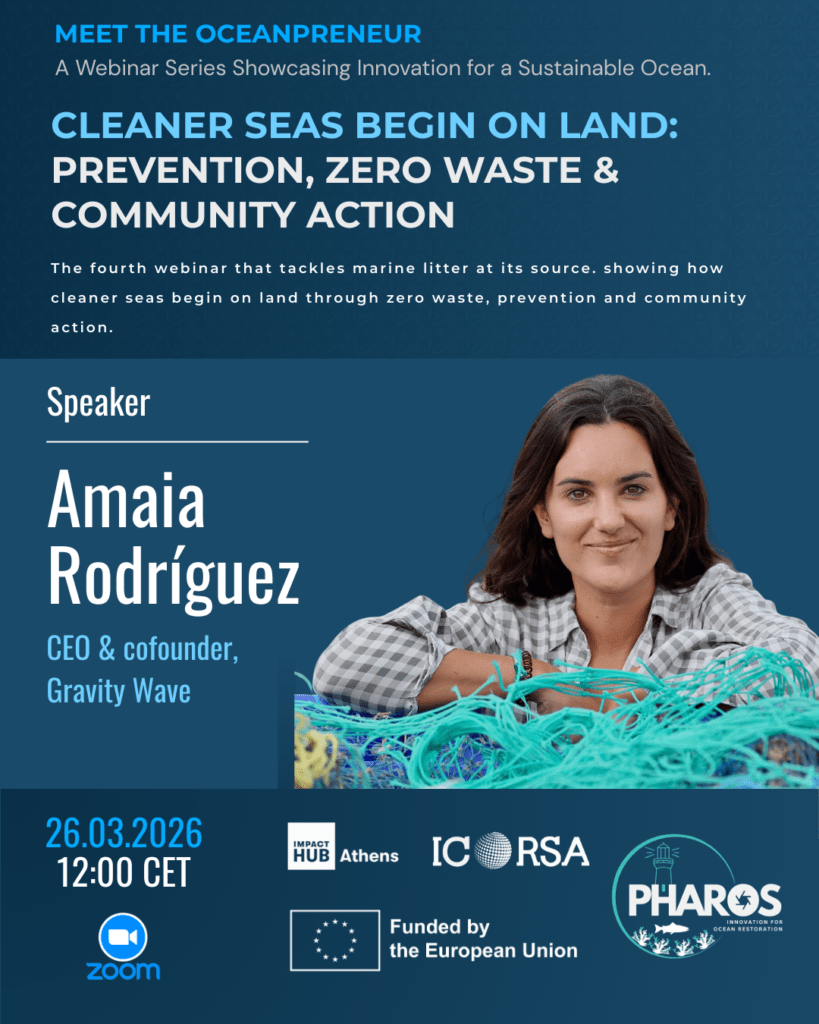
Amaia Rodríguez / CEO & Co-Founder, Gravity Wave
Amaia Rodríguez is the CEO of Gravity Wave, a Spanish impact-driven company tackling marine plastic pollution. She leads initiatives that collect abandoned fishing nets and other ocean plastics and transform them into recycled materials and products for brands and industry. Her work sits at the intersection of circular economy, sustainability, and real-world supply-chain execution—building partnerships with fishermen, ports, and companies to scale measurable environmental impact.
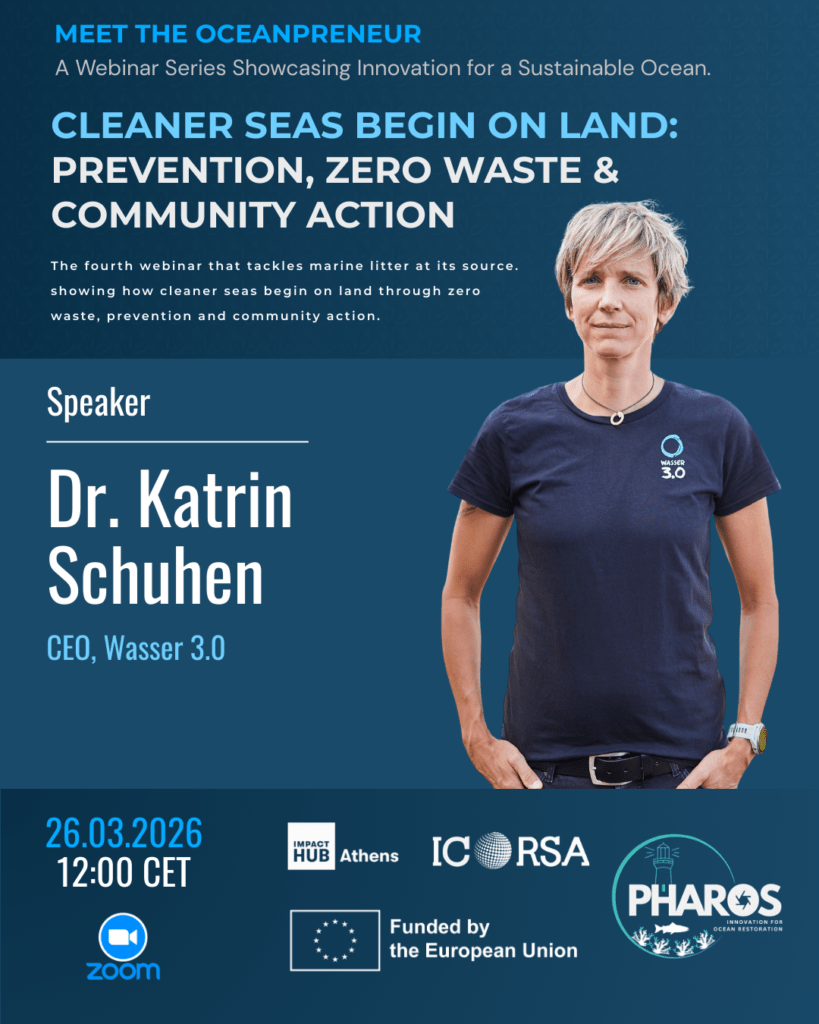
Dr. Katrin Schuhen / CEO, Wasser 3.0
After completing her doctorate in chemistry in 2007 (Ruprecht-Karls University, Heidelberg), Dr. Katrin Schuhen worked in medical technology and in polymer production industry before setting up her own research group as part of her Junior Professorship for Organic and Ecological Chemistry at the University of Koblenz-Landau, Germany (2012- 2018).
Since then, she has been working on new material classes for the removal of microplastics and micropollutants from all kinds of water as well as on their detection, reuse, and digitized process control. In May 2020, she founded Wasser 3.0 gGmbH as a non-profit Greentech company working for water without microplastics and micropollutants in innovation transfer, scaling, and growth as well as in research, education and awareness raising.
Together with her team, she developed the world´s first fast and efficient monitoring toolbox and analytical method for microplastics and innovated the Clump & Skim Technology for microplastic removal and reuse. Beside many awards for the technology innovation, Dr. Katrin Schuhen was awarded as one of the TOP 100 women in social enterprises (Euclid Network, 2023). In addition to many scientific articles, she published her first non-fiction book in October 2024 with the title: “Rebellin des Wassers”, Scorpio Verlag, Germany.
About the PHAROS Citizen Litter Entrepreneur Programme
The Citizen Litter Entrepreneur Programme is part of the EU-funded PHAROS project, which develops innovative nature-based solutions to restore marine ecosystems, enhance biodiversity, and address climate change across the Atlantic and Arctic regions. The programme empowers citizens and entrepreneurs to transform ocean plastic waste into sustainable business opportunities through training, tools, and circular economy ventures.