The Gran Canaria Demo

IMTA and Multiple Use of Space (Part 1)

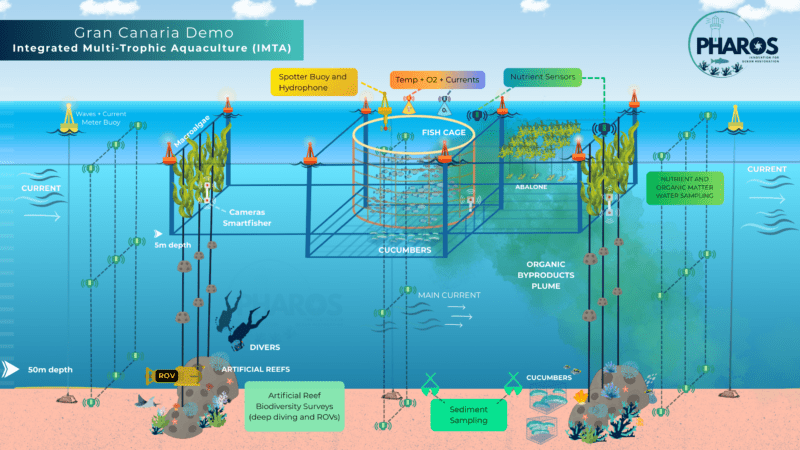
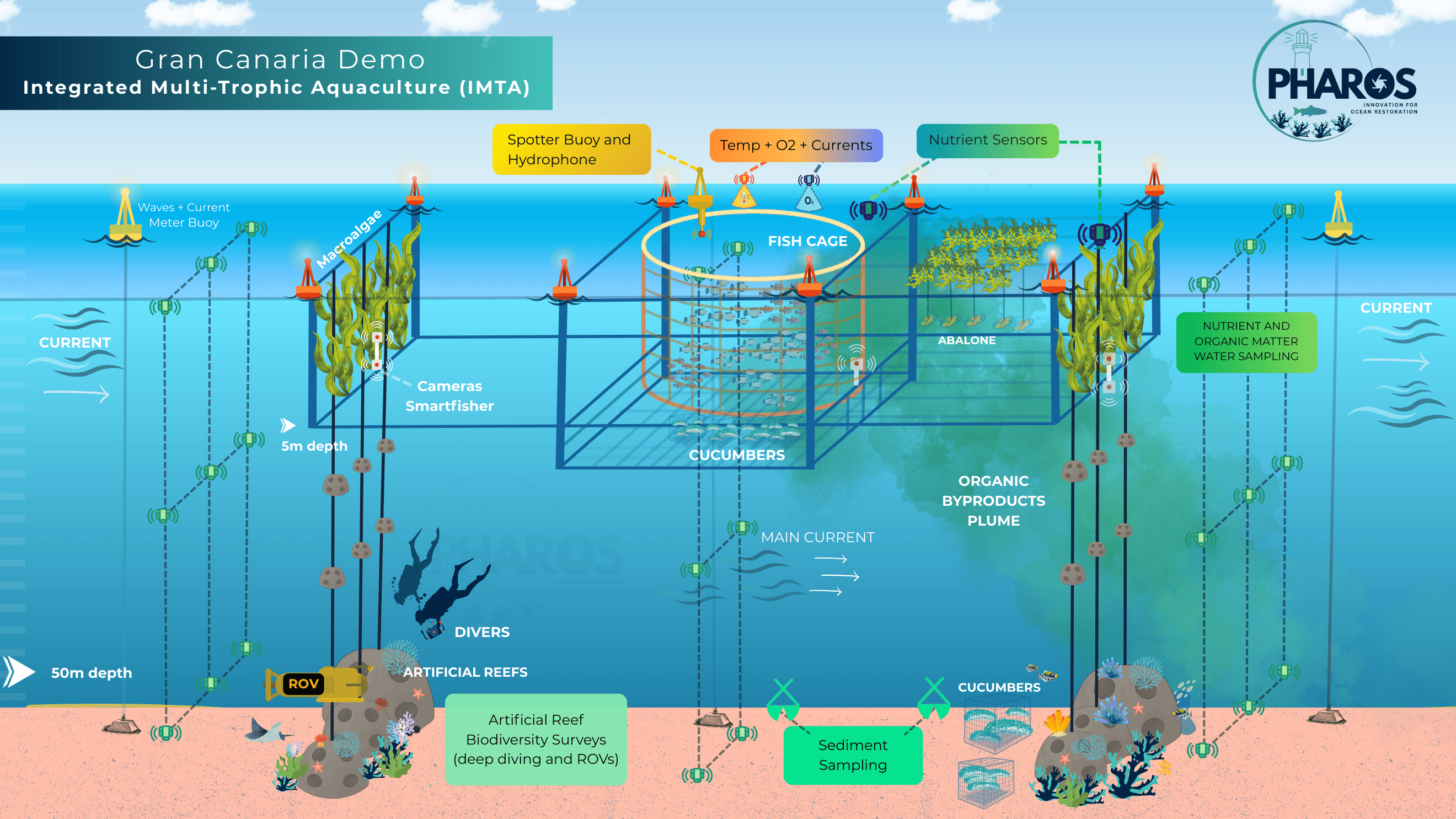
In Gran Canaria’s PLOCAN research area, a cutting-edge demo will integrate multiple Nature-Based Solutions (NBS) with aquaculture, targeting a site severely damaged by human activity. PLOCAN will deploy storm-proof infrastructure, including zonalization, buoys, mooring blocks, and a fish cage system for long-term Integrated Multitrophic Aquaculture (IMTA) restoration. Real-time monitoring and on-site data collection will measure ecosystem recovery, particularly the impact of macroalgae growth on CO2 sequestration, feeding this data into the PHAROS Digital Twin Ocean (DTO) system.

Open-schooling projects, where families, experts, and stakeholders collaborate with teachers and students to tackle local challenges, align with the Atlantic Action Plan 2.0. These initiatives aim to unlock the blue economy’s potential in the Atlantic while preserving marine ecosystems and addressing climate change adaptation and mitigation.

Gran Canaria Demo Part 1 Concept Will Test the Benefits of IMTA Co-location, including:

  • Biodiversity and ecosystem benefits from IMTA macroalgal for fish aquaculture and the surrounding environment.
  • Impact of co-location of lucrative abalone and sea cucumber on biodiversity restoration.
  • Impact of new artificial reefs (SER) on both biodiversity restoration and pollution reduction.

Marine Forest and Artificial Reef for Biodiversity Restoration (Part 2)

This Gran Canaria Demo will be located in the PLOCAN research area in Gran Canaria. It will additionally demonstrate the benefits to biodiversity restoration from a combined reef (active recolonisation) and polyculture macroalgae arrangement.

PLOCAN RESEARCH AREA IN GRAN CANARIA

Some of the anticipated benefits from the innovative Gran Canaria Part 2 Demo combo-arrangement that will be measured include:

  • Shelter and Habitat: The structure of seaweed ropes offers shelter, food, and breeding grounds for fish, crustaceans, and other life forms, thereby promoting biodiversity.
  • Nutrient Uptake: The macroalgae nutrient uptake contributes to improving water quality by reducing levels of these compounds and preventing issues like harmful algal blooms.
  • Coastline Stabilisation: Seaweed vertical rope systems and SER® reefs help stabilise the coastline by reducing erosion caused by waves and currents.
  • CO2 Capture: CO2 capture from the atmosphere mitigates ocean acidification and climate change. This carbon capture also results in the production of oxygen.

DEMO NEWS

Bantry Bay IMTA: Surprising Results from Ireland’s First Season
Bantry Bay IMTA: Surprising Results from Ireland’s First Season 901 507 PHAROS Project

Can seaweed farming reduce salmon aquaculture’s impact? PHAROS Ireland’s first full season in Bantry Bay delivers complex, surprising results.

Gran Canaria’s Blueprint for Atlantic Marine Restoration
Gran Canaria’s Blueprint for Atlantic Marine Restoration 1024 576 PHAROS Project

Off Gran Canaria, seabream, seaweed, sea cucumbers and artificial reefs form a closed loop system designed to restore the Atlantic from within.

Exciting Ocean Waters Restoration in Action at Gran Canaria
Exciting Ocean Waters Restoration in Action at Gran Canaria 1024 576 PHAROS Project

The Atlantic Ocean of Gran Canaria is set to become a groundbreaking laboratory for nature-based solutions.

Privacy Preferences

When you visit our website, it may store information through your browser from specific services, usually in the form of cookies. Our Privacy Policy can be read here.

Here you can change your Privacy preferences. It is worth noting that blocking some types of cookies may impact your experience on our website and the services we are able to offer.

Click to enable/disable Google Analytics tracking code.
Click to enable/disable Google Fonts.
Click to enable/disable Google Maps.
Click to enable/disable video embeds.
Our website uses cookies, mainly from 3rd party services. Define your Privacy Preferences and/or agree to our use of cookies.