Danube Delta Open Living Lab Launches, Turning Smartphones into Scientific Tools for Biodiversity Monitoring
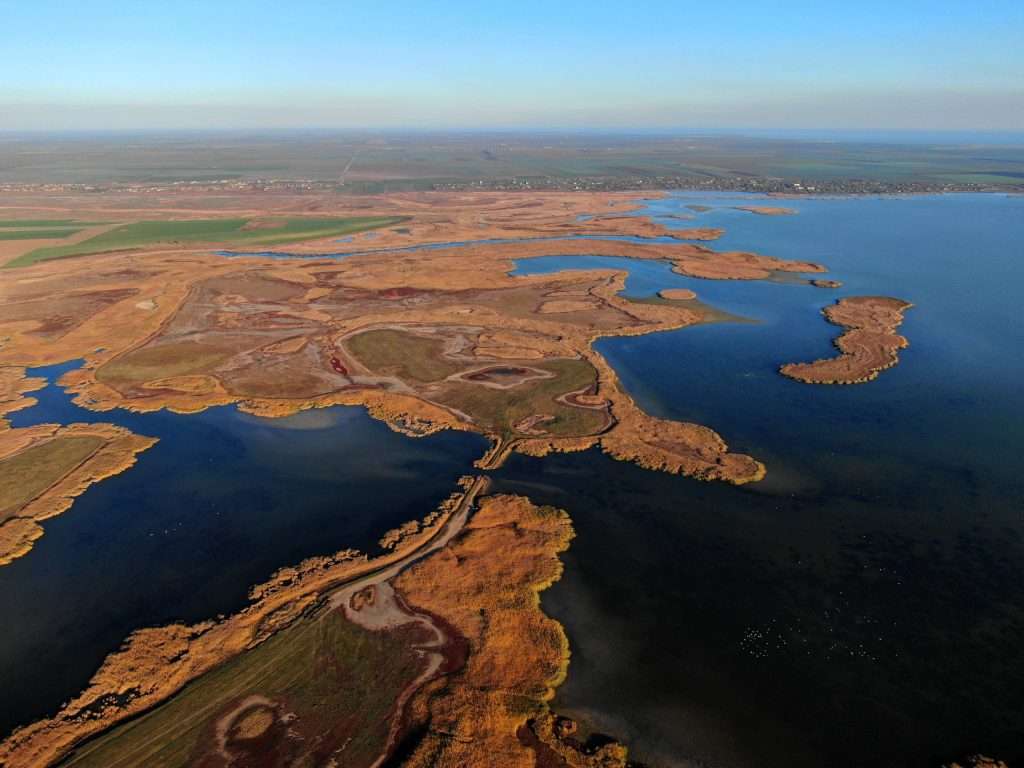
Danube Delta Open Living Lab Launches, Turning Smartphones into Scientific Tools for Biodiversity Monitoring https://pharosproject.eu/wp-content/uploads/2026/09/DJI_0216_Maxim-Yakovlev-scaled-1-1024x768.jpg 1024 768 PHAROS Project https://pharosproject.eu/wp-content/uploads/2026/09/DJI_0216_Maxim-Yakovlev-scaled-1-1024x768.jpgThe Danube Delta, Europe’s largest remaining natural wetland and a crucial ecological buffer between the Danube River and the Black Sea, is now at the heart of a new citizen science initiative. The Danube Delta Open Living Lab has officially launched, creating a cross-border network that invites everyone, from local residents and school groups to NGOs and international researchers, to participate in real-time biodiversity monitoring.
A Network for a Delta Under Pressure
Straddling Romania and Ukraine, the Danube Delta is a UNESCO World Heritage site renowned for its staggering diversity of birds, fish, and plant life. Functioning as a giant natural filter, it cleans water flowing into the Black Sea. However, this vital ecosystem faces mounting pressures: pollution, climate change, and an influx of invasive species.
The new Living Lab is designed to address these threats by building a comprehensive body of data on species distribution, tracking new arrivals, and monitoring how native and alien species interact. It is a “Replication Living Lab,” meaning it adapts and scales successful methods developed elsewhere rather than serving as a primary demonstration site. Its focus extends across the Danube basin, the Black Sea, and the surrounding territories of Ukraine, Romania, and Moldova.
Powered by the PHAROS Mission
The framework for the Living Lab was developed by the I.I. Schmalhausen Institute of Zoology in Kyiv, drawing on the priorities of the PHAROS project. The project establishes “Living Labs” as local hubs, real-world spaces where scientists, fishers, students, local government, and entrepreneurs co-develop and manage solutions. Its activities are developed within the framework of the PHAROS project, with support from the National Institute of Research and Development for Biological Sciences at the Bucharest University, the Royal Belgian Institute of Natural Sciences, the Technical University of Denmark, and Lviv Polytechnic. Among the involved institutions in the region are the Institute of Marine Biology NASU, Ukrainian Scientific Center of Ecology of the Sea, Institute of Hydrobiology NASU, Danube Biosphere Reserve, Kuyalnyk National Nature Park, NGO Mare Nostrum and other key players in ecology and wildlife management.
Citizen Science Made Simple: The MINKA Platform
The scientific method at the heart of the Danube Delta Living Lab is remarkably straightforward: anyone can participate by uploading photographic observations with location and time stamps.
This data is collected through MINKA, a free citizen science platform created by the Spanish National Research Council (CSIC). Developed by the Institute of Marine Sciences (ICM-CSIC) in Barcelona, MINKA serves as a digital hub for communities engaged in public participation in scientific research. It allows communities to set up local projects, share observations, and store data that scientists can actually use.
Data uploaded to MINKA is then sent to Ukrainian researchers at the Schmalhausen Institute for analysis. With the observer’s permission, it can also feed into international repositories like the Global Biodiversity Information Facility (GBIF). This means a photo taken by a schoolchild near Novoarkhangelsk could help track biodiversity patterns across continents.
A Tool for Education and Engagement in a Post-Conflict Context
The Danube Delta Living Lab places a strong emphasis on youth engagement and environmental awareness, particularly in a post-conflict context. The MINKA platform has been translated into Ukrainian, and the lab is included in Ukraine’s European Research Area roadmap. Early results have been promising: in July 2026, over a hundred schoolchildren from the Odesa region attended a biological camp where 15 of them logged more than 300 wildlife records on MINKA in just ten days. They learned to use the platform, analyse results, and even created poster presentations linking their work to a possible new Nature Reserve Fund object for Ukraine.
How to Get Involved
The PHAROS project has its own page on the Schmalhausen Institute’s website. Organisations interested in participating in Living Lab activities can register through an EU survey link, while the MINKA project space is open to anyone who wants to upload observations.
The Danube Delta Open Living Lab represents a new model of environmental stewardship: a slow, patient, yet powerful data-gathering effort that harnesses the collective power of scientists, schoolchildren, local communities, and a smartphone. It is a testament to how collaborative innovation, grounded in science and community engagement, can help restore our oceans and secure their future.
For more information, visit the Schmalhausen Institute of Zoology’s PHAROS page.