MINKA platform PHAROS CSIC

MINKA - Citizen Science Platform

The ocean is vast, but our understanding of it is full of gaps. Scientists cannot be everywhere at once. Monitoring stations are expensive to maintain. And yet, decisions about marine conservation, pollution control, and sustainable fishing need reliable, up-to-date information. PHAROS solves this problem by turning local communities into scientific partners. At the centre of this effort is MINKA, a citizen science platform where anyone with a smartphone can contribute to real marine research.

PHAROS uses MINKA as the central tool for its Living Labs: community-led innovation spaces across the Atlantic, Arctic, and Mediterranean. In Gran Canaria, local divers use MINKA to document invasive species and reef recovery. In Iceland, citizens help monitor invasive species via the platform. In the Danube Delta, Ukrainian and Romanian schoolchildren upload observations of native and invasive species. MINKA transforms passive bystanders into active data collectors, involving local governments and organisations, giving researchers the scale of information they need while giving communities a tangible sense of ownership over their marine environment.

What is MINKA?

MINKA is a citizen science observatory, a digital platform where organisations and nature enthusiasts record observations of nature, especially marine biodiversity.

MINKA is a UN Ocean Decade Action, a UN SDG Acceleration Action, and part of the EU Mission “Restore our Ocean and Waters”. It is developed and hosted in Europe and publicly funded, meaning the data stays open and cannot be monetised by private owners.

The name “MINKA” comes from the Quechua word for collective work for the benefit of the community, a pre-Columbian tradition of mutual aid. That philosophy runs through everything MINKA does.

What MINKA does?

  • Collects observations – Users upload photos of marine species, litter, or habitats, along with GPS coordinates and timestamps.

  • Enables collaborative identification – The community helps identify species through voting and discussion. An AI assistant also suggests matches.

  • Creates verifiable data – Every observation is reviewed. Experts validate scientific quality. The result is data usable for peer-reviewed research and policy decisions.

  • Connects local to global – MINKA integrates with international infrastructures like GBIF (Global Biodiversity Information Facility). Local communities are contributing to global science.

How PHAROS Plans to Implement MINKA

Implementation follows a five-phase methodology, designed to be flexible for local contexts while ensuring consistency across Living Labs.

1. Strategic definition

Living Lab (LL) leaders complete a “LL Canvas” on Miro: mission, scope, thematic focus, target stakeholders.

September 2024 – March 2025

2. Stakeholder Mapping

Identify and classify participants (mobilisers, facilitators, validators, contributors). Translate and distribute GDPR-compliant surveys.

March – December 2025

Co-creation of Activities

Workshops (online or in-person) where stakeholders design the citizen science actions together. Define what to observe, where, and how often.

September 2025 – March 2026

4. Launch and implementation

MINKA projects go live. Training sessions for participants. First BioBlitz events. Data begins flowing.

January 2026 onward

5. Monitoring and Iteration

Dashboards track participation and data quality. Living Labs review progress, adjust methods, and share lessons across the network.

Ongoing throughout project

Key principle: Co-creation is not consultation. Stakeholders help design the activities, not just comment on pre-defined plans. A school may decide to monitor beach litter every Friday. A diving club may choose to photograph specific reef zones monthly.

This ownership drives sustained participation.

Tools & Frameworks used in MINKA

Core MINKA Services

What it does:
Upload photos, sounds, or text observations with GPS and time

Example in PHAROS:
A snorkeller uploads a photo of a fireworm in Gran Canaria

What It Does
Real-time dashboards show biodiversity trends, spatial gaps, engagement metrics

Example in PHAROS
A Living Lab leader checks which zones lack data and targets outreach

What It Does
Online forums and participatory tools for stakeholder dialogue

Example in PHAROS
MPA managers discuss corridor planning using MINKA visualisations

Named after the two-faced Roman god, this model balances short-term participant needs with long-term scientific goals.

  • Short-term (citizens): Quick identifications, instant feedback, badges, local language interfaces, clear “what’s in it for me?”

  • Long-term (academics, managers): Peer-reviewed publications, policy briefs, multi-year trend analysis, data archiving.

The platform bridges these two time horizons. A volunteer gets recognition today. A researcher gets a dataset validated over years.

MINKA structures engagement around four interacting groups:

Community Role
Academics Design protocols, validate data, publish research.

Example: CSIC scientists verify species identifications

Participants Upload observations, identify species.

Example: Local divers, students, fishers

Facilitators Train volunteers, organise events, moderate forums.

Example: Living Lab coordinators

Mobilisers Recruit participants, spread awareness, build partnerships.

Example: NGOs, schools, local councils

Data Validation Workflow

  1. User uploads observation (photo + GPS + time).

  2. Community votes on identifications.

  3. Expert validators confirm scientific quality.

  4. Data is published to open repositories (GBIF, EMODnet).

This hybrid approach (AI + community + experts) scales validation while maintaining rigour.

The plan and the timeline

Activity:
Initial scoping and LL Canvas development

Living Lab:
All Labs

Activity:
Stakeholder mapping and GDPR surveys completed

Living Lab:
All Labs

Deliverable:
Deliverable D2.1 (Living Lab Implementation Plans) published

Lead:
CSIC

Activity:

  • Co-creation workshops;
  • First MINKA training sessions

Living Labs:
Gran Canaria, Santorini, Danube Delta

Activity:
Gran Canaria Living Lab public launch with BioBlitz event (4 dive sites + 4 shoreline sites)

Living Lab:
Gran Canaria

Activity:
MINKA training and community mobilisation

Living Labs:
Lanzarote

Activity:
Ireland Living Lab launch (citizen science for alien species monitoring)

Living Lab:
Ireland

Activity:

  • eDNA training and piloting;
  • Iceland Living Lab activities begin

Living Lab:
Iceland

Activity:
Co-creation and pilot actions begin

Living Labs:
Santorini, Danube Delta

Activity:
Each Living Lab has launched at least one MINKA-based citizen science action

All Living Labs

Activity:

  • ongoing monitoring,
  • data analysis,
  • replication scaling,
  • reporting

All Labs

Note on flexibility: Timelines may shift due to local factors (weather, school calendars, election cycles). The staggered launch allows early Labs to mentor later ones.

Connections with other PHAROS innovations

MINKA does not operate in isolation. It is woven into the fabric of PHAROS.

Living Labs

MINKA is the primary citizen science infrastructure for every PHAROS Living Lab. Each Lab decides its own observation focus (e.g., invasive species in Iceland, marine litter in Santorini, reef biodiversity in Gran Canaria) and uses MINKA to collect, visualise, and share data. The Living Lab methodology (co-creation, stakeholder mapping, iterative feedback) is built around MINKA’s capabilities.

Citizen Litter Entrepreneurs

The Citizen Litter Entrepreneurs programme (CLEP) trains citizens to turn marine litter prevention into micro-businesses. MINKA supports this by enabling participants to document litter hotspots, track cleanup progress, and visualise impact. In Santorini, the Living Lab is testing MINKA for marine plastic litter observations, feeding directly into CLE training.

Fisher Guardians

Local fishers become environmental stewards. They use MINKA to report lost fishing gear, marine megafauna sightings, and illegal dumping. This observational data complements the high-tech tracking of ALDFG (abandoned, lost, or discarded fishing gear). In Gran Canaria, the Fisher Guardians programme is connected to MINKA through the local Living Lab.

Blue Schools Network

Schools across the Atlantic and Arctic join the Network of European Blue Schools. Students use MINKA for biodiversity audits, BioBlitz events, and citizen science campaigns linked to their curriculum. MINKA provides the hands-on science experience that makes ocean literacy tangible. Ukrainian-language MINKA support, added through PHAROS, enables Danube Delta schools to participate fully.

Digital Twin Ocean (DTO)

Observations from MINKA (species locations, litter density, seasonal patterns) are made interoperable with the PHAROS DTO. Researchers and planners can overlay citizen science data with hydrodynamic models, acoustic monitoring, and satellite imagery, creating a richer, more complete picture of marine ecosystems.

Marine Protected Areas (MPAs)

MINKA data feeds into the enhanced BLUE4ALL MPA Blueprint platform – Marine Protected Area (MPA) Platform. MPA managers can visualise citizen-contributed biodiversity observations alongside professional monitoring data. This supports adaptive management, ecological corridor planning, and stakeholder engagement.

Work Packages (WP) related to MINKA

Work Package 2 (WP2): Stakeholder Engagement, MPA, Education, Fisher Guardian, and Citizen Litter Entrepreneur Programmes – Led by: CSIC

MINKA is the central tool for WP2’s citizen science and Living Lab activities.

Deliverable Due Date
D2.1 Living Lab implementation plans – Conceptual and methodological foundation for Living Labs, including MINKA integration. Published. August 2025 (Month 12)
D2.2 Interim Reports Living Labs evaluation – Assessment of Living Lab progress, including MINKA usage metrics and engagement quality. August 2027 (Month 36)
D2.3 SoA report on local MPA & ecological corridor status – Baseline assessment – informs where MINKA data can support MPA monitoring. November 2025 (Month 15)
D2.4 Plan to create/upgrade MPAs and ecological corridors – Includes citizen science protocols using MINKA for corridor monitoring. August 2026 (Month 24)
D2.5 Final Report on MPA platform and network – Final evaluation, including MINKA’s contribution to MPA data. June 2029 (Month 58)
D2.6 Education Plan expanding Blue Schools Network – How Blue Schools will use MINKA for ocean literacy. February 2026 (Month 18)
D2.7 Final Education impact and effectiveness report – Includes MINKA usage by schools and learning outcomes. June 2029 (Month 58)
D2.8 Fisher Guardian and citizen litter entrepreneur plans, guidelines and tools – How these programmes integrate MINKA for observation and reporting. February 2026 (Month 18)
D2.9 Final Fisher Guardian and citizen litter entrepreneur effectiveness report – Evaluation of MINKA’s role in pollution monitoring. May 2028 (Month 45)
D2.10 Final Report on Living Labs evaluation – Final assessment of all Living Labs and MINKA activities. August 2029 (Month 60)

Work Package 5 (WP5): Replication and Exploitation

Led by: PLOCAN

MINKA features in replication roadmaps and knowledge transfer.

Deliverable Due Date
D5.5 Replication Roadmaps – Includes processes for extending MINKA-based citizen science to replication regions. August 2029 (Month 60)
D5.6 Market research report for PHAROS Mission solutions – Assesses scalability of MINKA-style citizen science across the AA (Atlantic-Arctic) basin. May 2028 (Month 45)

Work Package 6 (WP6): Project Coordination and Management

Led by: PLOCAN

Data management and open science: MINKA data is made FAIR (Findable, Accessible, Interoperable, Reusable).

Deliverable Due Date
D6.2 – D6.5 Data Management Plan (updates) – Successive updates to the Data Management Plan, ensuring MINKA data remains FAIR throughout the project. February 2025, August 2027, May 2028, August 2029 (multiple updates)

Note: The due dates correspond to each update of D6.2–D6.5 respectively.

Work Package 7 (WP7): Dissemination and Communication

Led by: ICoRSA

MINKA is featured in communication materials, webinars, and outreach events.

Deliverable Due Date
D7.1, D7.3–D7.5 Dissemination & Communication Plan (and updates) – Includes planning and reporting for dissemination activities, with MINKA prominently featured in outreach. February 2025, August 2027, May 2028, August 2029

Consortium Partners involved in MINKA

Agencia Estatal Consejo Superior de Investigaciones Científicas (CSIC), Spain

Role in MINKA: Leader of WP2 and MINKA platform owner. Develops and maintains MINKA. Provides training, dashboards, and technical support to all Living Labs. Leads co-creation methodology.

Expertise: Spain’s largest public research institution with expertise in marine sciences, biodiversity, citizen science platforms, and stakeholder engagement methodologies.

International Consortium of Research Staff Associations (ICoRSA), Ireland

Stakeholder engagement and communication: Supports Living Lab leaders with GDPR-compliant surveys, communication materials, and event organisation. Co-facilitates co-creation workshops.

Expertise: Global network of research staff associations; specialises in researcher development, stakeholder mapping, survey design, and dissemination strategies.

PLOCAN (Consorcio para el Diseño, Construcción, Equipamiento y Explotación de la Plataforma Oceánica de Canarias)

Role in MINKA: Project coordinator. Hosts Gran Canaria demo sites. Links MINKA with Fisher Guardians, Blue Schools, and replication roadmaps.

Expertise: Operator of a world-class offshore test site; expertise in marine infrastructuremulti-use platformstechno-economic analysis, and project coordination.

ULPGC (Universidad de Las Palmas de Gran Canaria) Spanish Algae Bank

Gran Canaria Demos implementation: Uses MINKA for macroalgae and reef biodiversity monitoring. Connects MINKA to Spanish Algae Bank research.

Expertise: University with strong marine science programmes; operates the Spanish Bank of Algae; expertise in macroalgae cultivation, IMTA, and marine biodiversity restoration.

UGI (Underwater Gardens International), Spain

Artificial reef design: Uses MINKA for reef recolonisation observations and citizen science engagement around SER® reefs.

Expertise: SME specialising in Smart Enhanced Reefs (SER®) and parametric reef design; expertise in marine restoration, 3D-printed reefs, and ecological engineering.


Blue Ocean Sustainable Solutions (bO), Portugal – DTO lead.

Makes MINKA observations interoperable with the PHAROS Digital Twin of the Ocean.

Expertise: SME specialised in ocean digital twins, underwater acoustics, AI-based species identification, and real-time environmental data integration.

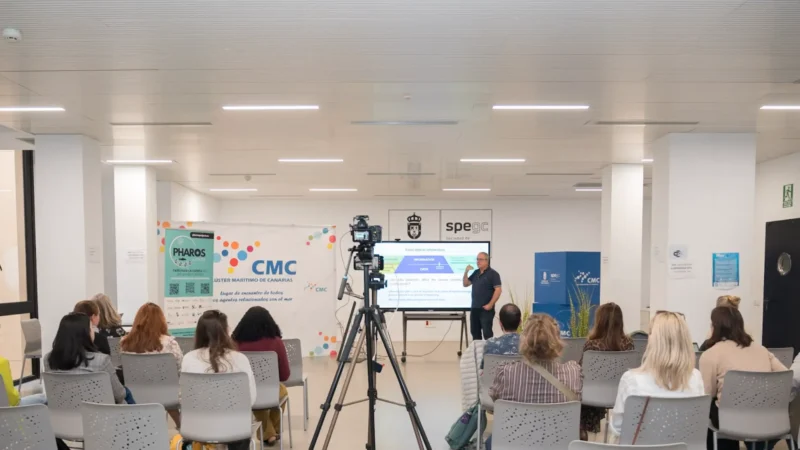
Asociación Cluster Marítimo de Canarias (CMC), Spain, Gran Canaria

Living Lab coordinator. Mobilises local industry, SMEs, and government stakeholders. Leads MINKA adoption in the Canary Islands.

Expertise: Maritime cluster organisation; expertise in blue economy networking, industry-academia collaboration, and regional stakeholder engagement.

Bantry Marine Research Station (BMRS), Ireland

Demo 3 (salmon farm + macroalgae). Supports Ireland Living Lab. Uses MINKA for biodiversity monitoring around aquaculture sites.

Expertise: Private marine research station; expertise in integrated multi-trophic aquaculture (IMTA), macroalgae farming, and coastal ecosystem monitoring.

Danmarks Tekniske Universitet (DTU), Denmark

Demo 4 (invasive species, Iceland). Leads Iceland Living Lab. Integrates MINKA with eDNA monitoring. Expertise: Technical university; world-leading expertise in eDNA analysis, molecular ecology, invasive species detection, and marine robotics.

I.I. Schmalhausen Institute of Zoology of National Academy of Sciences of Ukraine (IZNASU), Ukraine
Danube Delta Living Lab co-coordinator. Leads MINKA adoption in Ukraine. Translated MINKA into Ukrainian. Connected MINKA to national biodiversity portal UkrBIN.
Expertise: Leading Ukrainian zoology research institute; expertise in biodiversity informatics, invasive species, and citizen science in post-conflict environments.

Lviv Polytechnic National University (LPNU), Ukraine

Danube Delta Living Lab co-coordinator. Engages schools and community groups in MINKA-based citizen science.

Expertise: Major Ukrainian technical university; expertise in environmental education, community outreach, and cross-border research collaboration.

Impact Hub Labs (IHA), Greece

Santorini Living Lab coordinator. Uses MINKA for marine litter observations and Citizen Litter Entrepreneurs training.

Expertise: Social innovation and entrepreneurship hub; expertise in circular economy, citizen-led business incubation, and marine litter valorisation.

Munster Technological University (MTU), Ireland

Ireland Living Lab co-coordinator. Supports stakeholder engagement and MINKA training for schools and community groups.

Expertise: Multi-campus technological university; expertise in marine and freshwater biology, citizen science, and community-based environmental monitoring.

Institut Royal des Sciences Naturelles de Belgique (RBINS), Belgium

MPA platform lead. Links MINKA data to the Blue4All MPA Blueprint platform for adaptive management.

Expertise: National natural history museum and research institute; expertise in marine protected area (MPA) management, ecological corridors, and biodiversity data standards.

Gravity Wave (GW), Spain

Fisher Guardians recycling partner. Connects fisher-reported data (via MINKA) to end-of-life gear recycling.

Expertise: SME focused on marine plastic recycling; expertise in circular economy, fishing gear valorisation, and blockchain-based traceability.

NORCE Norwegian Research Centre (NORCE), Norway

DTO and AI modelling. Supports integration of citizen science data into predictive models.

Expertise: Norwegian research institute; expertise in climate modelling, artificial intelligence, marine data fusion, and high-performance computing.

Fondazione Centro Euro-Mediterraneo sui Cambiamenti Climatici (CMCC), Italy

MPA platform technical development. Integrates MINKA data into decision-support tools for MPA managers.

Expertise: Climate research centre; expertise in decision-support systems, MPA governance tools, ecological corridor modelling, and climate adaptation.

Institut Français de Recherche pour l’Exploitation de la Mer (Ifremer), France

Marine research support: Links MINKA to existing French citizen science initiatives.

Expertise: French national institute for ocean science; expertise in marine biology, observation networks, and citizen science coordination (e.g., Objectif Plages).

Gobierno de Canarias (GOBCAN), Spain

Regional government. Supports policy uptake of MINKA data for Canary Islands marine management.

Expertise: Regional government of the Canary Islands; expertise in marine spatial planning, coastal management, and integration of citizen science into public policy.

Privacy Preferences

When you visit our website, it may store information through your browser from specific services, usually in the form of cookies. Our Privacy Policy can be read here.

Here you can change your Privacy preferences. It is worth noting that blocking some types of cookies may impact your experience on our website and the services we are able to offer.

Click to enable/disable Google Analytics tracking code.
Click to enable/disable Google Fonts.
Click to enable/disable Google Maps.
Click to enable/disable video embeds.
Our website uses cookies, mainly from 3rd party services. Define your Privacy Preferences and/or agree to our use of cookies.