eDNA for Detecting Invasive Species

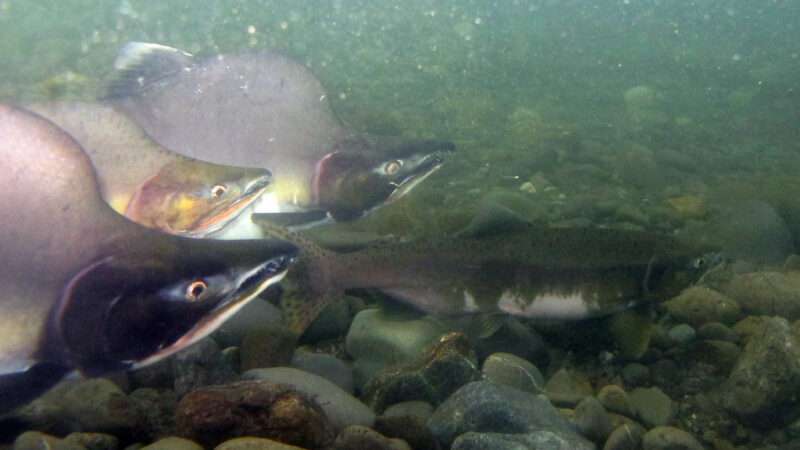
Pink salmon are a growing threat in the Arctic. Originally introduced to the Atlantic decades ago, they are now spreading rapidly through European waters, outcompeting and endangering native species like Atlantic salmon and Arctic char. For Iceland, a country whose economy and identity are tied to its pristine rivers and world‑class salmon fishing, this is a serious challenge.

The PHAROS project’s eDNA work is central to Demo 4: Invasive Species Reduction in Iceland. Led by the Technical University of Denmark (DTU), the objective is to create a paradigm shift in how we detect, monitor, and intervene against invasive species. By combining a robotic sensor buoy with advanced genetic analysis, PHAROS is developing a smart, non‑invasive early warning system. This approach doesn’t just tell us if pink salmon are present; it helps us track their movement in real time and target removal efforts, with the ultimate goal of a >50% reduction in invasive pink salmon in the demonstration sites.

What is eDNA for Detecting Invasive Species?

Imagine a cup of water from a river. Even if you can’t see them, that water contains tiny traces of the animals that live there: bits of skin, scales, mucus, and waste.

This is environmental DNA (eDNA).

For invasive species like pink salmon, finding these traces quickly is the first step to stopping them. Traditional monitoring can be slow and labour‑intensive, like sending someone out to physically count fish. eDNA monitoring is different. It’s like having a forensic lab working 24/7, right at the riverbank.

PHAROS uses eDNA to “listen” for the genetic signals of invasive fish. By placing a high‑tech buoy in the water, we can automatically collect and analyse these DNA traces. When the system detects pink salmon DNA, it sends an alert. This gives river managers a crucial head start to take action before the invasive fish can spawn and establish a population.

Strategy Behind

The strategy is simple but powerful: early detection leads to effective action.

Invasive species are easiest to control when their populations are low. By the time you see them, it’s often too late. The PHAROS eDNA strategy moves from a reactive approach (“We’ve caught a pink salmon, now what?”) to a proactive one.

The focus is on pink salmon in Iceland, an invasive species that threatens native salmonids. Pink salmon have a two‑year life cycle, meaning they return to rivers to spawn only in odd‑numbered years. This gives PHAROS a clear, cyclical timeline to test and refine its methods.

The strategy is built on three pillars:

Real‑time Detection

Deploy a robotic buoy (the Environmental Sample Processor, or ESP) to autonomously collect and analyse water samples around the clock.

Data‑Driven Intervention

Use the buoy’s data to pinpoint the best time and place to remove pink salmon, ensuring that intervention is both effective and has minimal impact on native species.

Community & Technology Integration

Combine high‑tech monitoring with local knowledge from river managers and innovative tools like acoustic sensors and underwater cameras to build a complete picture of the ecosystem.

How PHAROS Plans to Use qPCR and Metabarcoding

To decode the eDNA signals from the water, PHAROS uses two advanced genetic techniques, much like a detective uses different tools to solve a case.

1. Quantitative Polymerase Chain Reaction (qPCR)

Think of qPCR as a highly specific searchlight. We design it to look for one particular piece of DNA (in this case, a unique genetic marker for pink salmon). The “quantitative” part means it doesn’t just find the target; it also measures how much of it is there. A strong signal means a lot of fish are nearby, allowing the project to gauge the scale of an invasion in real time. The ESP buoy performs this analysis on board, sending results to scientists instantly.

2. Metabarcoding

If qPCR is a searchlight, metabarcoding is a broad‑spectrum camera. Instead of looking for a single species, it captures a DNA snapshot of everything in the water sample: pink salmon, Atlantic salmon, Arctic char, brown trout, and even insects and algae. This technique is used in the lab to validate the buoy’s findings and to monitor the overall health and biodiversity of the river ecosystem, ensuring that restoration efforts aren’t harming native life.

By combining these two methods (the precision of qPCR and the breadth of metabarcoding), PHAROS gets a clear, actionable picture of the river's inhabitants.

The Tools and Frameworks

The PHAROS eDNA demo is built on a powerful toolkit, integrating sophisticated hardware with smart software.

Environmental Sample Processor (ESP)

A robotic, autonomous “lab-in-a-box” from MBARI. It pumps water, filters eDNA, and runs qPCR analysis on board.

Provides near real‑time data on invasive species presence without needing a scientist on‑site.

Hydrotwin‑S (Acoustic Monitoring)

An AI‑driven underwater hydrophone that listens for and classifies sounds, such as the surge of seals that often follows a salmon run.

Acts as a secondary indicator of salmon activity, providing an ecological clue to validate eDNA data.

SmartFISHER (AI Cameras)

Underwater 2D cameras with integrated AI that can identify and count fish species in real time.

Visually confirms species presence and abundance, providing a live video feed to cross‑reference with eDNA signals.

MINKA Citizen Science Platform

A platform developed by CSIC that connects researchers with the public.

Engages local river owners, students, and communities in observation and reporting, making them active partners in monitoring.

Digital Twin of the Ocean (DTO)

A virtual model that integrates all collected data (eDNA, acoustic, video) for visualisation and analysis.

Creates a central dashboard to track the invasion in real time, enabling quick decision‑making by the project team.

Electrofishing & Nets

Traditional, selective fishing gear used for the physical removal of pink salmon.

The intervention tool used to catch and remove invasive fish once the monitoring system has confirmed their presence and identified the optimal timing.

The plan and the timeline

The eDNA demonstration is a tightly scheduled operation, aligned with the pink salmon’s two‑year spawning cycle.

This below cycle will be repeated in subsequent odd years, with the aim of proving that this eDNA‑powered approach can be a reliable, scalable method for protecting vulnerable rivers across Europe and the Arctic.

YEAR 1

July–September 2025: The ESP buoy, cameras, and hydrophones are deployed at the mouth of the Eyjafjarðará river in northern Iceland. The system begins its first full season of continuous monitoring.

Real time: Data streams back to DTU Aqua in Denmark. Scientists analyse the eDNA signals to track the arrival, movement, and peak abundance of pink salmon.

September–October 2025: The data are evaluated. The project team determines the best window for intervention – the point when pink salmon are present but native species are at lower risk.

October: Equipment is decommissioned and retrieved for servicing.

YEAR 2

The project team uses insights from the first year to plan a targeted removal campaign. This may involve electrofishing or specialised nets, timed precisely to coincide with the peak of the pink salmon run identified by the eDNA data.

The goal is to achieve a >50% reduction in invasive pink salmon at the demonstration sites.

Lessons learned from the removal effort will be used to refine the plan for future cycles.

Connections with other parts of PHAROS

The eDNA demo doesn’t work in isolation. It is deeply connected to the other pillars of the PHAROS project, creating a holistic approach to ocean restoration.

Living Labs

The local community in Iceland is engaged through a Living Lab, which includes the local fisheries association and even a nearby elementary school. This ensures the project benefits from local knowledge and helps build community support for invasive species management.

Digital Twin Ocean (DTO)

All the data from the ESP, cameras, and hydrophones are fed into the PHAROS DTO. This provides a real‑time dashboard for monitoring and allows scientists to model future scenarios, connecting the health of the river to the broader ocean ecosystem.

Replication & Exploitation

The success of this eDNA method will be documented and used to create a “replication roadmap”. This will help other regions (like the Danube Delta, which also struggles with invasive species) adopt similar techniques to protect their own native biodiversity.

Citizen Science

By engaging the public through the MINKA platform and events like the Blue Schools Network, the eDNA work helps build ocean literacy, teaching people about the importance of protecting native species from invasive threats.

Work Packages (WP) related to IMTA

WP3: Build, Implementation and Evaluation of Demos

T3.4: This is the core task for the eDNA demo. It covers everything from baseline analysis to the deployment of the robotic buoy and the implementation of reduction measures.

Milestone 7 – Invasive species eDNA buoy installed → August 2026
A key milestone confirming that the Environmental Sample Processor (ESP) is successfully installed and transmitting data.

Key Deliverable

D3.4 – Final Report on Demo 4 action, impact and outcomes → May 2028
The report on the eDNA demo’s success, detailing the reduction in pink salmon and lessons learned.

Lead: ULPGC

WP4: Monitoring, DTO modules and project-wide protocols

Key Task: T4.2: The data from the eDNA buoy are integrated into the DTO, making it a live part of PHAROS’s digital ocean representation.

Key Deliverable

D4.2 – DTO plan for Iceland demo site → August 2025

The plan for integrating the Iceland eDNA data stream into the overall PHAROS Digital Twin.

Lead: blueOASIS

Consortium Partners involved in IMTA

The success of the eDNA demo relies on a dedicated team of experts, each bringing unique skills to the project.

DTU (Danmarks Tekniske Universitet)

Lead Partner for Demo 4: Provides the core eDNA expertise, the robotic Environmental Sample Processor (ESP) buoy, laboratory facilities for qPCR and metabarcoding analysis, and leads the fieldwork and invasive species reduction measures.

Expertise: A leading technical university with deep expertise in marine and freshwater research, particularly in invasive species biology, environmental DNA (eDNA) methodologies, and aquatic ecosystem monitoring. They are leaders of the H2020 ECOTIP project on Arctic biodiversity.


blueOASIS

Role: Provides the Hydrotwin‑S acoustic monitoring system for seal detection and the SmartFISHER AI‑driven camera technology for visual species confirmation. Integrates all eDNA, acoustic, and video data into the PHAROS Digital Twin of the Ocean (DTO).

Expertise: A private company specialising in AI‑driven underwater monitoring solutions, including acoustic hydrophones (Hydrotwin‑S) and 2D/3D cameras (SmartFISHER). They are experts in creating digital twins by integrating real‑time sensor data with advanced modelling.

PLOCAN (Consorcio para el Diseño, Construcción, Equipamiento y Explotación de la Plataforma Oceánica de Canarias)

Project coordinator: Provides overall management and support to ensure the eDNA work in Iceland is effectively integrated with the project’s other demos and broader objectives.

Expertise: An internationally recognised marine research infrastructure. They are experts in operating offshore test sites, coordinating large‑scale EU projects, and have significant experience in techno‑economic analysis and business model development for marine innovations.

CSIC (Spanish National Research Council)

Role: Manages the MINKA citizen science platform. This platform will be used to engage local communities (e.g., river owners, schools) in Iceland, enabling them to report observations and become active participants in the invasive species monitoring effort.

Expertise: A major European research organisation with world‑class expertise in marine biology, ecology, and citizen science. They coordinate the Mission project PROBLEU and have developed the MINKA socio‑cyberinfrastructure platform for stakeholder engagement and community‑led science.

IZNASU (I.I. Schmalhausen Institute of Zoology)

Role: Contributes expertise in zoology and species identification. Assists in the analysis of biodiversity impacts from the eDNA and monitoring data and helps develop protocols for species‑specific detection and intervention.

Expertise: A leading zoological research institute in Ukraine. They specialise in the study of animal diversity, taxonomy, and ecology, particularly in freshwater and terrestrial ecosystems, and bring crucial expertise to the Danube Delta replication site and its invasive species challenges.

Local Stakeholders (e.g., Fisheries Association, Akureyri University, Akureyri Port Authority)

Provide essential local knowledge about river conditions and pink salmon occurrences. Grant necessary permissions for site access and equipment deployment. Act as a bridge between the project team and the local community, facilitating collaboration and knowledge exchange.

Regional authorities, educational institutions, and community groups with invaluable local and practical expertise. They include river owners, university staff, and port authorities who provide facilities, local logistical support, and a deep understanding of the socio‑economic and ecological context of the Eyjafjörður region.

Privacy Preferences

When you visit our website, it may store information through your browser from specific services, usually in the form of cookies. Our Privacy Policy can be read here.

Here you can change your Privacy preferences. It is worth noting that blocking some types of cookies may impact your experience on our website and the services we are able to offer.

Click to enable/disable Google Analytics tracking code.
Click to enable/disable Google Fonts.
Click to enable/disable Google Maps.
Click to enable/disable video embeds.
Our website uses cookies, mainly from 3rd party services. Define your Privacy Preferences and/or agree to our use of cookies.