A Round Table on Permitting Challenges & Opportunities for Academia and Collaboration
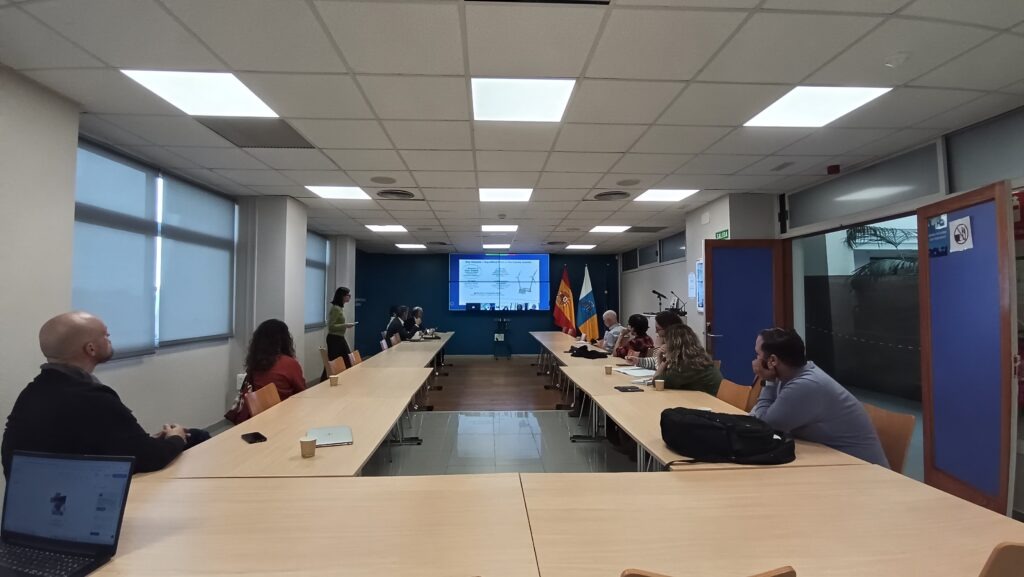
A Round Table on Permitting Challenges & Opportunities for Academia and Collaboration https://pharosproject.eu/wp-content/uploads/2026/02/The-room-1024x577.jpg 1024 577 PHAROS Project https://pharosproject.eu/wp-content/uploads/2026/02/The-room-1024x577.jpgOn 30 January 2026, project managers, engineers, academics, and administrators from across Europe gathered in Gran Canaria for a roundtable.
Five speakers presented accounts from real projects spanning marine restoration, offshore renewable energy, climate adaptation, and circular economy development. In each case, the obstacle was not scientific failure or insufficient funding. It was the permitting process itself. Projects were delayed by overlapping administrative jurisdictions, unclear authority structures, and approval timelines that bore no relation to operational requirements.
PHAROS convened the session because the pattern had become consistent enough to warrant serious attention. Across the domains in which the project operates, well-funded and scientifically validated initiatives were losing critical time at the regulatory stage. In some cases, delays ran to years. In others, momentum was lost entirely.
The evidence points to a structural problem. European Blue Economy projects operate across multiple layers of governance, each with its own procedures, timelines, and competencies. When these layers are not coordinated, the resulting friction does not simply slow innovation. It prevents it from reaching the water at all. The roundtable was convened not to document frustration, but to begin identifying where targeted reform could restore the link between regulatory process and practical progress.
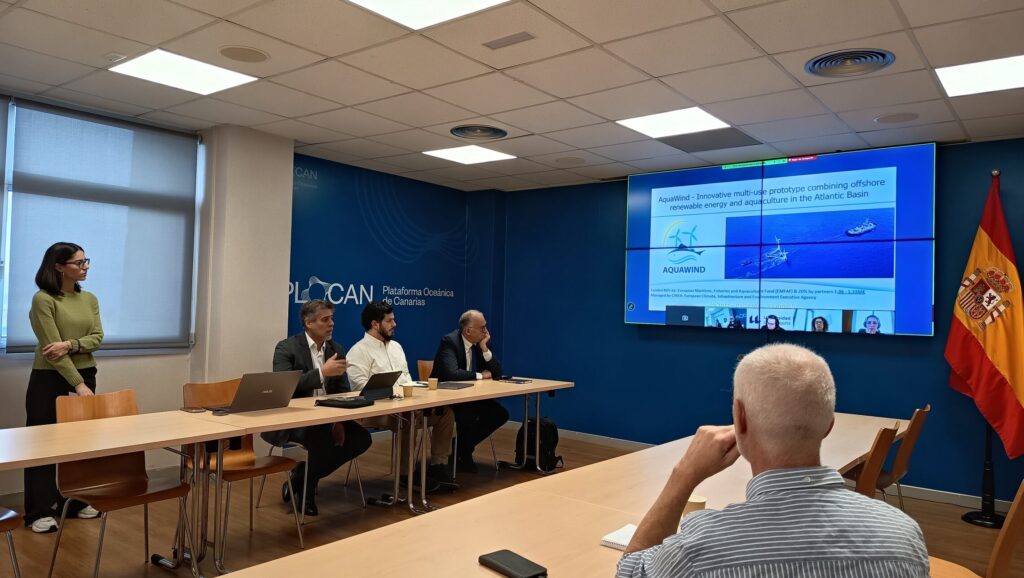
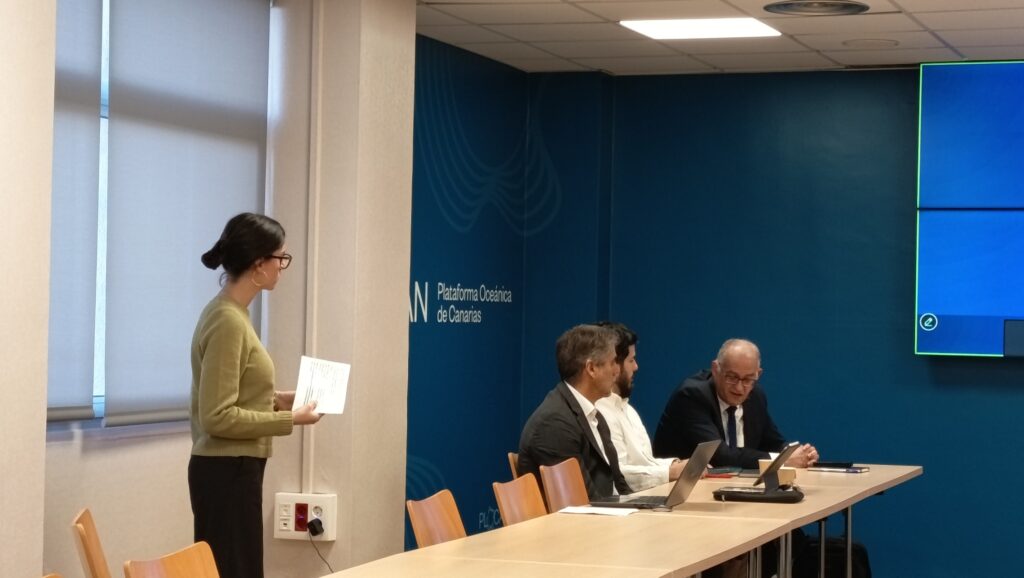
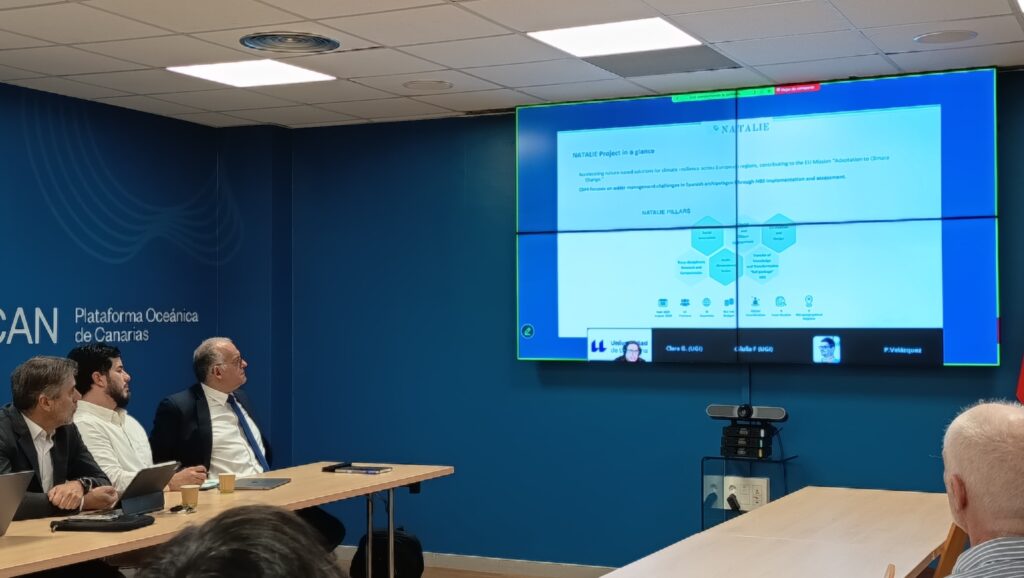
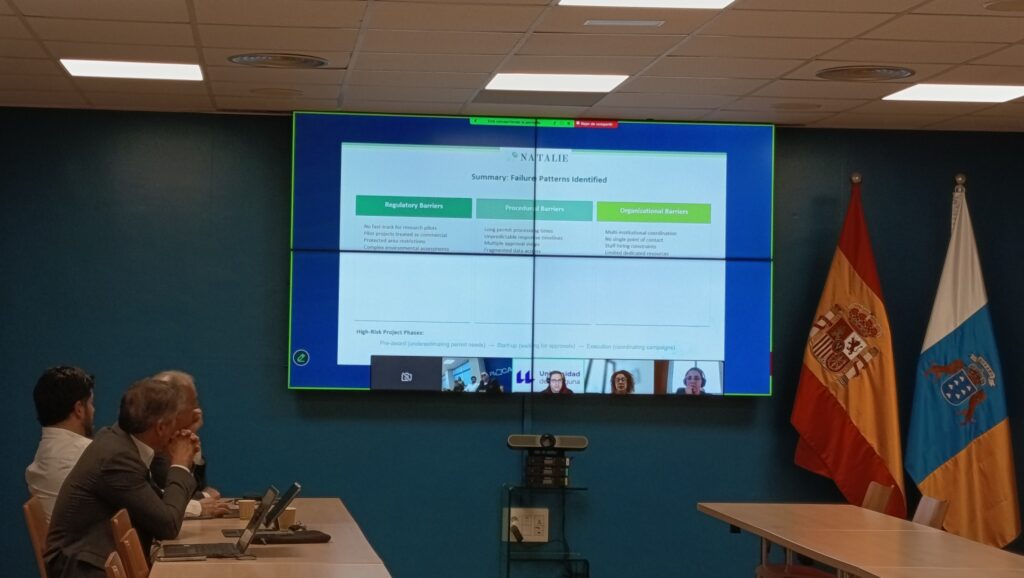
The session, hosted by Elba Bueno Cabrera, manager of Clúster Marítimo de Canarias at the venue of Plataforma Oceánica de Canarias (PLOCAN), became an analysis of the permitting system itself, conducted by those who knew it most closely.
The Scope of the Problem: Evidence from five projects
The speakers represented fundamentally different sectors and innovation domains: marine restoration and coastal engineering, agricultural biotechnology, climate resilience and nature-based solutions, offshore aquaculture integration, and renewable energy technology. What they shared, beyond sectoral differences, was a startling uniformity in their core struggles; the bureaucratic obstacles they encountered operated according to principles that transcended industries or technical domains.
Case 1: Marine restoration and artificial reefs
Oscar Aller Rojas, a marine biologist trained in conservation science and equipped with more than a decade of international project management experience, opened the discussion with an overview of the PHAROS project’s ambitious scope and objectives.
One finding stopped the conversation entirely.
According to permitting records presented at the roundtable, no artificial reef projects have received authorisation in Spain since the new artificial reef guidelines were adopted in June 2024 and updated in November 2025. A regulatory framework created specifically to enable marine restoration has, since its introduction, approved nothing.
The permitting process itself goes some way to explaining why. The standard pathway runs through four sequential phases. Project teams first prepare full documentation, including technical reports and environmental impact assessments, a process that alone can take months. The application then moves to the relevant autonomous community, where it passes through multiple internal reviews by different departments. It proceeds to central government for a separate national-level assessment. It then returns to the community for final coordination before a decision is issued.
Case 2: Microalgae innovation and the jurisdictional trap
Mariana Carneiro, a chemical engineer with specialization in biological engineering and microalgae optimization, brought to the conversation an example of how regulatory categories become misaligned with technological reality in ways that systematically prevent innovation. Carneiro is managing the REALM project, a Horizon Europe funded initiative that represents, in principle, exactly the kind of circular bioeconomy solution that European sustainability policy explicitly promotes and funds.
The concept is genuinely elegant and ecologically sound: cultivate microalgae next to existing greenhouse facilities, using nutrient-rich drain water from agricultural production as the growth medium. The algae concentrate nutrients in situ and then move to a centralized facility for processing into high-value products. The result is that clean, nutrient-depleted water can be safely discharged; agriculture gets treated effluent suitable for reuse; and high-value biomass enters the processing facility. It is innovation directly aligned with EU Green Deal priorities; it addresses agricultural pollution; it creates circular pathways. It is funded under Horizon Europe because European institutions determined it met the criteria for supporting transformative innovation.
There was no legislative precedent for this type of activity because nothing like it had been attempted in Portugal before, which meant that no administrative pathway existed, no decision-making procedure, no set of approval criteria. Hence, noone in the Portuguese administration could answer the fundamental question that should precede all other questions: who has the legal authority to say yes, and under what conditions? The consequence was what Carneiro described as a “ping-pong” between the Regional Development Commission and the Agricultural Reserve authority, with each agency explaining that whilst the activity might be acceptable, it fell within the other authority’s jurisdiction and therefore required their approval first. Neither could comfortably approve it because neither had primary authority. Both kept asking the other to take the lead. Meanwhile, the Portuguese government collapsed, and a caretaker government took over responsibility for public administration. Complex, non-standard projects that did not fit existing procedures were explicitly deprioritized as the temporary government maintained only essential services.
The demonstration facility’s construction deadline consequently moved past the validation date specified in the grant agreement, creating secondary problems for the project’s formal status with the funder. Worse, because the project involved outdoor biological systems operating according to seasonal patterns, it needed to capture a full annual cycle of operational data; seasonal data alone would be skewed and scientifically unrepresentative. The delay, therefore, did not just push back the project schedule; it threatened the scientific integrity of the results by preventing collection of adequate data across the full environmental cycle.
What makes this case particularly instructive is that the Spanish portion of the REALM project faced far fewer obstacles in pursuing essentially identical innovation. Spain has existing regulatory approaches that allowed the project to classify microalgae cultivation as a “special crop” rather than as aquaculture, which immediately resolved the jurisdictional conflict. The same innovation; the identical technical approach; resulted in dramatically different outcomes depending on which European country hosted the demonstration facility. This stark divergence reveals a crucial institutional insight that the roundtable would return to repeatedly: the problem afflicting European research and innovation is not uniform across the continent. It is fundamentally fragmented. Each member state has created its own regulatory labyrinth according to its own historical experience and legal traditions, and there is minimal harmonization, coordination, or reciprocal recognition across borders. An innovation that works smoothly in one country becomes trapped in regulatory purgatory in another, not because of substantive environmental or safety concerns, but because jurisdictional categories are misaligned.
Case 3: Nature-Based Solutions (NBS) and the administrative bottleneck
Juan Carlos Santamarta, a Full Professor of engineering at the University of La Laguna with three decades of applied research experience, brought a perspective that pushed beyond individual project problems to reveal systemic administrative dysfunction. He is leading NATALIE, a Horizon Europe project testing nature-based solutions for climate resilience across multiple Mediterranean and Atlantic sites.
The pilots are modest by conventional infrastructure standards; none involves major capital expenditure or permanent landscape alteration. In Fuerteventura, the team is exploring managed aquifer recharge, a water-saving technique that is potentially transformative for island communities facing drought and freshwater scarcity. In La Laguna, they are monitoring and enhancing urban woodlands for flood prevention during extreme precipitation events. In Maspalomas, they are testing filtration systems that remove contaminants before water reaches environmentally sensitive coastal aquifers. These are exactly the kind of low-impact, learning-oriented, reversible pilots that should move quickly through permitting processes.
The real-world consequences of these delays are visceral and concrete rather than abstract. When a permit arrives late in the Canary Islands context, the problem is not simply that paperwork is delayed; it is that the research window has closed. When fieldwork depends on the rainy season, and the permit arrives in month three of a four-month rainy season, you have lost your opportunity. You have missed the field campaign window during which the phenomenon you wanted to study actually occurs. The team cannot simply reschedule to the following month; the following months are dry. If you have international research teams that have flown from the mainland or from other European countries, booked accommodation, arranged their schedules, you have now wasted travel budgets, burned through project contingency funds, created cascading delays for dependent work packages, and generated pressure to reschedule work in ways that distort the scientific design. Data collection becomes compressed and compromised. The research loses quality.
Maspalomas provided a particularly instructive example, since the main permitting issue was straightforward and ought to have been resolvable quickly; the project needed monitoring access to a groundwater filtration system in a coastal area. Yet the hardest part was not the wait itself but rather not knowing when the process would end. For monitoring work that depends on seasonal cycles and international team coordination, Santamarta stressed emphatically, uncertainty is toxic; it poisons project management because you cannot schedule research teams, cannot book equipment, cannot plan campaigns, cannot coordinate with partners when you do not know whether permits will arrive in two months or two years. The administration was not hostile; it was simply overloaded and unable to commit to clear timelines.
Fuerteventura presented an entirely different administrative nightmare, one that illuminated problems beyond timeline insufficiency. Managed aquifer recharge has no local precedent in the Canary Islands; it is a technique that has worked elsewhere but not in this specific context, so there is genuine scientific and technical uncertainty about performance and impacts. When there is no local precedent, the regulatory process becomes “extra cautious,” as Santamarta put it, more risk-averse than the underlying environmental and technical considerations would seem to warrant. Water councils must align with public institutions, which must coordinate with health agencies, which must consult with environmental authorities. Each of these agencies has legitimate concerns rooted in their specific mandates and responsibilities. The problem is not that they are obstinate; the problem is that there is no clear leadership structure, no designated authority responsible for coordinating the overall process. “If nobody leads the whole chain,” Santamarta observed with quiet precision, “everything moves slowly.”
Case 4: Offshore multi-use aquaculture and the permitting cascade
Javier Roo brought the perspective of someone straddling two worlds; he is a marine scientist trained in applied oceanography and ecosystem management who currently works within the Government of the Canary Islands in an administrative capacity whilst also serving as project manager for AquaWind, a European initiative that attempts something genuinely novel in the offshore multi-use space. This is not simply wind energy or simply aquaculture; it is both simultaneously integrated on a single platform.
Most previous multi-use offshore platforms combine wind energy with lower-trophic level organisms like mussels or seaweed; AquaWind adds fish farming to the equation, which is a first for this type of integrated system and represents an additional step toward food security in a Europe that currently imports more than 70 percent of its marine protein.
Here is the critical insight Roo shared, one that would become central to understanding the broader permitting crisis: when you pursue multi-use activities, you do not merely double your permitting challenges; you create an exponential multiplication of bureaucratic requirements. A single-activity project faces a certain quantity and complexity of regulatory barriers; call this quantity X. A genuinely multi-use project, one that integrates offshore wind and fish farming on a single platform, faces something closer to three to four times X in total burden, since each activity layer brings its own set of regulatory requirements, its own approval pathways, its own documentation needs, and then these various requirements interact in ways that the permitting system was not designed to accommodate or coordinate.
AquaWind required permits spanning multiple administrative levels and governance structures. At the regional level, administered by the Canary Islands autonomous community, the project needed approval of an experimental and technical project design, documentation of environmental monitoring protocols (mandatory for any aquaculture activity), comprehensive escape and recovery plans (in case the fish farming component fails and organisms escape into the wild), and livestock registration for the aquaculture operation itself. At the national level, the project required authorization from the Ministry of Ecological Transition for the multi-use designation of the area, formal assessment of marine strategies compatibility (required under EU Marine Strategy Framework Directive), approvals from aviation and safety authorities (because of the wind turbines), and, late in the process, special permits for vessel operations. The testing area sits just 100 meters outside the interior waters boundary of the Canary Islands; standard aquaculture vessels operating in Spanish territorial waters can navigate interior waters freely, but exterior waters operate under different regulatory regimes, which meant that the vessel operations Roo needed to conduct for fish farming were not automatically permitted and required separate approval.
Case 5: Offshore wind energy and the grid connection gridlock
Pedro Mayorga, co-founder and CEO of EnerOcean and lead for the Primavera project, presented what might be the most cautionary and revealing case study of the entire roundtable. His company has developed the W2Power platform, a floating wind technology incorporating two wind turbines on a single floater.
Now, through the Primavera project supported by NEXT-GEN funds, he is planning to deploy an 11-megawatt full-scale demonstration unit in Canary Islands port waters. The decision to locate testing in port waters rather than other ocean waters was strategically sound; proximity to shore reduces operational complexity, simplifies maintenance logistics, minimizes cable connection distances, while keeping the resource and access to open waters. The Canary Islands possess excellent wind resources and sustained favorable atmospheric conditions for energy generation.
Beyond bird surveys, the company engaged with the local fishing community, not because regulations formally require it, but because sustainable coexistence with existing economic uses of marine space is not only ethically necessary but practically essential. Rather than override their concerns, the company adapted the platform design, adding a redundant mooring lines and moved the final position to allow for shorter travel distances when going to their fishing sites. This was not a regulatory requirement; it emerged from community engagement and reflected good business practice, stakeholder accountability, and genuine sustainability principles. It also added cost, complexity, and extended timelines.
But the actual gridlock came from electricity grid infrastructure access, a problem that reveals how permitting failures cascade across linked systems. The Canary Islands operate a closed electrical system with essentially fixed total capacity; the islands are not connected to the broader European grid and cannot import electricity from the mainland. An 11-megawatt installation, , created measurable strain. The company needed to secure grid connection authorization to export the energy its platform generates. The distribution network initially appeared to have available capacity at 20 kVs. However limitations at the Transport network remained blocked, unresolved, until January 2025, when permissions finally cleared.
The Pattern Emerges: Fragmentation, scale mismatch, and fear
What becomes systematically clear across all five detailed case studies is that permitting failures are not random mishaps or individual bureaucratic inefficiencies. They represent systemic problems embedded in how regulatory architectures have developed across European administrative systems. Several coherent patterns repeat consistently across different sectors, different countries, and different types of innovation.
First, fragmentation without meaningful coordination. Each major project confronts between three and four distinct types of permits, each originating from different administrative authorities operating according to different mandates, legal frameworks, and procedural timelines. There is no single contact point. No coordinating authority. No one entity with mandate to speak for all relevant agencies or with authority to establish unified timelines. Applications bounce between regional and national levels, between environmental agencies and sector-specific ministries, between terrestrial and maritime authorities. Multi-agency signoffs create sequential delays where every individual approval takes weeks, and then project managers discover the next agency in the chain needs something different, requires different documentation, has different priorities, which necessitates revision, resubmission, and another waiting period. This is not deliberate obstruction; it is administrative fragmentation that has no mechanism for integration.
Second, scale mismatches between pilot projects and regulatory frameworks. Regulations designed for large, permanent, commercial-scale infrastructure get applied mechanically and automatically to small research pilots. A one-tonne fish farm pilot undergoes the same formal technical and economic assessment required for a 5,000-tonne commercial operation targeting market production. The same documentation. The same impact assessment pathway. The same timeline assumptions. This is fundamentally non-proportionate. It is administratively expensive for both the applicant and the reviewing authority, and it is unnecessarily restrictive for learning-phase projects where the entire purpose is to gather data and knowledge before scaling to commercial levels.
Third, innovation cannot fit into existing regulatory boxes. When something is genuinely novel, when it represents true technological or methodological innovation, the regulatory system has no established category for it. There is no box to tick. No precedent to follow. No parallel case in the regulatory literature. Thus,applications enter bureaucratic limbo, bouncing between authorities, each asking “is this actually my responsibility?” The precautionary principle, well-intentioned and grounded in legitimate environmental protection concerns, becomes paralyzing. Rather than asking the operationally sensible question: “Is there significant probability of significant harm?” regulators ask the philosophically perfectionist question: “Can we be absolutely certain there is no possibility of harm?” These are very different questions. The first represents proportionate risk assessment appropriate for decision-making. The second represents regulatory perfectionism that, while protective, prevents any activity that carries any conceivable risk.
Fourth, administrative capacity is genuinely insufficient for workload. This is not deliberate obstruction by hostile civil servants. Public administration bodies are not trying to prevent innovation. They are simply under-resourced and overwhelmed. When a project submits complex technical documentation requiring specialist expertise to evaluate, reviewing authorities have limited capacity to process it quickly. Even when goodwill exists, and Santamarta emphasized that many administrators are genuinely willing to help and cooperative, the system simply cannot keep pace. Hiring civil servants takes time. Procurement of additional resources takes time. Existing staff are already busy with current workload. The system operates in a state of chronic understaffing relative to application volume.
Fifth, timelines are unpredictable and fundamentally misaligned with project reality. Projects wait indefinitely without clear information about when decisions will emerge, and then suddenly face compressed deadlines that seem arbitrary and unreasonable. Mayorga waited years for environmental assessment, then received the permit approval two days before the absolute deadline after being told he had six months to revise documentation. The rhythm of administrative processing does not match project management requirements or grant agreement constraints. Projects operate under fixed timelines set by funding agreements; missing a milestone means missing validation gates, which can jeopardize funding and create secondary failures that cascade through the project.
The Real Cost: Beyond delay
For REALM, the 24-month delay in Portugal meant the project could not capture full-year biological data; seasonal data alone would be skewed and scientifically unrepresentative. The project’s ecological conclusions and technical findings are consequently potentially compromised by insufficient data. The funding pathway became precarious; the funder had to decide whether to accept delayed deliverables or enforce contract provisions. Mitigation measures had to be implemented to prevent the delay from propagating throughout other project work packages, which consumed resources that should have been allocated to research and innovation.
For NATALIE, missed permit windows meant missed seasons. Research teams flew from distant locations at substantial cost and could not conduct planned fieldwork; visa expenses, accommodation costs, and team time were wasted because the administrative process did not align with the research window. International researchers faced disruption to their schedules and damage to their research plans. The project’s scientific validity suffered, incomplete seasonal data leads to incomplete understanding of climate system dynamics.
For AquaWind, the first year became consumed entirely by administrative permitting. Whilst the project was running down the clock on administrative approvals, parallel technical and scientific work stalled. The innovation itself, demonstrating that multi-use offshore systems can operate safely and productively, could not be tested and validated on schedule. The demonstration component of the project, which is the entire point of EU funding support, was delayed.
For Primavera, four years of development, environmental study, stakeholder engagement, and technological refinement had to be compressed into increasingly tight final timelines. Risk increased. The project is now delivering under some time pressure, which creates performance pressure and reduces the quality of learning outcomes.
And across all projects, there is a pervasive and chilling effect that extends beyond the specific cases discussed. How many researchers and company founders do not even attempt EU-funded innovation because they have heard the permitting horror stories? How many genuinely transformative ideas never make it past the proposal stage because entrepreneurs lack the financial stamina and institutional endurance to navigate a five-year permitting gauntlet? How many innovations that could address critical environmental and climate challenges simply do not get attempted because the pathway is too daunting?
Autonomous communities, central government, and nobody in charge
One of the sharpest insights came from Oscar Aller’s opening presentation and was reinforced throughout the discussion: Spain, like many other European member states, has undergone a significant transition of administrative powers and regulatory authority from central government to autonomous communities. This is a positive development for regional governance, for subsidiarity, for democratic legitimacy at levels closer to citizens. But the process is incomplete; competences are now split, often ambiguously, between regional and national levels, and there is no clear allocation of responsibility for coordinating activity across these levels.
For permitting purposes, this fragmentation creates chaos. Biodiversity permits might originate from and be issued by the autonomous community environmental authority. Coastal permits might require central government sign-off because they involve national maritime jurisdiction. Fisheries permissions might involve both levels, with the autonomous community regulating local fishing practices and central government setting broader national frameworks. No single authority owns the entire permitting process. No one can say with clarity and certainty: “Here is your timeline. Here is exactly what we need. Here is when you will receive a decision.” Instead, applications move between levels, each authority reviewing from its institutional perspective, sometimes reaching conclusions that contradict the other, creating delays as these conflicts are negotiated and resolved.
Javier Roo, speaking from his administrative position within Spanish government, acknowledged the depth and difficulty of this challenge. The competences for environmental assessment, agriculture, energy, and fisheries are distributed across multiple ministries at the national level and multiple departments at the regional level. Technically, a genuine one-stop shop is possible; the authority exists to create it. Practically, it is extraordinarily difficult to implement because legal authority itself is fragmented. An agency cannot make decisions outside its mandated scope, and when scope is ambiguous or divided, coordination becomes acutely difficult.
Spain has introduced mechanisms attempting to address this challenge. There is a “strategic projects” mechanism whereby projects of national importance can be designated as strategic, with the theory that administrative timelines are reduced by half and permitting is accelerated. In practice, as noted by Gordon, the environmental consultant and strategic projects specialist who participated in discussion, the mechanism has had surprisingly minimal impact. To truly unlock the benefits, projects must pursue an additional legal designation: “General Interest Project,” which requires full project approval and comprehensive environmental impact assessment. Once that additional designation is achieved, doors do open; barriers dissolve; the administration finds ways to cooperate and expedite. But the initial strategic project designation alone does not substantially help. The system appears designed to require multiple layers of designation before delivering benefits, which itself undermines the purpose of fast-tracking.
The Environmental Assessment Paradox
One of the most illuminating exchanges during the roundtable involved the precautionary principle and how it operates in environmental assessment processes. The precautionary principle is written explicitly into European environmental law, and it serves a legitimate purpose: preventing unknown environmental harms by requiring assessment of potential risks before activities are permitted. In the context of well-understood industrial activities, this works reasonably well. Environmental consultants know what to assess because the activity has been performed elsewhere and effects are understood. Regulators know what to check because precedent and scientific literature clarify the important parameters. Timelines are relatively predictable because processes are established and well-understood.
But for research pilots and genuinely novel innovations, the precautionary principle becomes a cage that prevents progress. Pedro Mayorga articulated the tension sharply and with some frustration; environmental permitting legislation is designed to be “very cautious of not making anything wrong,” which is defensible from one perspective. But when innovation projects undergo review, “the legislation has the routine to learn”; it is designed for established activities, not for projects that are testing whether a technology can work safely in a new context. These represent fundamentally different risk profiles. A large commercial offshore wind farm represents known technology and known risks. A small, reversible research platform testing new technology at reduced scale represents a different proposition entirely.
Mayorga proposed a conceptual distinction that the roundtable found broadly convincing: differentiate between “significant harm” and theoretical risk. A small research pilot operating with comprehensive monitoring poses minimal risk of significant harm. Rather than asking the perfectionist question: “Can we be absolutely certain there is no possibility of any harm?” regulators might ask the operational question: “Is there significant probability of significant harm?” If the answer is no, and if rigorous monitoring is in place, the project proceeds. This is not deregulation or recklessness. It is proportionate assessment appropriate to actual risk profiles.
The concept has precedent and institutional validation. An environmental consultant named Maile mentioned that Scotland implemented a genuine one-stop shop for marine development permitting roughly thirty years previously, consolidating multiple departmental reviews into a single streamlined process. That consolidation worked; it eliminated chaos. The same solution is arguably needed now for research projects; a unified permitting pathway specifically designed for research, demonstrating projects, and innovations. It is technically feasible. It requires political will to implement; it requires recognition that research projects are different from commercial development and deserve different treatment.
European regions attempting to implement one-stop shops have discovered that single-agency systems work quite well for single-use activities like wind energy alone or wave energy alone or artificial reef installation. They become exponentially more complex for multi-use platforms, where one platform simultaneously involves wind, aquaculture, and marine spatial considerations, because you cannot consolidate activities under a single regulatory lens when they are governed by genuinely different statutory frameworks.
Risk-Based Environmental Assessment Matrices
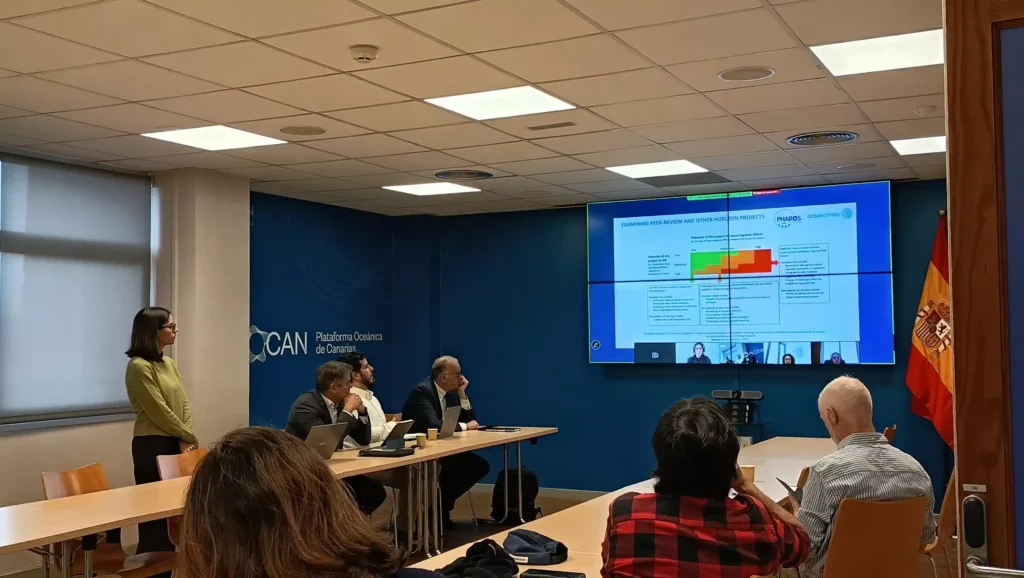
Oscar Aller referenced academic research conducted by colleagues at the University of Swansea that analyzed marine restoration permitting systems globally, reviewing permit requirements and interviewing marine restoration practitioners across multiple countries. The research found consistent recurring barriers: permitting is slow; authority is unclear; requirements are onerous. But it also identified an emerging and promising solution: development of risk-based assessment matrices specifically for coastal and marine restoration projects. The concept operationalizes risk assessment; marine restoration projects are categorized by environmental impact potential, ranging from low to high, based on specific objective criteria. These criteria include location (is the project in an already-modified environment or pristine habitat?); methods used (are these established, commonly deployed methods or novel techniques?); whether methods are adapted locally or imported without modification; and baseline environmental conditions.
Low-impact projects, those using established methods in suitable locations with comprehensive monitoring, can follow a simplified but rigorous fast-track approval process. This is not deregulation or environmental corner-cutting; it is proportionate regulation where the rigor of assessment matches the actual risk profile. Applicants and administrators alike understand this framework in advance; it provides clarity.
Australian environmental researchers have developed specific matrices adapted to the Australian context. These could be adapted to Spanish, European, and Mediterranean contexts. The advantage is that regulators have a clear decision framework built on objective criteria. Applicants know upfront which impact category their project falls into and what process applies. The system is transparent and predictable rather than arbitrary.
Fee systems to fund civil service capacity
Pedro Mayorga made a pragmatic but potentially controversial proposal that emerged from his experience with environmental permitting costs. Current environmental permitting is free to the applicant; there are no application fees. Meantime, public administration charged with reviewing applications is chronically under-resourced and overwhelmed. Applications pile up; timelines extend; the system becomes clogged. What if modest fees were imposed on environmental assessment applications, with all proceeds dedicated specifically to funding expanded civil service capacity for reviewing environmental assessments?
This is not equivalent to paying for faster processing, which would create moral hazard where wealthy projects could buy expedited review. Rather, it is funding mechanism to ensure the administration has personnel and resources proportionate to workload. If an office receives five hundred applications and has staffing adequate for one hundred applications, all permitting becomes glacially slow. If fees on applications generate resources to hire qualified additional staff, administrative capacity expands to meet demand. Mayorga acknowledged this approach is “a little capitalistic” and might seem unusual in European administrative contexts, but from a practical standpoint, it addresses a genuine and structural bottleneck.
Expanding administrative capacity does not require eliminating environmental protection; it requires ensuring the protection mechanisms have adequate resources to function well.
Conclusion: The need for speed aligned with responsibility
The most cogent and perhaps most powerful statement from the entire roundtable discussion came from Pedro Mayorga, articulated after describing his multi-year experience with environmental permitting. After walking through four years of permitting for an 11-megawatt research installation, after describing the compression of timelines and the arbitrary nature of deadlines, he observed simply: “We need a system that can move at the speed of reality.”
This observation captures the core of the issue with piercing clarity. Environmental protection is important; precaution has genuine value; careful assessment of potential consequences before deploying innovations is responsible governance. But paralysis is not precaution; it is paralysis. When research projects consume one-third of their timeline on permitting; when demonstration facilities miss seasonal windows because permits arrive late; when genuinely transformative innovations are abandoned because the bureaucratic pathway is too daunting; when one jurisdiction enables an innovation and another prevents it; when administrations lack capacity to assess what they are legally bound to review; when timelines shift arbitrarily and deadlines compress without warning. This represents systemic failure of institutional design.
The solutions exist and have been identified; some are regulatory in character (sandboxes, fast tracks, designated zones); some are institutional in nature (one-stop shops, support offices, dedicated staff); some are legal (updated science laws, EU harmonization); some are financial (fee systems to fund capacity). The PHAROS project’s roundtable laid out evidence from multiple projects and sectors, mapped the problems with precision, and identified clear pathways forward.
Now comes implementation. The policy brief will carry this evidence to policymakers and decision-makers. But implementation requires political will; it requires ministries coordinating across administrative silos; it requires governing institutions accepting that innovation requires regulatory flexibility aligned with actual risk rather than theoretical anxiety. It requires administrations being given mandate and resources to move faster. It requires acceptance that innovation operates at the speed of necessity rather than the speed of bureaucratic deliberation.
The Blue Economy is strategically vital for European economic development and resilience. Climate adaptation is increasingly urgent rather than merely important. Ocean restoration represents environmental and economic necessity. These do not proceed at bureaucratic speed; they proceed at the speed of need. The permitting system must evolve to match. The evidence has been gathered; the analysis is clear; the solutions are identified. What remains is the political decision to act.