The Recycling of Fishing Nets Opens a New Circular Economy Opportunity in Gran Canaria
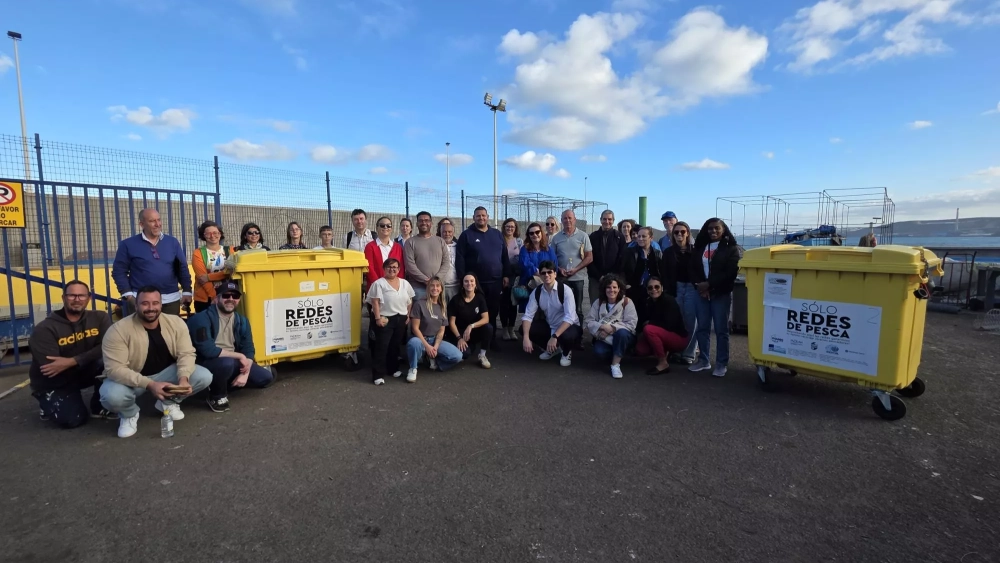
The Recycling of Fishing Nets Opens a New Circular Economy Opportunity in Gran Canaria https://pharosproject.eu/wp-content/uploads/2026/02/foto-de-familia_4_1000x563.webp 1000 563 PHAROS Project https://pharosproject.eu/wp-content/uploads/2026/02/foto-de-familia_4_1000x563.webpThe pilot initiative led by PLOCAN and Gravity Wave in San Cristóbal collects 220 kilos of material at the start to transform it into furniture and décor
By A. Ley
29 January 2026 (19:08 CET)
The management of marine waste in the Archipelago has begun a transition towards a sustainable business model. The Canary Islands Oceanic Platform (PLOCAN), in collaboration with the company Gravity Wave and the San Cristóbal Fishermen’s Cooperative (Pescatobal), has launched a pioneering system for the collection and recycling of fishing nets. The project, presented on January 29, 2026 during the FISHER GUARDIANS workshop, aims to consolidate the circular economy as a key tool for ocean protection and the creation of new economic resources in the Islands.
This workshop was the first major open event of the Living Lab of Gran Canaria, an initiative framed within the European PHAROS project. During the day, held at the cooperative’s headquarters in San Cristóbal, the impact of abandoned fishing gear was analysed and it was explained how an organised traceability system can turn this plastic waste into raw material for other sectors.
Results of the Pilot Scheme
The operational viability of the project has already delivered its first tangible results. According to Amaya Rodríguez, CEO and co-founder of Gravity Wave, the installation of the first containers in San Cristóbal has been a success. In the first official collection, carried out last week, 220 kilos of discarded nets and fishing gear were removed.
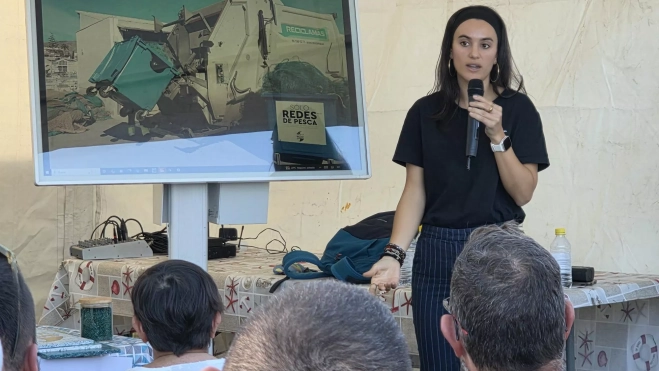
The proposed business model goes beyond mere cleaning. Rodríguez explained that logistics are currently being studied to determine whether the recycling can be completed in the Canary Islands or if it will require transportation to the Spanish mainland. The ultimate aim is to reintroduce these materials into the market, transforming them into value-added products such as furniture and decorative items, giving them a second commercial life.
Technology and Traceability
One of the pillars of this initiative is building trust through technological innovation. During the workshop, there was a demonstration of the Trinamix device, a tool capable of identifying the type of plastic in a net in real time. This enables the quality of the waste to be certified and facilitates its reintegration into the production chain.
Pablo Reche, technologist at PLOCAN and project manager, emphasised that the Fisher Guardians programme serves as a direct appeal to the local community. The goal is for fishermen to insert old or drifted nets into a local recycling chain, integrating the preservation of ecosystems with traditional economic activity.
The Fisherman as Custodian
The response from the primary sector has been positive. Dolores Guedes, head of administration at Pescatobal, noted that the fishermen have welcomed the project enthusiastically since its introduction. Guedes described the maritime professionals as custodians of the environment, emphasising their interest in preventing accidents involving marine fauna, such as turtles, caused by ghost nets.
To support this work, a clean collection point has been set up in the port itself where the nets are stored sorted into specific containers. The cooperative’s management believes this project, unprecedented in the Canary Islands, represents a forward-looking investment for the sector.
The PHAROS project, funded by the European Union, has a roadmap that goes beyond waste collection. In Gran Canaria, the implementation of experiments combining multitrophic aquaculture with the installation of artificial reefs is planned from 2027 onwards, seeking to restore habitats and enhance marine biodiversity.
Source and Photos: atlanticohoy.com