Marine BioBlitz Day at El Cabrón Marine Reserve
Marine BioBlitz Day at El Cabrón Marine Reserve https://pharosproject.eu/wp-content/uploads/2026/02/el_cabron-gran_canaria_0.jpg 940 430 PHAROS Project https://pharosproject.eu/wp-content/uploads/2026/02/el_cabron-gran_canaria_0.jpgOn January 31st, as part of the PHAROS Citizen Science Marine BioBlitz, this underwater wilderness served a crucial role. While the project’s other featured dive sites showcased human intervention, the reefs built from concrete and imagination, El Cabrón was held up as the standard. It is the baseline. It is what everyone is trying to replicate.
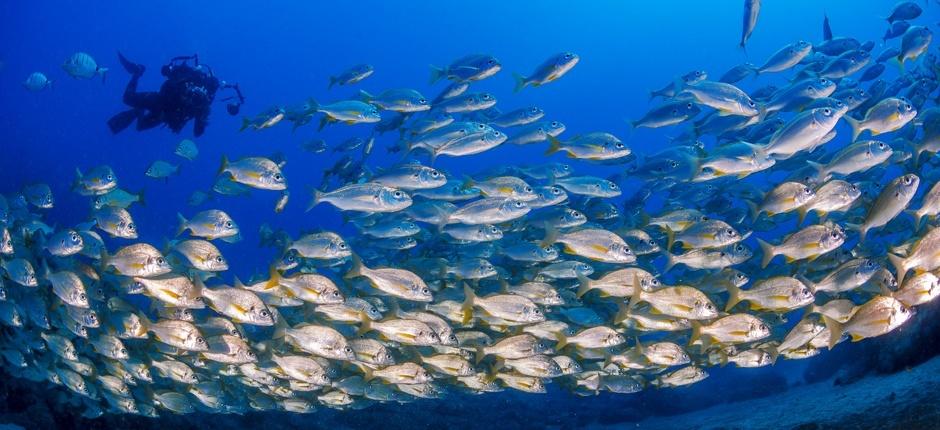
Located off the southeastern coast near Arinaga, the El Cabrón Marine Reserve is a rare thing in these islands. Designated in 1999 and listed as a Site of Special Scientific Interest by the European Union in 2001, it is one of only three marine reserves in the entire Canary Island archipelago and the sole representative on Gran Canaria. Its protected status is not merely a line on a map but a strict enforcement zone where commercial fishing nets are banned and boat traffic is heavily regulated. The result, spread across nearly 1,000 hectares of seabed, is a living museum of biodiversity.
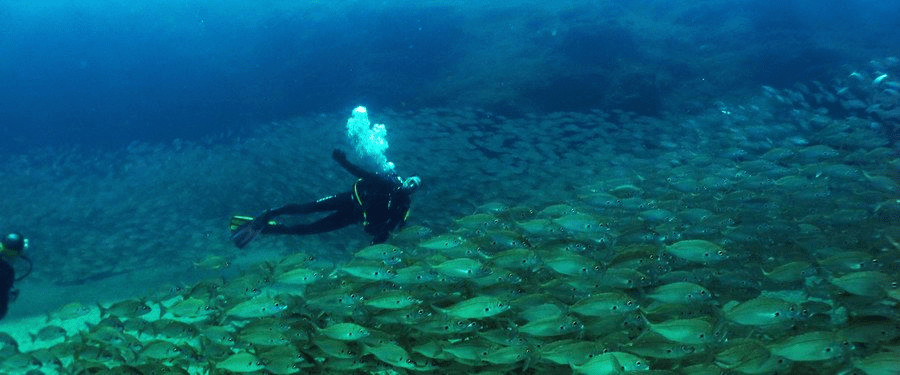
For the citizen scientists descending into its depths, the experience was overwhelming. Visibility stretched to 30 metres, revealing a topography that no engineer could replicate. The seabed here is a memory made beautiful, a landscape forged by volcanic activity. There are arches of basalt, vertical tunnels that swallow the light, drop-offs that fall away into the abyss, and caverns draped in filter feeders. Over ten main dive routes wind through this labyrinth, catering to novices and technical divers alike.
But the geology, however spectacular, is merely the stage. The true measure of El Cabrón’s significance is the cast of species that inhabit it. Marine biologists have catalogued over 400 species of flora and fauna within its boundaries. They come from the Mediterranean, the Atlantic, the waters off Africa, and even the distant Caribbean. It is a crossroads of the currents. Divers report the usual suspects, the large schools of barracuda and ornate groupers, but the real excitement is reserved for the rarer sightings. The endangered angel sharks, which lie buried in the sand with only their eyes showing, were present. The elusive seahorses, clinging to the seagrass with prehensile tails, were spotted. The rays, both sting and eagle, glided through the shallows as if performing for the visitors.
For the PHAROS team, this site is not just a beautiful dive; it is the scientific control in a grand experiment. The artificial reefs at Parque de la Atlántida and the Biotopo de Arguineguín are the test subjects. By comparing the biodiversity, the species density, and the ecological stability of those man-made habitats against the natural benchmark of El Cabrón, researchers can measure their own success. They can ask critical questions: Are the concrete modules attracting the right kind of life? Are the food webs as complex? Is the recovery rate at the artificial sites merely fast, or is it truly sustainable?
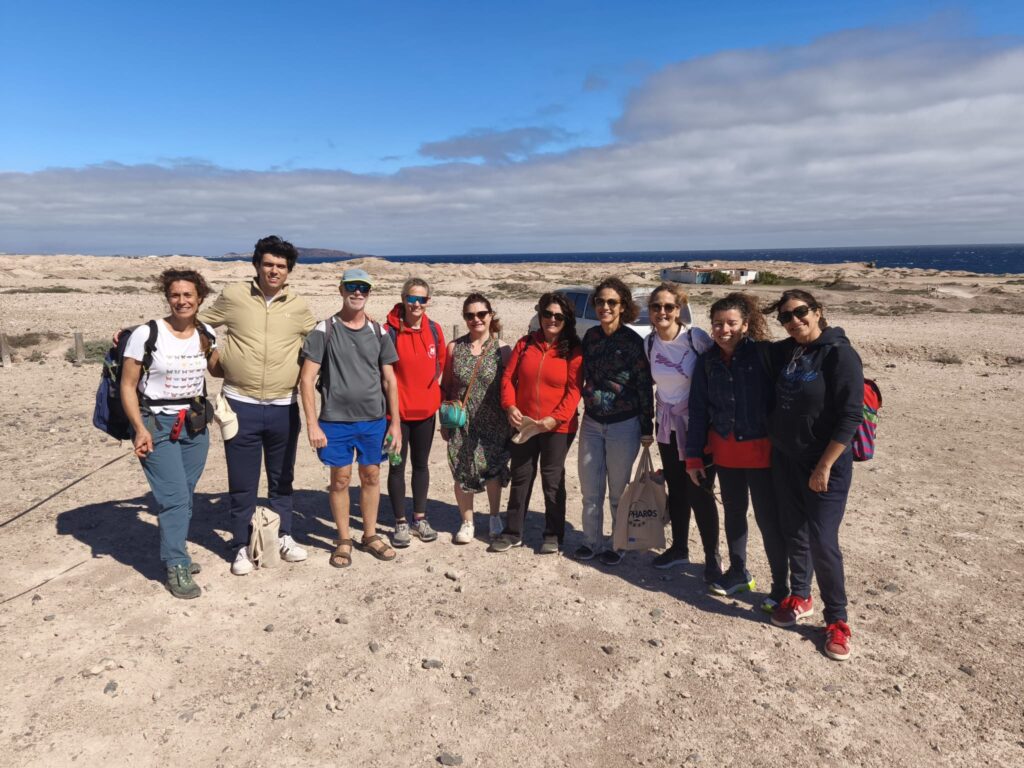
Standing on the volcanic shore after the dive, watching the citizen scientists compare notes and sketch their observations, the value of this natural reserve becomes clear. It is proof of what happens when the ocean is simply left alone. It shows that the volcanic bones of these islands, if protected from plunder, can support an explosion of life that rivals the world’s great coral reefs. As the PHAROS project moves forward, seeking to restore damaged ecosystems across the cold North Atlantic and the Arctic, the lessons from El Cabrón will travel with them. It is the sound of a healthy ocean. And it is the tune to which they hope the rest of the sea will one day dance.