From Waste to Value: (Micro)Plastics Reduction & Turning Plastic Into Value, Jan 29, 2026
From Waste to Value: (Micro)Plastics Reduction & Turning Plastic Into Value, Jan 29, 2026 https://pharosproject.eu/wp-content/uploads/2026/01/5EmailBanner_FROM-WASTE-TO-WORTH-Microplastics-Reduction-Turning-Plastic-into-Value-1024x576.png 1024 576 PHAROS Project https://pharosproject.eu/wp-content/uploads/2026/01/5EmailBanner_FROM-WASTE-TO-WORTH-Microplastics-Reduction-Turning-Plastic-into-Value-1024x576.pngThis in-person seminar introduces best practices for becoming ocean entrepreneurs. Participants will learn how to transform plastic litter into sustainable businesses through innovative solutions, training, and tools for circular economy ventures. The session will be held in Spanish and will also be accessible online via Zoom, with live English subtitles available for online participants.
Session Title: From Waste to Value: (Micro)plastics Reduction & Turning Plastic into Value
Event & Framework: Meet the Oceanpreneur Webinar Series – PHAROS Project, Session #3 (In-person)
Date & Time: 29 January | 14:30 – 16:00 (90 minutes) UTC+0, Gran Canaria Time
Venue: CLÚSTER MARÍTIMO DE CANARIAS
Event Host: Adelina de la Jara – CLÚSTER MARÍTIMO DE CANARIAS, PHAROS Project
Moderator: Alicia Herrera – EOMAR Group, University of Las Palmas de Gran Canaria (ULPGC)
Speakers:
Íñigo Núñez – e-Waste & Canarias Recicla Foundation
Gustavo Viera / Maryam Rodríguez – GESPLAN, Circular Ocean Project
Context
Marine plastic pollution, including microplastics, remains one of the most pressing environmental challenges for coastal and island regions. This session is framed within the EU Mission “Restore our Ocean and Waters” and the PHAROS Project, which aims to empower citizens and entrepreneurs to tackle marine litter through innovation, circular economy models, and community-driven solutions.
The session highlights real-world examples from the Canary Islands, demonstrating how entrepreneurship, science, public initiatives, and citizen engagement can transform plastic waste from an environmental burden into economic, social, and environmental value.
Objectives & Goals
The session aims to:
- Showcase practical, real-life examples of plastic waste valorisation and circular solutions.
- Explore how (micro)plastics can be reduced, collected, reused, and reintegrated into value chains.
- Highlight the role of entrepreneurship and public initiatives in addressing marine litter.
- Encourage cross-sector collaboration between citizens, businesses, public authorities, and researchers.
- Inspire participants to consider replicable and scalable models aligned with the Mission Ocean goals.
Methodology & Session Format
The session follows an interactive, hybrid methodology combining short presentations, moderated discussion, and audience engagement:
- Short, focused speaker presentations
- Fireside chat discussion facilitated by the moderator
- Open audience Q&A
- Storytelling, practical insights, and actionable takeaways
Speaker Lineup
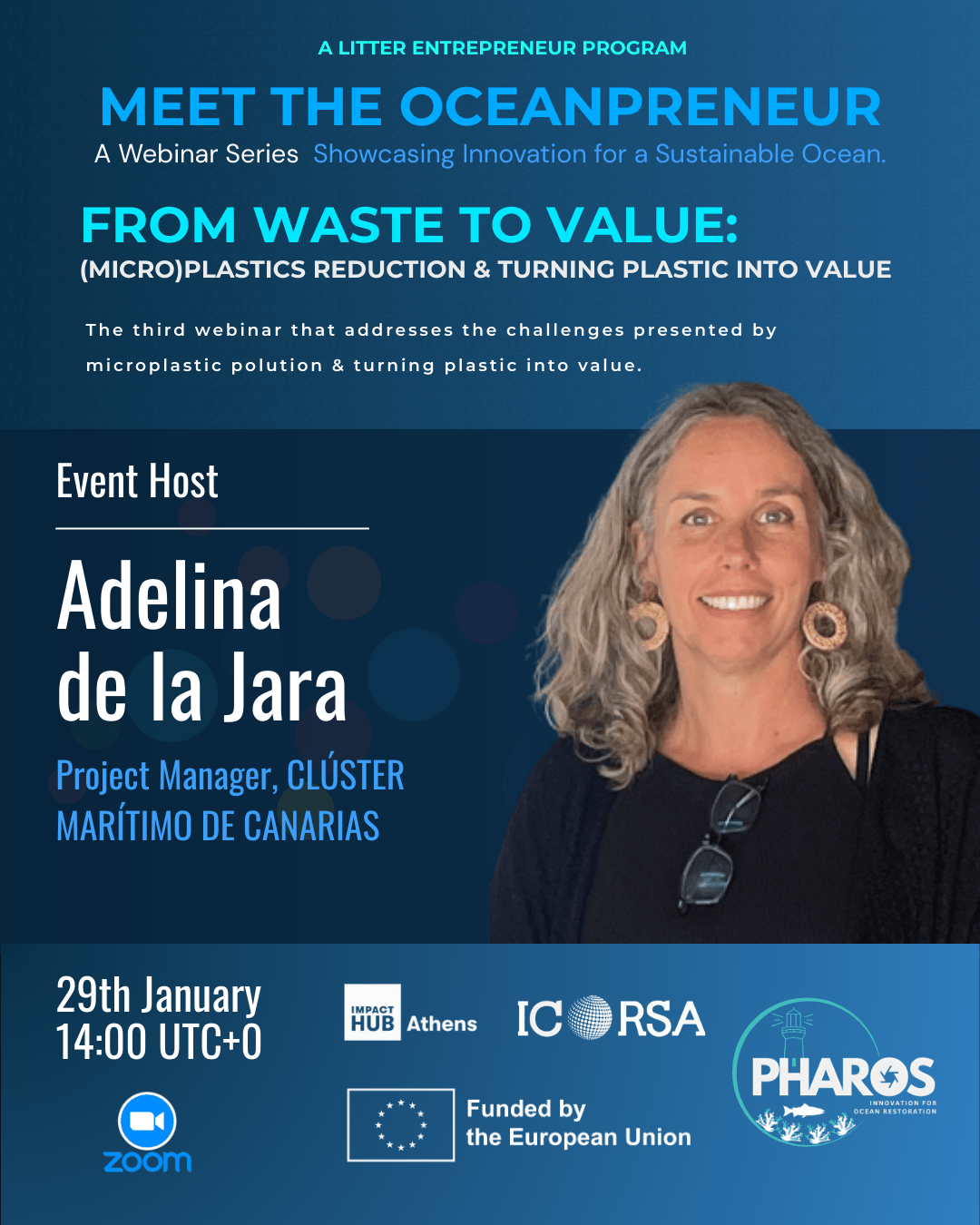
Adelina de la Jara
Project manager, CLÚSTER MARÍTIMO DE CANARIAS
Adelina de la Jara holds a degree in Marine Sciences and is a project manager with over 20 years of experience in biodiversity, marine biotechnology, blue economy and circular economy. She currently works as a Project Manager at the Canary Islands Maritime Cluster, contributing to European initiatives under the Interreg MAC 2021–2027 programme and the European Commission’s Mission Ocean. She has also served as an independent evaluator of R&D&I projects for the European Commission within Horizon 2020 and Horizon Europe calls. Her professional background combines scientific expertise with project management, innovation consultancy, sustainability, communication and environmental management, with a strong focus on corporate social responsibility, GRI reporting and EU-funded projects.
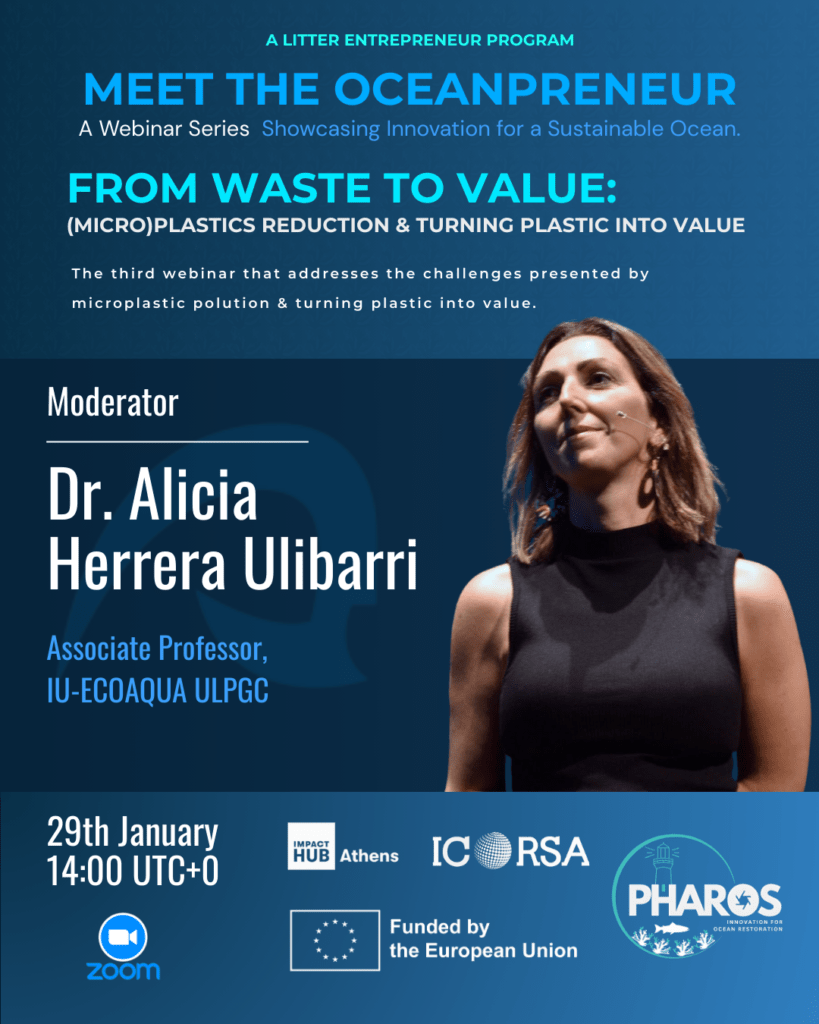
Dr. Alicia Herrera Ulibarri
Associate Professor, IU-ECOAQUA ULPGC
She is currently an Associate Professor in the Department of Biology and a researcher in the Marine Organisms Ecophysiology Group (EOMAR) at the IU-ECOAQUA Institute of the University of Las Palmas de Gran Canaria. Her main research line focuses on the study of the effects of microplastic pollution on marine ecosystems. She has participated in several research projects and oceanographic campaigns, and she led the MICROTROFIC project, which received the First Prize of the Cátedra Telefónica in the Research category in 2020. She is currently involved in the international projects IMPLAMAC Capitalization and ECOMARIS, and she is the principal investigator of the ASTRESS project, which expands the assessment of impacts on marine organisms to other anthropogenic stressors such as underwater noise and chemical pollution.
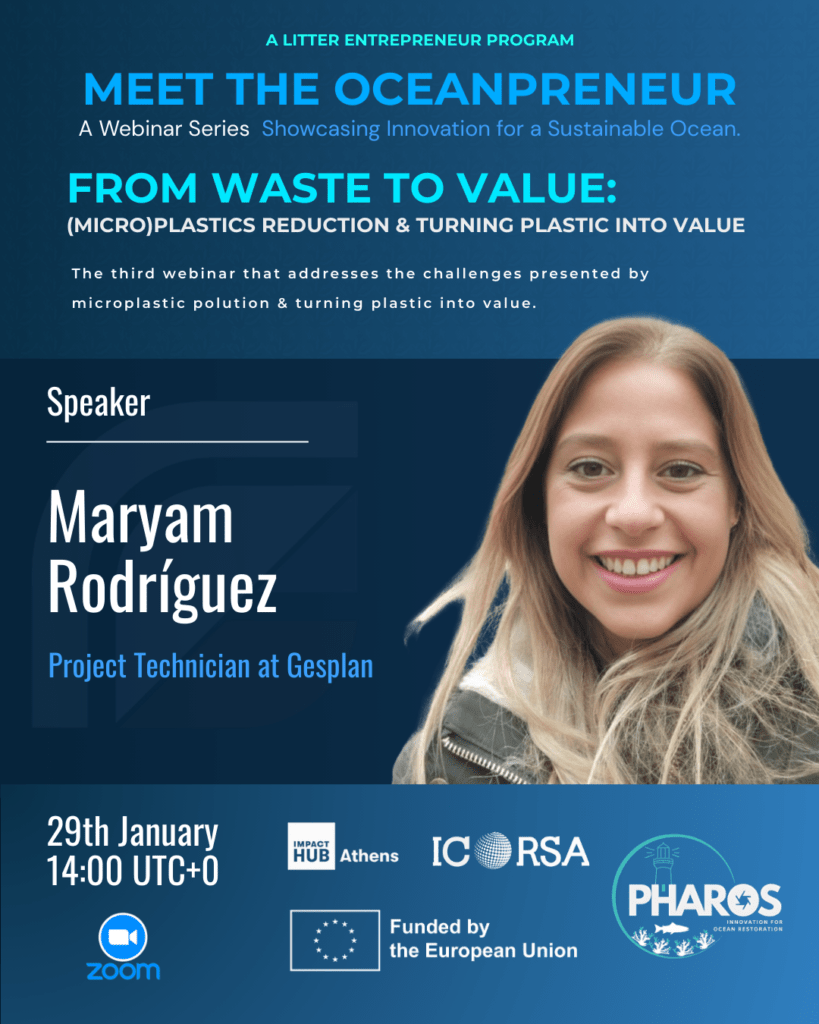
Maryam Rodríguez
Project Technician at Gesplan
Maryam Rodríguez is a senior professional with a career dating back to 1995, specializing in strategic planning within the urban and environmental sectors. Leveraging her extensive expertise in financial technical management and the circular economy, she currently serves as a member of the CIRCULAROCEAN Project’s drafting team.
CIRCULAROCEAN Project (INTERREG MAC 2021-2027), is coordinated by the Canary Islands Government’s Vice-Ministry of Ecological Transition, aiming to drive the transition of marine litter towards a circular economy across the Eastern Central Atlantic.
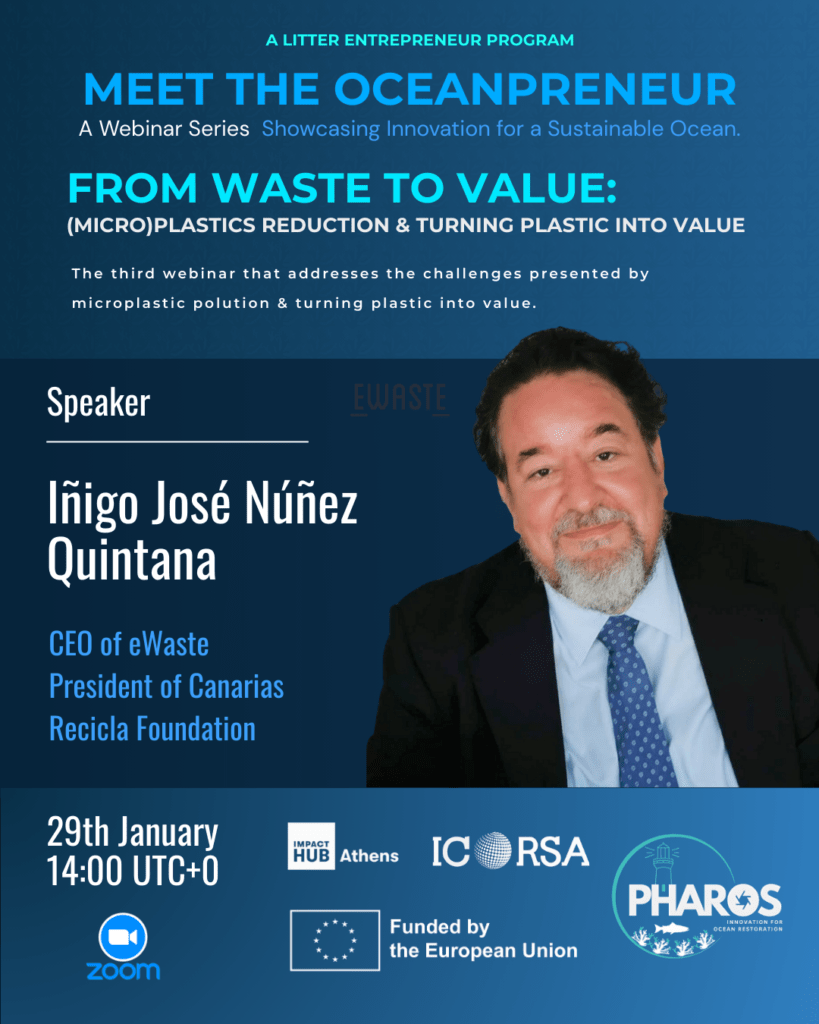
Iñigo José Núñez Quintana
CEO of eWASTE
President of the Canary Islands Foundation for Recycling and Sustainable Development
Iñigo José Núñez Quintana is the CEO of eWaste, the only specialised treatment plant for Waste Electrical and Electronic Equipment (WEEE) in the Canary Islands. He plays an active role in shaping and advancing sustainability policies, circular economy strategies, and responsible environmental management in insular territories. He is also President of the Canary Islands Foundation for Recycling and Sustainable Development (Canarias Recicla Foundation), through which he promotes institutional initiatives focused on environmental protection, sustainable development, and social awareness, with particular attention to the challenges faced by island regions.