Citizen Science Marine Day at the Biotopo de Arguineguín
Citizen Science Marine Day at the Biotopo de Arguineguín https://pharosproject.eu/wp-content/uploads/2026/02/maxresdefault-1024x576.jpg 1024 576 PHAROS Project https://pharosproject.eu/wp-content/uploads/2026/02/maxresdefault-1024x576.jpgOn January 31st, as part of the PHAROS Citizen Science Marine BioBlitz, a group of citizen scientists slipped beneath the surface off Montaña Arena beach. Their destination was the Biotopo de Arguineguín, a site that represents something increasingly rare in the fast-paced world of ecological restoration: patience.
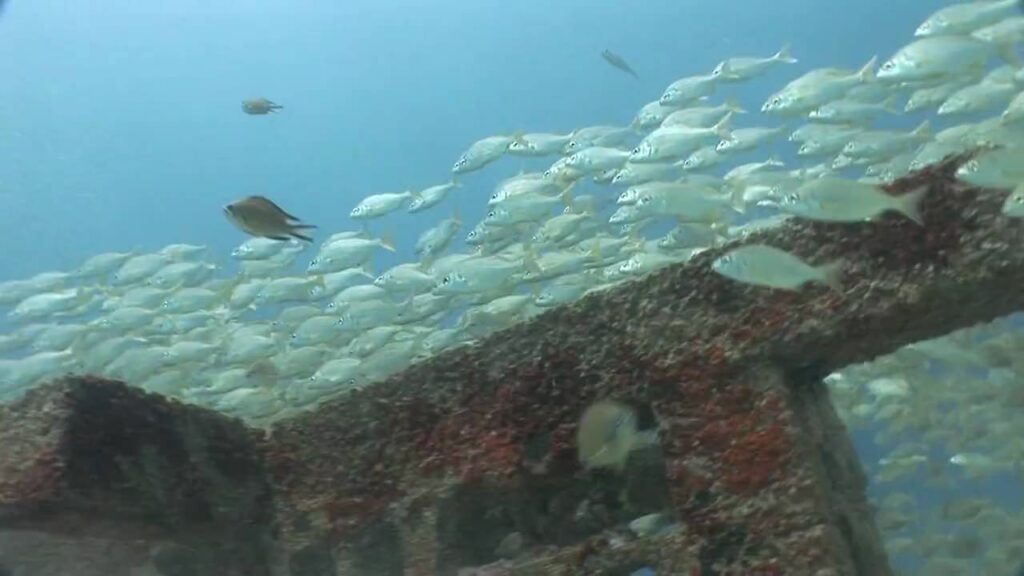
The Biotopo is the quiet workhorse of the Canarian artificial reef network. Created in 1991 by the Government of the Canary Islands, its mission was straightforward and, at the time, experimental. Faced with expansive sandy seabeds that functioned as marine deserts, authorities sank multiple concrete modules at a depth of approximately 23 metres. The goal was simple simulation, to mimic the nooks and crannies of a natural rocky habitat and see if life would take the hint.
It did. And then it kept on doing so for 34 years.
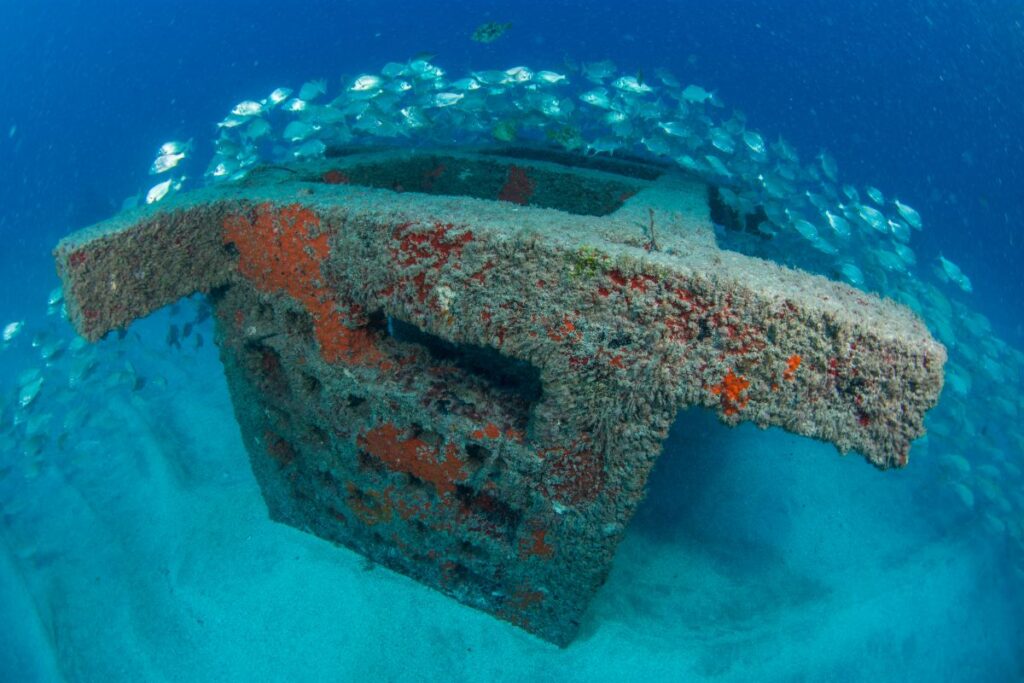
What divers encounter is not merely a collection of fish gathered around a shelter, but a fully functioning, mature ecosystem. The reef, which stretches for nearly 700 metres along the seabed, has become a fixed address for some of the Atlantic’s most charismatic residents. Divers report observing impressive banks of fish moving in coordinated shoals, while the shadows of groupers slide through the lower reaches of the concrete structures. Octopuses are spotted tucked into crevices. Perhaps most delightfully for the visiting citizen scientists, the sandy fringes of the reef were home to colonies of garden eels, their slender bodies swaying in the current like a meadow of buried flowers.
The Biotopo’s significance to the PHAROS project, however, extends far beyond the spectacle of a good dive. It is, in essence, a living archive. For over three decades, this site has been quietly generating invaluable long-term data on how artificial substrates mature. While the Parque de la Atlántida demonstrates the rapid initial colonisation possible with modern design, the Biotopo de Arguineguín shows what happens next. It shows how species interactions stabilise, how predator-prey relationships establish themselves, and how a man-made habitat eventually becomes indistinguishable from a natural one in all but its geometric origins.
For the PHAROS team, which must develop restoration blueprints applicable across the vastly different conditions of the Atlantic and Arctic basins, this data is gold dust. The reef acts as a control, a long-term experiment that tells them what success looks like after the novelty has worn off. It confirms that the concrete modules deployed here in 1991 did not just attract fish temporarily, but fundamentally altered the carrying capacity of the seabed.
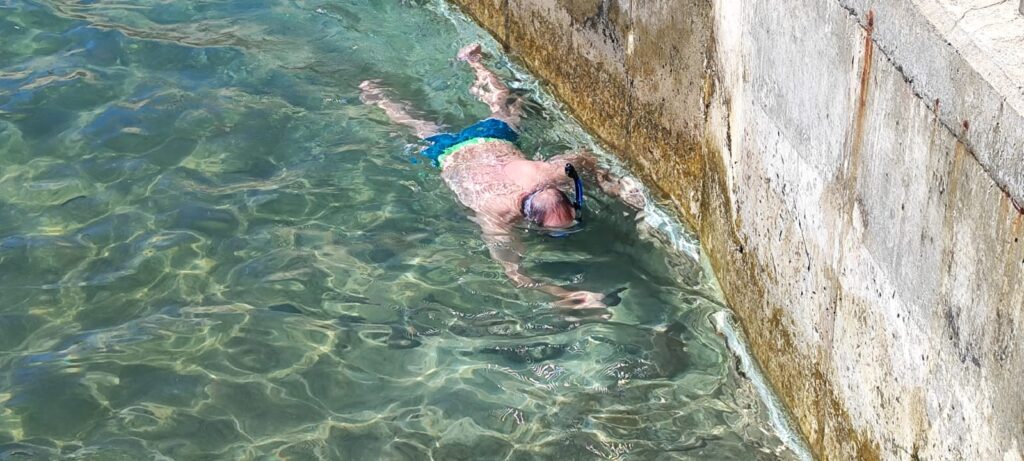
As the citizen scientists surfaced and handed their observation slates to the marine biologists, the contrast with the other sites visited during the BioBlitz was clear. Some reefs are built to inspire, to capture the imagination with ruins and submarines. The Biotopo de Arguineguín was built to answer a question. And three decades later, its answer is resonating through the laboratories and planning rooms of Europe’s most ambitious ocean restoration project. It is proof that if you build it patiently, and you wait, the garden eels will eventually come to tend the sand.