Best Practices in Living Labs Report
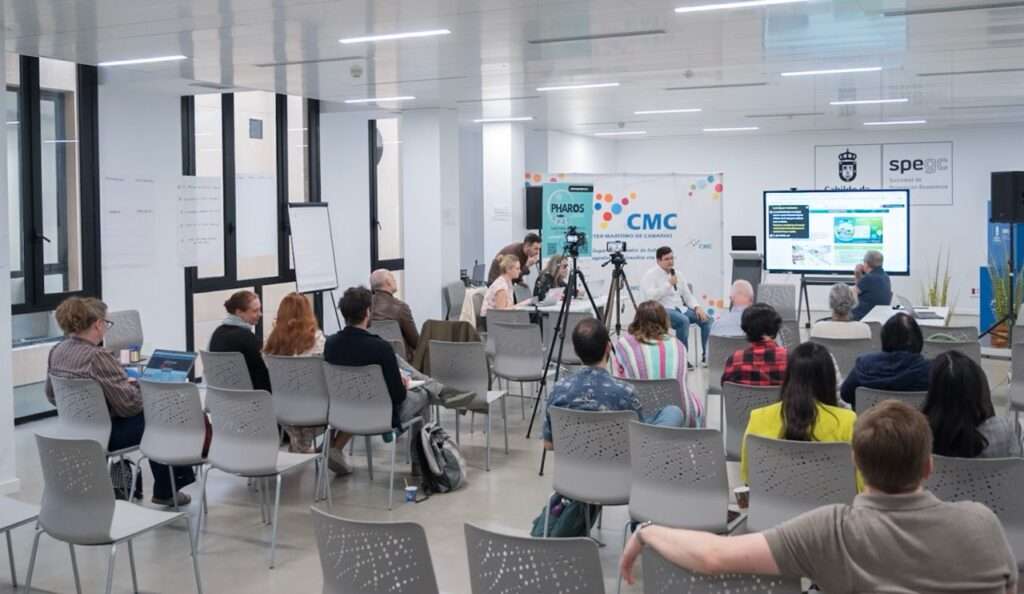
Best Practices in Living Labs Report https://pharosproject.eu/wp-content/uploads/2026/02/Screenshot-2026-03-19-at-13.49.05-Large-1024x594.jpeg 1024 594 PHAROS Project https://pharosproject.eu/wp-content/uploads/2026/02/Screenshot-2026-03-19-at-13.49.05-Large-1024x594.jpegGran Canaria, 30 January 2026 - In the distinctive context of island ecosystems, where environmental vulnerability intersects with tightly knit communities, a novel approach to problem-solving is being explored. The first “Best Practices in Living Labs Implementation” workshop, organised at the Clúster Marítimo de Canarias on January 30, 2026, and forming part of the PHAROS Project series, brought together a consortium of European projects to dissect the opportunities and hurdles of applying Living Labs methodologies in island territories.
Facilitated by Adelina de la Jara Valido of the Clúster Marítimo de Canarias, with support from Meritxell Turó of the Institute of Marine Sciences (ICM-CSIC), the session served as a foundational co-design exercise. Its aim is to produce a manual of best practices, enabling the harmonisation and comparison of living lab outcomes across different initiatives. The workshop underscored a central thesis: islands, with their pronounced land-sea interactions, environmental sensitivity, and concentrated stakeholder networks, are potent testbeds for nature-based solutions and blue economy innovations. Yet, they simultaneously grapple with inherent constraints such as fragmented governance, regulatory complexity, and challenges in scaling pilot projects.
A Mosaic of Methodologies: Lessons from the Field
The workshop’s core involved presentations from several Horizon Europe projects, each applying a variant of the living lab concept to island and coastal challenges.
The NATALIE Project’s Transformation Lab Forges Local Pathways for Nature-Based Solutions
The NATALIE project, represented by Noelia Cruz Pérez of the University of La Laguna, operates a “Transformation Lab” in Maspalomas, Gran Canaria. Focused on implementing a nature-based solution (NBS) for water quality, its methodology prioritises co-creation with local actors. Key outcomes highlight the critical need for capacity building; a novel micro-credential on NBS is planned to address knowledge gaps. The project’s success is partly attributed to the direct involvement of the Cabildo (insular government), ensuring political buy-in and enhancing the solution’s longevity beyond the project’s 2028 deadline.
Noelia Cruz Pérez, a professor at the University of La Laguna and leader of the project’s Canary Islands case study, detailed the workings of their “Transformation Lab,” a focused model of co-creation currently active in Maspalomas, Gran Canaria.
The NATALIE initiative operates across three pilot sites in the archipelago: La Laguna, Fuerteventura, and Maspalomas. It is in Maspalomas where the Transformation Lab is expressly situated. The core objective is twofold: to implement a specific Nature-Based Solution (NBS) aimed at improving water quality before it enters the sensitive Maspalomas lagoon, and to meticulously integrate local knowledge and secure community validation for that solution. “We are working together with society, with citizens, to try to refine the details so the solution is as adapted as possible and also gain that acceptance from the local community,” Cruz Pérez explained.
The methodology is distinct. Unlike a broader Living Lab framework, the project employs a specifically conceived “Transformation Lab” model, led by the Spanish company WI and B and the University of Thessaly in Greece. Its central focus is achieving concrete co-creations with a defined stakeholder group. To date, two sessions have been completed, with several more planned. A primary insight from initial engagement has steered the early focus firmly towards capacity building. “We know we are working with a concept that is relatively novel, like nature-based solutions. What we have seen is that there is a greater need right now in the area to increase awareness about this type of solution,” Cruz Pérez noted.
This capacity building aims to elevate the understanding and skills of a diverse cross-section of local actors, including academia, municipal technicians, local consultancies, tourism operators, and NGOs. The overarching goal is to ensure the project’s legacy. “NATALIE ends in 2028, but it is a solution that is intended to be implemented in Maspalomas with the idea that it can survive on its own and be maintained by the local community, especially by the local or insular public administration,” she stated.
Key outcomes emerging from this process are both practical and strategic. One significant proposal is the development of a micro-credential in nature-based solutions, likely to be launched by the University of La Laguna, addressing a identified skills gap within the archipelago. Furthermore, the project benefits from critical top-level engagement. “We have the great fortune of having the Cabildo within the consortium. Therefore, the regional authority is involved, and the local authority has also participated in the Transformation Lab. So from a political point of view, to also take action, we have them within the team, which is something very positive that we are seeing has a very positive impact on us,” Cruz Pérez emphasised.
The workshop activities have shaped this collaborative journey. An initial session with 15 stakeholders from water management, tourism, and NGOs defined priority co-creation areas: capacity building, educational programmes for schools, participatory mapping of existing NBS in the Canaries, and a comprehensive review of all regional NBS activity. A second, larger workshop nearly a year ago, involving 35 stakeholders, then delved specifically into these chosen areas, an effort that has been met with very good reception.
Cruz Pérez summarised the main advantages of conducting such a targeted Transformation Lab in an island territory. It increases awareness and acceptance of NBS among both public administrators and technicians; it helps ensure the continued implementation and maintenance of solutions; it builds local capacity in design, monitoring, and upkeep; it focuses efforts on holistic green solutions rather than traditional grey infrastructure; and ultimately, it guarantees that the implemented solutions have a long-term duration, surviving well beyond the lifecycle of the NATALIE project itself.
The NATALIE project’s approach underscores a fundamental lesson for island resilience: sustainable innovation requires more than just technical excellence. It necessitates patient investment in human capital, strategic alliances with governing bodies, and a genuine process of co-design that transforms external solutions into locally owned, enduring assets.
The GENESIS Project Harnesses Geology and Digital Innovation to Secure La Palma’s Lifeline
From the GENESIS project, Iván Hernández Ríos detailed the “La Palma Deep Demonstrator.” This initiative seeks to protect groundwater through nature-based solutions with a geological component, supported by digital tools like hydrological modelling and a prospective digital twin. La Palma was selected due to its acute dependency on vulnerable groundwater resources, a situation starkly revealed by the 2021 Tajogaite volcanic eruption. The project exemplifies a synergistic approach, combining physical solutions with digital monitoring to create knowledge that outlasts the project timeframe, a necessity given the slow processes of geological systems.
Iván Hernández Ríos of the Association for Research in Macaronesia detailed the project’s ambitious “Deep Demonstrator” on the island of La Palma, an initiative that seeks to protect, restore, and preserve groundwater through the specialised lens of geology.
The project’s core objective is to demonstrate the efficacy of nature-based solutions with inherent geological components; solutions that imitate natural processes where the geology itself forms the foundation for application. This focus is deployed across the Macaronesia region, targeting islands identified as especially vulnerable to climate change and deeply dependent on natural resources. The work spans the European archipelagos of the Azores, Madeira, and the Canary Islands, alongside the associated state of Cape Verde. Coordinated by the Geological and Mining Institute of Spain (CSIC), a central pillar of its work is the La Palma Deep Demonstrator.
The choice of La Palma is strategic and sobering. “We can find in a fairly small territory, one that is very vulnerable to groundwater and dependent on groundwater, with more than 90% of water resources coming from groundwater for the uses of the island. We find ourselves in a situation especially dependent, especially at risk,” Hernández explained. This acute dependency intersects with critical water infrastructure and the impacts of climate change, creating a pressing need for innovative management. The project explores enhancing underground storage through both traditional local techniques, such as hydraulic closures leveraging volcanic dikes, and novel approaches like managed aquifer recharge, which remain underutilised in the region.
The demonstrator is designed to work synergistically across three integrated components. First, nature-based solutions are supported by a suite of digital solutions. This digital layer is crucial for modernising a conservative sector with ageing infrastructure, allowing researchers to parameterise, model, and generate long-term performance knowledge for these solutions. Acknowledging the slow pace of geological processes, the project uses its four-year timeline to intensively study conditions. This is enabled by digital tools including hydrological modelling and real-time monitoring of critical island infrastructure to calibrate those models. The culmination is the development of a digital twin, integrating various models to simulate solution performance, scalability across the island, and efficacy under future climate scenarios.
The project’s context was violently underscored by recent history. “There was a critical moment that made us more present and made us more aware of the importance of critical water infrastructures we have on the island: the Tajogaite volcanic eruption of 2021. This showed us how vulnerable we are to risk impacts,” Hernández noted. Coupled with persistent drought conditions, this event crystallised the imperative to analyse and apply the GENESIS concepts on an island where over 90% of water supply is precariously sourced from the ground.
La Palma itself, one of the smallest Canary Islands, presents a specific profile: a small population, over 35% of its land designated as protected Natura Network areas, and an economy centred on water-intensive agriculture alongside a significant tourism sector. The GENESIS project addresses the resulting challenges through a multi-pronged strategy: the on-the-ground demonstration of nature-based solutions for critical water infrastructure, the deployment of digital solutions for monitoring and modelling, active community engagement to forge local agreements, and the planned development of a Living Lab to sustain the endeavour beyond the project’s formal conclusion.
Hernández also outlined the significant challenges that the workshop would subsequently explore. These include navigating the diverse water management practices and governance structures of local communities; integrating a multiplicity of stakeholder interests; demonstrating solutions whose full validation may exceed the project’s timeframe; balancing necessary scientific rigor with meaningful community engagement; and, fundamentally, establishing sustainable management practices that endure long after the project itself has ended.
The GENESIS Deep Demonstrator thus emerges as a critical response to a clear and present danger. It represents a fusion of deep geological time, immediate climatic threats, and forward-looking digital innovation, all focused on securing the most fundamental of resources for one of Europe’s most vulnerable island communities.
Navigating Abstraction: The Murcia Urban Living Labs and the Practical Challenge of Building Future Resilience
Jesús Ochoa presented insights from the Future Resilience project’s urban living lab in Murcia. While not an island, its methodological struggles were highly instructive. The team employed the FORESIGHT scenario-planning methodology across three workshops to build climate resilience in vulnerable neighbourhoods. Significant difficulties were encountered in recruiting local residents, leading to workshops dominated by technical experts and civil society representatives, which in turn caused participant fatigue. This experience highlighted the challenges of maintaining engagement when workshop outcomes feel abstract or disconnected from immediate, tangible action.
In the tangible landscape of urban climate adaptation, where theoretical resilience must meet neighbourhood-level reality, the Future Resilience Project in Murcia offers a candid case study in participatory methodology and its complexities. Presenting at a workshop on Living Labs best practices, Jesús Ochoa of the Polytechnic University of Cartagena detailed the ambitions and acute challenges faced by their urban living laboratory, which sought to identify solutions for climate resilience in the southeastern Spanish city.
The laboratory’s core objective was to determine which solutions could improve urban resilience against climate change impacts specific to Murcia. The work concentrated on two vulnerable neighbourhoods: one significantly affected by urban heat island effects, and another highly susceptible to heavy rainfall and flooding. A parallel aim was to advance a transition towards a compact, diverse, proximity-based city model, with a special interest in integrating citizens’ granular, lived knowledge of these impacts at the street level.
Murcia’s context is one of punctuated equilibrium. “Lately these days we are seeing how the different storms and different meteorological phenomena pass, and here it seems we are in a bubble, but suddenly a phenomenon appears – whether it’s a heat island or flooding or torrential rain – and it affects us in quite an important way,” Ochoa described, setting the scene for a city existing between calm and climatic disruption.
The methodological framework encountered its first major hurdle at the outset: participant recruitment. A significant difficulty arose in finding residents from the affected neighbourhoods themselves. This necessitated improvisation, leading to mixed groups drawn from two main sectors. Public administration managers provided technical insight, including urban planning architects, environmental engineers, health technicians, and emergency services personnel. Alongside them were citizens representing stakeholders from education, culture, social spheres, and health.
The team employed the FORESIGHT methodology to evaluate neighbourhood climate resilience, a process designed to identify vulnerabilities and key factors through the construction of different future scenarios. This was executed across three workshops, designed to be maximally participatory and interdisciplinary.
The workshop process was structured and incremental. Prior to the first workshop, which involved 28 participants, an online survey distilled factors influencing climate resilience. The workshop itself then tasked participants with developing a future vision of how these factors might evolve under various scenarios. The second workshop provided an evaluation framework to assess the impact and uncertainty of each factor, culminating in participatory scenario generation and refinement through identifying associated challenges and opportunities. The third and most developed workshop evaluated specific adaptation policies, resulting in 30 proposed policies classified across areas including emergencies, planning, governance, and data management.
However, Ochoa’s presentation was notably forthright about the main difficulties encountered. Regarding neighbourhood participation, there was a stark lack of response from actual residents, forcing reliance on mixed professional-civil society groups. Some neighbours who were aware of the labs perceived them as a “waste of time,” where discussions remained abstract rather than leading to concrete, actionable projects like those typically announced by the city council.
Further challenges emerged regarding the type and number of participants. Difficulties in curating diversified groups meant the same participants attended each session, leading to palpable participant fatigue. The team felt the workshop durations were insufficient for firm conclusions, and that while greater refinement was possible, the exhaustion within the recurring group was a limiting factor.
The progress of the laboratories themselves faced methodological headwinds. The scenario-generation exercise was perceived by some as abstract and impractical. The terminology used proved confusing at times, requiring facilitators to continuously redirect discussions. Maintaining an adequate and productive work pace was noted as a complex and effortful task.
Despite these hurdles, a distinct advantage emerged from the initial constraint. The very composition of the mixed groups, born from a recruitment problem, ultimately enriched the process. “Very different groups increased the number of interactions and results,” Ochoa acknowledged. The overall challenge, he concluded, was foundational: “Identifying key factors and constructing scenarios may seem a simple task, but in reality it is not.”
The Murcia experience serves as a vital narrative for the Living Lab community. It highlights the delicate balance between structured academic methodology and the demand for concrete, recognisable action from citizens. It underscores the very real risk of participant fatigue in intensive co-creation processes and the critical importance of clear, accessible communication. Ultimately, the project reveals that building urban resilience is not only a technical or environmental challenge, but a profoundly human and logistical one, where the design of the process itself must be as resilient as the solutions it seeks to produce.
The PHAROS Framework: Embracing “Wicked Problems”
Jaume Piera of ICM-CSIC framed the PHAROS project’s ambition to establish interconnected living labs, including the “MarCoLab” in Gran Canaria. A central theme was the evolution beyond traditional citizen science towards a more complex ecosystem of actors, aligned with the “quadruple helix” model of innovation: academia, industry, government, and civil society. A proposed “quintuple helix” adds the crucial element of context; specifically, the type of intricate, “wicked problems” that living labs are designed to address.
Adelina de la Jara Valido elaborated on these problems, which characterise the challenges facing coastal systems. They are multicausal, multiscalar, and multisectoral; they often fall between administrative boundaries, lacking a single responsible entity; and their solutions are not simply true or false, but better or worse. The degradation of a coastal zone, for instance, may be linked to global climate change, regional invasive species, and local maritime activities simultaneously.
Archipelagos of Innovation: The PHAROS Project Maps a New Ecosystem for Tackling “Wicked” Coastal Problems
The ambition of the European PHAROS project extends beyond implementing single solutions; it aims to cultivate an interconnected web of experimental ecosystems to address the most persistent challenges facing coastal communities. At this workshop, Jaume Piera of the Institute of Marine Sciences (ICM-CSIC) outlined the project’s foundational Living Labs framework, a model designed to navigate complexity through structured collaboration and open innovation.
The PHAROS strategy is inherently connective, planning for multiple Living Labs where direct demonstration will occur. “Gran Canaria is one of them, which is why we start here,” Piera stated, positioning the island as a primary testbed. A central consideration is the relationship between new initiatives and existing local efforts. Piera highlighted the example of Red Promar, a pre-existing biodiversity monitoring network, posing a key challenge: “how to transfer or integrate information from Red Promar and MINKA platforms.”
The use of an international platform like MINKA is intended to enable future interconnection between Living Labs.The goal is to establish channels for dialogue between Pharos Living Labs, envisioning a future mosaic of sites distributed from Ireland and Iceland to Macaronesia, demonstrating the scalability of the approach.
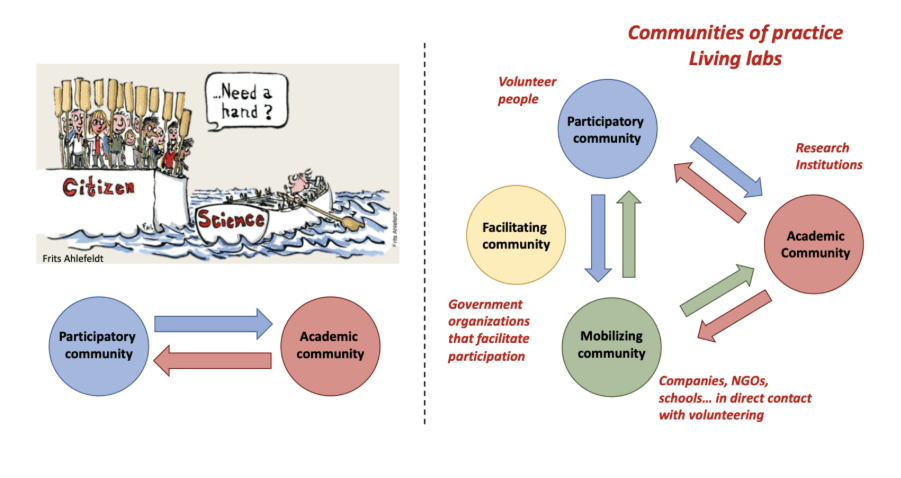
A significant part of the PHAROS framework involves redefining participation. Moving beyond traditional citizen science, which often frames collaboration as solely between academia and society, Living Labs embrace a more complex actor ecosystem. Piera identified four key communities: the participatory community (society at large); the academic community (providing scientific knowledge); mobilizing communities (groups that engage and recruit participants); and facilitating communities (entities like local government or councils that enable activities). The Clúster Marítimo de Canarias hosting the workshop was cited as a prime example of a facilitating community.
To illustrate the model, he provided the concrete example of a school-based Living Lab. Here, the participatory community would be students and teachers; mobilising could be managed by a Blue Schools network; research centres would form another participatory layer using the Minka platform; and local or regional authorities would act as facilitators. This example underscores the project’s intent to operationalise the framework within tangible, community-embedded settings.
This structure aligns directly with the Quadruple Helix model of innovation. Piera then introduced the critical fifth element: the context. In Living Labs, this context is typically a “highly complex problem,” one without an easy solution. These are what Adelina de la Jara Valido, also of the Clúster Marítimo, later elaborated on as “wicked problems.” ”A good part of today’s workshop will be trying to address this type of twisted problem that happens in Gran Canaria,” Piera noted.
Adelina de la Jara Valido then distilled the core philosophy. “A Living Lab is ultimately an initiative that is centered on the user. It is an open innovation ecosystem that ultimately what it does is test in real life solutions that can respond to a complex problem, a twisted problem that has many interconnected challenges, and that is where the complexity comes from.” These initiatives seek to engage all actors from the quadruple helix to co-create the best possible responses.
Furthermore, each problem is unique, making direct replication difficult. Solutions are not true or false, but better or worse, requiring testing and adaptation. There is no immediate or definitive test for interventions, as ecological responses unfold over time. Every attempt is significant, carrying real, irreversible consequences. Finally, each wicked problem is a symptom of another, nested within interconnected scales, such as linking local coastal management to regional invasive species and global climate change.
The PHAROS framework, therefore, presents itself as a necessary and sophisticated response to an era of interconnected crises. It is a recognition that saving a coastline requires more than a single technical fix; it demands a permanently engaged, multi-voiced innovation ecosystem capable of navigating ambiguity, negotiating trade-offs, and learning its way forward, one complex, “twisted” problem at a time.
Co-Design in Action: Prioritising Challenges for Gran Canaria
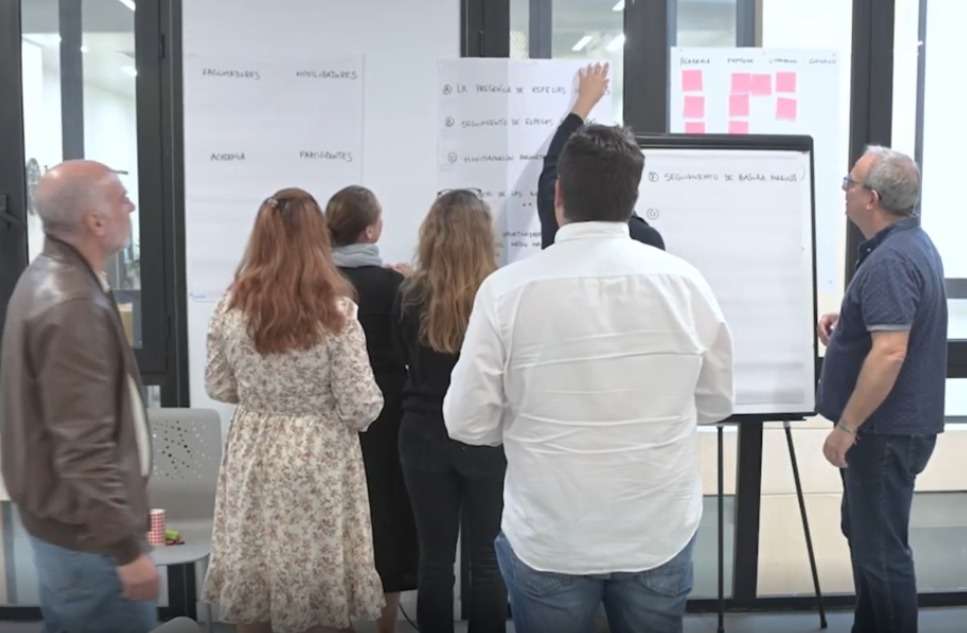
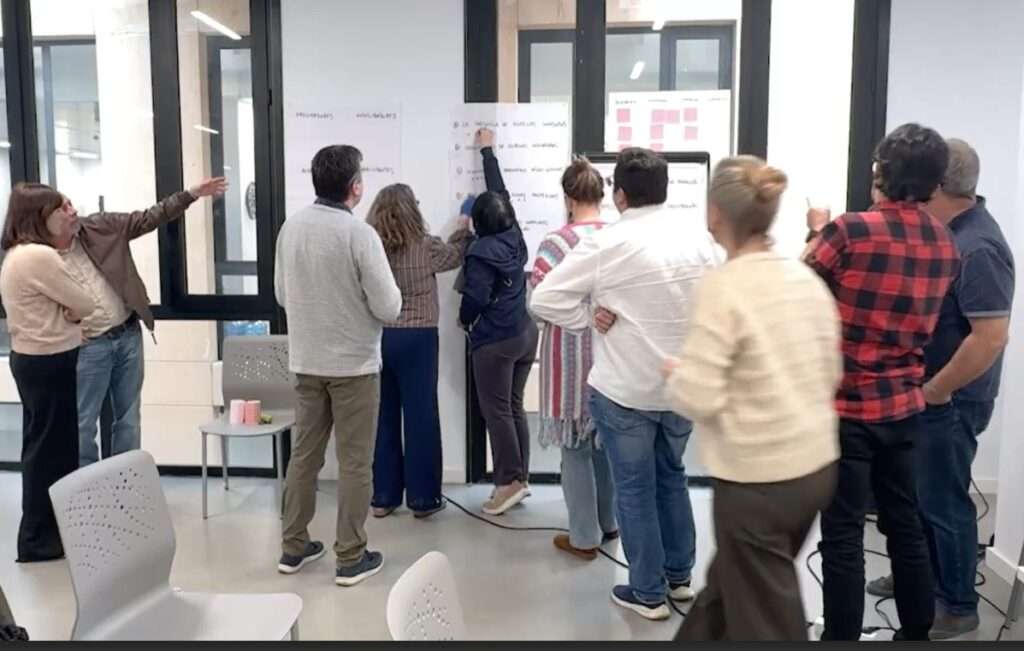
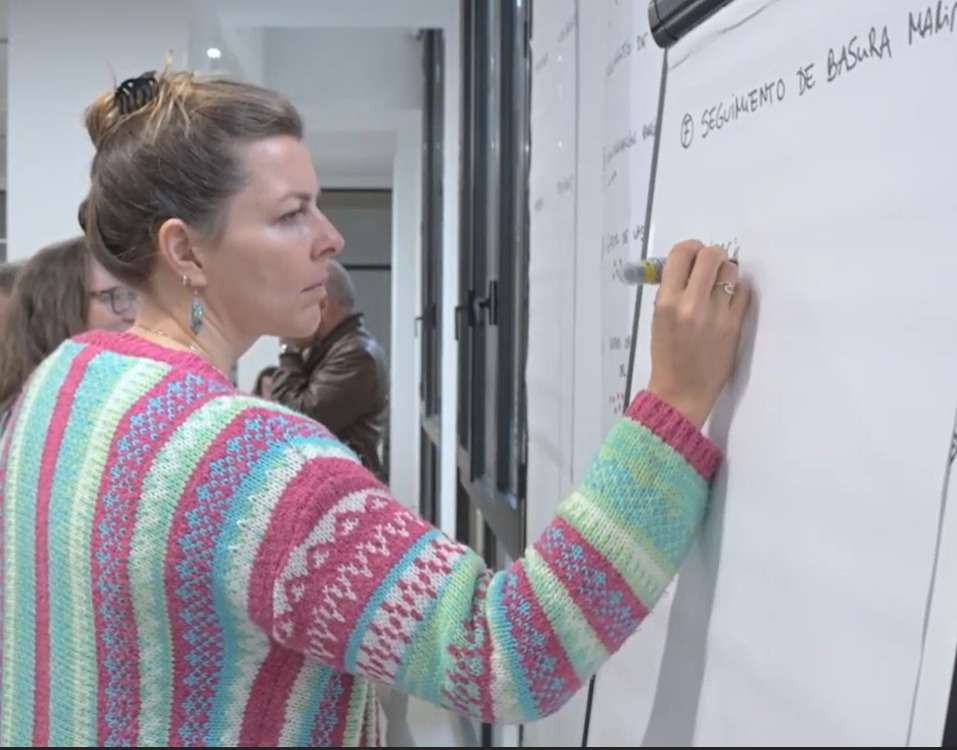
In a practical exercise, participants were tasked with identifying and prioritising key challenges for the nascent PHAROS MarCoLab. The listed issues included monitoring invasive species and marine litter, assessing the effectiveness of protected areas, tracking indicator species and physico-chemical parameters, and exploring new sustainable commercial opportunities from the marine environment.
A voting exercise revealed divergent priorities shaped by stakeholder perspective. Academic participants leaned towards monitoring and research oriented challenges, while citizens emphasised visible problems like litter and invasive species. Industry representatives focused on balancing commercial opportunities with conservation. This result proves the relevance of the “wicked problems” approach.
This activity also mapped the present and absent members of the quadruple helix. Notable gaps were identified in government representation (e.g., Cabildo, municipal authorities) and certain industry sectors (e.g., tourism, commercial fishing), pinpointing critical areas for future engagement.
Temporal Dissonance and the Challenge of Return
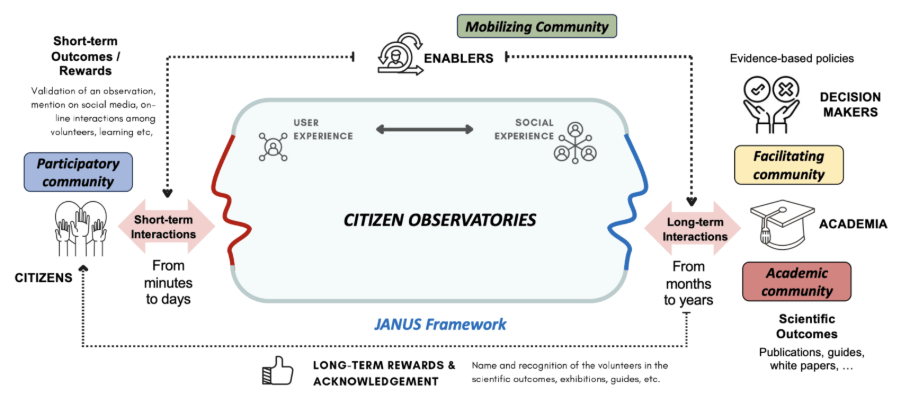
One of the most resonant insights came from Jaume Piera, who highlighted a fundamental misalignment in the temporal expectations of the different helices. Citizens, accustomed to instant feedback, expect immediate returns from their participation. Academia, however, operates on longer timescales, often requiring years of data collection before publishing results. Government works to administrative and political cycles, while business needs practical, market driven timelines. Bridging this “temporal dissonance” is paramount.
Connected to this is the imperative to demonstrate clear value or “return” for each participating community. If citizens do not see tangible impact, if academia cannot secure quality data, if government lacks evidence for policy, or if business finds no sustainable opportunity, engagement will falter. The workshop concluded that designing clear feedback loops and communication strategies tailored to each group is not ancillary; it is central to the living lab’s survival.
Conversely, orange stickers marked “Who Is Missing.” Beyond government, this list called for greater involvement from industry actors like tourism operators, fishing associations, and aquaculture businesses, as well as specific community groups such as surfing clubs, neighbourhood associations, and formal school networks.
The workshop culminated in several key insights that cut to the heart of collaborative endeavours. Jaume Piera highlighted the profound challenge of temporal misalignment between the four helices. Citizens, he noted, operate in a culture of instant feedback and expect immediate returns, while academics work on multi-year cycles toward publication. Government functions to administrative and political timelines, and business requires market-driven, practical schedules. This dissonance, if unmanaged, threatens engagement.
Related communication challenges were acknowledged, arising from the clash between technical scientific language and everyday speech, and between abstract concepts and concrete actions.
Perhaps the most critical insight was the universal importance of return for all communities. The workshop concluded that each stakeholder group must perceive clear value. Citizens require recognition and visible local impact; academia needs quality data and publication avenues; government seeks evidence for policy and cost-effective solutions; and business looks for market opportunities and sustainable practices. The success of the Living Lab hinges on its ability to design and communicate these distinct returns, ensuring that participation is not merely extracted, but mutually beneficial.
The workshop thus achieved its foundational aim: it transformed the abstract concept of a Living Lab into a defined, if complex, matrix of priorities, actors, and essential conditions. The path forward for MarCoLab is now clearer, marked not only by the six ecological challenges on the board, but by the more nuanced human challenges of alignment, inclusion, and reciprocal value that will determine its ultimate resilience and impact.
Charting the Course for Gran Canaria’s Marine Living Lab
Following a morning of intensive co-design, the PHAROS project workshop transitioned from diagnosis to strategy, outlining a concrete roadmap for the nascent MarCoLab Gran Canaria. The session synthesised the identified challenges, stakeholder map, and critical insights into a set of actionable next steps, acknowledging the complex, iterative journey ahead.
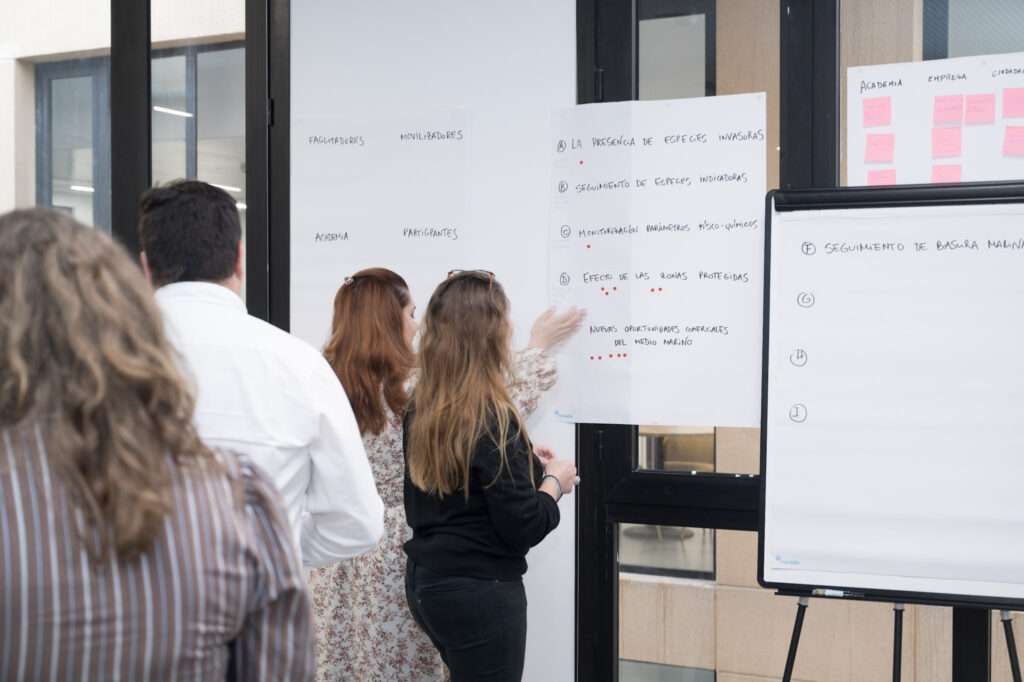
The immediate task will be to analyse the participatory voting exercise to establish a clear hierarchy of priority challenges. While the interconnected nature of issues like invasive species, marine litter, and water quality monitoring is recognised, this prioritisation will provide crucial focus for the lab’s initial activities, ensuring tangible early progress.
A central pillar of the strategy is a dedicated stakeholder engagement effort aimed at filling the significant gaps identified in the room. Targeted outreach will focus on securing the participation of government authorities, whose involvement is essential for permitting and policy support. Engaging the fishing industry will be pursued to harness practical local knowledge and secure operational buy-in. The tourism sector will be approached to explore sustainable practice partnerships and potential funding avenues. Efforts will also be made to broaden citizen participation through established networks like schools and local community groups.
To transform this diverse assembly into a functional ecosystem, a clearer definition of community roles is required. This involves specifying who will mobilise participation (such as the Blue Schools network, dive centres, or environmental NGOs); which entities will facilitate the process (potentially government agencies, the Clúster Marítimo, or research institutions); defining the participatory community (students, fishers, divers, residents); and confirming the academic support structure (from bodies like ICM-CSIC, universities, and PLOCAN).
Underpinning all engagement is the need for a sophisticated communication approach. This must involve crafting messages that speak to different audiences in appropriate language, proactively managing expectations regarding project timelines, explicitly demonstrating the value and return for each community, and creating visible feedback loops so contributors can see the impact of their involvement.
A fundamental acceptance guiding the Lab’s development is that it is an iterative process. Organisers acknowledged that this first workshop is merely the beginning, with continued refinement expected based on participant feedback. Flexibility to adapt as the Lab evolves and a commitment to learning from parallel projects like NATALIE, GENESIS, and Future Resilience are seen as key to resilience.
These lessons from other projects provide a valuable compass. From NATALIE, the imperative of capacity building before implementation and the critical advantage of early local authority involvement were underscored. GENESIS demonstrated the power of synergistic approaches that marry traditional knowledge with digital innovation for long-term monitoring. The Future Resilience project offered a cautionary tale and practical insights, highlighting that while mixed stakeholder groups can be fruitful, they risk participant fatigue and require careful facilitation to ground abstract concepts in tangible examples.
In conclusion, the workshop was deemed a successful initiation of the co-design process. It achieved its core objectives: bringing together diverse stakeholders from academia, civil society, and the maritime cluster; identifying priority challenges through participatory means; mapping the current stakeholder landscape and its deficiencies; defining potential community roles; and integrating hard-won lessons from related European initiatives. The exercise laid bare both the considerable potential and the inherent challenges of creating a functional Living Lab that must balance scientific rigor, citizen engagement, government support, and economic viability.
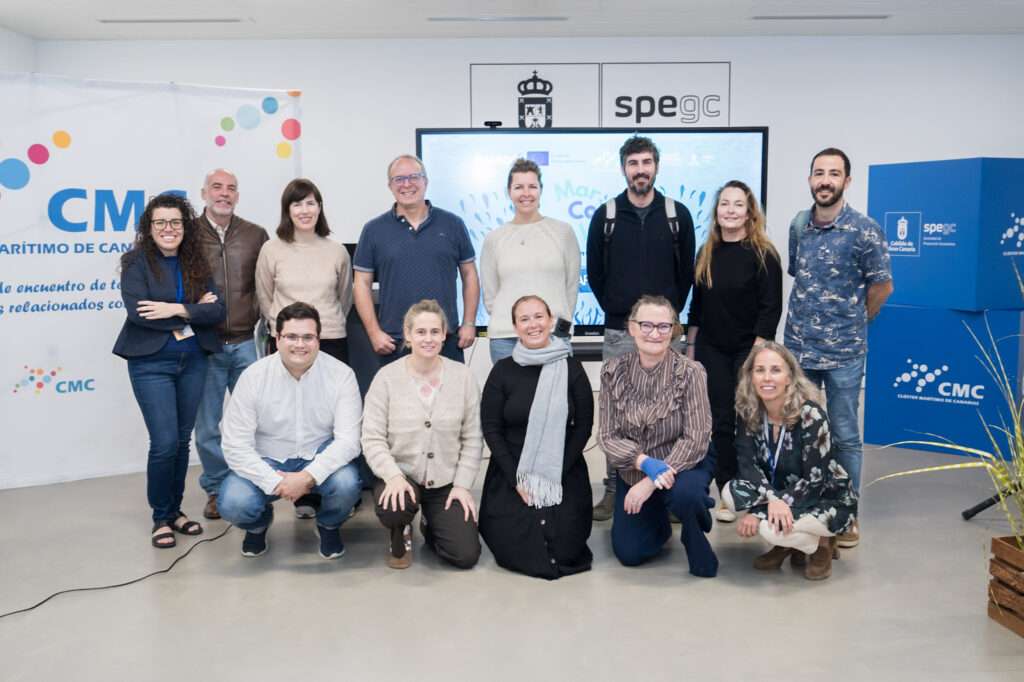
Perhaps most importantly, the workshop itself embodied the co-design principle it sought to promote. Participants did not merely hear about Living Lab theory; they experienced its participatory methodology firsthand, actively shaping the direction of MarCoLab Gran Canaria through their votes, reflections, and contributions. This foundational work sets the stage for the afternoon’s session, which promises to delve into the specifics of the Minka digital platform and explore concrete examples of community interaction, building directly upon the collaborative foundations established during this inaugural gathering.