Join PHAROS for a Marine BioBlitz in the Canary Islands, Jan 31, 2026
Join PHAROS for a Marine BioBlitz in the Canary Islands, Jan 31, 2026 https://pharosproject.eu/wp-content/uploads/2026/01/Marine-BioBlitz-Canary-Islands.png 800 600 PHAROS Project https://pharosproject.eu/wp-content/uploads/2026/01/Marine-BioBlitz-Canary-Islands.pngThe waters surrounding Gran Canaria and Lanzarote hold secrets that could shape the future of ocean restoration worldwide. On January 31, 2026, PHAROS invites citizens to become marine scientists for a day, exploring dive sites that demonstrate how human ingenuity can revive ocean ecosystems. Three of these sites represent some of the Atlantic’s most successful artificial reef projects, offering living proof that nature-based solutions work.
Three Artificial Reefs, One Vision
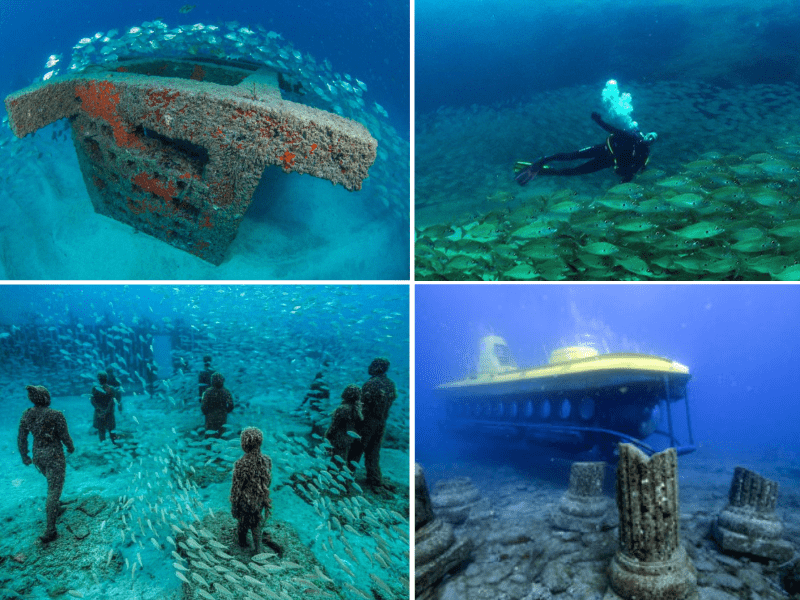
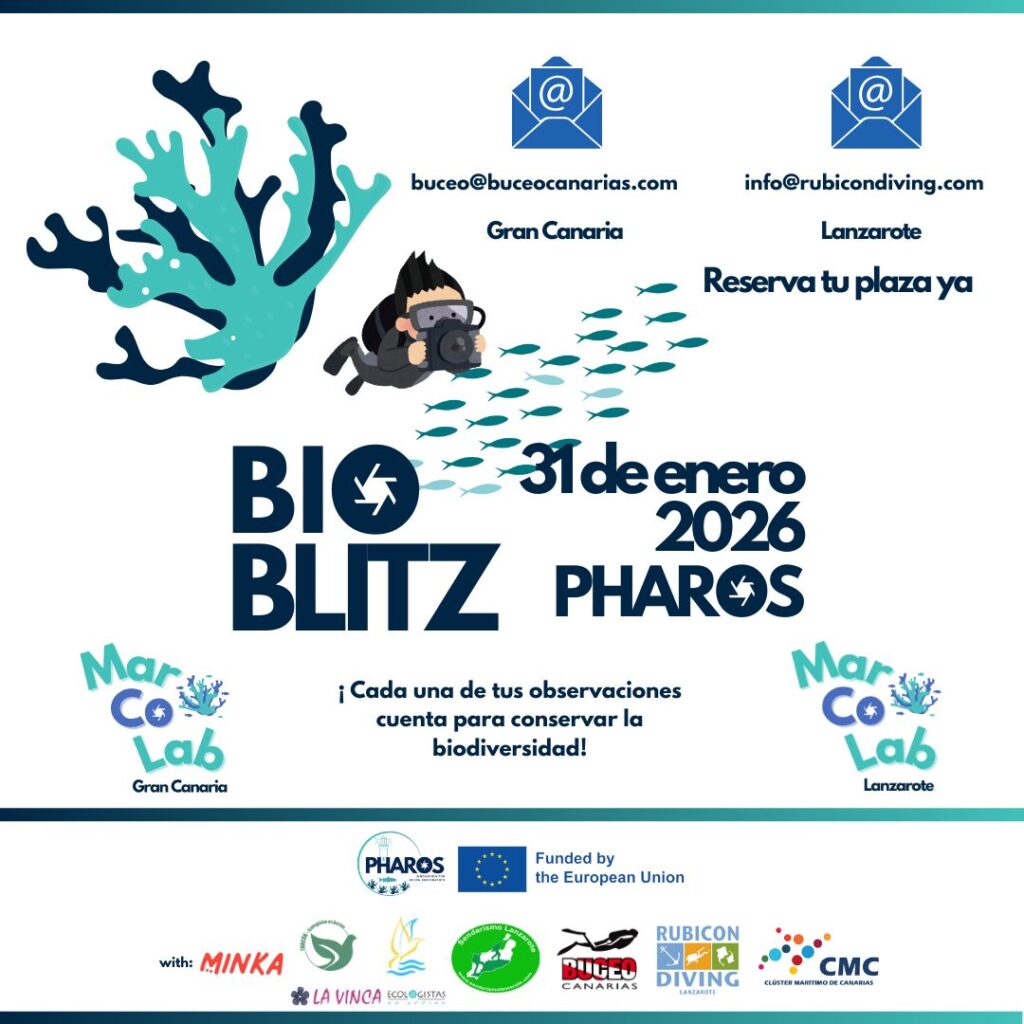
The PHAROS Citizen Science Marine BioBlitz showcases four exceptional dive sites.
What makes this event remarkable is that three locations are artificial reef success stories that could serve as blueprints for PHAROS demonstrations across the Atlantic and Arctic basins.
Parque de la Atlántida
Gran Canaria’s first artificial reef holds special significance for PHAROS. This underwater park served as the backdrop for the project’s kickoff meeting when team members explored its depths aboard the Golden Shark submarine from Puerto de Mogán. Created in 2017, the park features over 350 structures made from pH-neutral concrete and fiberglass designed to resemble ruins of a mythical civilization.
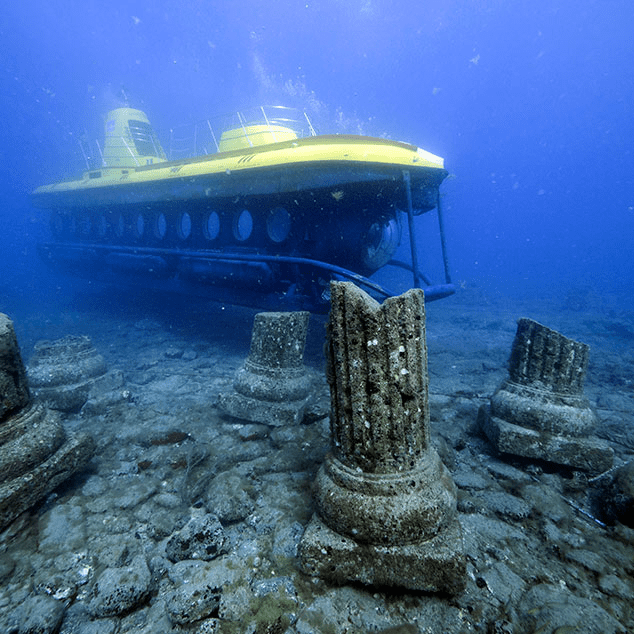
Within just a few years, native marine life has transformed these artificial ruins into vibrant ecosystems where visitors observe abundant fish populations, rays, and even sunken fishing boats. The park demonstrates that artificial reefs can rapidly accelerate biodiversity recovery while the electric-powered submarine ensures environmentally respectful human access.
Key Aspects:
- Artificial Reef: It’s an innovative seabed regeneration project with structures in neutral PH concrete and fiberglass, blending art with marine conservation.
- Recreation of Ruins: The layout includes decorative sets resembling ruins of a mythical civilization, evoking the legend of Atlantis.
- Marine Life: The park encourages native flora and fauna, allowing visitors to see fish and potentially rays and sunken fishing boats during their trip.
- Submarine Tours: You experience it from a real submarine, the Golden Shark, departing from Puerto de Mogán.
Register here: buceo@buceocanarias.com
Biotopo de Arguineguín
Located in front of Montaña Arena beach, this artificial reef was created in 1991 by the Government of the Canary Islands to promote marine biodiversity. Multiple concrete modules submerged at approximately 23 meters deep simulate natural habitat conditions.
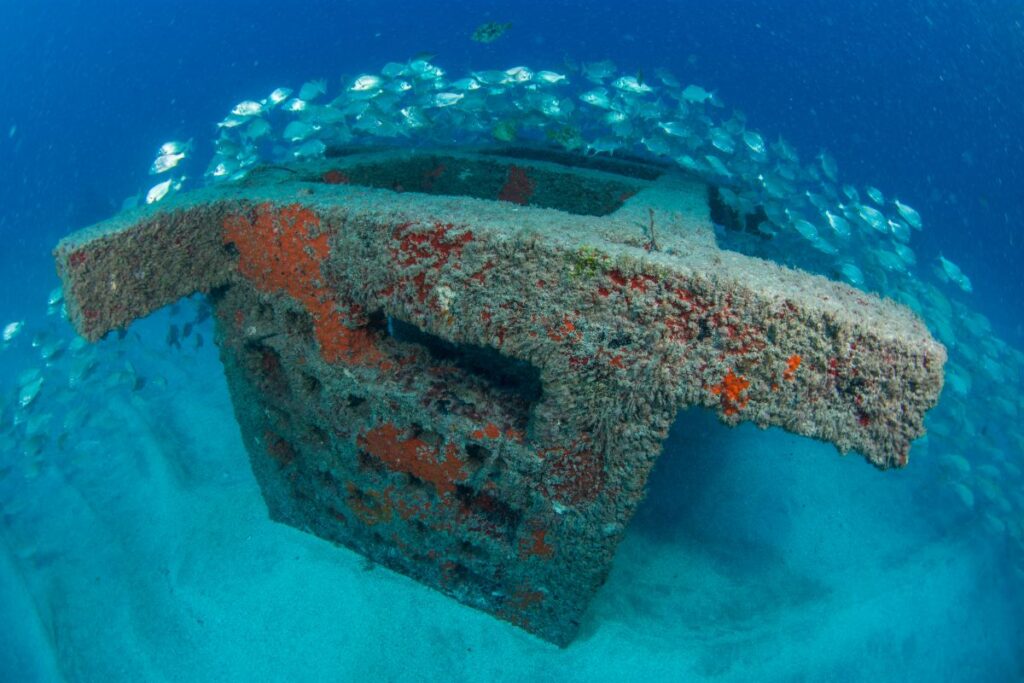
Over three decades, this project has transformed barren seabed into a thriving ecosystem. Divers regularly observe impressive banks of fish, groupers, octopuses, and fascinating garden eels. The reef extends nearly 700 meters and provides invaluable long-term data for contemporary restoration projects like PHAROS.
Key Aspects:
- An artificial reef with multiple concrete modules submerged in the sandy bottom about 23 meters deep.
- Located in front of the Arena Mountain Beach, on the coast of Arguineguín, Gran Canaria.
- A new habitat for marine species, promoting biodiversity and the proliferation of underwater life.
Register here: buceo@buceocanarias.com
El Cabrón
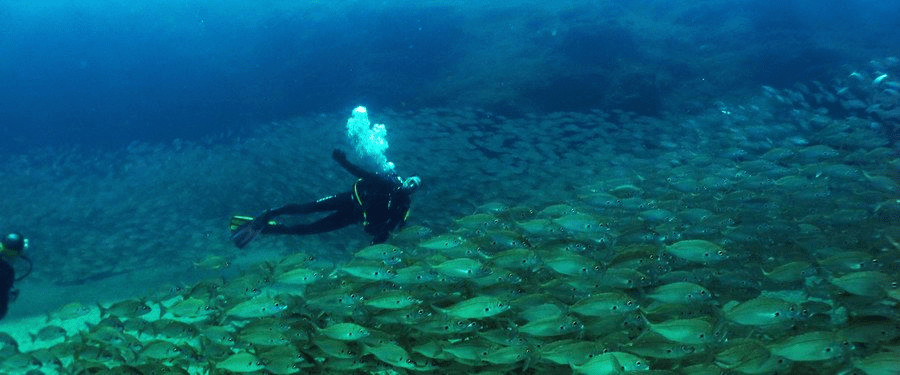
The third site, El Cabrón Marine Reserve, provides essential context as one of only three marine reserves in the Canary Islands. Designated a Site of Special Scientific Interest by the European Union in 2001, this protected natural site features dramatic volcanic caves, arches, and extraordinary biodiversity including seahorses, angel sharks, and stingrays. Comparing natural recovery here with accelerated restoration at artificial reef sites will provide valuable insights for PHAROS demonstrations.
Key Aspects:
- Protected Marine Reserve: Designated in 1999 and listed as a Site of Special Scientific Interest by the EU in 2001, it is one of only three marine reserves in the Canary Islands and the only one on Gran Canaria
- Exceptional Biodiversity: Home to over 400 species of marine flora and fauna from the Mediterranean, Atlantic, Africa, and Caribbean, including endangered angel sharks, rays, seahorses, and large schools of barracuda
- Dramatic Volcanic Topography: Features spectacular underwater landscapes with volcanic caves, arches, walls, drop-offs, vertical tunnels, and caverns suitable for various diving levels
- Outstanding Diving Conditions: Offers visibility up to 30 meters, depths reaching 30 meters, year-round diving availability, and over ten main dive routes
- Natural Conservation Success: Protected status prohibits commercial fishing and boat traffic, allowing marine ecosystems to flourish naturally and sustain vital local fish populations
- Prime Location: Covers approximately 1,000 hectares near Arinaga on Gran Canaria’s southeastern coast, featuring diverse habitats from rocky reefs to sandy seabeds and sea-grass nurseries
Register here: buceo@buceocanarias.com
Museo Atlántico
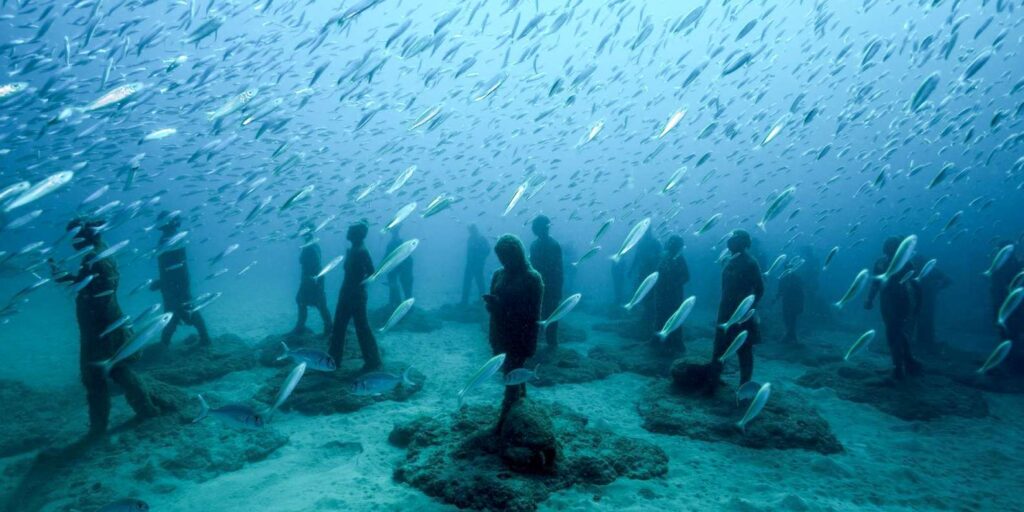
Lanzarote’s underwater museum offers a unique approach to reef creation. British artist Jason deCaires Taylor installed over 300 life-size pH-neutral concrete sculptures at 12-14 meter depths in 2016, creating thought-provoking art installations that simultaneously provide substrate for marine organism colonization. The museum transforms barren seabed into an active catalyst for reef recovery.
Register here: info@rubicondiving.com
Proven Models for Ocean Recovery
These sites represent proven restoration methodologies directly applicable to PHAROS goals. The Gran Canaria demonstration will deploy Smart Enhanced Reefs (SER®) alongside Integrated Multi-Trophic Aquaculture systems, creating synergies between food production and ecosystem restoration. Arguineguín and Atlantis Park demonstrate that artificial reefs can transform degraded environments within years, validating PHAROS’s approach.
Become a Citizen Scientist
The January 31 BioBlitz invites families and ocean lovers to contribute directly to marine research. Participants will photograph algae and coastal benthic communities, then upload observations to MINKA, PHAROS’s citizen science platform that transforms community members into active research participants.
The Marine BioBlitz takes place Saturday, January 31, 2026, from 09:00 to 13:00.
Register for Gran Canaria sites (El Cabrón, Biotopo de Arguineguín, or Parque de la Atlántida) at buceo@buceocanarias.com; for Lanzarote’s Museo Atlántico, contact info@rubicondiving.com.
By engaging citizens while showcasing successful artificial reef projects, this event demonstrates that ocean restoration is already happening in the Canary Islands. Join PHAROS on January 31 to witness this transformation and contribute to the science guiding future ocean restoration efforts.