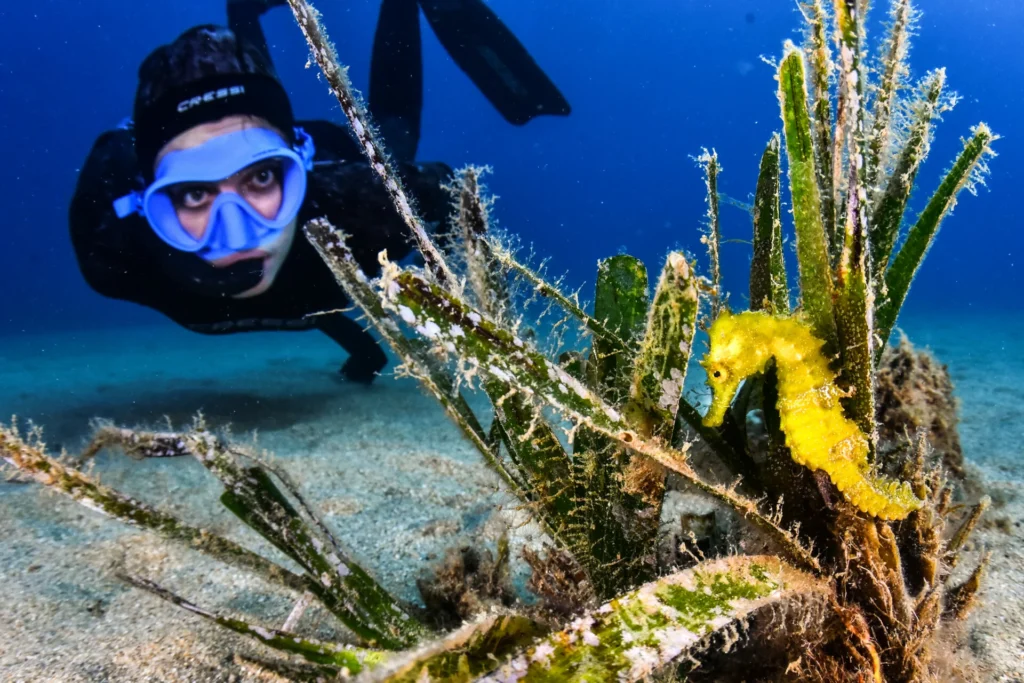
MINKA talk: Citizen Science Data for Research and Ecosystem Management, Jan 30, 2026
MINKA talk: Citizen Science Data for Research and Ecosystem Management, Jan 30, 2026 https://pharosproject.eu/wp-content/uploads/2026/01/Sea-horse.-Credit_-MINKA-1920x1280-1-1024x683.webp 1024 683 PHAROS Project https://pharosproject.eu/wp-content/uploads/2026/01/Sea-horse.-Credit_-MINKA-1920x1280-1-1024x683.webpFrom citizen observations to publishable research and actionable evidence
Discover how MINKA’s citizen-generated data can strengthen academic research and support evidence-based ecosystem management for public administrations and policy-makers.
This session is part of MarCoLab Gran Canaria, PHAROS’ Living Lab in the Canary Islands: a blue economy innovation and co-creation space that brings together research, public authorities, businesses, and communities to test, learn from, and scale solutions for healthier marine ecosystems.
Through concrete success stories, the session will highlight how Living Lab-generated citizen science data can be reused for rigorous academic research and transformed into knowledge to support evidence-based ecosystem management.
When / Where
- Date: Friday, 30 January 2026 (PHAROS Mega Event, Gran Canaria)
- Time: 14:30–16:00
- Location: CMC – Clúster Marítimo de Canarias, Explanada Vapores Insulares, (Edificio Fundación Puertos – Trasera del CC El Muelle) Puerto de La Luz y de Las Palmas. 35008 – Las Palmas de Gran Canaria
- Format: Interactive info session + examples + Q&A and discussion
- Registration: https://doodle.com/sign-up-sheet/participate/2f3b12f6-6bca-4483-a676-9076c0a6e93b/select
Speaker
Jaume Piera, the leader of the EMBIMOS research group at ICM-CSIC and the founder and coordinator of MINKA citizen science infrastructure. He will guide participants through practical successful examples of how to use MINKA data for research and real-world impact.
Why attend?
MINKA enables universities, research groups, and authorities to connect with citizen science at scale: supporting data collection, validation workflows, and collaboration opportunities. In this session, we’ll focus on how to move from observations to outcomes: robust academic outputs and stronger decision-making for ecosystem management.
You will leave with:
- An overview of the potential impact of participatory based methods for doing science and environmental management.
- A clear picture of what data MINKA provides and how it’s generated (from field observation to usable records).
- A roadmap for data access and reuse
- Concrete use cases: theses, publications, monitoring, and decision-support for administrations and protected areas.
- Time to ask questions, discuss methodological considerations, and explore collaboration opportunities.
Who should join?
- PhD candidates, postdocs, PIs, research support staff, and data analysts
- Universities and research centres exploring citizen science methods
- Public administrations, MPA managers, and policy teams seeking evidence for ecosystem management
- NGOs and consultancies working on biodiversity, monitoring, and restoration
Preliminary agenda (90 minutes)
14:30–14:45 | Welcome & context
- Why citizen science data matters for science, restoration and management
14:45–15:00 | MINKA in 15 minutes: what it is and what it enables
- Platform overview, data types, validation logic, and how research teams can plug in
15:00–15:35 | Exploiting the MINKA datasets for academia, policy & administration
- Typical research pathways (PhD projects, papers, collaborations)
- Examples
- How citizen observations can complement monitoring, reporting, and adaptive management
- Success Stories
15:35–16:00 | Q&A and discussion
- Bring your research question, management challenge, or data need