These New Rules Threaten Europe’s Seaweed Producers
These New Rules Threaten Europe’s Seaweed Producers https://pharosproject.eu/wp-content/uploads/2026/02/image-2.png 901 427 PHAROS Project https://pharosproject.eu/wp-content/uploads/2026/02/image-2.pngWritten by: The Pharos Project Team, Julie Maguire (BMRS) and ICoRSA.
Stricter limits on iodine and heavy metals could force closures, while driving innovation.
Europe’s seaweed industry faces disruption
The new European Commission legislation will impose substantially stricter limits on iodine and heavy metals in macroalgae products. For the small and medium enterprises that form the industry’s spine, these regulations represent both an existential threat and a potential catalyst for transformation. Some producers may not survive, and others must invest heavily in new processing infrastructure and cultivation methods.
Contamination Problem
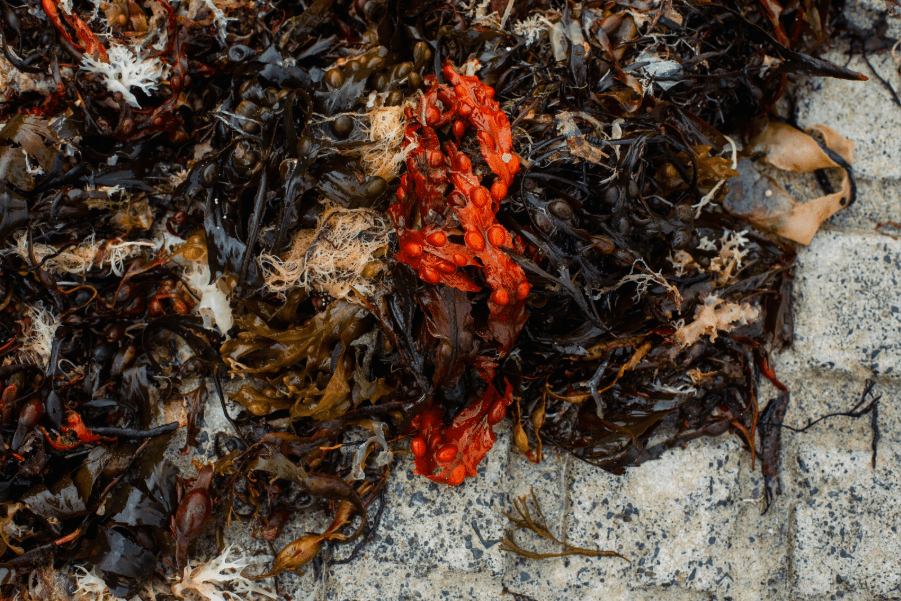
Seaweed’s ability to absorb minerals from seawater is both its greatest asset and fundamental vulnerability. Macroalgae concentrate beneficial nutrients like iodine, calcium, and magnesium. Unfortunately, they also accumulate heavy metals present in coastal waters: arsenic, cadmium, lead, mercury, and nickel. When industrial runoff or agricultural pollution affects coastal environments, seaweed becomes a repository for contaminants.
The health risks are serious. Excessive iodine causes thyroid dysfunction. Arsenic is carcinogenic. Cadmium damages kidneys. Lead affects neurological development in children. Mercury interferes with brain function and foetal development. Food safety authorities across Europe have documented cases where seaweed products contained dangerous contaminant levels. The regulatory response was inevitable; what has caught producers off guard is the stringency of new limits and the speed required for compliance.
What Regulations Actually Require
Commission Regulation (EU) 2023/915 establishes the new framework, replacing earlier legislation. For seaweed-based food supplements, maximum levels are now set at 3.0 milligrams per kilogram for both cadmium and lead, whilst mercury must remain below 0.1 mg/kg. New nickel limits came into force on 1 July 2025: 30 mg/kg for general seaweed and 40 mg/kg for wakame. Inorganic arsenic follows the “As Low As Reasonably Achievable” (ALARA) principle, meaning producers must demonstrate active efforts to minimise contamination rather than simply meeting numerical thresholds.
Iodine regulation is more complex. The EU has not yet established harmonised maximum limits, instead relying on monitoring through Commission Recommendation (EU) 2018/464. However, individual countries have moved ahead independently. France recommends a maximum of 2,000 mg/kg dry weight for edible seaweed. Germany takes a stricter approach: 20 mg/kg for dried seaweed products and a maximum daily intake of 500 micrograms. Industry sources indicate the EU is moving towards establishing harmonised limits based on accumulated monitoring data.

Cost of Compliance
For small producers, particularly those wild-harvesting in areas with historical contamination, these regulations create immediate challenges. Many existing operations will find their products no longer meet safety standards. The choice is stark: invest in processing infrastructure, relocate to cleaner waters, or close operations.
Research has identified post-harvest techniques that substantially reduce contaminants. Blanching can reduce iodine in brown seaweed by up to 90 percent. Washing removes surface contaminants and leaches metals from tissues. Fermentation can transform certain contaminants whilst creating new flavour profiles. These techniques work but implementing them requires substantial investment.
Blanching facilities need industrial-scale hot water systems, energy for heating, cooling infrastructure, and food safety controls. Washing operations require clean water supplies, drainage systems, and contamination protocols. Fermentation demands controlled environments, starter cultures, and extended processing times. For small coastal producers with minimal infrastructure, these requirements may exceed annual revenue. Energy costs alone for blanching can become prohibitive.
Processing techniques also create quality challenges. Blanching and washing reduce nutritional content alongside removing contaminants. Texture changes; blanched seaweed becomes softer. Flavour profiles shift through fermentation. For producers whose marketing emphasises minimal processing and maximum nutrients, these requirements create tension between safety compliance and brand identity.
The Shift to Controlled Cultivation of Seaweed
The most profound impact is accelerating the shift from wild harvesting towards controlled aquaculture. Wild harvesting offers no control over the growing environment; if coastal waters contain heavy metals, the product reflects that contamination. Regulatory pressure makes this approach increasingly unviable.
Controlled aquaculture offers different risk profiles. Producers can select pristine cultivation sites away from industrial discharge and agricultural runoff. They can monitor water quality continuously and relocate if contamination is detected. Farmed sugar kelp consistently shows lower heavy metal levels than wild-harvested equivalents. Cultivation enables traceability; each batch links to specific locations, growing periods, and environmental conditions.
This traceability is essential as the EU implements a “no data, no market” environment where comprehensive testing and documentation are mandatory. The transition to aquaculture, however, requires expertise, capital, and permits many small producers lack. Establishing offshore sites involves leasing marine space, obtaining environmental approvals, installing infrastructure, and developing harvesting systems. Coastal communities that have harvested wild seaweed for generations may lack technical knowledge or financial resources. The regulations risk consolidating the industry towards larger operations whilst squeezing out traditional harvesters.
Broader Context for Seaweed
Seaweed regulations sit within broader EU food safety policy evolution. Directive 2002/32/EC covers seaweed in animal feed, a growing market for methane-reducing supplements. Commission Regulation (EU) No 231/2012 sets specifications for seaweed-based food additives like carrageenan. The regulatory net tightens across all applications.
The EU’s Strategic Guidelines for Aquaculture (2021-2030) promote sustainable seaweed farming, creating a paradox where the same institution encouraging growth imposes regulations threatening existing producers. The resolution appears to be regulatory pressure eliminating marginal operators whilst enabling well-capitalised operations to expand.
The ALARA principle will increasingly define expectations. Rather than meeting numerical thresholds, producers must demonstrate continuous improvement. This creates perpetual adaptation where today’s compliance may be insufficient tomorrow.
Opportunities Within Crisis
Regulatory pressure may catalyse genuine innovation. Processing techniques that reduce contaminants whilst preserving nutrition represent valuable intellectual property. Cultivation methods producing clean product could be licensed globally. Monitoring systems providing real-time contamination data could transform quality assurance. European producers successfully navigating these regulations gain competitive advantage in global markets increasingly concerned with food safety.
Forward-thinking operations are positioning themselves to benefit. Integrated operations combining cultivation with processing can optimise both stages for contamination control. Producers investing in analytical capability can offer testing services to smaller operations. Collaborative models where small harvesters supply larger processing facilities can preserve artisanal production whilst ensuring safety compliance.
Heavy Burden
The tightening of iodine and heavy metal regulations marks a big change.
Some businesses will not survive; capital requirements and technical expertise demanded by the new environment will prove insurmountable for operations with thin margins. Coastal communities may lose traditional livelihoods.
Yet the regulatory direction is irreversible and, from a consumer protection standpoint, justifiable. Food safety authorities cannot ignore contamination risks. The question is whether transition can be managed to preserve industry diversity and sustainability credentials whilst achieving safety objectives. Targeted support for small producers, accessible testing infrastructure, technical assistance programmes, and reasonable implementation timelines could make the difference between transformation and devastation. The seaweed industry’s future depends on whether regulatory authorities and stakeholders can collaborate effectively during this critical period.
Sources
- European Commission (2023). Commission Regulation (EU) 2023/915 of 25 April 2023 on maximum levels for certain contaminants in food and repealing Regulation (EC) No 1881/2006. Official Journal of the European Union, L 119/103. Available at: https://eur-lex.europa.eu/eli/reg/2023/915/oj
- European Commission (2018). Commission Recommendation (EU) 2018/464 of 19 March 2018 on the monitoring of metals and iodine in seaweed, halophytes and products based on seaweed. Official Journal of the European Union, L 78/16. Available at: https://eur-lex.europa.eu/legal-content/EN/TXT/?uri=CELEX:32018H0464
- European Commission (2012). Commission Regulation (EU) No 231/2012 of 9 March 2012 laying down specifications for food additives listed in Annexes II and III to Regulation (EC) No 1333/2008. Official Journal of the European Union, L 83/1. Available at: https://eur-lex.europa.eu/legal-content/EN/TXT/?uri=CELEX:32012R0231
- European Commission (2021). Strategic guidelines for a more sustainable and competitive EU aquaculture for the period 2021 to 2030. Communication from the Commission, COM(2021) 236 final. Available at: https://eur-lex.europa.eu/legal-content/EN/TXT/?uri=COM:2021:236:FIN
- Shaughnessy, B.K., Jackson, B.P. and Byrnes, J.E.K. (2023). Evidence of elevated heavy metals concentrations in wild and farmed sugar kelp (Saccharina latissima) in New England. Scientific Reports, 13(1), 17644. DOI: 10.1038/s41598-023-44685-4
- Bruhn, A., Brynning, G., Johansen, A., Lindegaard, M.S., Sveigaard, H.H., Arias, A., Eybye, K.L., Pavia, H., Saake, B., Toth, G.B. and Weihe, R. (2023). Processing-mediated reduction of elemental contaminants in seaweed for food and feed products. Journal of Applied Phycology, 35, pp.1539-1557. DOI: 10.1007/s10811-023-02960-1