Spanish media reported on Fisher Guardian initiative
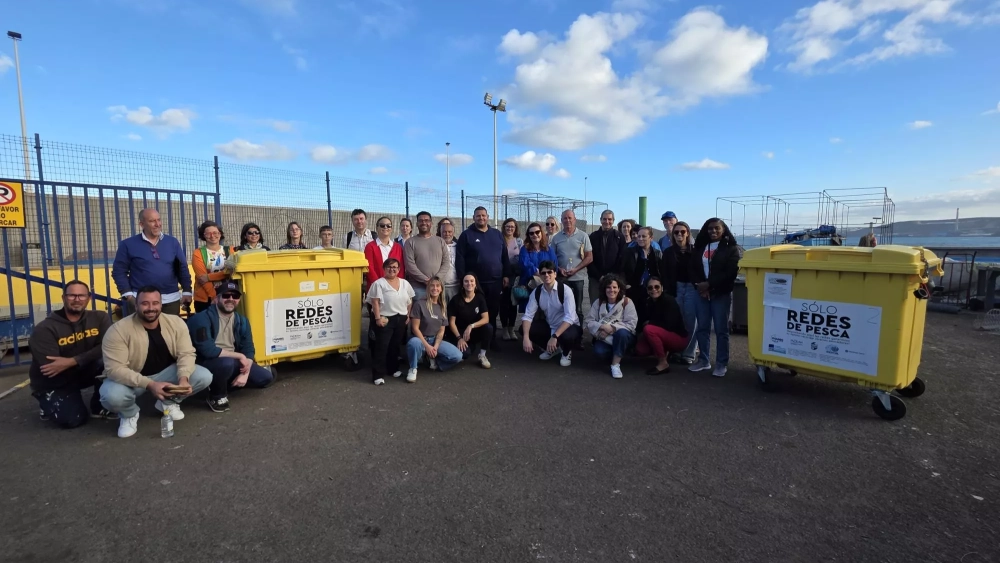
Spanish media reported on Fisher Guardian initiative https://pharosproject.eu/wp-content/uploads/2026/02/foto-de-familia_4_1000x563.webp 1000 563 PHAROS Project https://pharosproject.eu/wp-content/uploads/2026/02/foto-de-familia_4_1000x563.webpA circular economy initiative focused on recycling end-of-life fishing gear has been launched in San Cristóbal, Gran Canaria. The project, named “Fisher Guardians,” is driven by a collaboration between the Oceanic Platform of the Canary Islands (PLOCAN), the company Gravity Wave, and the local San Cristóbal Fishing Cooperative (Pescatobal). It operates under the broader European-funded PHAROS project.
A pilot phase has already yielded tangible results, with an initial official collection removing 220 kilograms of discarded nets and fishing gear. The long term goal is to transform this marine plastic waste into high-value products such as furniture and home decor, thereby giving it a second commercial life. Logistical studies are underway to determine if full recycling can be done locally in the Canary Islands or if materials need to be sent to mainland Spain.
A key component of the initiative is the use of innovative technology to ensure traceability and quality. During a public workshop, the “Fisher Guardians” project demonstrated the Trinamix device, which can identify the type of plastic in a net in real time. This workshop, the first major open event of the Gran Canaria “Living Lab,” aimed to educate and build trust within the local community, particularly among fishermen.
The fishing sector has responded positively. Fishermen are actively participating by depositing old or retrieved nets in specific containers at a designated clean point in the port. Cooperative administrators highlight that the fishermen, seeing themselves as guardians of the sea, are motivated to prevent “ghost nets” from harming marine fauna like turtles. This project is presented as a future oriented endeavour previously unseen in the Canaries.
The overarching PHAROS project has a wider roadmap beyond waste collection. For Gran Canaria, plans from 2027 onwards include experiments combining integrated multi trophic aquaculture (IMTA) with artificial reef installations to restore habitats and enhance marine biodiversity.
Article 1: “Crónica del Atlántico Hoy” (29/01/2026)
This outlet reported on the launch of the pilot project as a new circular economy opportunity. It focused on the collaboration between PLOCAN, Gravity Wave, and the Pescatobal fishing cooperative in San Cristóbal, Gran Canaria. Key details included the initial collection of 220kg of fishing nets, the plan to recycle them into furniture and decor, and the use of Trinamix technology for plastic identification. It framed the story within the larger European PHAROS project, mentioning future plans for multi-trophic aquaculture and artificial reefs from 2027. See the Spanish version in PDF version here.
Article 2: “Tellkes” (02/02/2026)
Tellkes covered the “Fisher Guardians” workshop as the first open event of the Gran Canaria Living Lab under the PHAROS project. The report emphasised the workshop’s role in raising awareness and building trust within the fishing community about the recycling process. It highlighted the involvement of fishermen as key allies, the demonstration of the Trinamix device, and the project’s aims to reduce marine pollution and foster the blue and circular economy. See the Spanish version in PDF version here.
Article 3: “Telde Habla” (31/01/2026)
This local news site provided a detailed community-focused report on the same workshop. It included extensive direct quotes from project managers: Pablo Reche (PLOCAN), Amaya Rodríguez (Gravity Wave), and Dolores Guedes (Pescatobal). It elaborated on the practicalities, such as the dedicated “punto limpio” (clean point) in the port for storing nets, the fishermen’s positive reception, and their motivation to protect marine life like turtles. It also confirmed the 220kg collection and discussed the logistical considerations for local recycling versus processing on the Spanish mainland. See the Spanish version in PDF version here.
Radio interviews: