Climate Migration and Why People Move
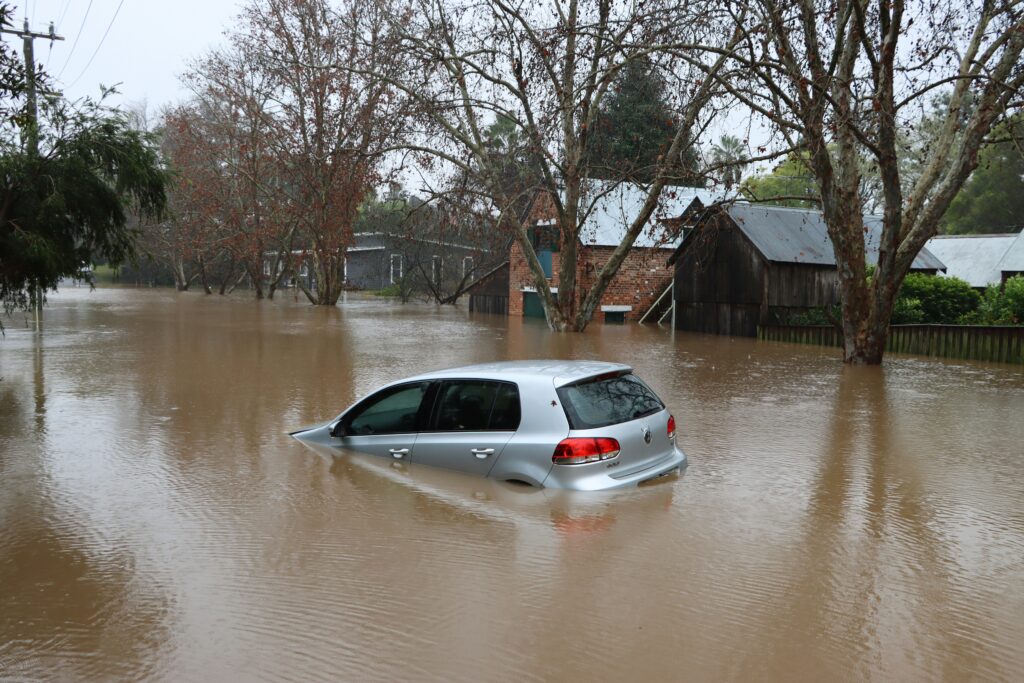
Climate Migration and Why People Move https://pharosproject.eu/wp-content/uploads/2026/01/wes-warren-Mx5m1K7Sthg-unsplash-1024x683.jpg 1024 683 PHAROS Project https://pharosproject.eu/wp-content/uploads/2026/01/wes-warren-Mx5m1K7Sthg-unsplash-1024x683.jpgFor two decades, Professor François Gemenne has been challenging assumptions about why people move when the climate changes. His latest research through the EU-funded HABITABLE project reveals something crucial. The decision to stay or go isn’t just about rising temperatures or sea levels. It’s far more complex, more human, and more unpredictable than our models suggest.
This matters because we’re getting climate migration wrong. And if we misunderstand the problem, we’ll design the wrong solutions.
The Old Way of Thinking Is Broken
Traditional climate models treat people like physics. Hit X temperature threshold, people move. Reach Y sea level, communities relocate. Simple cause and effect.
Except humans don’t work that way.
Gemenne’s team spent four years studying climate migration across Europe, Africa, and Thailand. What they found challenges the entire framework we’ve been using to predict and prepare for climate-driven displacement.
The breakthrough? Social tipping points.
The Real Migration Trigger
Here’s how it actually works. A village experiences repeated crop failures. A few families decide to leave. Their departure creates a ripple effect. Neighbors start questioning their own future. More families follow. Suddenly, the entire community tips toward migration.
This isn’t about temperature hitting a magic number. It’s about social dynamics, community psychology, and collective decision-making.
Think of it like leaving a party. The first person to leave faces social pressure to stay. But once a few people go, others feel permission to follow. Before you know it, everyone’s heading for the door.
Climate migration works similarly. Except the stakes are infinitely higher.
What Europe Gets Wrong About Climate Refugees
When Gemenne started this work 20 years ago, people thought he was studying bird migration. Now climate migration dominates headlines, but the public conversation remains disconnected from reality.
The term “climate refugee” itself is problematic. It suggests people fleeing immediate disaster. But the HABITABLE research shows migration decisions are rarely that straightforward.
“There are real discrepancies between public debate and empirical realities for climate refugees,” Gemenne explains.
Take France. The Obs’COP survey found that more than one in five French people believe they may have to leave their homes in the next decade due to climate change. That’s a massive shift in perception. Climate migration is no longer something happening to islanders in the Pacific. Europeans now see themselves as potential climate migrants.
But perception and reality don’t always align. Some places are described as “uninhabitable” not because conditions are currently unlivable, but because media narratives have convinced residents their situation is hopeless.
Words matter. Labels matter. And right now, we’re using language that obscures more than it reveals.
Ghana: Where Gender and Age Determine Who Moves
Professor Mumuni Abu led the HABITABLE team’s work in Ghana’s northern savannah regions. His findings expose how climate migration isn’t uniform, even within the same community.
Gender determines who can migrate and where they can go. Age shapes the opportunities available. Social class influences whether migration is even possible.
Two people experiencing the same drought may make completely different decisions based on their social position. One may have family networks in urban areas offering employment opportunities. Another may lack the resources to move at all.
Abu’s team worked with local authorities and NGOs to design more inclusive policies. They used theatre and storytelling in schools to raise awareness.
The lesson? Climate migration policy must account for social inequalities, not just environmental thresholds.
The Mekong River
Sara Vigil from the Stockholm Environment Institute led research along the Mekong River on the Thailand-Laos border. Her team discovered something counterintuitive.
In many cases, climate factors were less important than economic pressures. Debt. Declining fish stocks. Limited livelihood options, especially for women. These structural issues drove migration decisions more than environmental changes.
This doesn’t mean climate change isn’t real or important. It means climate change intersects with existing vulnerabilities to create complex migration patterns.
“The impacts of climate change on migration are shaped by deeper structural inequalities, including gender roles, uneven access to resources and entrenched social hierarchies,” Vigil explains.
Communities along the Mekong responded with grassroots solutions. Community-led water monitoring. Local mobilization. Adaptation strategies developed by those most affected.
The research revealed a fundamental truth. We need to shift from asking “who is vulnerable?” to asking “why are certain people and places becoming more vulnerable?”
That’s a radically different question. And it demands radically different answers.
Three Lessons That Change Everything
After four years of intensive research across three continents, the HABITABLE team identified three crucial insights that should reshape how we think about climate migration.
First, perception matters as much as reality.
How people perceive climate risks influences their decisions as much as actual environmental conditions. If communities believe their home is becoming uninhabitable, they may leave even if conditions haven’t reached crisis levels yet. Conversely, strong place attachment may keep people in genuinely dangerous situations longer than models predict.
Second, social tipping points provide richer frameworks than physical thresholds.
Traditional models focus on temperature increases or sea-level rise. But migration happens when communities collectively tip toward movement. That tipping point depends on social networks, economic opportunities, cultural factors, and psychological resilience, not just environmental metrics.
Third, equitable research partnerships ensure local knowledge informs global decisions.
The HABITABLE project brought together researchers from Europe, Africa, and Asia as equal partners. This wasn’t Western researchers studying “vulnerable populations.” It was collaborative knowledge production that centered local expertise and experience.
What This Means for Policy
Climate migration is happening. But if we misdiagnose the causes, we’ll design ineffective responses.
Current approaches often focus on preventing migration or managing displacement. The HABITABLE research suggests we need more nuanced strategies.
Some migration is adaptive. It can reduce vulnerability and improve livelihoods. Policies should support safe, voluntary migration as a valid adaptation strategy, not treat all movement as failure.
Other times, people want to stay but need support to adapt in place. Resources should flow to community-led adaptation initiatives, not just top-down infrastructure projects.
And when displacement is unavoidable, we need frameworks that protect rights and dignity, not treat climate migrants as security threats.
Gemenne emphasizes the need for more careful language. Declaring places “uninhabitable” can become a self-fulfilling prophecy, undermining adaptation efforts and triggering premature displacement.
The Exhibition Bringing Research to Life
The HABITABLE findings are now featured in a global exhibition at the National Museum for the History of Immigration in Paris, running until April 5, 2026.
This isn’t academic research locked behind paywalls. It’s public knowledge designed to inform real-world decisions.
Gemenne hopes the work becomes a “living study, carried forward by many local partners, shaping decisions long into the future”.
That vision reflects a deeper truth about effective climate research. It must be collaborative, accessible, and action-oriented. Otherwise, it’s just data gathering.
Where Do We Go From Here?
Climate migration will increase. That’s not alarmism. It’s physics and demographics.
But how we respond remains an open question.
We can continue with simplistic models that treat people as passive responders to environmental triggers. Or we can embrace the complexity revealed by the HABITABLE research.
That means understanding that two people experiencing the same climate impact may make completely different decisions based on their gender, age, class, social networks, psychological resilience, and a dozen other factors.
It means recognizing that perception shapes reality in powerful ways.
It means designing policies that address structural inequalities, not just environmental symptoms.
And it means listening to local communities rather than imposing external solutions.
The Bottom Line
Climate migration isn’t a future problem. It’s happening now. More than one in five people in France believe they may need to move in the next decade due to climate change. That perception alone will shape migration patterns, regardless of what climate models predict.
The HABITABLE research offers a more sophisticated understanding of why people move, when they stay, and what triggers collective tipping points.
This knowledge should fundamentally reshape how we approach climate adaptation, migration policy, and international cooperation.
Because getting climate migration right isn’t just about better predictions. It’s about designing responses that protect dignity, support adaptation, and address the root causes of vulnerability.
We’re not going to stop climate change overnight. But we can change how we respond to it.
And that response starts with understanding the messy, complex, deeply human reality of climate migration.
Sources:
- European Commission, Horizon Magazine: “Researchers reveal how climate change is shaping decisions to move or stay put” (2026)
- HABITABLE Project: EU Horizon Programme (2020-2024)
- Hugo Observatory, University of Liège, Belgium
- Obs’COP Survey: EDF and Ipsos International Climate Opinion Survey
- Stockholm Environment Institute: Gender and Social Equity Research
- University of Ghana: Climate Migration Studies, Northern Savannah Regions
- National Museum for the History of Immigration, Paris: “Migrations and Climate” Exhibition (2025-2026)