Workshop: Best Practices in Living Labs on Jan 30, 2026
Workshop: Best Practices in Living Labs on Jan 30, 2026 https://pharosproject.eu/wp-content/uploads/2026/01/best-practices-in-living-labsBanner-1024x576.png 1024 576 PHAROS Project https://pharosproject.eu/wp-content/uploads/2026/01/best-practices-in-living-labsBanner-1024x576.pngThe target audience of the workshop consists of professionals and organisations actively involved in the planning, implementation, or support of living labs in island contexts, particularly in relation to Nature-Based Solutions and the blue economy. This includes:
- Project managers and coordinators of living labs, pilot projects, and EU-funded initiatives operating in island or coastal territories.
- Public-sector technicians and policymakers from regional and local administrations responsible for environment, coastal management, innovation, and territorial development.
- Researchers and technical experts from universities and research centres working on NbS, marine and coastal systems, and participatory innovation methods.
- Private-sector representatives and SMEs engaged in the blue economy, environmental solutions, and applied innovation who participate in testing or scaling pilots.
- Cluster organisations, innovation hubs, and support entities that facilitate collaboration, funding access, and knowledge transfer.
The session will be held in English and will also be accessible online via Zoom.
- Webinar Series – PHAROS Project, Session #1 [Hybrid (In-person/Online)]
- Date & Time: Friday 30 | 9:30 – 11:30 (120 minutes) UTC+0, Gran Canaria Time
- Venue: Clúster Marítimo de Canarias (CMC)
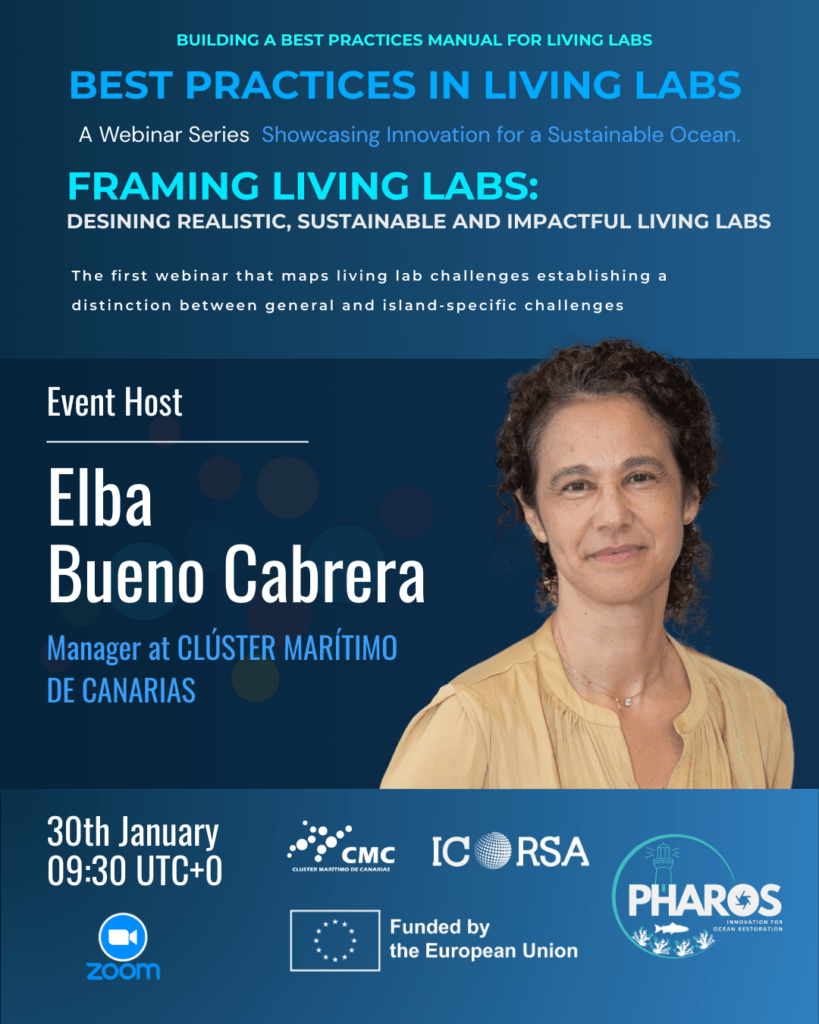
- Event Host: Elba Bueno – CLÚSTER MARÍTIMO DE CANARIAS, PHAROS Project
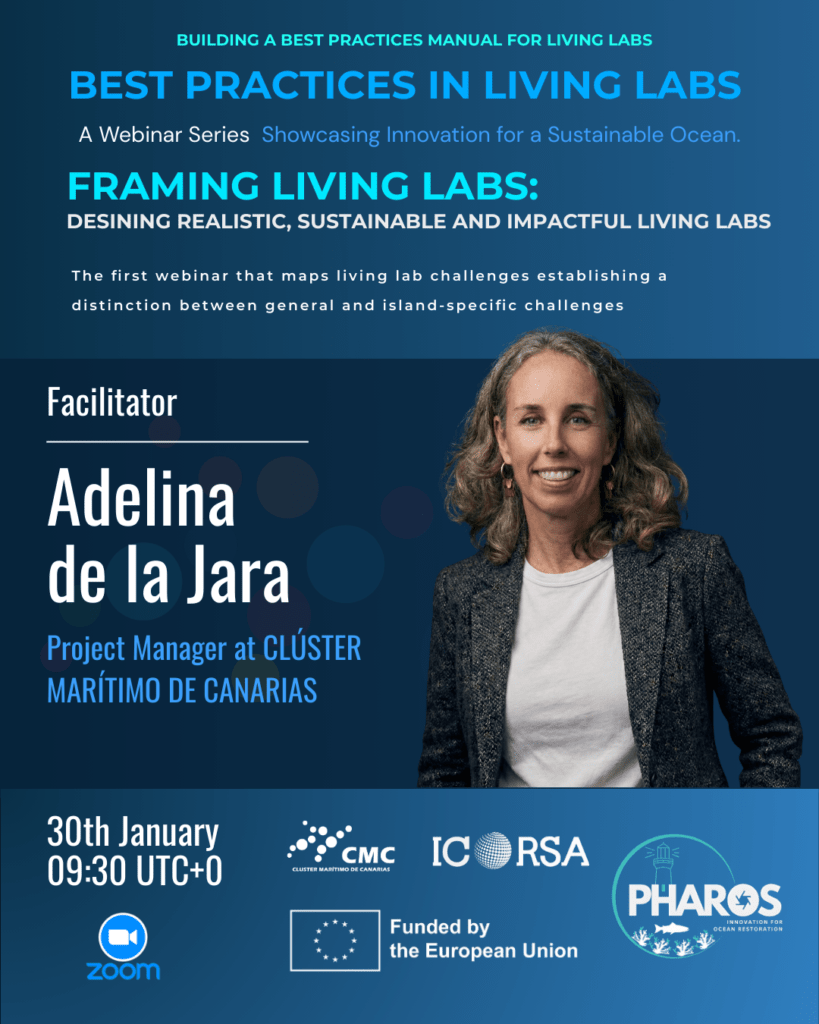
- Facilitator: Adelina de la Jara – CLÚSTER MARÍTIMO DE CANARIAS, PHAROS Project
- Project Natalie: Noelia Cruz Pérez, University of La Laguna
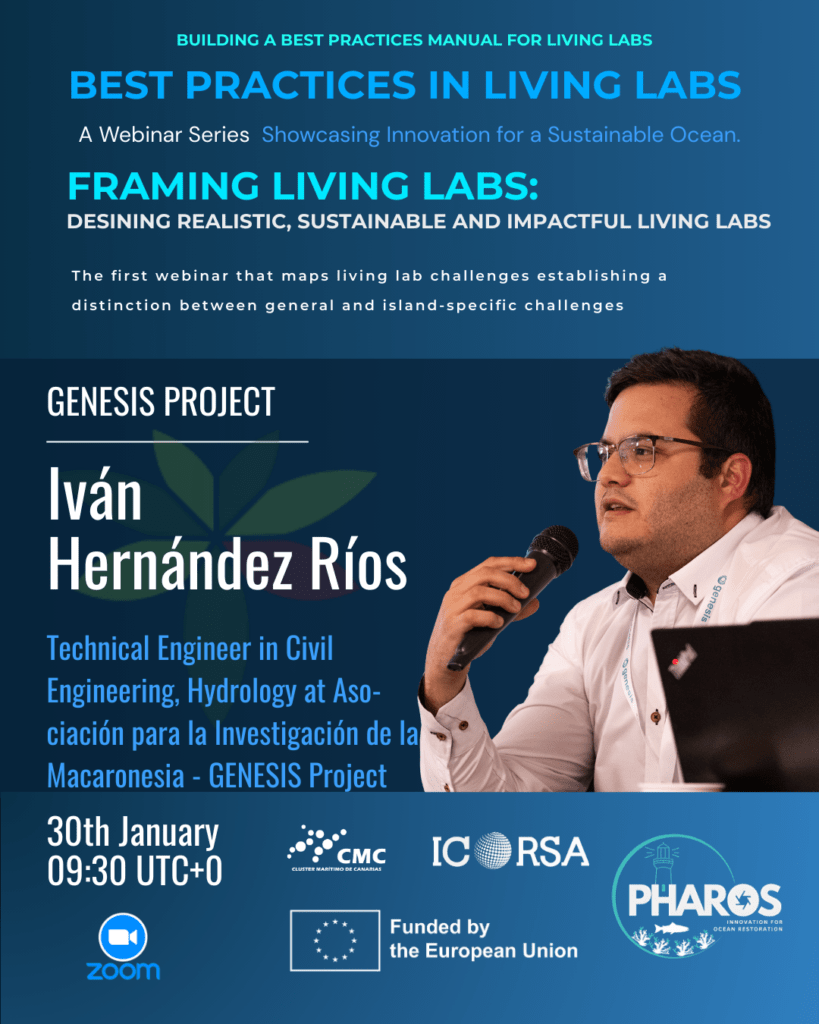
- Project Genesis: Iván Hernández Ríos (Asociación para la investigación de la Macaronesia)
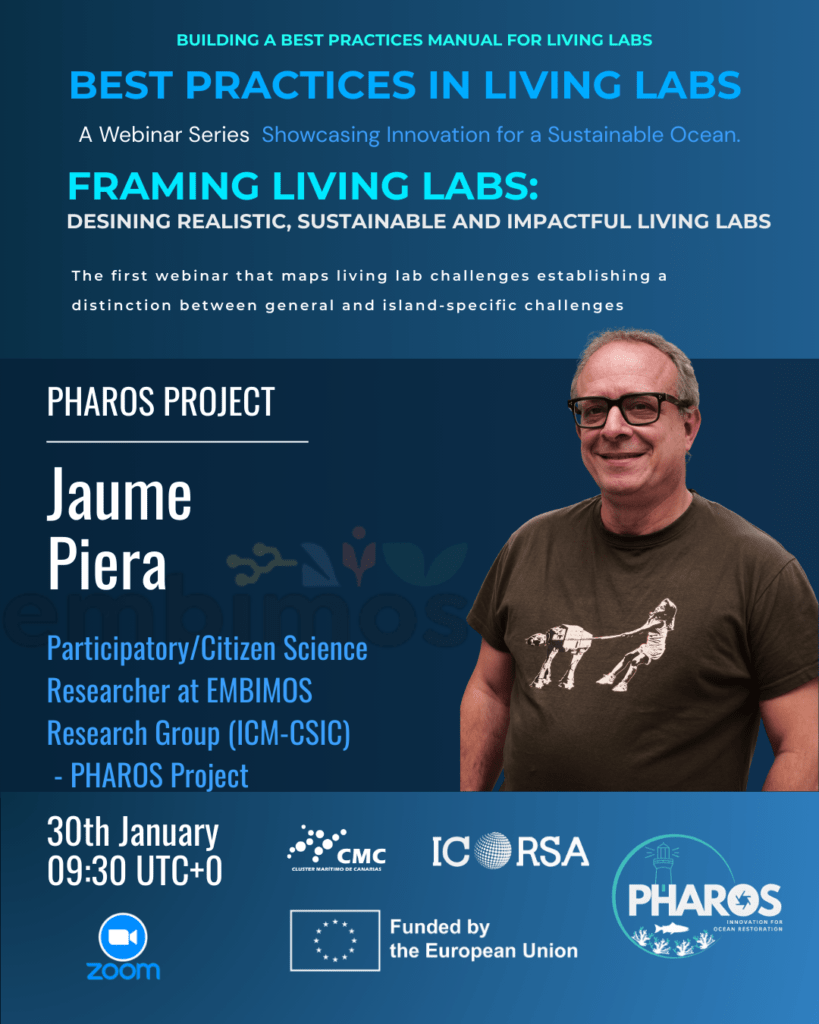
- Project Pharos: Jaume Piera (Embimos Research Group ICM-CSIC)
Context
Island territories offer highly suitable environments for piloting living labs focused on Nature-Based Solutions and the Blue Economy, due to their strong land–sea interaction, environmental sensitivity, and close-knit stakeholder ecosystems. At the same time, islands face structural constraints—such as limited scale, fragmented governance, regulatory complexity, and challenges in sustaining and scaling pilots—that require tailored approaches. This workshop series is conceived to systematically capture and analyse these specificities, ensuring that living lab practices developed in islands are both effective and transferable.
Objectives
The overall objective of the workshop series is to co-produce a Best Practices Document on Living Labs in Island Contexts, grounded in real implementation experience. Specifically, the series aims to:
- Identify and prioritise challenges faced by living labs in islands.
- Analyse enabling factors, methodologies, and governance models that address these challenges.
- Extract transferable lessons to support replication, scaling, and policy uptake of living lab initiatives in island and outermost regions.
Methodology
The series follows a progressive, hybrid and participatory methodology, combining short framing inputs with structured discussions, breakout group work, and collective validation. Each workshop builds on the outputs of the previous one, moving from diagnosis (challenges) to analysis (enablers), operational guidance (methods and tools), and consolidation (validation of best practices). Digital collaboration tools ensure equal participation of on-site and online attendees, while all discussions are systematically documented to feed directly into the final best practices document.
Activity in the First Workshop
The first workshop, lasting two hours and delivered in a hybrid format, is dedicated to mapping challenges for living labs in island contexts. Participants will identify and discuss practical barriers encountered across the living lab lifecycle—governance, stakeholder engagement, co-creation and testing, funding continuity, and scaling. Through plenary challenge harvesting and facilitated breakout sessions, these challenges will be structured, analysed, and prioritised, providing a robust empirical basis for the subsequent workshops and the final document.
About the Speaker: Noelia Cruz – University of La Laguna
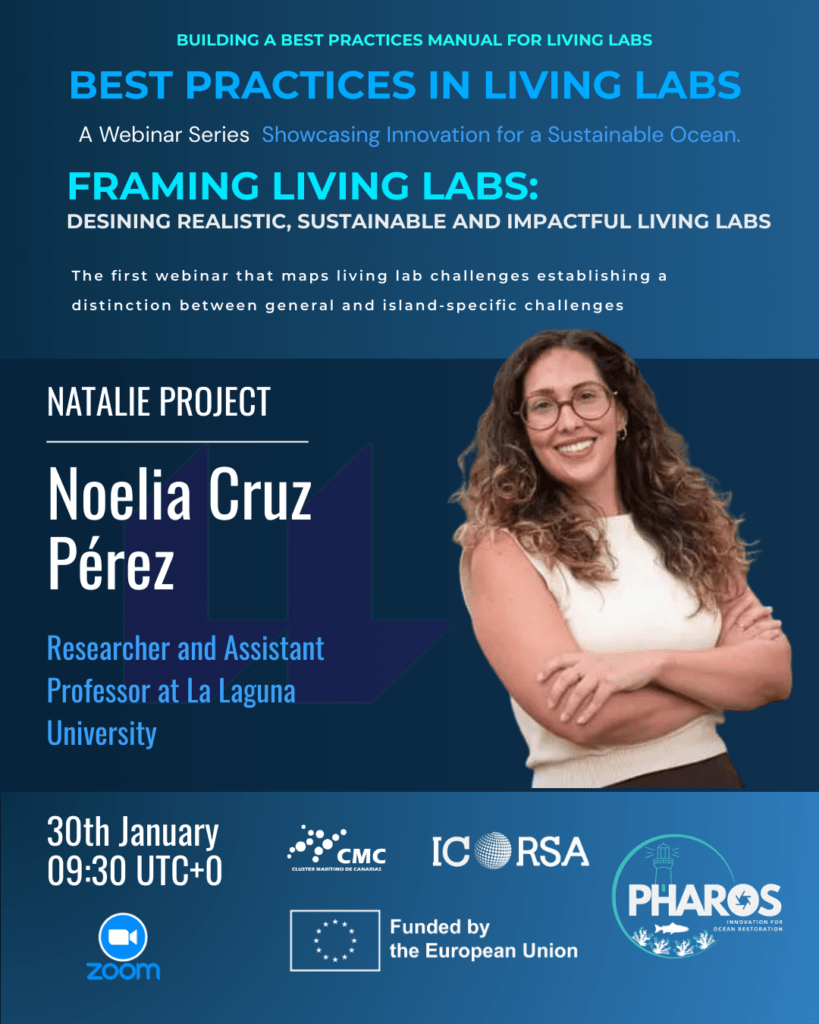
Noelia Cruz – Researcher and Assistant Professor at La Laguna University
Noelia holds a PhD Cum Laude in Regional Development from the University of La Laguna, where she received the Extraordinary Doctorate Award for her thesis on the assessment of the environmental footprint of hydraulic and port infrastructures. As a Civil, Building, and Agricultural Engineer, she presents a solid background in engineering and extensive experience in projects related to water and sustainable development. She has also participated in numerous national and international research projects, funded by programs such as H2020, INTERREG, and ERASMUS+, focusing on the development of innovative solutions to mitigate the effects of climate change and promote the transition to a circular economy. Currently, Noelia is member of the 2030 Agenda Committee and the Committee of Experts on Climate Change that advises the Government of the Canary Islands, actively contributing to the implementation of sustainable policies in the archipelago.