ROUND TABLE: Permitting Challenges & Opportunities for Academia and Collaborative Projects, Jan 30, 2026
ROUND TABLE: Permitting Challenges & Opportunities for Academia and Collaborative Projects, Jan 30, 2026 https://pharosproject.eu/wp-content/uploads/2026/01/ROUNDTABLE-WHERE-PROJECTS-FAIL-EVIDENCE-FROM-DELAYED-PROJECTS-1024x576.png 1024 576 PHAROS Project https://pharosproject.eu/wp-content/uploads/2026/01/ROUNDTABLE-WHERE-PROJECTS-FAIL-EVIDENCE-FROM-DELAYED-PROJECTS-1024x576.pngThis Roundtable brings together key stakeholders including local authorities, marine spatial planners, regulators, academic institutions and project teams to discuss R&I permit barriers and explore possible collaborative solutions. The session will be held in English and will also be accessible online via Zoom.
Session Title: WHERE PROJECTS FAIL: EVIDENCE FROM DELAYED PROJECTS
Event & Framework: Permitting Challenges & Opportunities for Academia and Collaborative Projects Webinar Series – PHAROS Project Session #1 [Hybrid (In-person/Online)]
Date & Time: Friday 30 | 12:00 – 13:00 (60 minutes) UTC+0, Gran Canaria Time
Venue: Plataforma Oceánica de Canarias (PLOCAN)
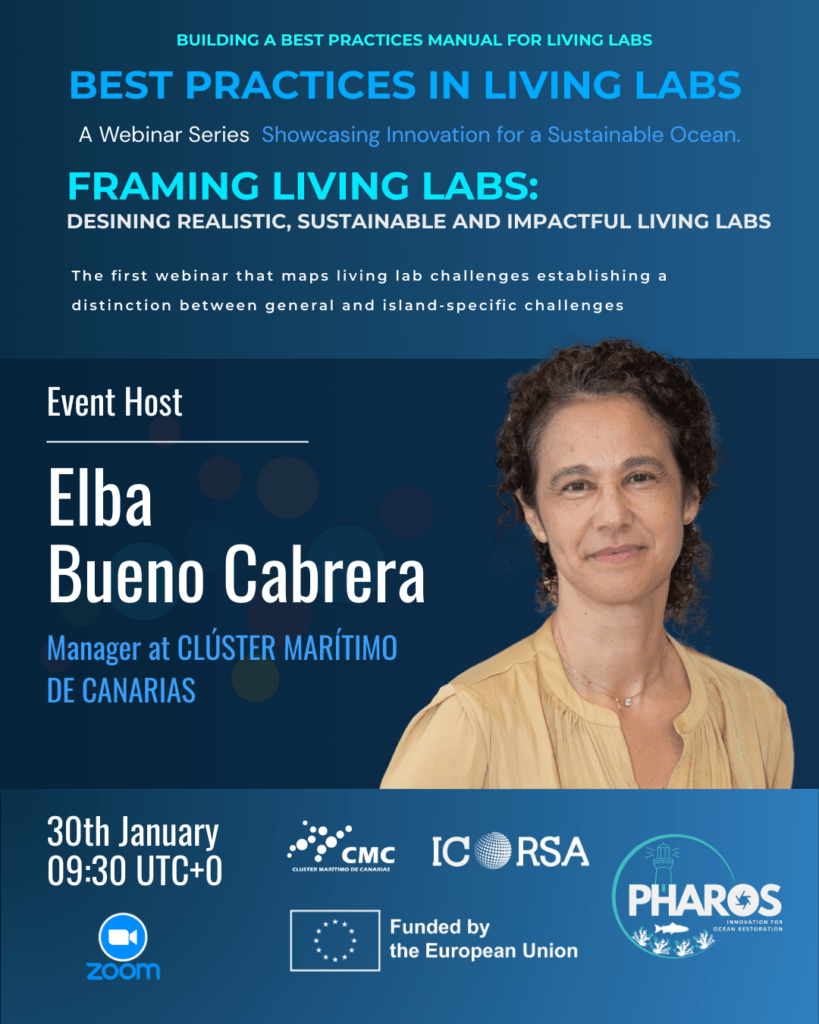
Event Host: Elba Bueno Cabrera – CLÚSTER MARÍTIMO DE CANARIAS, PHAROS Project
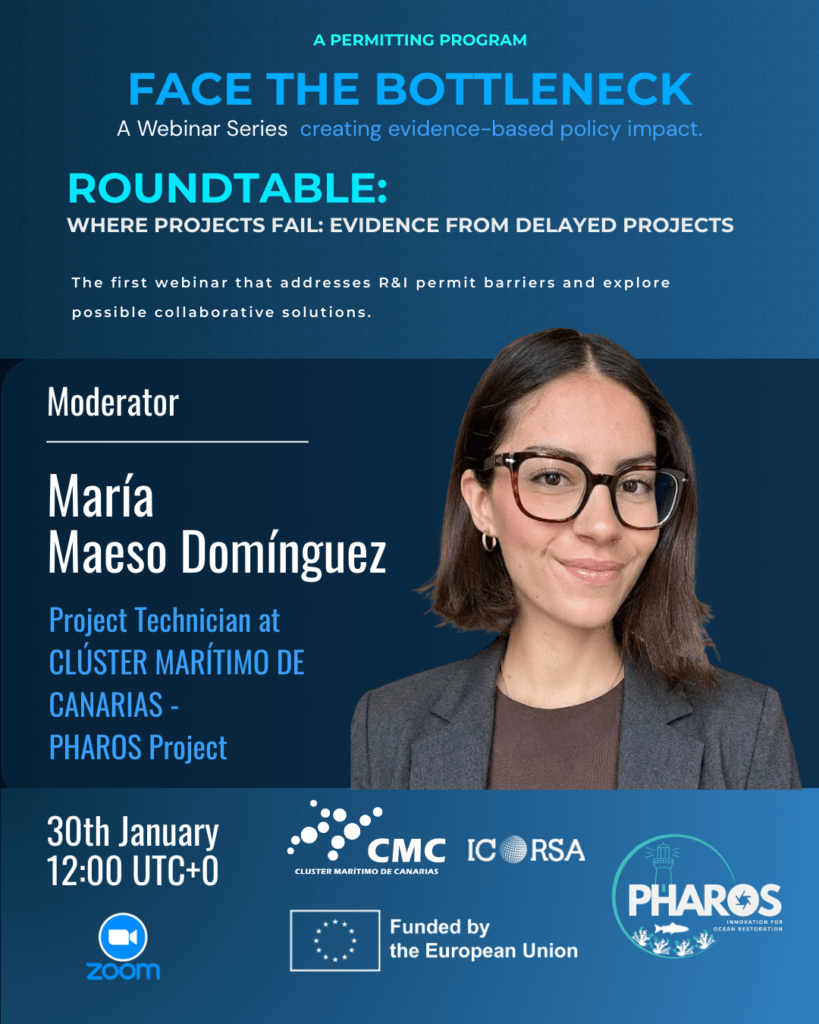
Moderator: María Maeso Domínguez del Río – CLÚSTER MARÍTIMO DE CANARIAS, PHAROS Project
Project managers & Projects
- Oscar Aller – UnderWater Gardens, PHAROS
- Mariana Carneiro – Necton, REALM
- Alexandre Rodrigues – Necton, REALM
- Juan Carlos Santamarta – La Laguna University, NATALIE
- Noelia Cruz – La Laguna University, NATALIE
- Javier Roo – ACIISI, AquaWind
- Pedro Mayorga – EnerOcean, Primavera
Context
Permitting and administrative delays are a critical barrier for the implementation of EU-funded projects, particularly those involving pilots, infrastructure, testing facilities, and innovation deployment. Across multiple programmes, projects fail not due to technical limitations, but because of regulatory complexity, unclear procedures, fragmented competences, and long decision-making timelines.
This webinar is part of the PHAROS Project and its webinar series on Permitting Challenges & Opportunities for Academia and Collaborative Projects. The series seeks to strengthen the interaction between projects and public administrations while generating evidence-based policy recommendations. As the first session in the series, this webinar lays the groundwork for a forthcoming policy brief by providing an initial diagnosis based on real project experiences.
Objectives & Goals
The session aims to:
- Build an empirical evidence base on administrative and permitting bottlenecks affecting EU projects
- Identify recurring failure patterns across different project types and sectors
- Analyse high-risk phases in the project lifecycle (pre-award, start-up, execution)
- Capture concrete impacts of delays on project viability, funding, and outcomes
- Distinguish between regulatory, procedural, and organisational barriers
- Translate real cases into clearly defined problem statements for the PHAROS policy brief
- Ensure direct and structured input from project managers, technical leads, and stakeholders
Methodology & Session Format
The session follows a structured, evidence-oriented methodology focused on collecting and validating real project experiences to feed directly into the policy brief:
- Short, structured presentations of real project cases, each outlining the permit involved, responsible authority, delay duration, and project impact
- Analytical framing of common administrative failure patterns and high-risk phases in EU-funded projects
- Moderated discussion to identify recurring issues and distinguish between regulatory, procedural, and organisational barriers
- Collective validation of key bottlenecks and translation of findings into clear problem statements for the policy brief
Speaker Lineup
Elba Bueno
María Maeso
Oscar Aller Rojas
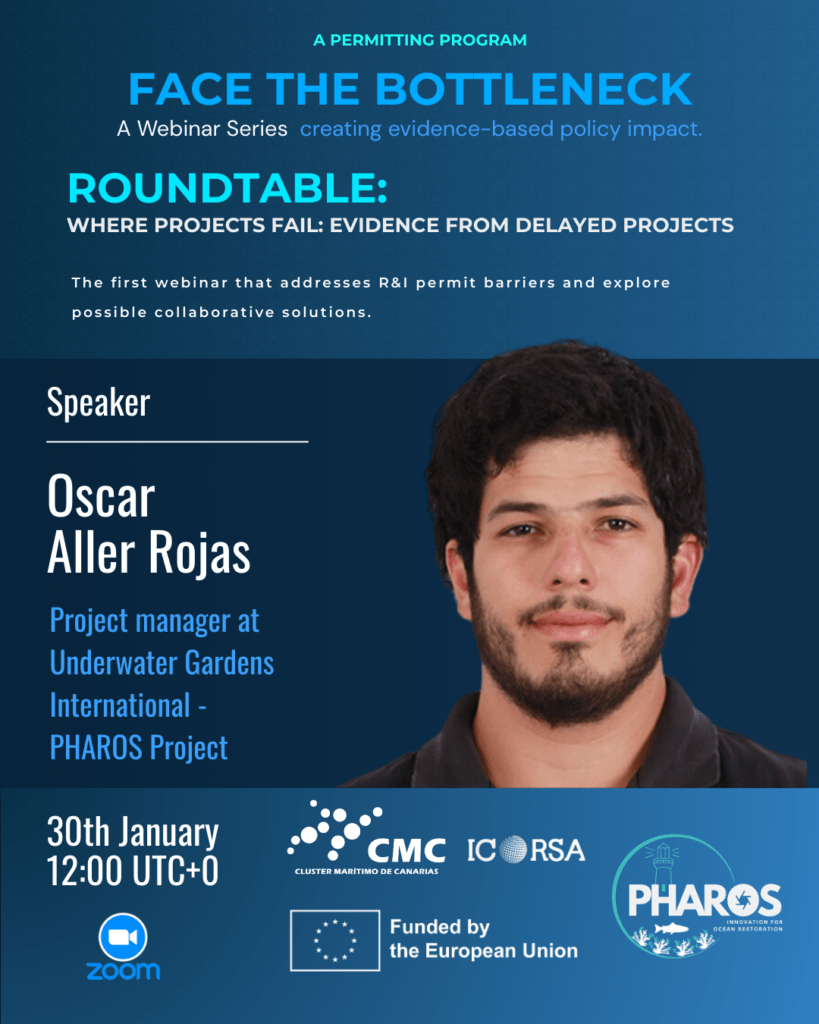
Oscar Aller Rojas is a marine biologist with a decade of international experience in marine conservation and project management, integrating scientific research, public policy, and strategic financing. He has worked with foundations, NGOs, and government institutions across Latin America and Spain. His experience includes managing a portfolio projects at the Walton Family Foundation in Peru and Chile, contributing to the establishment of the Nazca Ridge National Reserve in Peru, and serving as Marine Policy Officer at the Royal Society for the Protection of Birds (RSPB) in the United Kingdom. He has postgraduate training at the University of Glasgow and James Cook University. He currently serves as Marine Biology Department Coordinator and Project Manager at Underwater Gardens International (Barcelona), where he leads marine restoration projects.
Mariana Carneiro
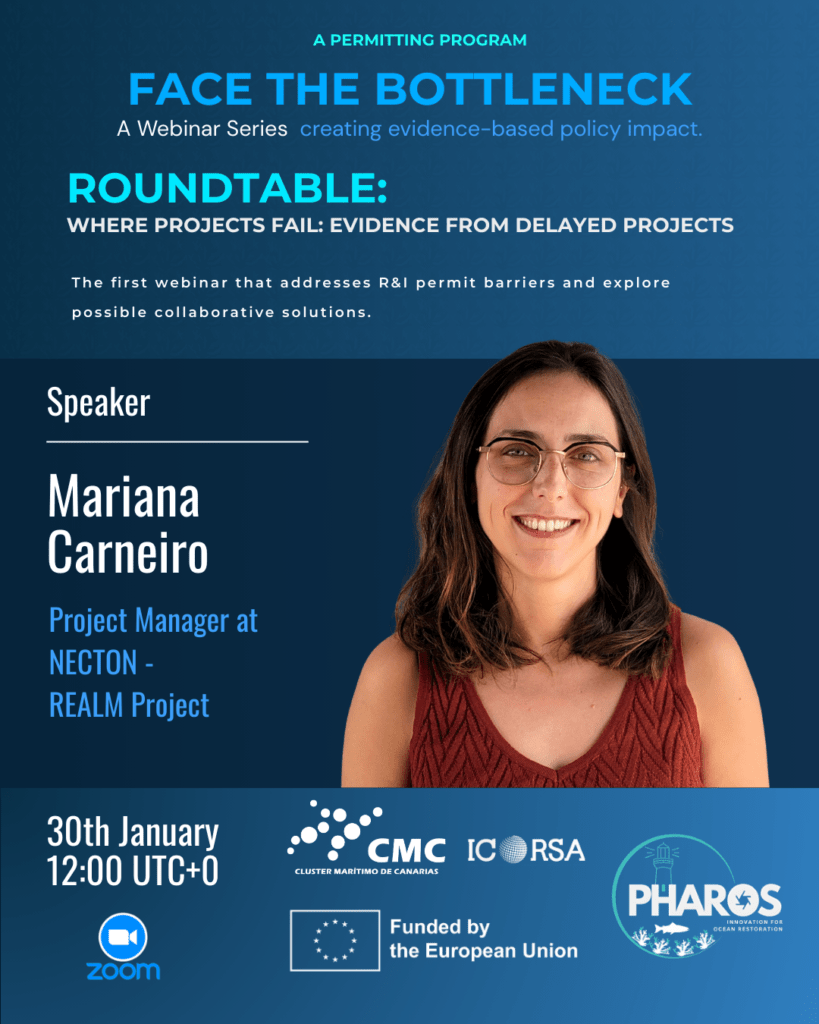
Mariana Carneiro holds a PhD in Chemical and Biological Engineering and is a Project Manager at Necton S.A since 2021. She specializes in industrial microalgae process optimization and innovation. Among others, she coordinates the EU-funded REALM project, developing cost-effective microalgae cultivation using greenhouse drainwater. Within REALM, it’s possible to encounter permitting barriers regarding the microalgae cultivation that are important to discuss to help identify regulatory bottlenecks and define solutions for implementing circular, nature-based innovations in Europe.
Juan Carlos Santamarta
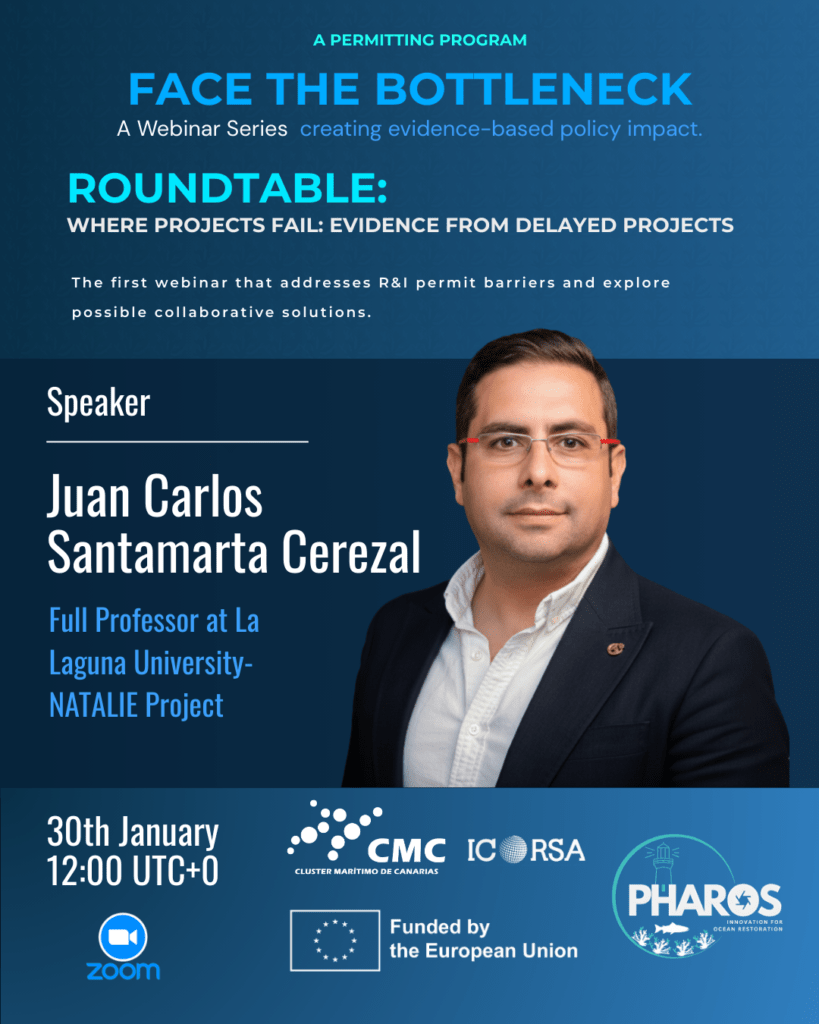
Juan Carlos Santamarta is a Full Professor at the University of La Laguna (Canary Islands, Spain) and an engineer specializing in groundwater, water infrastructure and climate resilience in island systems. At ULL, he has led major EU projects including ARSINOE (H2020), NATALIE and GENESIS (Horizon Europe), and AGEO (Interreg), alongside more than 36 European and national research projects. He is a member of the World Federation of Engineering Organizations (WFEO) and contributes to the UN-Water groundwater workstream. His project leadership has been recognized at European level, including the RegioSTARS 2025 Award and an EU “Success Story” distinction for the ARSINOE case study.
Javier Roo
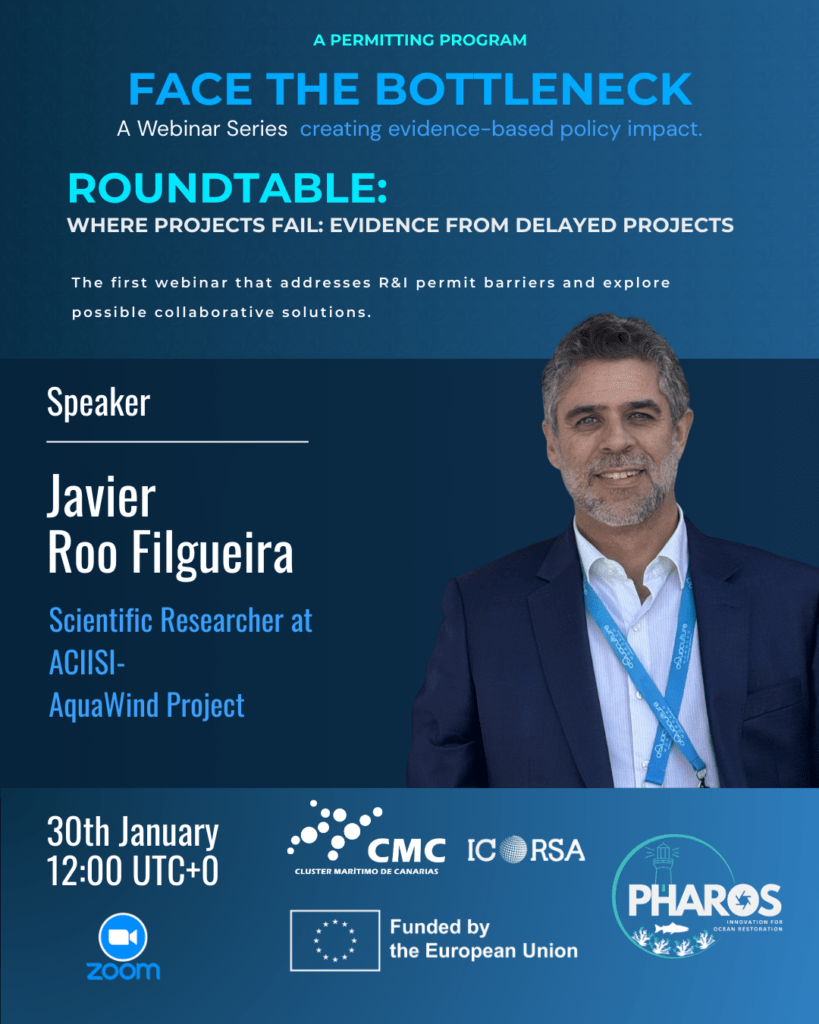
Javier Roo holds a degree in Marine Sciences and a PhD from the University of Las Palmas de Gran Canaria and over 25 years of experience in applied research, public administration, and the coordination of national and European R&D projects in the Blue Economy. He has authored more than 150 scientific publications (2,230+ citations, h-index 28), holds four ULPGC sexenios, and has supervised 4 PhD and 19 Master’s theses. His career spans research in Greece and Norway and senior roles within the Government of the Canary Islands. He currently manages European R&D projects at ACIISI while acting as a project reviewer for the Spanish State Research Agency.
Pedro Mayorga
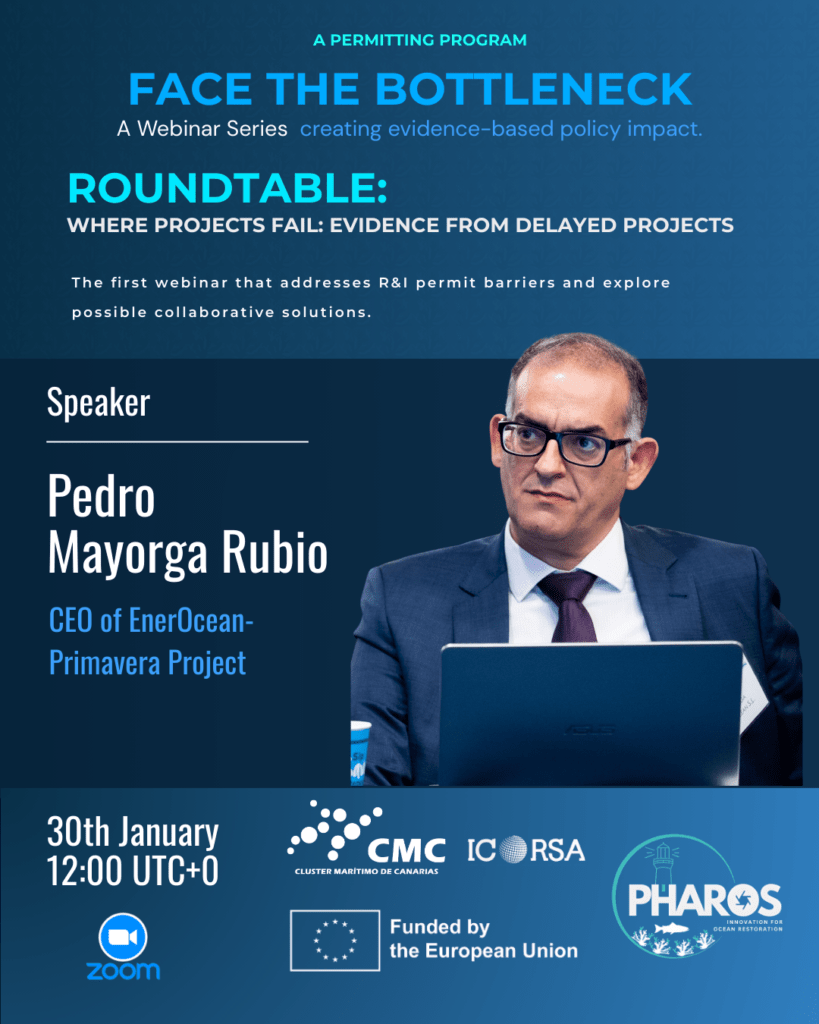
Pedro Mayorga holds a degree in Industrial Engineering. He is the founder, CEO, and Technical Director of EnerOcean S.L. With more than 25 years of experience in energy, he has been the leader in the development of W2Power, the world’s first multi-turbine platform successfully tested in open waters. Pedro is also member of the board of directors and representative in multiple clusters, associations, and technology platforms at the international, national, and regional levels. He began his career at General Motors as a manufacturing and maintenance engineer before joining an energy research center (ITE in Valencia), where he served as director of the technology area before devoting himself fully to EnerOcean S.L., which he founded in 2007.